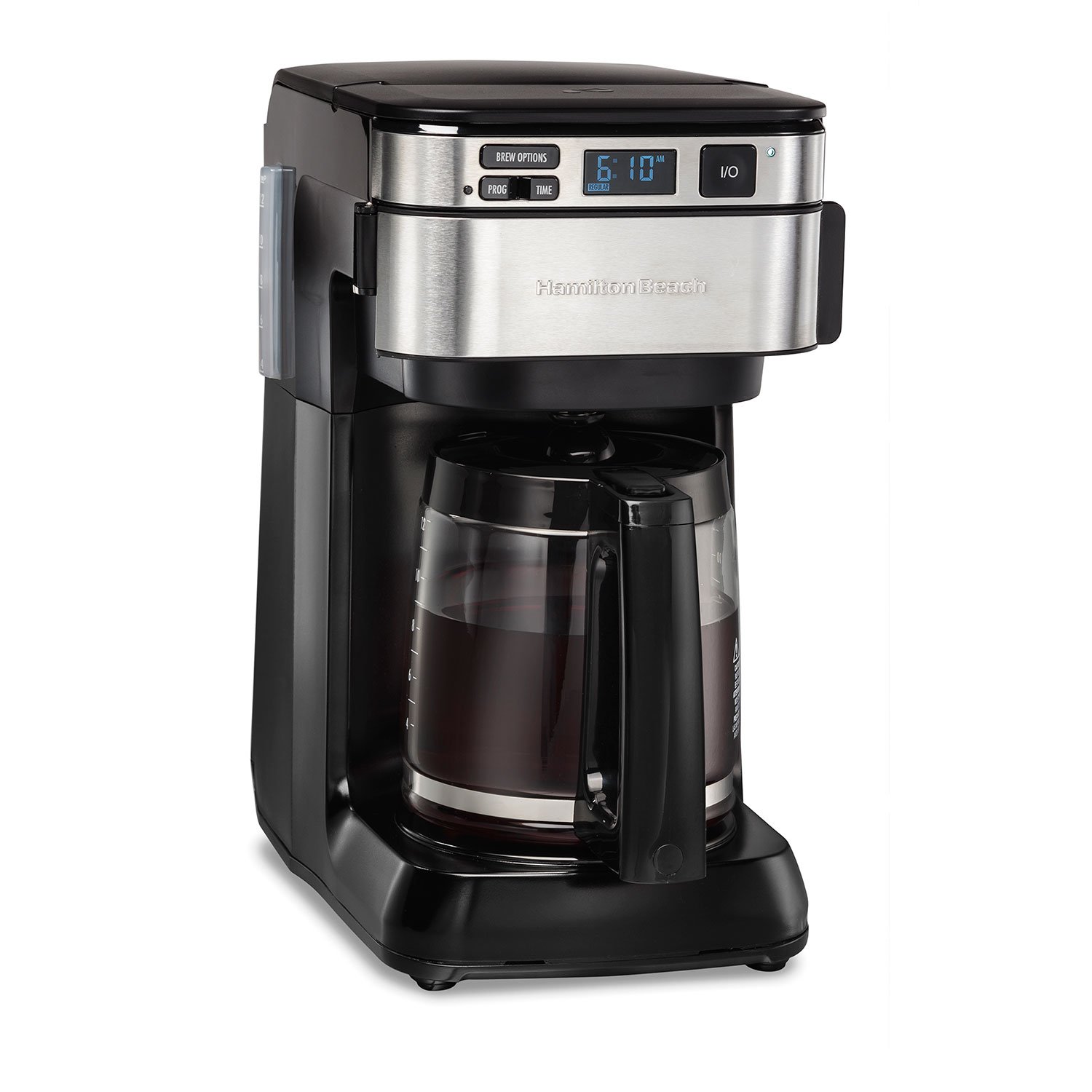
Buy the Hamilton Beach FrontFill 12 Cup Programmable. It fills from the front, so the cabinet above your counter stops mattering, and it is programmable 24 hours ahead — the one feature that changes whether you use a coffee maker on a Tuesday. If you are one person and the counter is eight inches wide, buy the AeroPress Original instead: 5.25 inches tall, no plug, lives in a drawer.
A first apartment is a set of constraints and none of them are about coffee. The counter is short and already holding a microwave. The cabinet above it is low enough that a rear-hinged lid will not open. And you might move again in eleven months, so whatever you buy has to survive a cardboard box.
So this guide ranks five ways to make coffee rather than five drip machines: the right answer for one person in a studio and for two who host on Sundays are not the same appliance. Every figure comes from the manufacturer's own page, and where a brand publishes nothing the table says so rather than guessing.
How to shop for a first coffee maker
What it costs to be wrong
Everything here is in the two cheapest price bands on this site, deliberately. The first coffee maker is the one you learn your own habits on, and half the people reading this will find in six months that they drink one cup, not a pot — a cheap lesson at these prices and a dear one at espresso-machine prices.
Counter footprint, and whether the cabinet is in the way
A rented kitchen gives you about 18 inches between the counter and the wall cabinet, per KraftMaid's published standard installation. A machine that fills from the front or has no lid at all makes that number irrelevant, which is worth more in a small kitchen than any feature on the box.
Whether it needs a plug and a circuit
Two of these five need no electricity at all, which matters in a kitchen where the outlet by the counter is already running a microwave and a toaster. US kitchens are required to have at least two 20-ampere small-appliance circuits, but in an older building you cannot assume both are where you want them.
How many people it feeds
Twelve cups is a pot for a household. Ten ounces is one mug. The most common first-apartment mistake is buying the 12-cup because it is the same price and then throwing away two-thirds of every pot — which is why the two smallest brewers here rank as high as they do.
What breaks, and what it costs to replace
A glass carafe is the part that breaks in a move. A plastic press body is not. Where a brand publishes a warranty we print it — BLACK+DECKER publishes two years, AeroPress publishes one — and where it does not, the table says not published.
Best overall
Image: Hamilton Beach
Hamilton Beach FrontFill 12 Cup Programmable
Fills from the front, 24-hour timer
Model
46310
Type
Drip · 24-hour programmable timer · wattage not published by Hamilton Beach
Capacity
12 cups
Dimensions
13.9 × 7.95 × 12.91 in (H × W × D)
Reasons to buy
The water reservoir fills from the front and the brew basket swings out sideways, so nothing ever hinges up into the cabinet — the single design choice that makes clearance stop being a question
7.95 inches wide, which is narrower than most 12-cup machines and leaves the rest of a short counter usable
Programmable 24 hours ahead with a two-hour keep-warm and automatic shutoff, so the coffee is made before you are awake enough to make it
A brew-strength selector with regular, bold and a 1-to-4-cup setting, which is what stops a 12-cup machine from being useless on a weekday
Reasons to avoid
Hamilton Beach publishes no wattage and no brew temperature for this model, so there is nothing to check against the SCA's 90 to 96 °C band
A glass carafe on a warming plate, which is the combination that cooks a half-pot flat after about thirty minutes
13.9 inches of published height, which is the measurement that decides whether it slides under a cabinet, not the 7.95 inch width
This is the machine I would put in a first apartment without thinking about it for long. It is 7.95 inches wide, it costs about what the Chemex costs, and it solves the one problem that actually stops people buying a drip machine for a rented kitchen: you never have to lift a lid under a cabinet. The 24-hour timer is the feature that converts a coffee maker from an appliance you own into one you use.
What you give up is documentation. No published wattage, no brew temperature, no certification — so this guide cannot tell you the water hits the standard, only that the machine is built around your kitchen rather than a spec sheet.
Not the right fit if you drink exactly one cup a day — see the AeroPress Original, which is 5.25 inches tall and costs less.
A two-year limited warranty, published, which is longer than most appliances at this price carry
Large rubberized buttons and a readable clock display, which sounds trivial until you use a cheap machine with membrane buttons at six in the morning
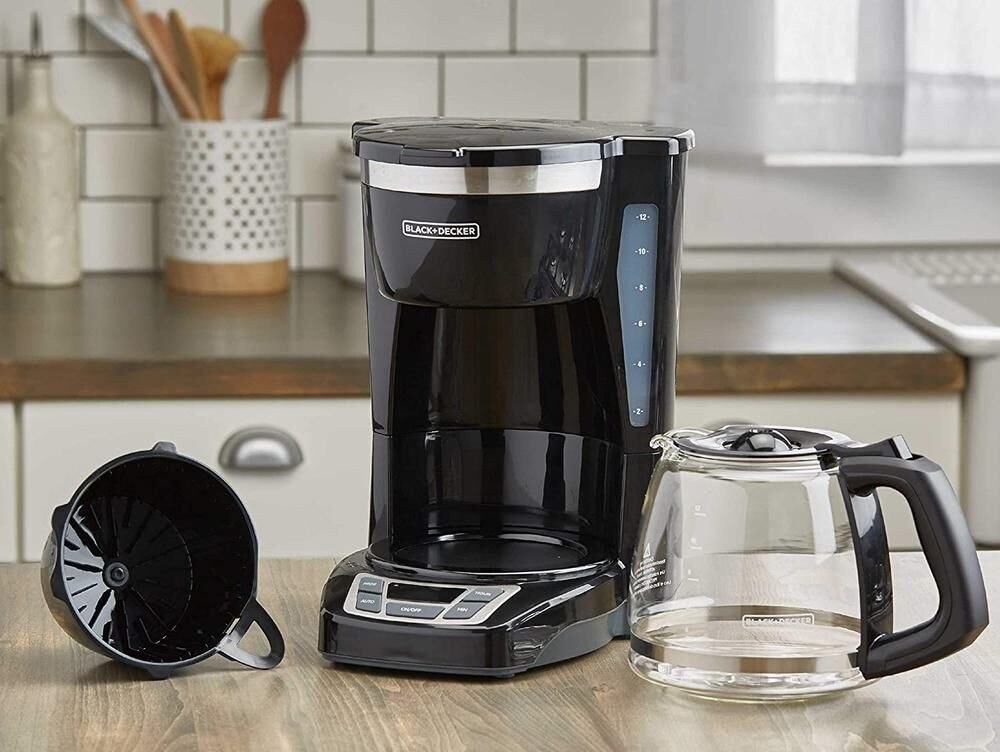
Two-hour automatic shutoff and a removable brew basket, and BLACK+DECKER states plainly that a "cup" here is about 5 ounces — a piece of honesty most brands leave to the fine print
Reasons to avoid
BLACK+DECKER publishes no height, no width and no weight for this machine — its own spec block has the labels and no values — so this guide will not tell you whether it clears your cabinet
The carafe sits on a non-stick warming plate for an hour, not a thermal carafe, so the last two cups are not the same drink as the first
The cheapest way here to have a full pot waiting, and a published two-year warranty is a real thing at this price. The buttons are the underrated part: big, rubberised and legible.
The gap is measurable, and it is the measurements. A brand that prints "Height:" and "Width:" on its own spec block with nothing after them cannot be ranked on fit, so if your clearance is tight, buy the Hamilton Beach, which publishes all three numbers.
Not the right fit if you need to know it fits before it arrives — see the Hamilton Beach FrontFill, which publishes 13.9 by 7.95 by 12.91 inches.
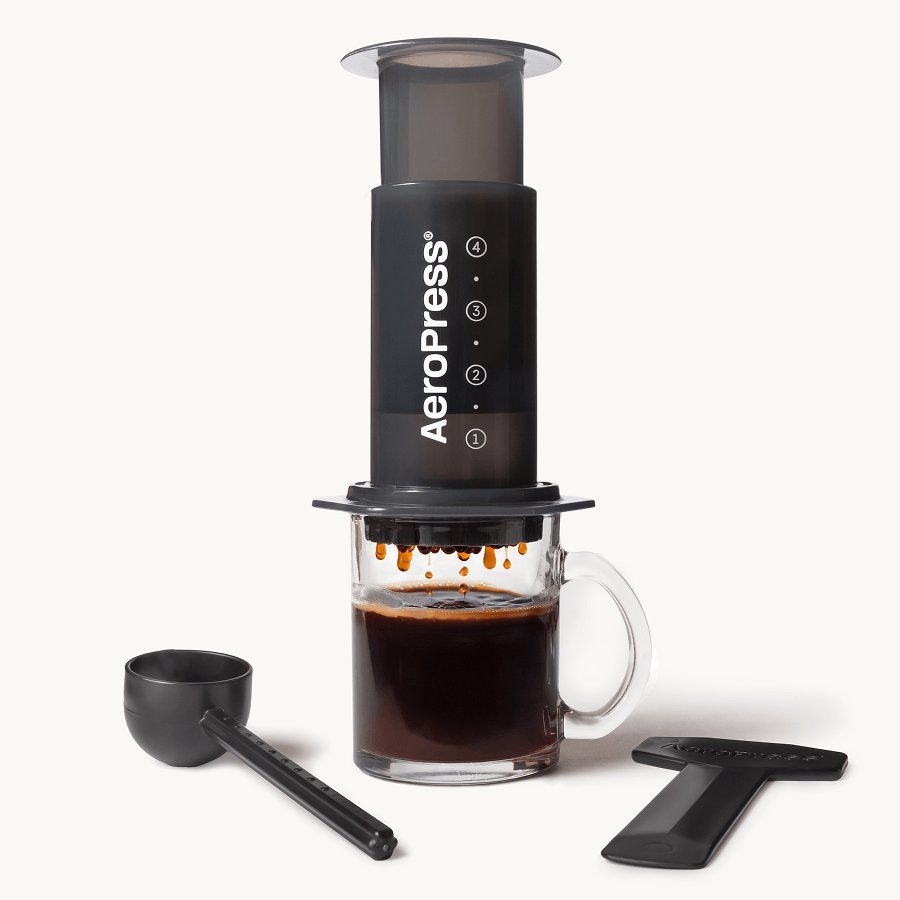
5.25 inches tall and 4.2 inches wide, so it lives in a drawer and takes no counter at all — the only brewer here that occupies zero square inches when you are not using it
AeroPress publishes a brew time under two minutes, and the cleanup is one push of the plunger into a bin
No electricity, no carafe to break, and a one-year warranty published by the manufacturer
Plastic body rather than glass, which is the correct material for something that will be packed in a box when the lease ends
Reasons to avoid
10 ounces is one large mug, so a second person means a second brew
You have to stand there and do it, every time, which is the opposite of a 24-hour timer
If you drink one cup a day, this is the correct purchase and everything above it on price is a worse answer. It makes a cup that is genuinely better than a cheap drip machine makes, because you control the water and the time instead of a thermostat nobody published the settings for.
It also solves the first-apartment problem completely: 5.25 by 4.2 inches, no plug, no carafe. Where it fails is mornings when you want the coffee to already exist. Two minutes of work is not much, but it is two minutes more than none.
Not the right fit if you want coffee made before you wake up — see the Hamilton Beach FrontFill.
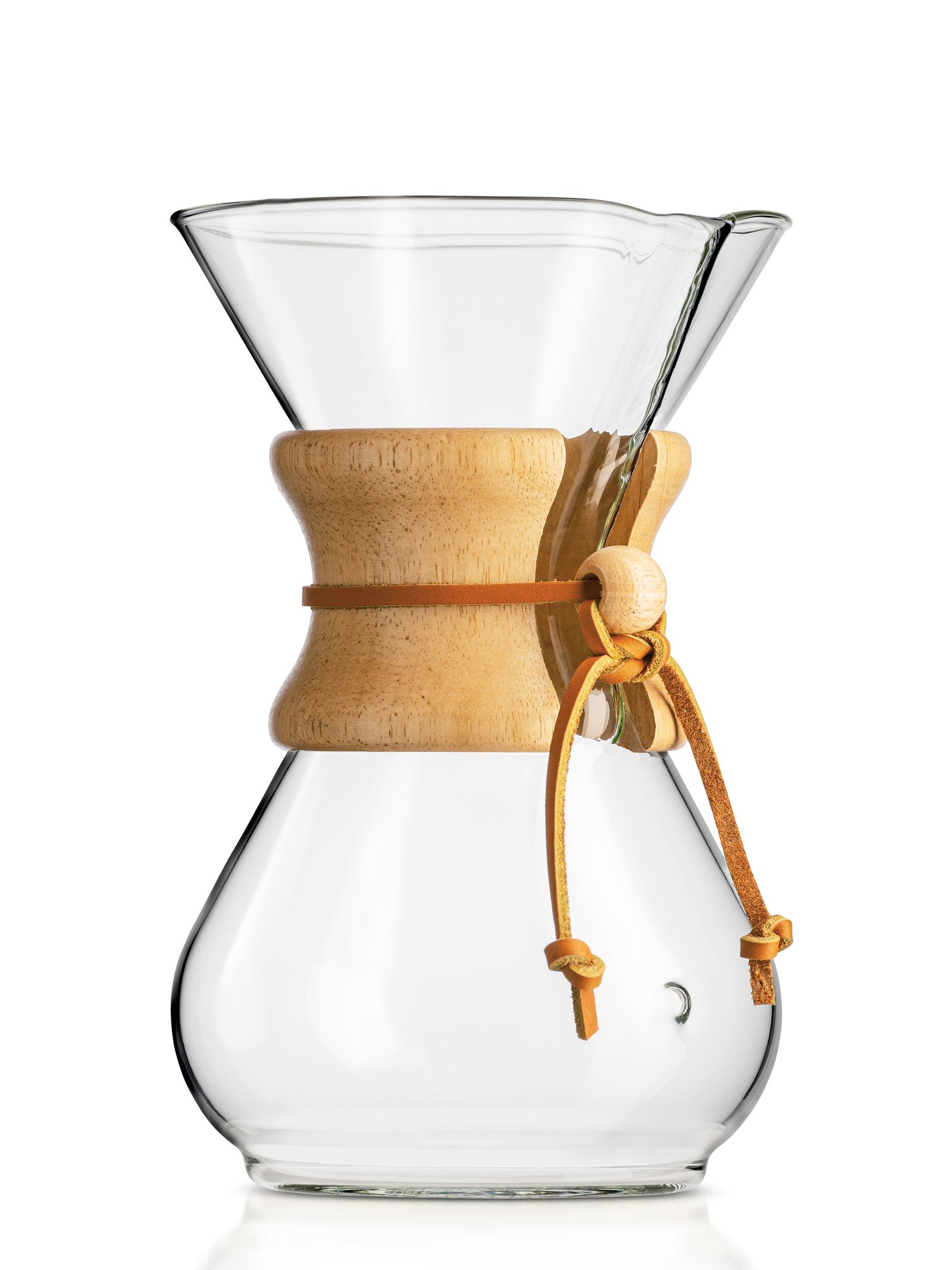
30 ounces of coffee out of an object 8.5 inches tall and 5.125 across, which is a remarkable amount of drink per square inch of counter
It brews and serves in the same vessel, so a setup for two people is one thing to wash rather than three
The bonded filters strip more oils and fines than standard paper, and the result is the cleanest cup on this page
Reasons to avoid
Chemex's filters are thick, proprietary and noticeably more expensive per brew than any other filter here
Glass with a fixed wooden collar means a bottle brush, and it is the one item on this list that a moving box can end
For two coffee drinkers who want something better than a warming plate, this is the most sensible object on the page. You brew straight into the carafe you pour from, it looks like something you would set on a table, and 30 ounces covers two people twice.
It is also the one pick here that requires a kettle you can aim, which is a second purchase — our pour-over kettle guide covers that. Buy it knowing the filters are a running cost, and buy it carefully: Chemex also sells a Glass Handle Series and retail pages mix the two up.
Not the right fit if you want to press a button and walk away — see the Hamilton Beach FrontFill.
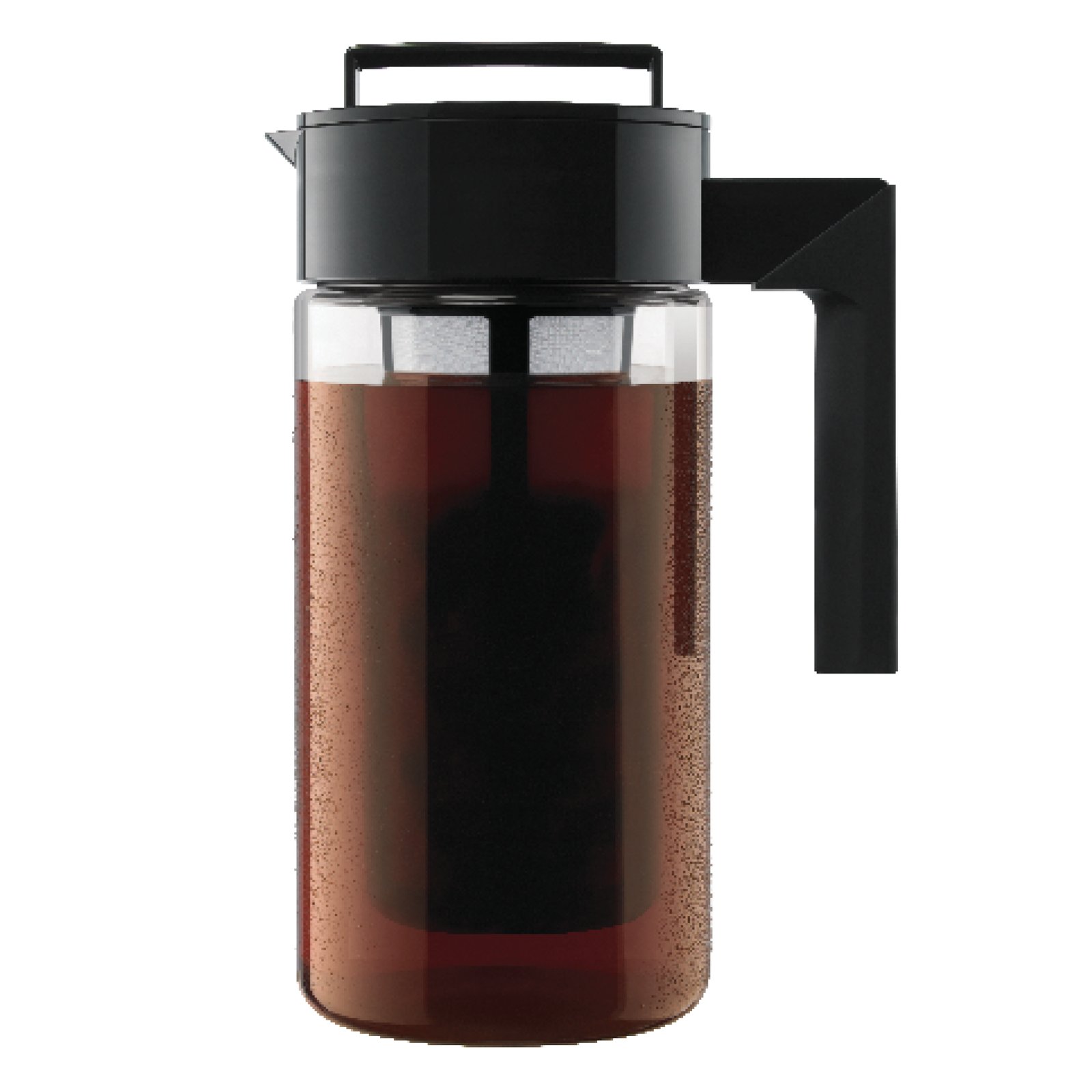
It takes no counter space at all, because it lives in the refrigerator between uses — the only brewer here with a footprint of zero
Eastman Tritan rather than glass, published at 467 g empty, so it survives being dropped in a shared kitchen and survives a move
The lid is airtight and leakproof, which is what lets it lie down on a fridge shelf if it will not stand up in the door
One brew is roughly four iced coffees, made overnight while you are not in the kitchen
Reasons to avoid
Takeya publishes a capacity and a weight and no dimensions at all, so whether it stands in your fridge door is something you will find out on delivery
Cold brew only — there is no hot coffee in this object, and the steep takes 12 to 24 hours, so it is a planning purchase
Nobody puts a cold brew jug on a best-coffee-makers list, and they should. In a first apartment it does something none of the others can: it makes four drinks while the kitchen is empty and then takes up none of it. If you buy iced coffee out in the summer, this pays for itself in about a week.
The Tritan body is the right call over the glass version for a rented kitchen — it is lighter, it does not shatter, and it packs. What Takeya will not tell you is how tall it is, which matters when the plan is a fridge door shelf.
Not the right fit if you drink coffee hot in January — see the AeroPress Original, or pair the two.
We did not brew with these five and there is no lab behind this page. Here is exactly what this ranking is built on, so you can judge it yourself.
Every number in every spec block came from the manufacturer's own product page, each one linked in Sources below — nothing from a retailer retail page, an aggregator or another guide. Where a brand publishes no figure, the table says "Not published" rather than borrowing one. BLACK+DECKER's own specification block has the words "Height:" and "Width:" with no values after them, and that absence is printed here as published.
Heights were compared against 18 inches of counter-to-cabinet clearance, the standard installation KraftMaid publishes, and footprints against the 12-inch depth of a standard wall cabinet. Brew-temperature claims, where a brand makes one, were checked against SCA Standard 310-2021, which specifies 90 to 96 °C. None of the five brands here publishes a brew temperature.
Every Amazon page linked above was fetched and the page title checked against the product named here, because model numbers in this category get reused across colours and generations.
The verdict
Best overall: the Hamilton Beach FrontFill 12 Cup Programmable. It is 7.95 inches wide, it fills from the front so the cabinet above stops mattering, and it is programmable a day ahead. In this price band that combination is not close.
Best for one person: the AeroPress Original at 5.25 inches tall with no plug. Best for two: the Chemex Six Cup Classic, 30 ounces from a 5.125-inch circle of counter. Cheapest full pot: the BLACK+DECKER CM1160B, with a published two-year warranty and no published dimensions. For summer: the Takeya Deluxe Cold Brew, which lives in the fridge and takes no counter at all.
Whichever you buy, measure the gap between your counter and the cabinet above it first. Our five-number measuring guide takes six minutes.
What is the cheapest way to make good coffee in an apartment?
An AeroPress Original and a bag of pre-ground coffee. It is in the cheapest band on this site, 5.25 inches tall, needs no electricity, and beats any drip machine at the same money because you control the water temperature and contact time instead of an unpublished thermostat.
Is a 12-cup coffee maker too big for one person?
Usually, yes — 12 cups is about 60 ounces at the 5-ounce cup BLACK+DECKER publishes, and one person drinks two. Both 12-cup machines here have a 1-to-4-cup setting that changes how water is dispersed over a small bed. If you never expect a guest, the AeroPress is the honest answer.
Do I need a burr grinder to start?
No, but it is the upgrade that changes the cup most — more than moving from a cheap drip machine to a dear one. A blade grinder produces dust and boulders in the same batch; our burr versus blade guide shows what that costs. Coffee maker first, grinder second.
How much counter space does a coffee setup actually need?
The narrowest full-size machine here is 7.95 inches wide. A pour-over setup — Chemex plus a kettle base — needs about 12 inches and no clearance above it. An AeroPress needs none, because it lives in a drawer. Measure the gap between counter and cabinet first.
Will a coffee maker and a microwave trip the breaker?
They can. A 20-ampere circuit at 120 volts carries 2,400 watts and a microwave alone is commonly 1,000 to 1,200. Neither 12-cup machine here publishes a wattage, which is the problem — a typical one draws 900 to 1,100 watts, so a shared circuit is close to the limit. The fix is a different outlet.
Also considered
Keurig K-Mini — It was the obvious pick for a first apartment — 4.5 inches wide — and it has quietly gone. Keurig now sells the K-Mini Mate and Mate Plus, so the machine most guides recommend is not the one you would receive. Pods are also the dearest coffee per cup here.
Melitta 52 oz Pour-Over Coffeemaker with Glass Carafe — A genuinely good cheap brewer and the one we most wanted to include, but every photograph Melitta publishes of it is a photograph of the retail box, and its product page lists no dimensions. We do not run pictures of packaging.
Hamilton Beach FlexBrew Single-Serve (49979) — Brews from grounds or a pod and takes a 14-ounce travel mug, which is a good fit for a commute. Hamilton Beach's own page now marks it no longer available, so it is a machine with no future spare parts.
Bodum Brazil French Press — The default cheap French press, and not one specification could be verified: bodum.com renders its product pages entirely in JavaScript and serves no dimensions, capacity table or product image to a plain request.
Mr. Coffee 12-Cup Programmable — A direct competitor to both drip machines above at the same money. Its manufacturer's pages sit behind a challenge page that returns nothing, so there is no first-party height, footprint or wattage to rank it on.