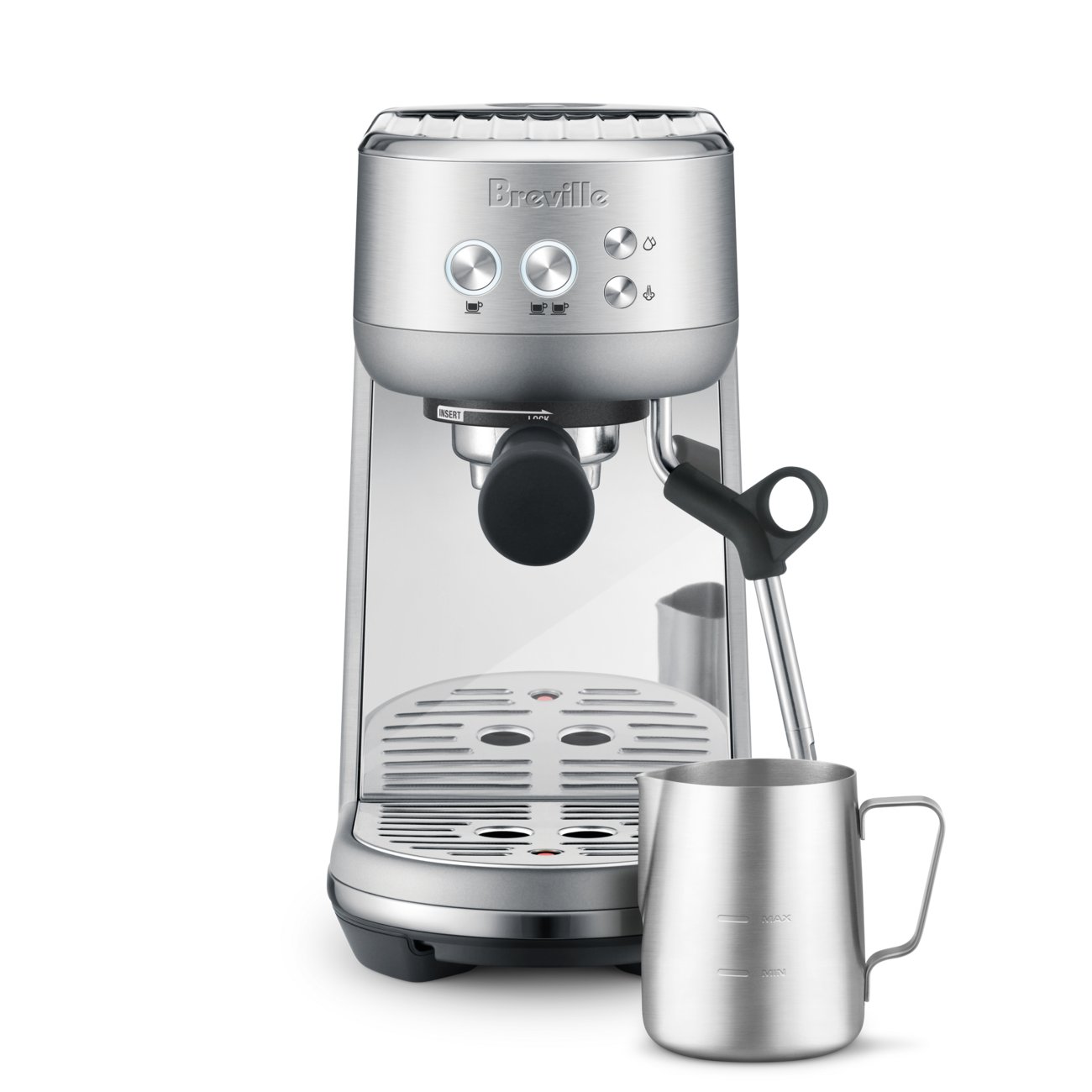
Buy the Breville Bambino: a 54 mm portafilter, published PID temperature control, and a ThermoJet heater Breville rates at three seconds to extraction temperature. Nothing else here removes the morning wait, and the wait is what puts first espresso machines in cupboards.
Two other honest answers. The De'Longhi Stilosa is the cheapest route to a real portafilter and a real steam wand, and the Gaggia Classic Pro is the one you will still be using in five years — the only machine here whose manufacturer publishes brew pressure rather than pump pressure.
Which is the thing every beginner espresso page gets wrong. The "15 bar" or "20 bar" on the box is the pump's maximum against a closed outlet with no coffee in the way; real espresso extracts at around 9 bar. Gaggia publishes both figures — a 15-bar Ulka pump with the relief valve calibrated to 9 bar. Everything here sits in the $ to $$$ bands; the one machine left out on band rather than merit is named at the bottom.
How to shop for a beginner espresso machine
Heat-up time
The spec that decides whether you use the machine on a weekday. Published times here run from 3 seconds to 2 minutes, and one machine has no heater at all.
Pressurized or non-pressurized baskets
A pressurized basket makes drinkable espresso from any grind and hides your mistakes; a single-wall basket demands a real burr grinder and teaches you. Five of these six have no grinder, and espresso is the one brew method where pre-ground coffee will not work.
Portafilter diameter
54 mm and 58 mm have accessories everywhere, 51 mm has fewer, 40 mm is a lever standard. It decides whether you can buy a better basket later.
Footprint and water tank
These machines live out permanently. Published widths here run from 5.7 to 15.9 inches and tanks from a 60 mL brew cylinder to 72 oz.
Best overall
Image: Breville
Breville the Bambino
3-second heat-up, no grinder included
Model
BES450
Pump
15 bar Italian pump
Heat-up
3 seconds (ThermoJet)
Portafilter
54 mm
Water tank
47 fl oz
Dimensions
11.9 × 6.1 × 13.5 in (as published)
Power
1560 W
Reasons to buy
A published three-second heat-up, which is the difference between a machine you use on a Tuesday and one you use on a Sunday
PID temperature control, published, so brew temperature is held rather than drifting through the shot
A 54 mm portafilter, the size with the widest accessory support at this end of the market
Ships with both dual-wall and single-wall baskets, so you can graduate off pressurized baskets without buying anything
1560 W into a thermoblock, which is what gives it usable steam from a machine this small
Reasons to avoid
No grinder, and pre-ground coffee genuinely does not work for espresso, so budget for one
Breville publishes its dimensions as 11.9 by 6.1 by 13.5 inches, and a 6.1-inch depth is not physically plausible here, so the axis labels appear transposed — measure your space generously
Three seconds is the whole argument. Every other electric machine here makes you wait between 40 seconds and two minutes, and that wait is why first espresso machines end up in cupboards. The Bambino removes it, holds temperature with a published PID, and gives you the 54 mm portafilter the accessory market actually supports. I would buy this one — and buy a grinder in the same order, because the steam wand is manual and there is no grinder in the box.
Not the right fit if you want the grinder in the same box — see the note on the Barista Express in Also considered.
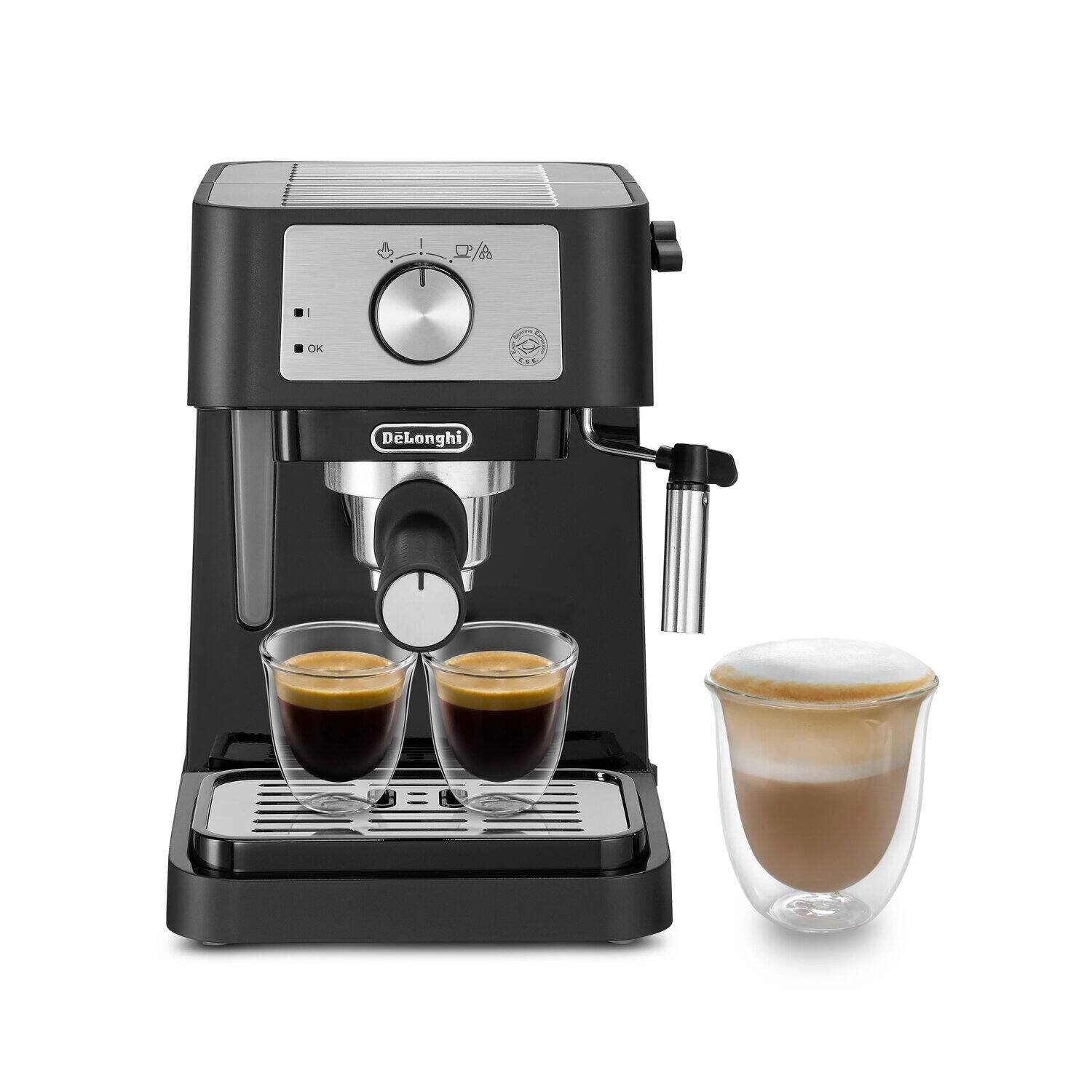
The cheapest way to a real portafilter and a real steam wand rather than a pod machine
A stainless-steel boiler rather than the aluminum thermoblock most machines at this price use
Crema-disk pressurized baskets, so a mediocre grinder still produces something drinkable while you learn
1100 W, the gentlest draw of any electric machine here, which matters on a shared kitchen circuit
Reasons to avoid
Pressurized baskets are a floor and a ceiling — they hide bad grinding, and they stop you ever making genuinely good espresso
If the question is whether home espresso is for you, this answers it cheaply: a portafilter, a pump and a manual steam wand for entry money, with crema-disk baskets that make the coffee drinkable on day one from a supermarket grind. That matters, because a beginner who makes bad espresso for three weeks quits. The ceiling arrives fast, though — 90 seconds of warm-up, a published 4.29-inch maximum cup height, and crema produced mechanically rather than by extraction. An inexpensive experiment, not the machine you keep.
Not the right fit if you already own a burr grinder and want to learn properly — see the Dedica Duo.
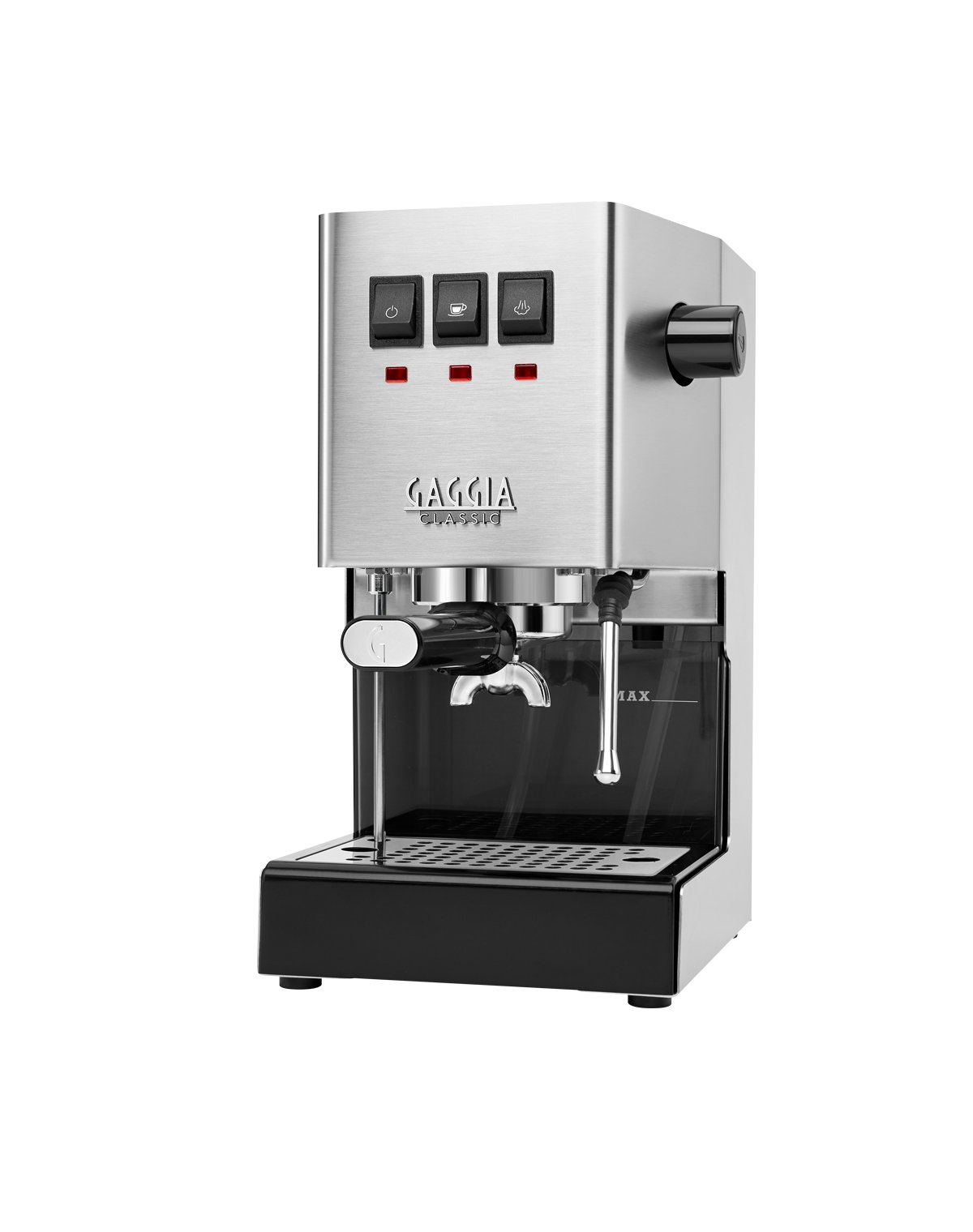
The only machine here whose manufacturer publishes brew pressure — a 15-bar Ulka pump with the relief valve calibrated to 9 bar
A lead-free brass boiler with a fully embedded heater, which holds temperature far better than an aluminum block
A commercial-style rotating steam wand with a two-hole tip and 3.75 inches of usable length, so a real milk pitcher fits
A 72 oz reservoir, the largest here by a wide margin, so you refill it weekly rather than daily
Published basket capacity of 7 to 18 grams, on a machine the enthusiast world has repaired and modified for thirty years
Reasons to avoid
19 pounds and 14.2 inches tall, so it is a permanent fixture that needs headroom to fill the tank
No published heat-up time, portafilter diameter, or stock basket type
One machine, three names — Classic Pro E24, New Gaggia Classic E24 and Classic Evo Pro — which makes buying the right one harder than it should be
Buy this if you suspect you are going to care about this. A brass boiler, a relief-valve calibration the manufacturer will actually tell you about, and a commercial steam wand are not beginner features — they are the features that stop the machine becoming the limit once your technique improves, which is why people run these for fifteen years and rebuild them. It asks more of you in return: no automation, 19 pounds of permanent counter tenant, and a hard requirement for a proper burr grinder, because it will punish an inconsistent grind in a way the pressurized-basket machines will not.
Not the right fit if you want espresso without a learning curve — see the Breville Bambino.
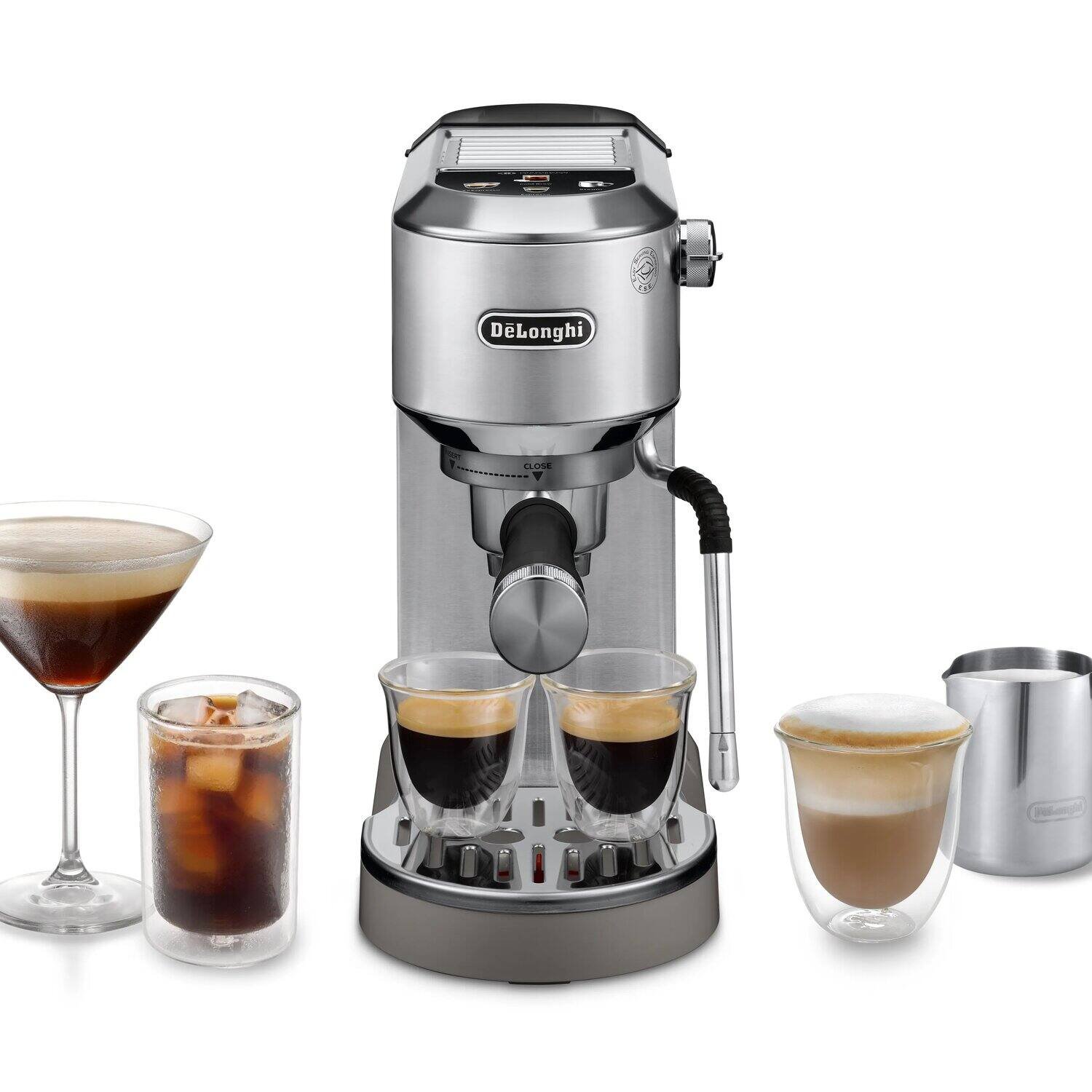
Ships with single-wall, non-pressurized baskets — the real thing, at mid-band money, which almost nothing else at this price does
40 seconds to heat, less than half the Stilosa's wait, from an aluminum and stainless thermoblock
One published dimension is 5.9 inches, the narrowest electric body here, and a published 5.85-inch cup height that a travel mug clears
Reasons to avoid
Without a burr grinder that adjusts espresso-fine, single-wall baskets give you sour, fast-running shots and you will blame the machine
De'Longhi publishes no portafilter diameter, so accessory compatibility cannot be confirmed before buying
The reason to pick this over the cheaper Stilosa is one word: single-wall. The crema comes from extraction rather than from a plastic disc with a hole in it, and getting that at mid-band money in a body just under six inches wide is a genuinely good deal. It comes with a condition attached, though — single-wall baskets need a grinder that goes espresso-fine and adjusts in small steps, and the Baratza Encore ESP is the cheapest thing that reliably does it. Buy this with that grinder, or buy the Stilosa instead.
Not the right fit if you do not yet own an espresso-capable grinder — see the Stilosa.
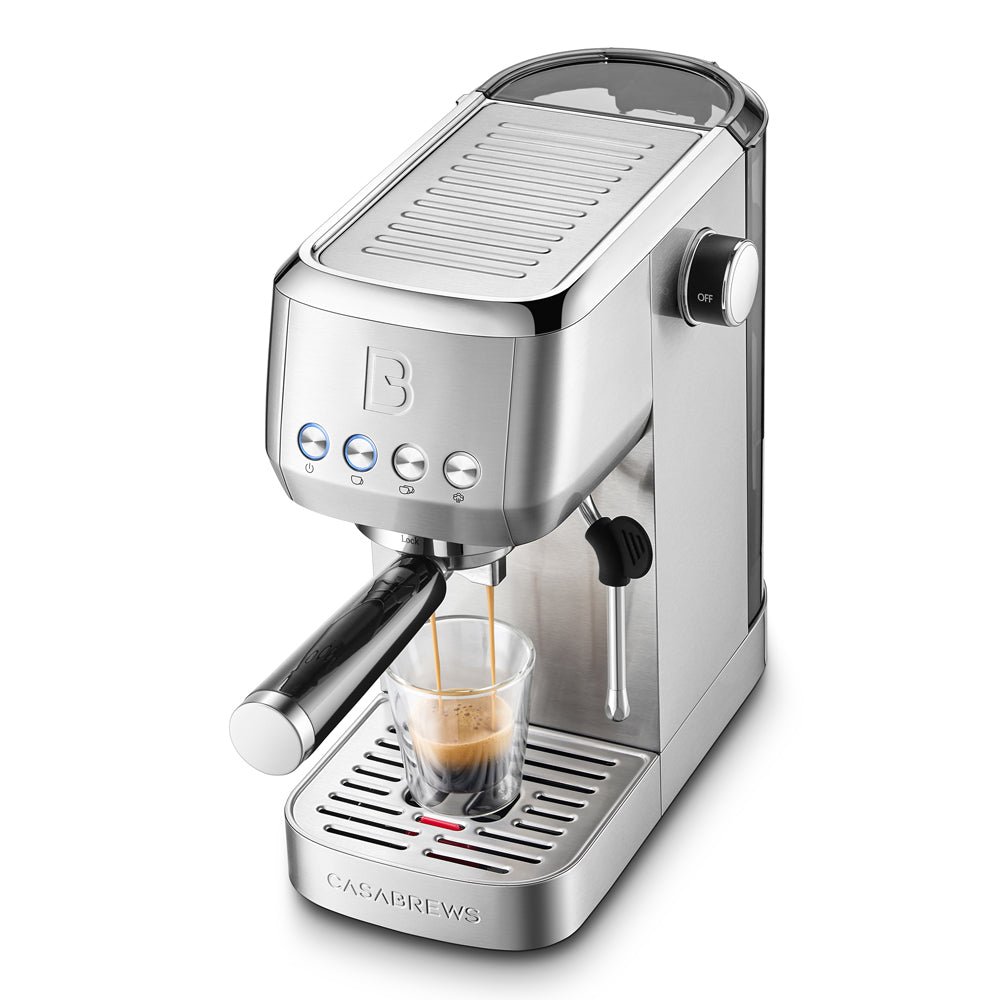
5.7 inches wide, the narrowest machine in this guide, which is the strongest argument for it
PID temperature control on a thermoblock at entry money, which is unusual at this price
A 43.9 oz removable tank, larger than either De'Longhi here, plus a published descaling reminder
Double-wall pressurized baskets and a 51 mm portafilter, so it makes drinkable coffee straight away with a modest grinder
Reasons to avoid
Two minutes to heat, the longest wait here
51 mm portafilters have a much thinner accessory market than 54 mm or 58 mm, so upgrading baskets later is harder
At 5.7 inches wide with PID temperature control, this is a lot of machine for entry money, and it deserves a look if counter space is the binding constraint. The pressurized 51 mm baskets do what pressurized baskets do — coffee that tastes fine from an ordinary grind, which for a first machine is the right compromise. Buy it for the width and the price, not for the 20 on the box, and note that Casabrews runs several near-identical pages for this machine, so check the model code before you order.
Not the right fit if you want a portafilter size with real accessory support — see the Breville Bambino at 54 mm.
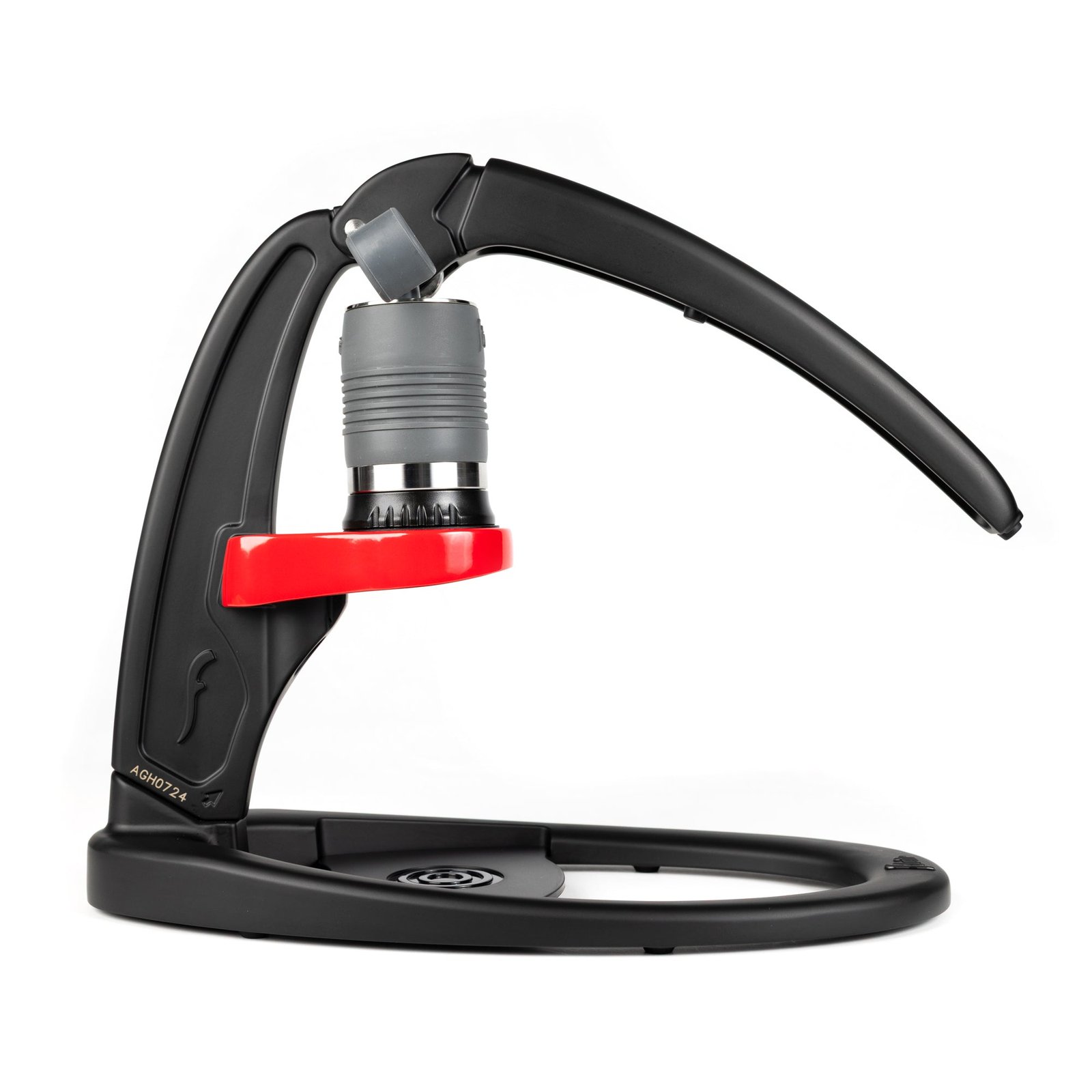
No pump, no boiler and no electricity, so nothing in it can fail electrically
An integrated pressure gauge, which is the fastest way to learn what 9 bar actually feels like
Ships with a bottomless 2-in-1 portafilter, a flow-control portafilter, a 40 mm dispersion screen and a dosing cup, and the 5-pound frame packs into a drawer
Reasons to avoid
No steam wand at all, so milk drinks need a separate frother, and you boil a kettle and pour it in for every single shot
The Flair is the most interesting object in this guide and the one that teaches fastest: with a gauge in front of you and your own arm supplying the force, the relationship between grind, dose and pressure stops being theoretical within about three shots, and the published 12 to 18 gram dose gives a genuine 40 mL double. It carries the strongest disqualifier too. No steam wand means no flat white without buying a frother, and kettle-boiling every shot is friction some people find meditative and others abandon by week three. Know which one you are.
Not the right fit if you drink milk-based coffee — see the Breville Bambino.
Nobody here has pulled shots on all six of these machines, and this guide does not imply otherwise — the ranking is built from published manufacturer specifications. Every figure above came from the maker's own product page (Breville, De'Longhi, Gaggia North America, Casabrews and Flair, all linked in Sources), and where a brand renders no specification table, as both De'Longhi pages do, the numbers come from the product data embedded in that same page.
Basket type was weighted highest, because it decides what grinder you must own: pressurized baskets — De'Longhi's crema disk, Casabrews' double wall — work with mediocre grinding, and the single-wall baskets on the Dedica Duo and the Flair do not. Heat-up times are as published: 3 seconds for the Bambino, 40 for the Dedica Duo, 90 for the Stilosa, 2 minutes for the Casabrews. Gaggia publishes none, and the Flair has no heater.
All six Amazon product pages were fetched and confirmed live on 11 September 2026, with each page title checked against the product named here — which is how the Gaggia's three different names surfaced.
The verdict
Best overall: the Breville Bambino, because a published three-second heat-up and PID temperature control on a 54 mm portafilter is the combination most likely to turn a new machine into a daily habit. Best budget: the De'Longhi Stilosa, whose crema-disk baskets make drinkable espresso from an ordinary grind. Best for learning properly: the Gaggia Classic Pro, brass-boilered, 9-bar calibrated, and repaired rather than replaced. And the Flair Classic if you want to understand espresso rather than just drink it — provided you do not want milk in it.
Whichever you choose, buy the grinder in the same breath; our grinder guide covers the ones that go fine enough. Then check the counter measurements, because a 14.2-inch machine under a 15-inch clearance is a problem you want to find before the box arrives.
Yes, and it is not optional on five of these six. Espresso needs a grind fine enough to build resistance and adjustable in very small steps. Only the pressurized-basket machines tolerate a mediocre grind, and even they are limited by it.
Is a 20 bar pump better than a 15 bar pump?
No. Both are the pump's maximum against a closed outlet with no coffee in the way. Espresso extracts at around 9 bar once there is a puck and a relief valve in the circuit, and Gaggia is the only manufacturer here that publishes its 9-bar calibration.
What is the difference between pressurized and non-pressurized baskets?
A pressurized basket has a restrictor that creates back-pressure mechanically, so it makes crema from almost any grind. A single-wall basket makes the coffee provide the resistance, which needs a proper grinder. The Dedica Duo and Flair use single-wall, the Stilosa and Casabrews pressurized, and the Bambino ships with both.
How much counter space does a home espresso machine need?
Less than you think, if you shop on width: the Casabrews is 5.7 inches wide and the Dedica Duo 5.9. The Gaggia is 8 inches wide but 14.2 inches tall, which is the one to check against your cabinet clearance.
Can I make a latte on all of these?
On five of them. Every electric machine here has a manual steam wand, so you texture the milk yourself. The Flair Classic has none and needs a separate frother.
Also considered
Breville the Barista Express (BES870XL) — Excluded on band rather than merit: at $$$$ it sits above this guide's range, and it is the one machine that solves the grinder problem in the box, with a built-in conical burr grinder, 16 grind settings and a 67 oz tank.
Philips Series 3200 LatteGo (EP3241/54) — Philips' US product page loads its specification tab client-side, so the served page publishes no dimensions, tank size, pressure or wattage, and we do not print numbers we cannot source from the manufacturer.
Nespresso Vertuo and other pod machines — A pod machine is a fine appliance with no portafilter, no grind decision and no extraction variable you control, so nothing in this guide is competing with it.
De'Longhi Dedica Arte (EC885) — De'Longhi's US site returns no product page for it — the model code and the product name both come back empty — so the Dedica Duo took the slot.
Flair NEO Flex and Flair 58 — Flair's own NEO Flex page returns a 404 and neither model appears on Amazon US, so the Flair Classic took the slot and is the better lever machine for a beginner anyway.