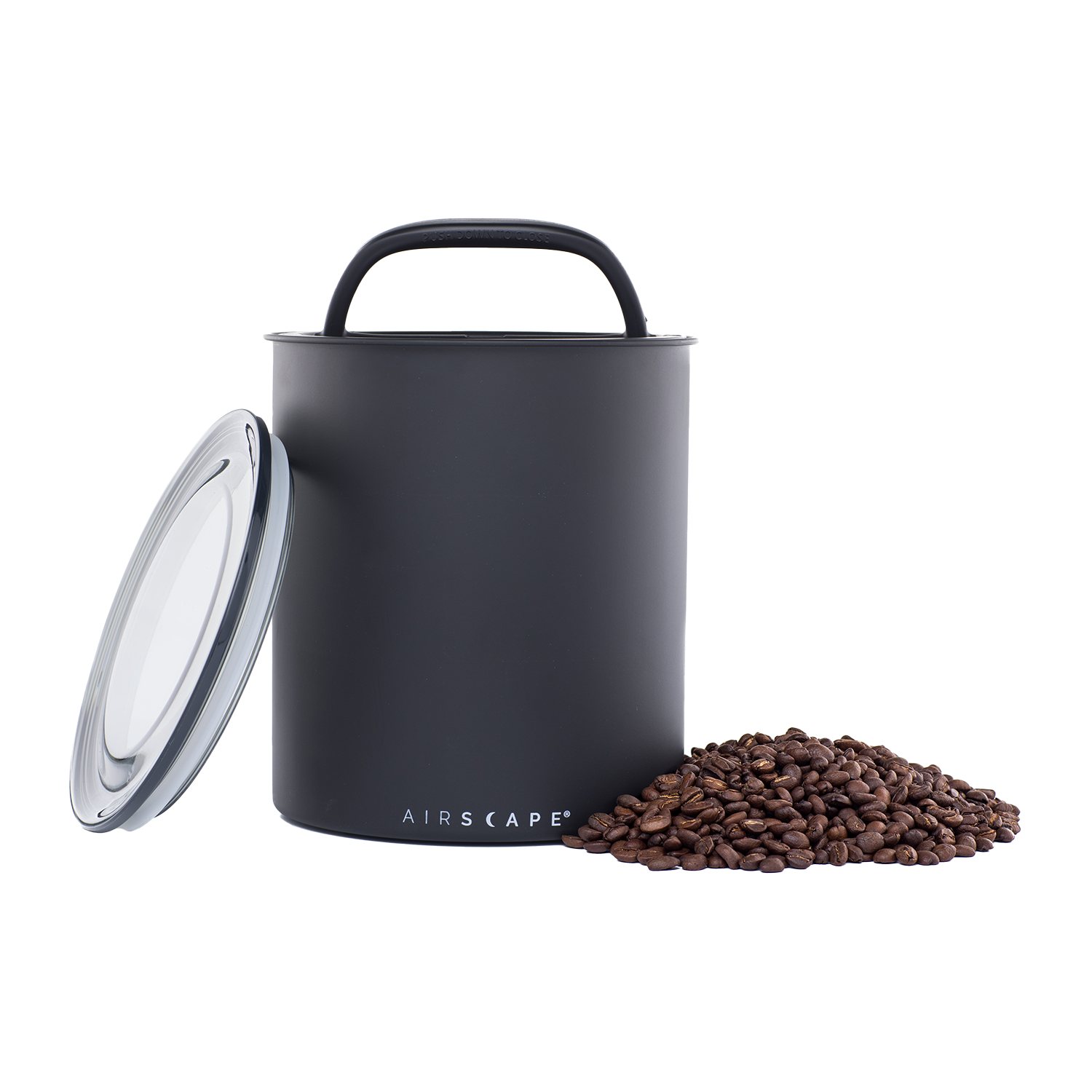
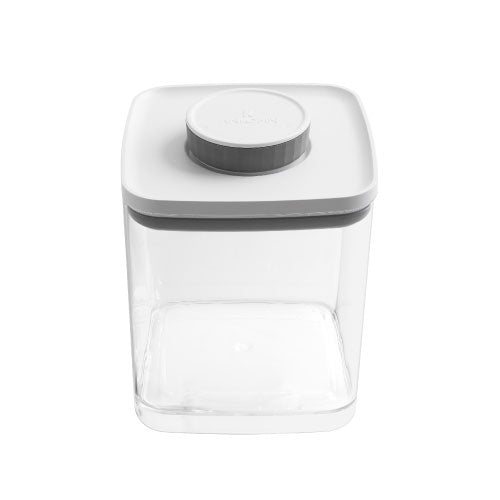
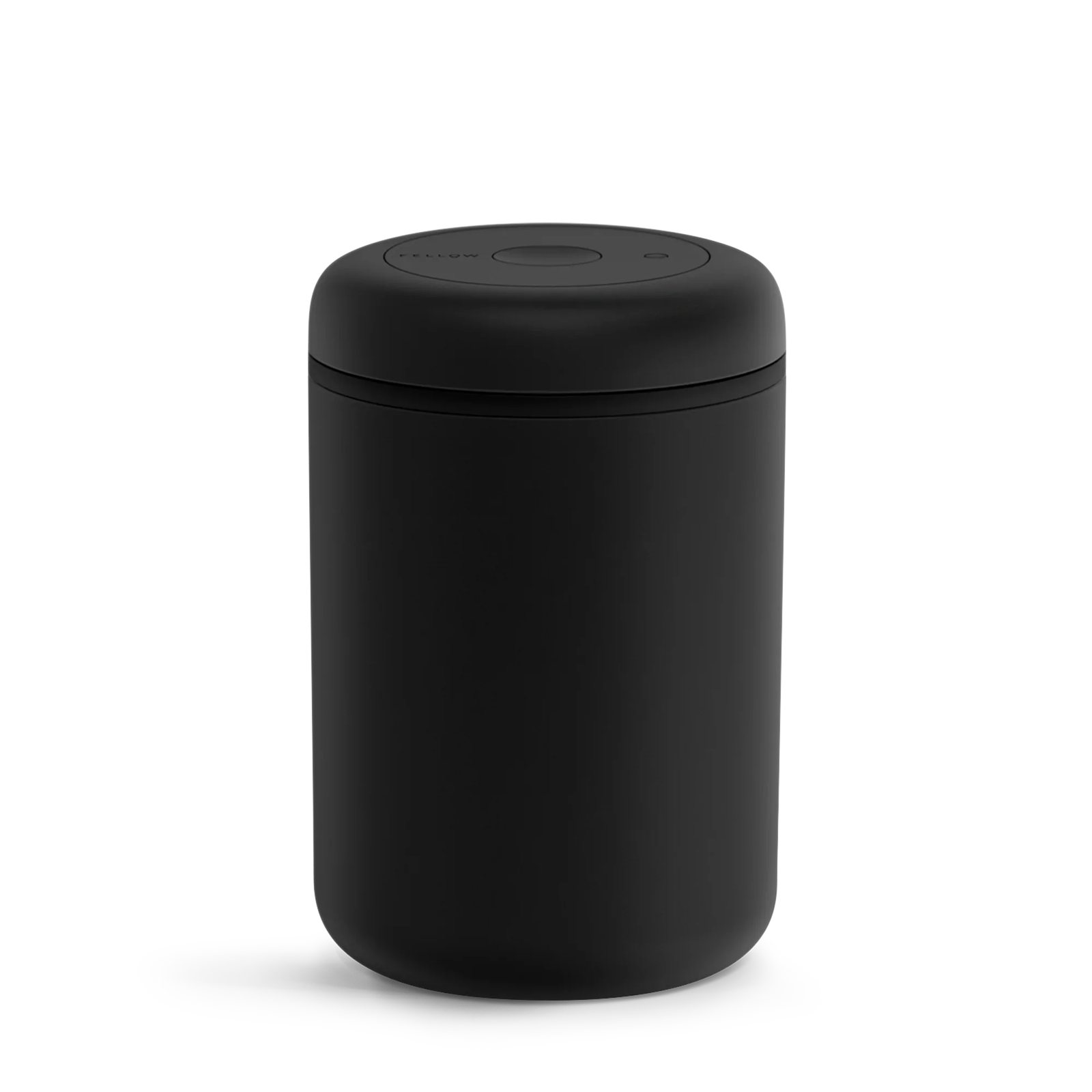
Buy the Fellow Atmos in 1.2 liters. Every canister in this category publishes a capacity, and the capacities do not compare: Fellow prints liters, Planetary Design prints pounds of beans, Hario prints grams and milliliters, and Ankomn prints only liters. Fellow is the one brand here that closes the loop for you — its 1.2 liter canister "holds up to 16 oz of light/medium roasts", and it says in the same sentence that a dark roast will not fit a full pound. Dark beans are bigger for the same weight, so the same jar holds less of them. Nobody else admits that.
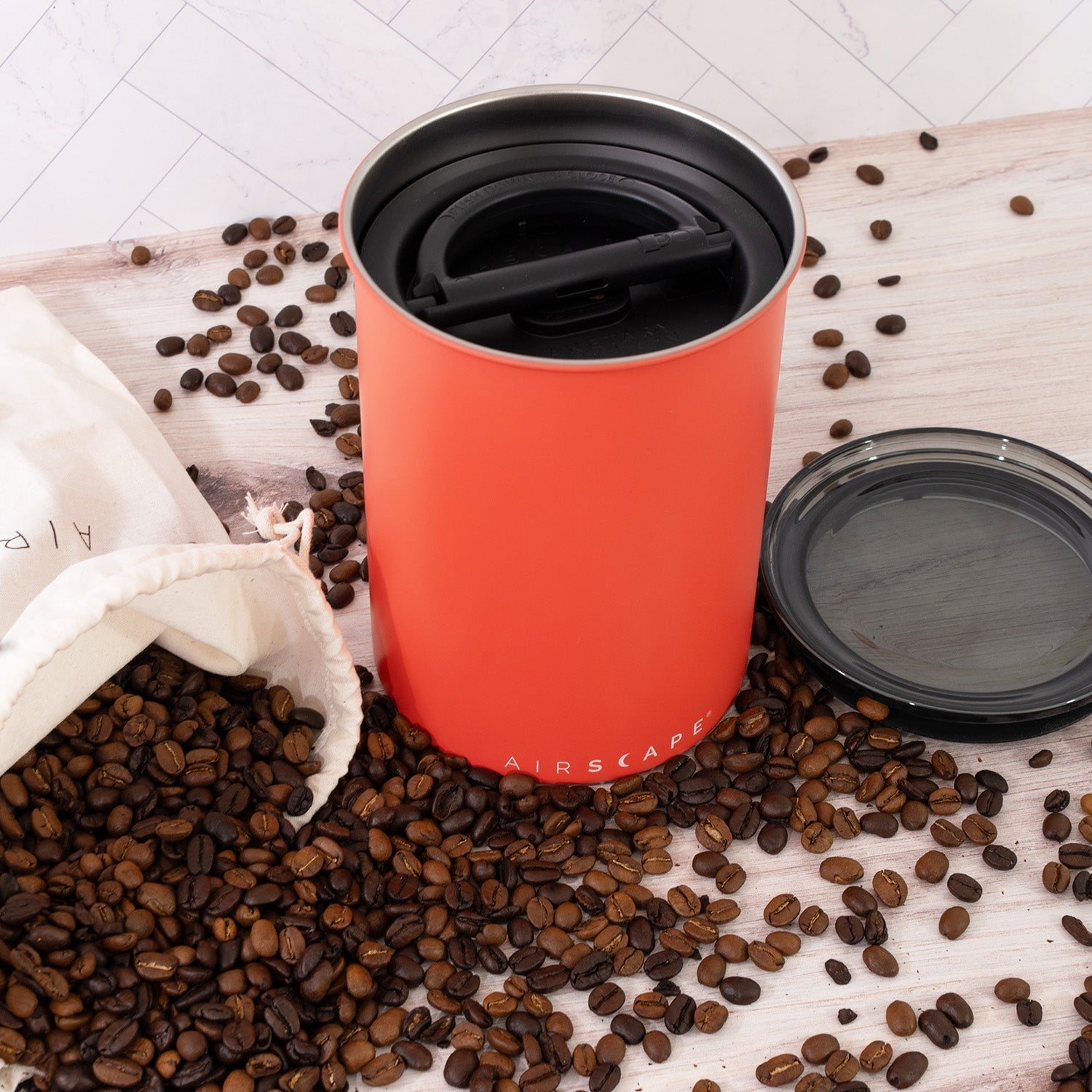
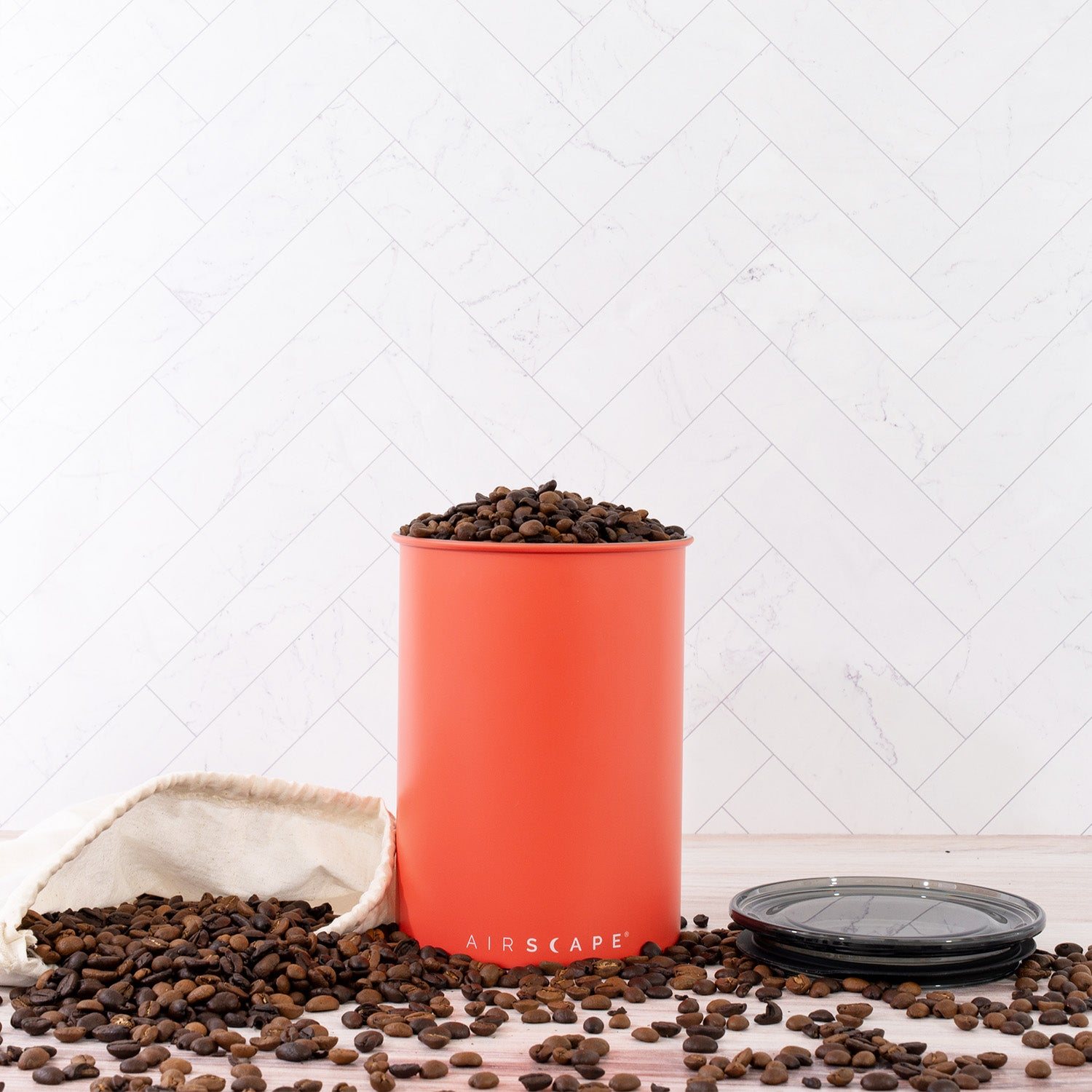
If you want steel and a lid that pushes air out mechanically rather than pulling a vacuum, the Airscape Classic in the one-pound size is the one. If you buy beans by the kilo, the Airscape Kilo takes up to 2.5 lb.
One thing worth being clear about before the picks: a canister slows staling, it does not stop it. The canister is for whole beans, and the real freshness upgrade is buying less coffee more often.
How to shop for a coffee canister
A capacity you can compare to a bag
Coffee is sold in pounds and 250 g bags; canisters are sold in liters. Fellow and Planetary Design publish a bean weight, Hario publishes a volume and a gram figure, Ankomn publishes liters only. A brand that will not say how many bags fit has left the useful number off the box.
How the air actually leaves
Three mechanisms here. Airscape's inner plunger pushes air out through a two-way valve and locks it out. Fellow's and Ankomn's lids pull a partial vacuum. Hario's is a plain silicone gasket that seals but removes nothing — not the same feature under different names.
Whether you have to maintain it
A vacuum leaks. Ankomn tells you to turn the lid every four or five days; Fellow rates its seal at about a week. A plunger lid needs no maintenance because it removes the air once, when you press it down.
Light, and whether you can see in
Light stales coffee. Glass and clear plastic let you see the level and let light at the beans; painted steel does neither. Three picks here are opaque and three see-through — a trade rather than a ranking.
The body, and what happens in a dishwasher
Ankomn publishes a dishwasher-safe body with a hand-wash lid and a 100,000-turn warranty on the mechanism; Fellow's steel canisters are hand wash. A canister that cannot be washed properly will taste of last month's beans.
Best overall
Image: Fellow
Fellow Atmos Vacuum Canister 1.2 L
The only honest capacity on the page
Model
1168 · 1.2 L
Holds
16 oz light-medium beans
Seal
Twist vacuum
Body
18/8 stainless or glass
Reasons to buy
Fellow publishes a bean weight for every size — 6 oz in the 0.4 L, 11 oz in the 0.7 L, 16 oz in the 1.2 L — so you can match the canister to the bag you actually buy
It then says a dark roast will not fit a full pound in the 1.2 L, which is the single most useful sentence any brand on this page has written
Twist the lid and it pulls air out of the chamber; Fellow rates the seal at about a week between brews, unopened
Sold in matte steel or clear glass at the same price, so the see-through question is a choice rather than a price tier
The manual and the electric versions are both current, so a lid that twists itself is available without changing canister
Reasons to avoid
A vacuum lid is a mechanism, and mechanisms fail in a way that a plain gasket does not
The steel version hides how much is left, and the glass version lets light at the beans — there is no version that solves both
More money than the Ankomn vacuum canister of the same 1.2 liter volume
This wins on disclosure. Liters are a useless unit for coffee and every brand here knows it; Fellow is the one that converts for you and then tells you when the conversion breaks.
The canister itself is good: a real vacuum rather than a gasket, a week of seal life, and a choice of steel or glass at one price. If you buy one-pound bags of a light or medium roast, the 1.2 L is exactly the right size, and Fellow has told you so in advance.
Not the right fit if you want air removed without a mechanism — see the Airscape Classic.
The patented inner plunger is pressed down onto the beans and forces the air out through a two-way valve, so the air is gone rather than thinned — and it stays gone with no lid-turning schedule
The same valve lets fresh beans release their carbon dioxide outward, which is the thing a hard vacuum seal fights against in the first week after roasting
Restaurant-grade stainless with a non-slip base and a stackable body
Planetary Design publishes the bean weight in pounds — half a pound and one pound — which is how coffee is actually sold in the US
A clear inner lid, so you can see the level through the plunger even though the body is opaque
Reasons to avoid
Planetary Design publishes no dimensions at all for the canister, so shelf clearance is a guess until it arrives
The plunger has to be pushed down again after every scoop, which is a small habit rather than an automatic seal
The Airscape is the mechanically honest one. A vacuum lid removes some of the air and then slowly loses the argument to physics; a plunger removes it, and the valve lets the coffee's own gas out. It is the most expensive way here to store one pound of beans, and what you buy is the absence of maintenance.
Not the right fit if you want to see the beans through the wall — see the Ankomn Turn-N-Seal.
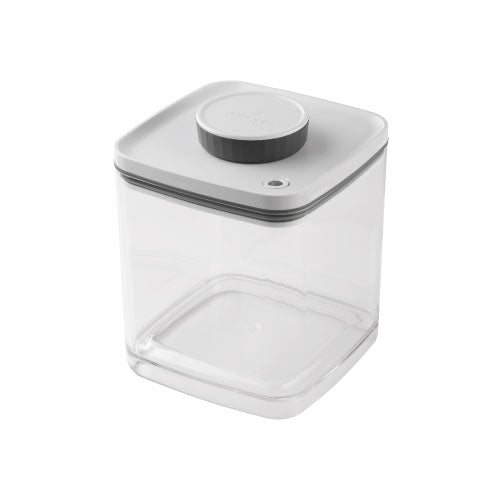
A genuine vacuum for less than the Fellow, from a lid Ankomn warrants for 100,000 turns
Ankomn publishes the materials properly — BPA-free recyclable polycarbonate with a medical-grade, oxidation-resistant silicone seal — which most brands here do not
Dishwasher-safe body with a hand-wash lid, and a modular stacking shape, so a shelf of them takes no more room than one
Sold in five sizes from 0.3 to 2.4 liters on one lid system, so coffee, tea and sugar can share it
Reasons to avoid
Ankomn tells you to turn the lid every four or five days to maintain the vacuum, which is the only canister here with a homework assignment
Capacity is published in liters and nowhere in grams or pounds of beans, so you cannot tell how many bags fit without pouring one in
Clear plastic lets light at the beans, and the coffee on the shelf is the coffee you are trying to protect
The value vacuum. Same job as the Fellow for less, better documented on materials than anything else here, and the 100,000-turn warranty says something real about the part most likely to fail. The costs are the maintenance schedule and the units.
Not the right fit if you will forget to turn it — see the Airscape Classic.
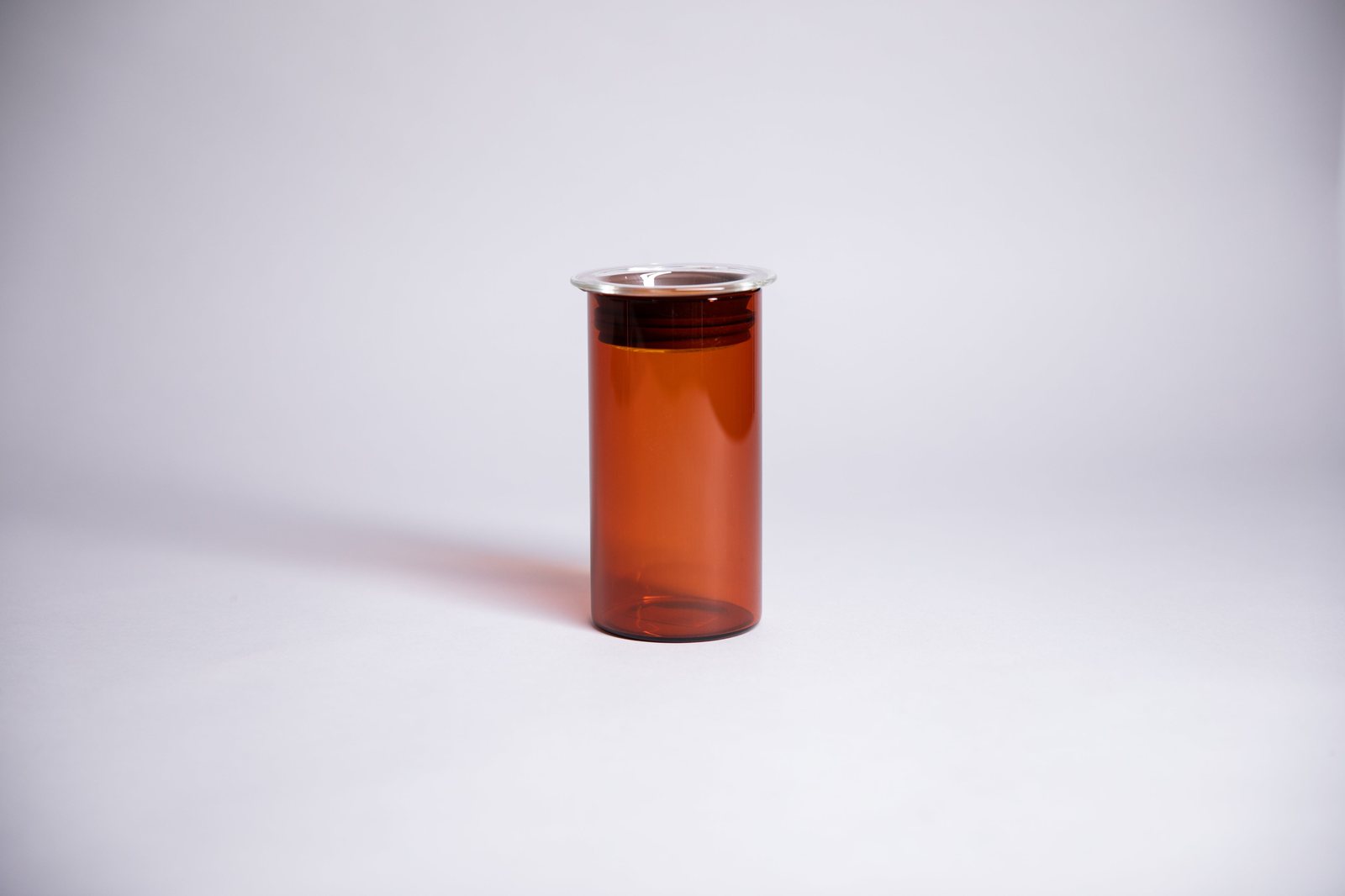
Hario publishes the capacity twice — 400 mL practical volume and 100 g of coffee beans — and then publishes the outside as well, 80 mm wide by 143 mm tall with a 70 mm diameter
Heatproof glass with a glass lid, so there is no plastic touching the beans and nothing to hold an odour between roasts
A silicone packing ring rather than a mechanism, which means nothing to maintain, nothing to warrant and nothing to break
The cheapest way on this page to store the 100 g of beans you are actually working through this week
Reasons to avoid
A gasket seals air in; it does not take any out, so this is the least effective preservation on the page and Hario does not pretend otherwise
100 g is a quarter of the Fellow's capacity, so a one-pound bag needs four of them
Glass on a shelf, in amber or grey, both of which pass more light than painted steel
The right answer to a different question. If you buy 250 g bags and finish them in a fortnight, air removal solves a problem you do not have, and a jar you can see into is more pleasant every morning.
It is also the only canister here whose exact size you know before it arrives: 80 by 143 millimeters fits a shelf, and "1.2 liters" tells you nothing about one.
Not the right fit if you buy a pound at a time — see the Fellow Atmos 1.2 L.
2.5 lb of whole beans in one container, which is five of the Fellow's capacity and the only pick here sized for a bulk or subscription bag
The same patented plunger lid as the Classic, so the air is pushed out mechanically and the coffee's own gas can still escape
Galvanized steel with a food-safe matte finish, which is a heavier build than the painted Classic
Planetary Design sells the inner plunger lid and the top lid as separate spare parts, so a cracked lid is not a new canister
Reasons to avoid
A 2.5 lb canister of coffee is months of drinking for one person, and months is longer than any canister can keep beans tasting fresh
No published dimensions here either, and this is the largest object on the page
The most expensive canister on this page
The right canister if you buy in bulk — a five-pound sack split between two of these, or a kilo subscription bag. For everyone else it is the wrong shape of solution: storing more coffee better is not the same as drinking fresher coffee.
Not the right fit if you buy one bag at a time — see the Airscape Classic.
The same 1.2 liter body and the same stacking system as the Turn-N-Seal for substantially less, because the lid seals rather than pulling a vacuum
No maintenance schedule — an airtight lid stays shut, so there is nothing to turn every four days
The cheapest 1.2 liter container on this page by a clear margin
The same stacking footprint as the vacuum version, so the two mix on one shelf
Reasons to avoid
Airtight is not the same as air-free; the oxygen already in the jar when you close it stays there with the beans
Ankomn publishes liters and no bean weight here either
Clear plastic again, so light is not being kept off the coffee
The honest budget answer. If the alternative is a folded bag and a clip, an airtight container is a real improvement and this one costs very little. It is here as the floor rather than as a recommendation — the vacuum version of the same container is the better buy if the coffee sits for more than a week.
Not the right fit if you want the air taken out — see the Ankomn Turn-N-Seal.
Nobody ran a staling trial for this page, and there is no lab behind it. Here is what the ranking is built on.
Every capacity, material and seal description came from the manufacturer's own product page, linked in Sources. Where a brand publishes liters and no bean weight, the table says so rather than converting — the conversion is exactly the thing Fellow demonstrates does not hold.
Fellow's roast caveat, Ankomn's four-to-five-day turning instruction and Airscape's two-way valve are all quoted from the brands' own pages rather than from reviews.
Every Amazon page was opened and its title matched against the exact model and size named here; four of the six picks ship with a brand-store button because that is where the verified page was.
The verdict
Best overall: the Fellow Atmos 1.2 L, because it publishes a bean weight for every size and then tells you when that weight stops being true. A vacuum lid, a week of seal life, and a choice of steel or glass at one price.
Best mechanism: the Airscape Classic, whose plunger pushes the air out once. Best vacuum for the money: the Ankomn Turn-N-Seal 1.2 L, if you will turn the lid twice a week. Best small: the Hario Colors Glass Canister, the only one with published outside dimensions. Bulk: the Airscape Kilo at 2.5 lb. Cheapest: the Ankomn Everlock.
And the thing no canister fixes: coffee has a roast date, and the date is doing more work than the jar. Buy the size you drink in a fortnight, keep it out of the light, and grind it the morning you use it.
Two to four weeks from the roast date, and that clock runs whatever you store them in. A canister slows the decline; it does not restart it.
Should I keep coffee in the freezer instead?
Only unopened, in one-use portions, and never with beans you open and close repeatedly — each cycle condenses moisture onto cold beans. None of the canisters here is designed for freezer use.
Does a vacuum canister really do anything?
It removes some of the oxygen and slows oxidation. It is not a hard vacuum: Ankomn asks you to turn the lid every four or five days to keep it, and Fellow rates its seal at around a week unopened. Airscape's plunger is the one mechanism here that does not decay, because it pushes the air out once and locks the lid down on what is left.
Why does 1.2 liters not hold a pound of coffee?
Because roast level changes bean density. Darker roasts have lost more moisture and expanded, so a pound of dark beans takes up more space than a pound of light ones. Fellow publishes this directly — 16 oz of light or medium roast in the 1.2 L, and not a full pound of dark.
Can I store ground coffee in these?
You can, and it will still be stale quickly. Ground coffee exposes many times more surface to air than whole beans and loses its aromatics in days rather than weeks. If you are grinding fresh, a canister is for the beans — our grinder guide covers the other half.
Also considered
Coffee Gator canisters — One of the most widely sold canisters in the category, with a date-tracker dial in the lid. The brand's own domain does not answer an automated request at all from this network, so there is no first-party capacity, material or seal specification to read or to link.
OXO Good Grips POP containers — A push-button airtight lid, a huge range of sizes and a deserved reputation. OXO's site returns a 403 to every automated request, so nothing on it can be quoted or cited here. The mechanism is also airtight rather than air-removing, which puts it in the Everlock's category rather than the Atmos's.
Any canister with a one-way degassing valve only — A one-way valve is what a coffee bag has. It lets carbon dioxide out and nothing in, which is the right design for a sealed bag you have not opened yet and does nothing for a jar you open every morning. Airscape's two-way valve is a different part solving a different problem.
Mason jars with a hand pump — Cheap and effective while the seal holds. The failure is the pump — a separate object that lives in a drawer, gets lost, and is needed every time the jar is opened. Every pick here builds the mechanism into the lid.
The bag the coffee came in — Not a joke. A one-way valve bag with a tight roll and a clip beats a leaky jar, and for a 250 g bag finished in ten days it is fine. It is here because it is what every canister has to beat, and three of them do not beat it by much.