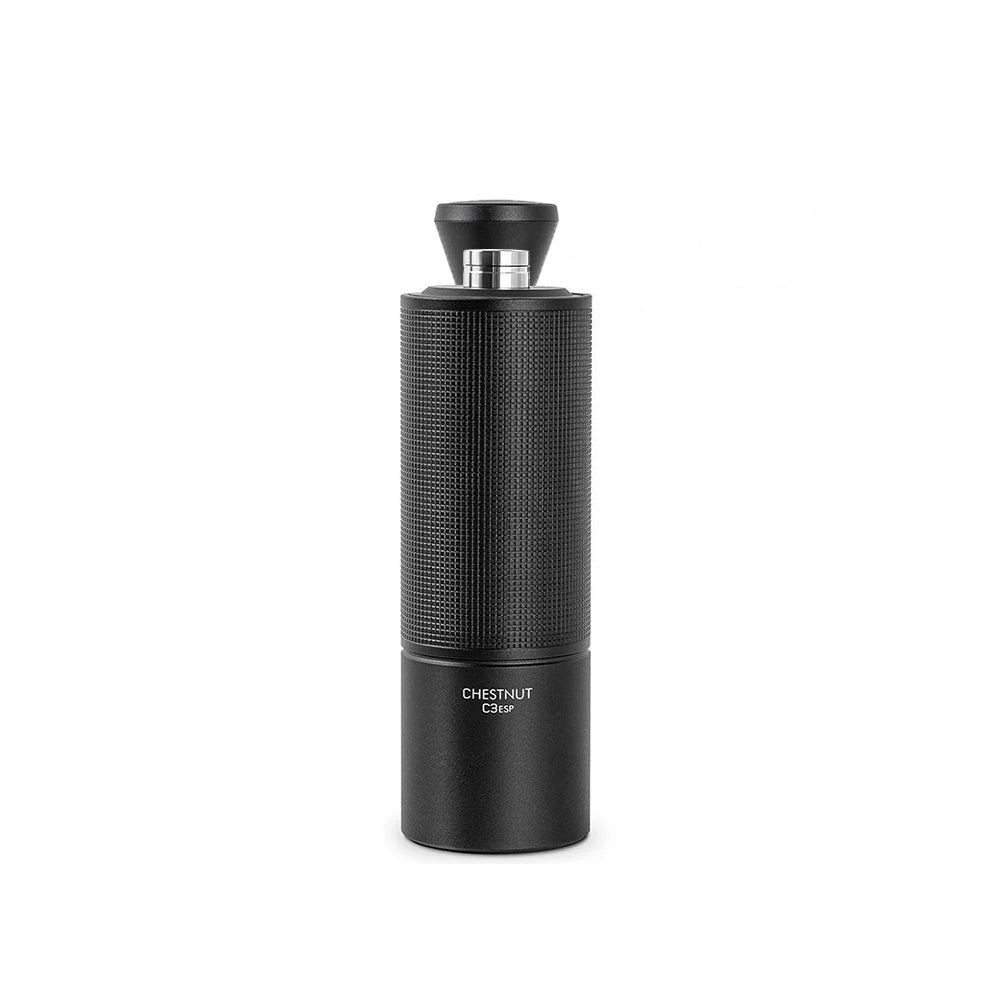
Buy the Baratza Encore: 40 mm conical steel burrs, 40 stepped settings you can write down and return to, and a grind rate Baratza publishes at 1.3 to 2.2 grams per second. If you brew pour-over and nothing else, the Fellow Ode and its 64 mm flat burrs grind it better; if you want to spend the least, the Timemore Chestnut C3 ESP adjusts in 0.0233 mm clicks and costs less than every electric grinder here.
The grinder decides more about a cup of drip or pour-over than the brewer does, and it is the piece almost everyone buys last. Every pick here is a burr grinder on purpose; if you are still deciding whether that matters, read burr vs blade first.
How to shop for a coffee grinder
Burr type and diameter
Bigger burrs cut more beans per rotation at lower speed — less heat, a narrower spread of particle sizes. The published range runs from a 38 mm hand burr to 64 mm flats, and three brands decline to publish a diameter at all.
Settings you can return to
Stepped settings are repeatable — you can go back to 18 tomorrow. Stepless is finer, but you are relying on a mark you made yourself. For drip and pour-over, repeatable beats fine.
Hopper or single dose, and cleaning
A hopper holds a week of beans and stales them; a single-dose bin means you weigh what you need. Quick-release burrs and removable bins are what make a grinder cleanable in practice.
Height, because of the cabinet
A standard cabinet leaves about 18 inches of clearance and the hopper lid still has to open under it. The Breville is 15.3 inches tall before that lid moves.
Best overall
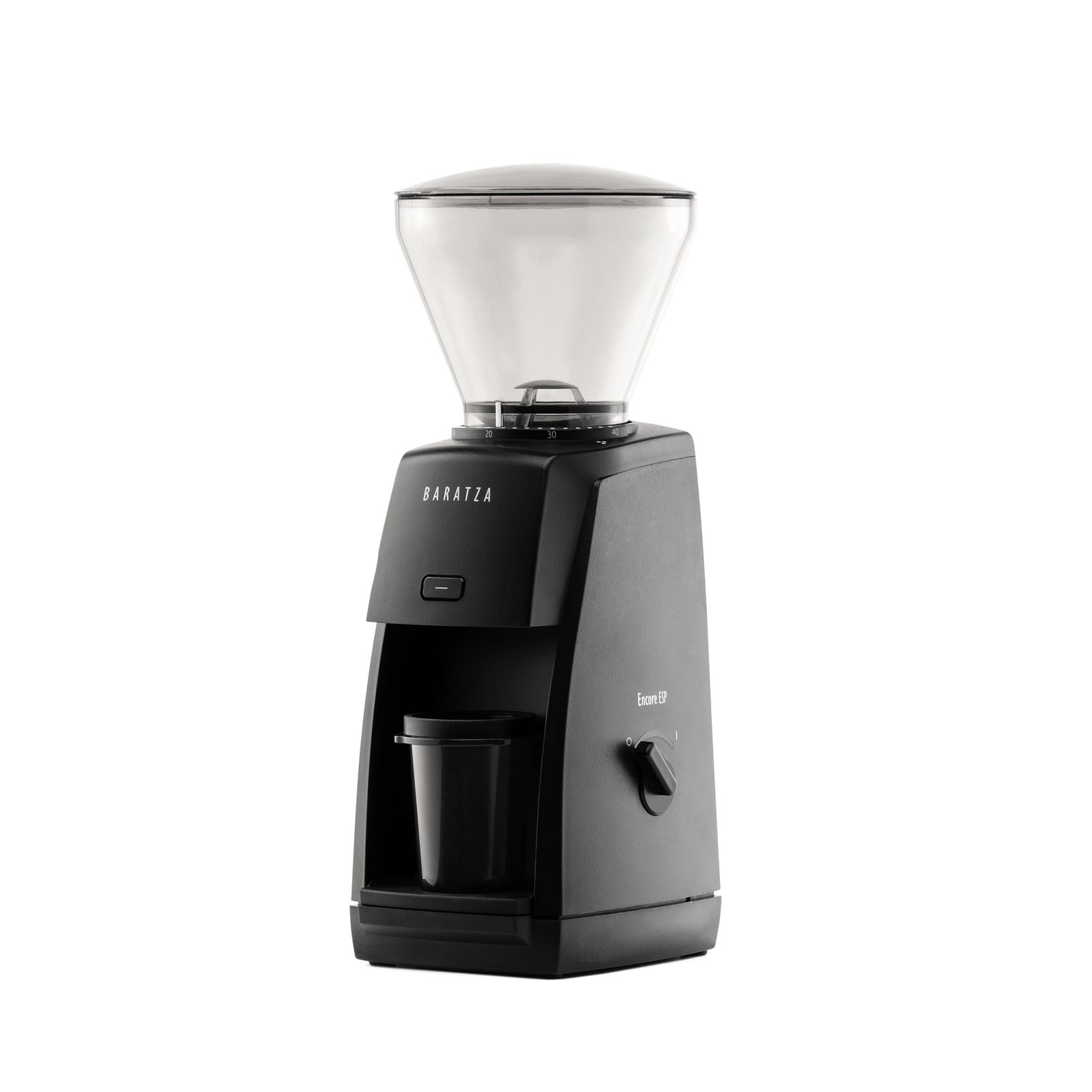
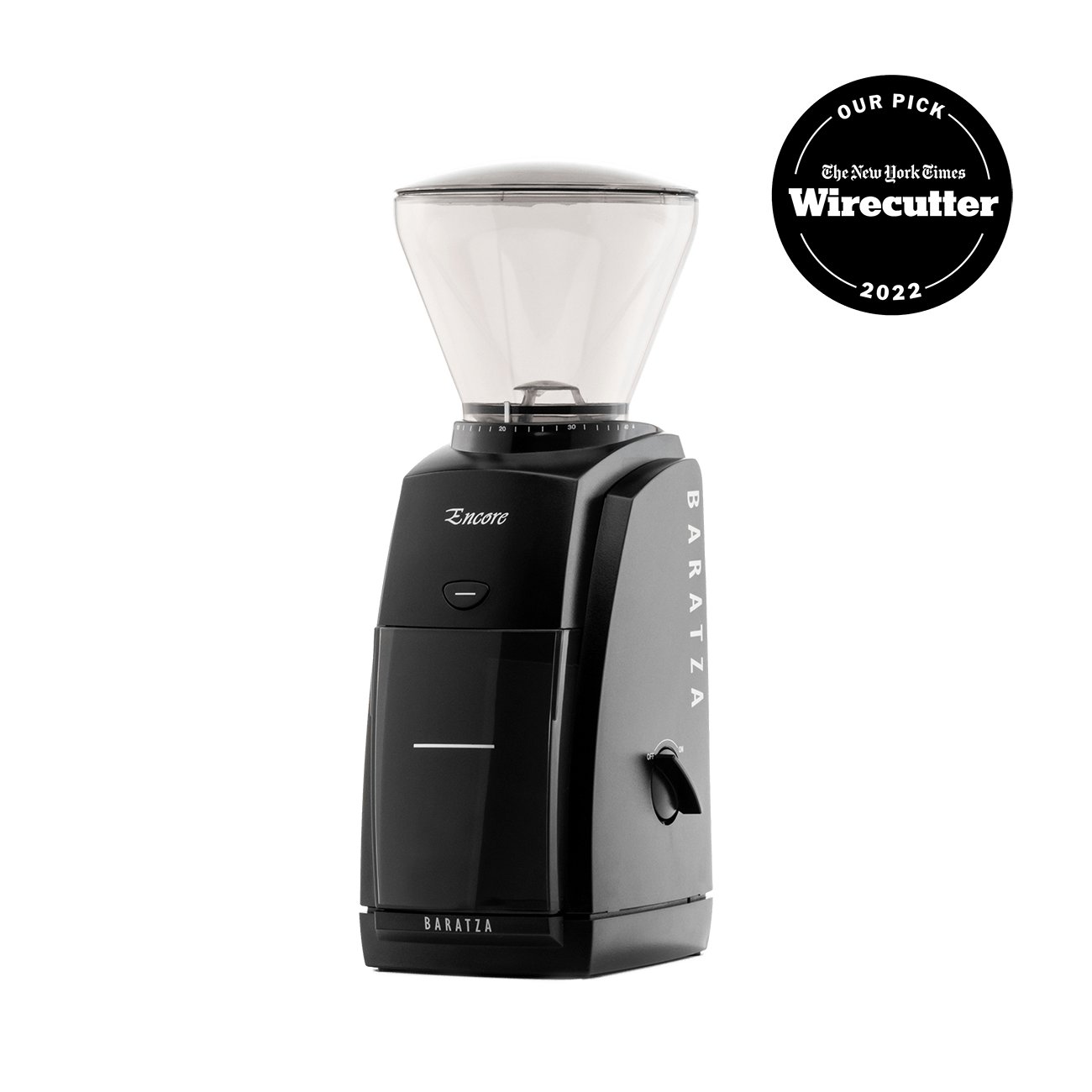
Image: Baratza
Baratza Encore
40 published settings, no conveniences
Model
ZCG485
Burrs
40 mm conical steel (M3)
Settings
40 stepped
Capacity
300 g hopper / 120 g bin
Dimensions
13 × 15 × 34 cm
Power
70 W
Reasons to buy
A published grind rate — 1.3 g/sec at setting 10, 2.2 g/sec at setting 30 — the only stated throughput figure here
40 stepped settings from cold-brew coarse to espresso fine, so drip and pour-over sit mid-dial
550 RPM burr speed, published, slow enough to keep heat out of the grounds
Sold as serviceable parts with published replacement burrs, and a 300 g hopper with a 120 g bin
Reasons to avoid
Dimensions in centimeters only and no weight, so a US buyer converts 34 cm themselves — about 13.4 inches
A one-year warranty, short for the money next to Fellow's two, and static cling in the bin that the spec sheet does not address
The Encore is the default recommendation in home coffee and it deserves to be — not because it grinds better than everything else, but because Baratza tells you what it does: 40 mm conical steel, 550 RPM, 1.3 to 2.2 grams per second, 40 settings you can return to. You give up comfort — plain plastic, no timer, no scale — and get a grinder that can be rebuilt when the burrs dull. I would buy this one.
Not the right fit if you brew pour-over exclusively and want flat burrs — see the Fellow Ode Gen 2.
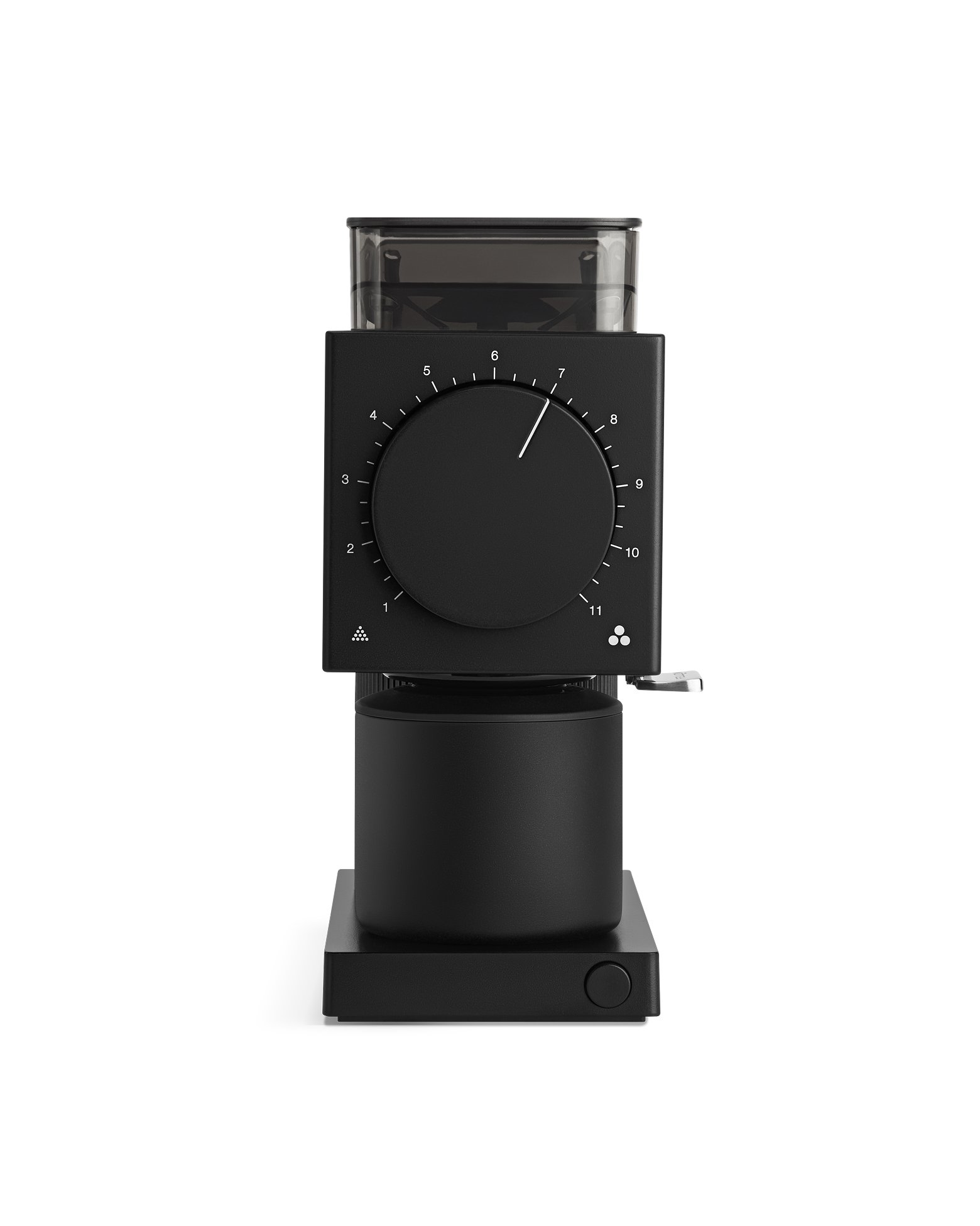
64 mm stainless flat burrs, the largest here by a wide margin, in a two-stage geometry Fellow designed in-house
Fellow publishes its own measured grind-profile data, which almost no manufacturer does
Single-dose, 100 g bin, no hopper — beans stay in a sealed bag and you grind what you weigh
105 mm wide, about 4.1 inches, the narrowest electric grinder here, with a two-year warranty
Reasons to avoid
Fellow states plainly that the Ode is not for espresso, and it is the most expensive way here to grind drip coffee
Flat burrs at 64 mm are the reason to buy this: a bigger set does the same work in fewer rotations with less heat, and filter coffee rewards the tighter grind that follows. Fellow publishing its own particle-distribution data instead of adjectives — and saying outright that the Ode will not do espresso — is honesty worth paying for, if you already know you are a filter drinker.
Not the right fit if you might want espresso later — see the Baratza Encore ESP.
The dial is split explicitly — 1 to 20 espresso, 21 to 40 filter and coarser — so one grinder covers both ends
The M2 burr set is cut for finer work than the standard Encore's M3, without losing the coarse half
Quick-release burr mount, and the same published 550 RPM and 1.3 to 2.2 g/sec as its sibling
Reasons to avoid
A clear premium over the plain Encore for a range you may never turn to if you only brew filter
Same one-year warranty and the same missing weight figure
Buy this if there is an espresso machine anywhere in your future: splitting a 40-step dial so the bottom 20 are espresso-usable is the sensible way to build a one-grinder kitchen, and the quick-release burrs make the cleaning espresso demands plausible. If you will never pull a shot, it is money spent on half a dial you will not turn.
Not the right fit if espresso is definitely not happening — see the standard Encore.
A stepless side dial, so you are never stuck between two settings
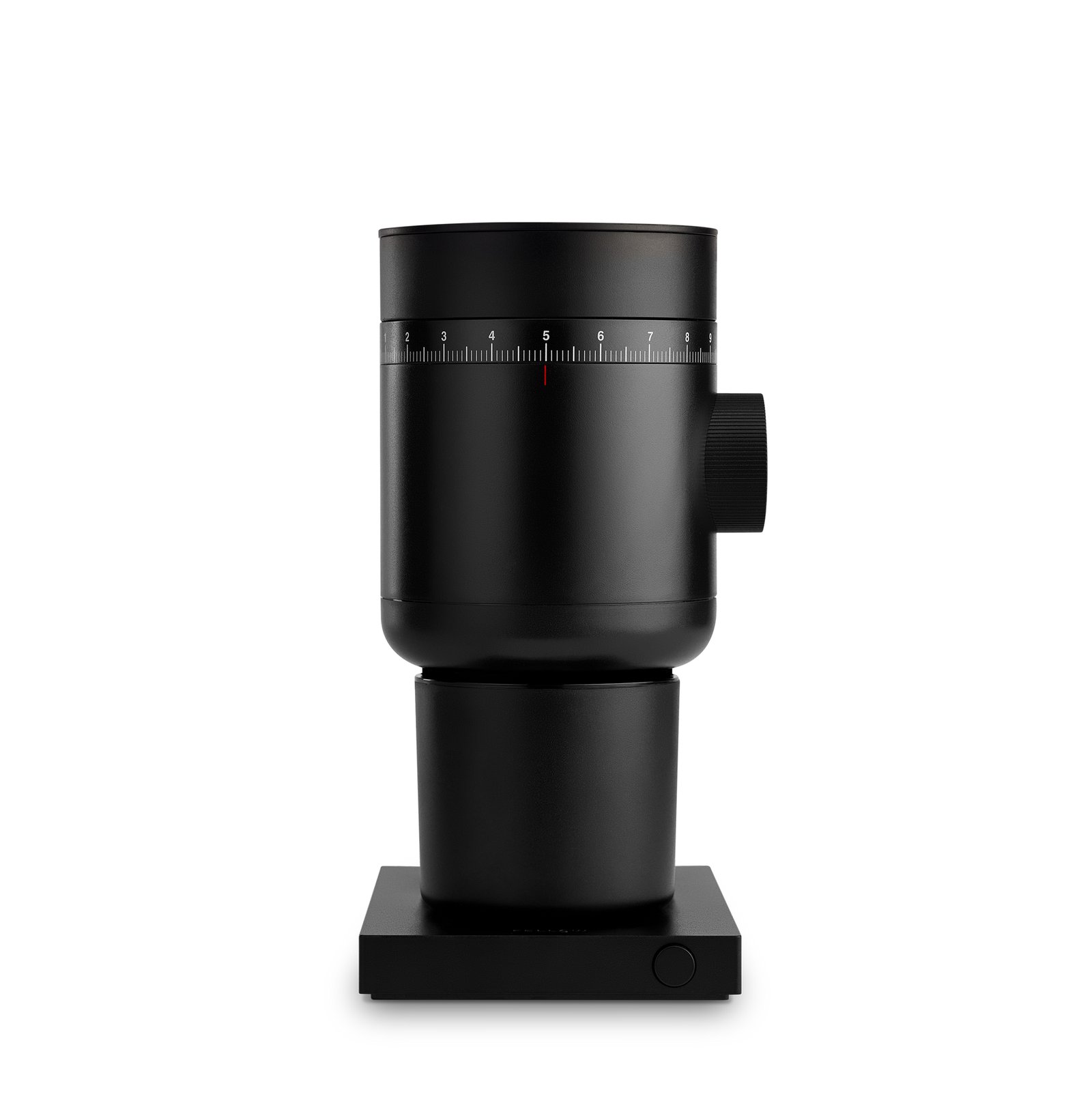
48 mm conical burrs, larger than either Baratza, and 10.5 inches tall — it clears an 18-inch cabinet gap with room to load beans
Espresso through cold brew on Fellow's published range, with a 30 g catch cup, anti-static treatment, auto-stop and a two-year warranty
Reasons to avoid
Stepless means there are no numbers, so returning to yesterday's grind depends on a mark you made yourself
300 W is the highest draw here and Fellow publishes no motor speed, and the body is plastic — ABS, PC, nylon and POM by Fellow's own description
The Opus 2 suits somebody who wants to dial a brew in precisely and does not mind the bookkeeping: stepless adjustment on 48 mm conical burrs is real capability, and 10.5 inches is the height a US kitchen cares about. For drip I would still take the Encore, because 40 numbered steps beat an unmarked dial when you make the same cup every morning.
Not the right fit if you want to write down a setting number and return to it — see the Baratza Encore.
60 published settings, the widest count here, espresso fine to French press coarse
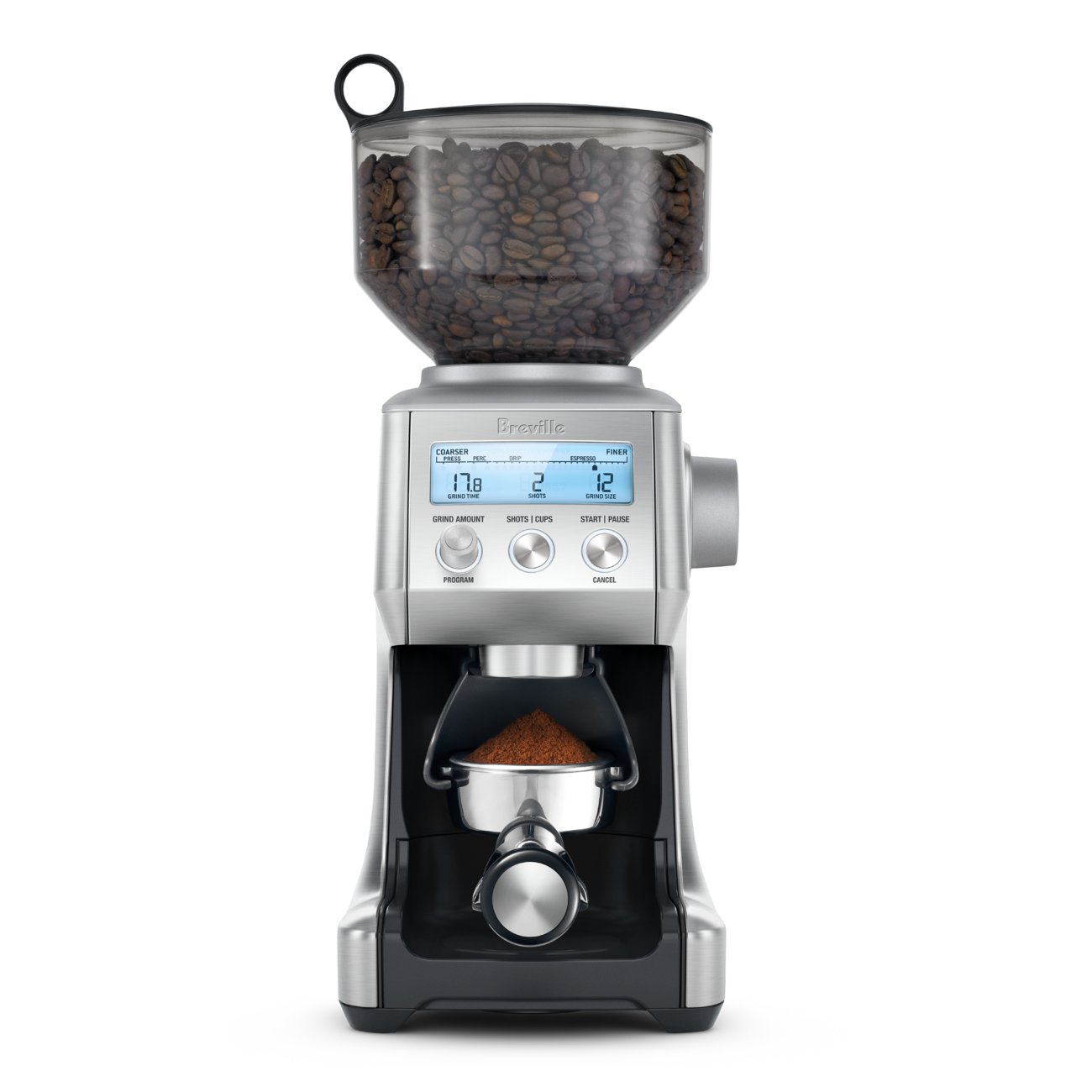
Grinds straight into a portafilter, with 50-54 mm and 58 mm cradles and a sealing grounds container
An 18 oz hopper, by far the largest here, and dimensions published in inches so the cabinet check is straightforward
Reasons to avoid
15.3 inches before the hopper lid opens, so under a standard cabinet you pull it forward to fill
No published burr diameter, motor speed or grind rate — three of the numbers this guide ranks on — and a one-year warranty where Fellow gives two
The Smart Grinder Pro earns its place on interface rather than burrs: 60 settings, a dosing timer, portafilter cradles and an 18-ounce hopper suit a household where several people brew different things. I dock it for the tape measure and the blank spec sheet — 15.3 inches means the hopper cannot be filled in place, and a guide that ranks on burr size gets no diameter from Breville at all.
Not the right fit if your counter has a cabinet above it — see the Fellow Opus 2 at 10.5 inches.
0.0233 mm per click, 30 clicks per rotation across a 0-to-90-click range — finer published resolution than any electric grinder here
A CNC-machined 38 mm S2C660 stainless burr set, specified for concentricity rather than just material
An all-metal unibody with a threaded catch cup, covering espresso through French press on one dial
Takes no counter space and no power
Reasons to avoid
20 g per grind and roughly 30 to 60 seconds of cranking a dose, every morning, forever
No published dimensions or weight, and the brand's detailed C3-series spec page warns that it is a sample page not to order from
For the money this is the most precise grinder here and it is not close: a 0.0233 mm click on a 38 mm CNC-machined burr set is finer adjustment than the Encore offers, in an all-metal body, for less than any electric. What you trade is your arm — 30 to 60 seconds per 20-gram dose — so be honest about whether you grind by hand for years or buy an Encore a month later.
Not the right fit if you want to press a button before you are properly awake — see the Baratza Encore.
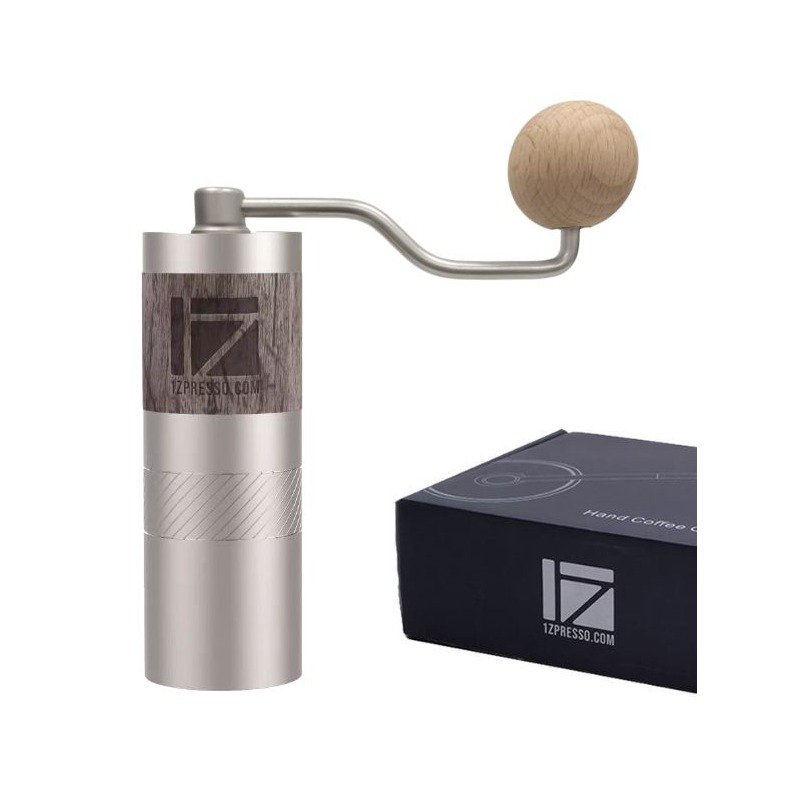
4.6 cm across and 475 g, so it genuinely goes in a carry-on rather than theoretically going in one
30-click adjustment per rotation on an internal dial, which is real repeatability in a travel grinder
Built from 420 and 304 stainless with aluminum and wood, with a pouch, a brush and a published one-year warranty
Reasons to avoid
1Zpresso publishes no burr diameter for the Q family, a 15 to 20 g capacity is one mug rather than a household, and brand-direct orders ship from Taiwan
This is the grinder you buy second: small enough at 4.6 cm across and 475 grams to live in a bag, precise enough at 30 clicks per rotation to make hotel-room coffee worth drinking, and built from stainless and aluminum rather than plastic. As the only grinder in the house it is too small at 15 to 20 grams a dose, and the missing burr diameter means buying on reputation rather than a number.
Nobody here has ground coffee with all seven — no side-by-side brew test, no particle analysis. The ranking is built from what each brand is willing to put a number on, which is why "not published" appears in the table instead of a guess.
Every specification came from the manufacturer's own product page, each linked in Sources. Baratza and Breville publish their real numbers inside the page's structured data rather than the visible spec tab, which is where these were read from.
Burr diameter was weighted heaviest, because burr size governs how much coffee is cut per rotation and therefore how much heat and how wide a spread of particle sizes results. Settings were judged on repeatability rather than count, and heights against the 18 inches a standard cabinet leaves. The case for burr over blade rests on Uman et al. in Scientific Reports, linked in Sources, not on our opinion. All seven Amazon pages were fetched and confirmed live.
The verdict
Best overall: the Baratza Encore — 40 mm conical steel burrs, 40 stepped settings, 550 RPM and a published 1.3 to 2.2 grams per second, in a grinder built to be repaired rather than replaced. For pour-over only, the Fellow Ode and its 64 mm flats. For the least money, the Timemore Chestnut C3 ESP at 0.0233 mm per click, if you will turn the handle. If espresso might happen later, the Baratza Encore ESP.
Whichever you pick, it will do more for your coffee than a new brewer. The burr vs blade comparison explains why in numbers, and the kettle guide covers the other half of the setup.
Middle of the dial — roughly 18 to 22 of 40 on a Baratza Encore, coarser than espresso and finer than French press. If the brew runs through in under two minutes it is too coarse.
Does burr size actually matter?
Yes, and it is the specification to compare. Larger burrs cut more beans per rotation — fewer rotations, less heat, a narrower spread of particle sizes. The range here runs from 38 mm on the Timemore to 64 mm flats on the Fellow Ode.
Conical or flat burrs for filter coffee?
Flat burrs tend to produce a tighter particle distribution, which is why the Ode's 64 mm flats are the pour-over pick. Conical burrs are cheaper and run cooler at low speed, like the Encore's 40 mm set. For drip, either is far beyond a blade grinder.
Is a hand grinder good enough for daily coffee?
For one or two cups, easily. The Timemore C3 ESP adjusts in 0.0233 mm clicks, finer than any electric here, and costs less. The limit is volume and effort: 20 grams per grind and 30 to 60 seconds of cranking each time.
How tall a grinder will fit under my kitchen cabinet?
Under a standard 18-inch clearance, aim for 13 inches or less so the hopper still opens. The Fellow Opus 2 is 10.5 inches, the Encore is 34 cm or about 13.4, and the Breville at 15.3 has to be pulled forward to fill.
Also considered
OXO Brew Conical Burr Coffee Grinder — Probably a good grinder, but oxo.com serves an automated-traffic challenge to every request, so there is no published burr diameter, wattage or dimensions to rank it on.
Cuisinart DBM-8 Supreme Grind — Same problem, worse: cuisinart.com returns a bot challenge for the product URL, the category page and every sitemap.
Any blade grinder, at any price — A blade chops rather than cuts, so one batch holds dust that over-extracts and boulders that under-extract — Hamilton Beach's own support page concedes as much.
Krups F203 and similar blade mills — Beyond the blade problem, krups.com returns a 404 for the product and an empty US sitemap, so there is no documentation to check a claim against.
Grinders built into drip machines — Convenient, and almost always a small blade or a low-grade burr set with no published diameter and no way to service it.