Buy a burr grinder — and if money is the obstacle, buy the Timemore Chestnut C3 ESP, a hand grinder that costs about what a blade grinder costs and adjusts in 0.0233 mm steps. If you want a button, the Baratza Encore is the electric default and it leads our grinder guide. The Hamilton Beach Fresh Grind is here because a blade grinder does have one honest job, and it is not coffee.
A blade is a propeller in a cup: it chops whatever is in the way until you let go of the button. A burr set passes beans between two surfaces a fixed distance apart, so nothing leaves until it is small enough to fall through the gap. The difference shows up in the cup as one identifiable flaw — bitter and sour at the same time, because the dust over-extracts while the boulders under-extract, and you drink both in the same mouthful.
How to shop for a coffee grinder
How the machine makes small pieces
A burr set cuts to a gap you choose. A blade impacts whatever it hits at random. One is a dimension you set; the other is a duration you guess.
Whether the result is repeatable
A burr grinder at setting 20 gives you the same grind tomorrow. A blade grinder gives you whatever eight seconds of chopping produced this time, which is never quite the same thing twice.
What the manufacturer will admit
Hamilton Beach's own support page concedes that all blade grinders produce some uneven grounds, and recommends a burr grinder for pour-over. That is the maker of the blade grinder in this comparison saying it.
Heat
A blade spins fast enough to warm the grounds while it works, and heat drives off aromatics before the water touches them. Burr sets run slower — Baratza publishes 550 RPM for the Encore.
The burr grinder to buy
Image: Timemore
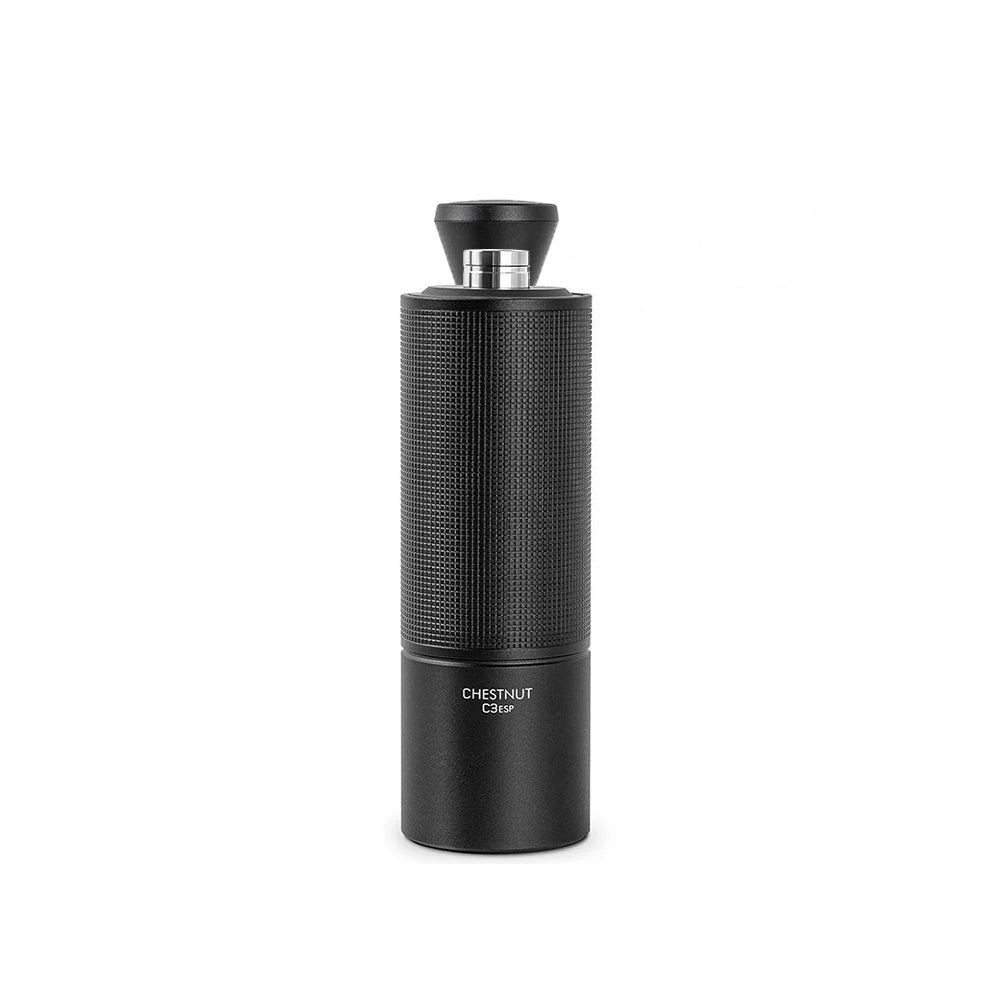
Timemore Chestnut C3 ESP
38 mm burrs for blade-grinder money
Model
Chestnut C3 ESP
Mechanism
38 mm conical burr
Adjustment
30 clicks per rotation (0.0233 mm)
Capacity
20 g
Power
Manual
Dimensions
Not published
Reasons to buy
A CNC-machined S2C660 stainless conical burr set at 38 mm, in an all-metal body, for less than most electric grinders of any kind
Adjustment in 0.0233 mm clicks with 30 clicks per rotation and a 0-to-90-click range — finer published resolution than any electric grinder we have specs for
No power, no counter space, nothing to break electrically
One dial covers espresso through pour-over to French press
Reasons to avoid
20 grams per grind and 30 to 60 seconds of cranking, every time
Timemore publishes no dimensions and no weight
The argument that a burr grinder is expensive stops being true here. This costs about what a decent blade grinder costs and it does the thing a blade cannot: it sets a particle size and holds it. The published 0.0233 mm per click is the resolution you need to move a pour-over from sour to balanced without changing anything else. The cost is your arm and about a minute — a genuine ongoing tax, and still not close.
Not the right fit if you want to press a button — the Baratza Encore is the electric answer, in our grinder guide.
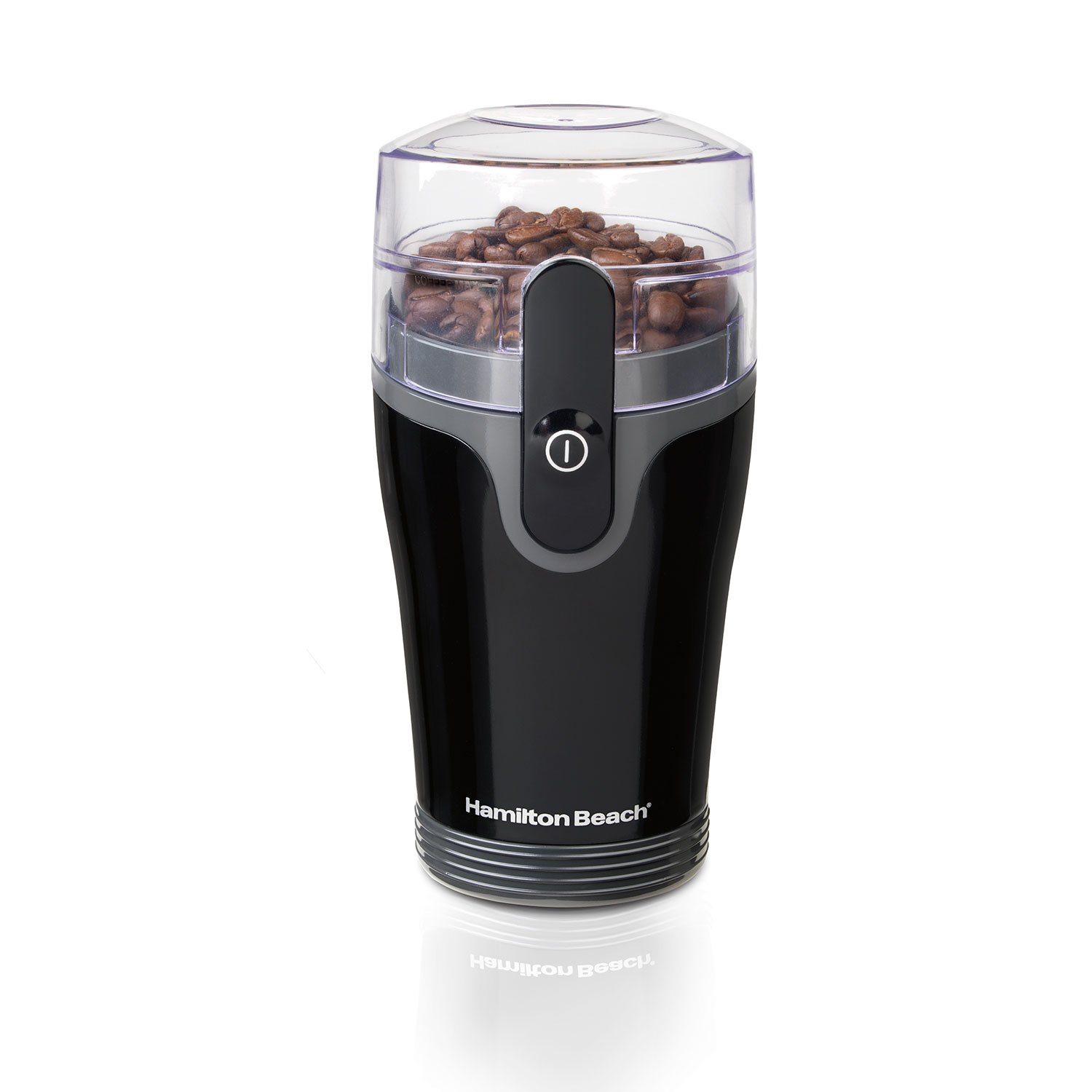
Genuinely useful for whole spices, where an uneven grind does not matter and often helps
A removable stainless chamber that goes in the dishwasher, which is more than most grinders at this price offer
3.7 inches wide and 1.48 lb, so it lives in a drawer rather than on the counter
Reasons to avoid
No settings at all — the published operation is press and hold, so grind size is however long you held the button, and beans that settle against the chamber wall miss the blade entirely
Hamilton Beach's own support page states that all blade grinders produce some uneven grounds, and recommends a burr grinder if you brew pour-over
This is a well-made version of a machine that should not be used for coffee, and it is here so the comparison is fair rather than rhetorical. For whole spices it is genuinely good: 125 watts in a dishwasher-safe stainless chamber for entry money. For coffee, the clearest evidence against it is Hamilton Beach's own documentation — they concede the uneven grind, tell you to shake the machine to compensate, and point pour-over brewers at a burr grinder instead. Buy it for the spice cupboard.
Not the right fit if you are grinding coffee — see the Timemore Chestnut C3 ESP, which costs about the same.
This comparison is built from manufacturer documentation and published research, not from a grind test in our kitchen. Here is the basis.
The mechanism difference is stated by the manufacturers themselves: Hamilton Beach publishes that its Fresh Grind operates by press-and-hold with a stainless blade and no settings, while Baratza and Timemore publish burr diameters, materials and adjustment increments.
That grind uniformity governs extraction rests on published research, not our opinion — Uman et al., Scientific Reports 6:24483 (2016), measured grind particle-size distributions by laser diffraction. The strongest single piece of evidence, though, is from the blade grinder's own maker: Hamilton Beach's support page concedes that all blade grinders produce some uneven grounds and recommends a burr grinder for pour-over. Both Amazon pages were fetched and each title checked against the product named here.
The verdict
Burr, always, for coffee. A burr grinder sets a particle size; a blade grinder times a collision. That is a difference in kind rather than degree, and it produces the specific fault — bitter and sour in the same cup — that no brewer, ratio or brew time can correct afterwards.
If budget is the reason you are still considering a blade grinder, the Timemore Chestnut C3 ESP removes it: a 38 mm CNC-machined burr set with 0.0233 mm adjustment for about what a blade grinder costs. If you want an electric one, buy the Baratza Encore; keep a Hamilton Beach Fresh Grind in the drawer for spices. The full comparison across seven burr grinders is in our grinder guide.
Is a burr grinder really worth it for drip coffee?
Yes, and drip is where it shows up most clearly, because a drip machine gives you no way to compensate. The cheapest fix is a hand grinder like the Timemore C3 ESP, which costs about what a blade grinder does.
Can I get a decent grind from a blade grinder if I shake it?
It helps, and Hamilton Beach's own instructions tell you to do it, because beans settle against the chamber wall and miss the blade. It reduces the problem; it does not fix it. You are still timing a chop rather than setting a size.
What is the cheapest burr grinder worth buying?
A hand grinder. The Timemore Chestnut C3 ESP has a 38 mm CNC-machined conical burr set adjusting in 0.0233 mm clicks, for less than most electric grinders of either type. The tradeoff is 20 grams per grind and roughly 30 to 60 seconds of cranking.
Is there anything a blade grinder is actually good at?
Whole spices. Uneven particle size is not a problem when you are grinding peppercorns or cumin into a dish, and a small dishwasher-safe chamber is genuinely convenient for it. Keep one in the drawer for that and grind coffee with burrs.
Also considered
Krups F203 and similar blade mills — The same mechanism as the Hamilton Beach with worse documentation — krups.com's product URL returns a 404 and the US site's sitemap is empty, so there is no manufacturer specification to check any claim against.
Grinders built into drip coffee makers — Usually a small blade or an undocumented low-grade burr set, with no published diameter and no way to service it. When it jams or dulls, you are replacing the coffee maker.
Cuisinart DBM-8 Supreme Grind — A genuine burr grinder that we could not include, because cuisinart.com returns an automated-traffic challenge for the product page, the category page and every sitemap. No published specification means no entry.
What the difference actually costs you, in one cup
Extraction is a race against surface area. Dust has enormous surface area for its mass, so hot water strips it fast and keeps going past the point where the good flavors stop and the bitter ones start. A boulder has very little, so the water barely gets into it and takes out only the sharp sour acids near the surface. Brew them together and the cup is two opposite mistakes at once.
That is why the usual fixes do not work. Grinding longer makes more dust without rescuing the boulders. Using more coffee scales the problem up. Brewing cooler softens the bitterness and worsens the sourness; brewing hotter does the reverse. No brewer setting separates two populations of particle after the fact — which is why Uman and colleagues published particle-size distributions measured by laser diffraction in Scientific Reports: distribution, not nominal grind size, predicts what comes out of the cup.
If you already own a blade grinder
Three things help, in descending order of effect, and none of them fix it.
Shake the machine while it runs. Hamilton Beach's own support guidance for the Fresh Grind says to tilt or shake it so beans settling against the chamber wall are moved back into the blade path. It measurably evens things out and it is free.
Pulse rather than hold. Short bursts with a shake between them spread the damage around instead of pulverising whatever sits directly under the blade.
Grind coarser than feels right and brew by immersion. French press and cold brew tolerate an uneven grind far better than pour-over, because long steeping lets the boulders catch up. A blade grinder and a French press is an honest combination; a blade grinder and a V60 is not.
What does not help: buying better beans. If your budget is fixed, cheaper beans through a burr grinder beat good beans through a blade, every time — and the price assumption that keeps this argument alive is no longer true. A hand grinder with a CNC-machined 38 mm conical burr set now costs roughly what a name-brand blade grinder costs.