Buy the Fellow Stagg EKG Pro: it holds any temperature from 104 to 212 °F, so you can sit inside the SCA's 90 to 96 °C brewing band rather than merely reach it, and it has a brew stopwatch in the display. If that is more kettle than you want, the Cosori Original Electric Gooseneck has a 205 °F preset and a 60-minute hold for a fraction of the money, and the difference in the cup is nothing. For the brewer itself, start with the Hario V60 02 in ceramic.
A pour-over setup is the cheapest real upgrade in home coffee and the smallest: a dripper, a filter and a kettle you can aim need about seven inches of counter and no clearance above at all. That makes this the guide to read if the drip machines all failed your cabinet measurement.
How to shop for a pour-over setup
Can you set a temperature, or only pick one?
SCA Standard 310-2021 specifies 90 to 96 °C — roughly 194 to 205 °F. A to-the-degree dial lets you move inside that band when a coffee tastes sour; presets get you into it and stop. Both beat a kettle that only boils, which lands above the standard.
Does it hold that temperature?
Grinding, rinsing the filter and weighing coffee takes three or four minutes, and an unheld kettle loses several degrees in that time. A published hold duration is the spec worth paying for.
Spout shape, and cone or flat bottom
A gooseneck exists to make the stream slow, narrow and aimable, and no manufacturer here publishes an inner spout diameter, so it is judged on published design alone. Below it, a V60 cone runs fast and rewards a steady pour; a Kalita flat bottom runs slower and forgives a clumsy one.
Counter cost, and what happens when it breaks
Everything here lives under any cabinet, but a kettle base still takes floor space — Fellow publishes 11.10 by 6.77 inches for the Stagg. A kettle is also an electrical appliance, so published warranty terms and a live manufacturer website are part of the purchase, and one brand here has neither.
Best overall
Image: Fellow
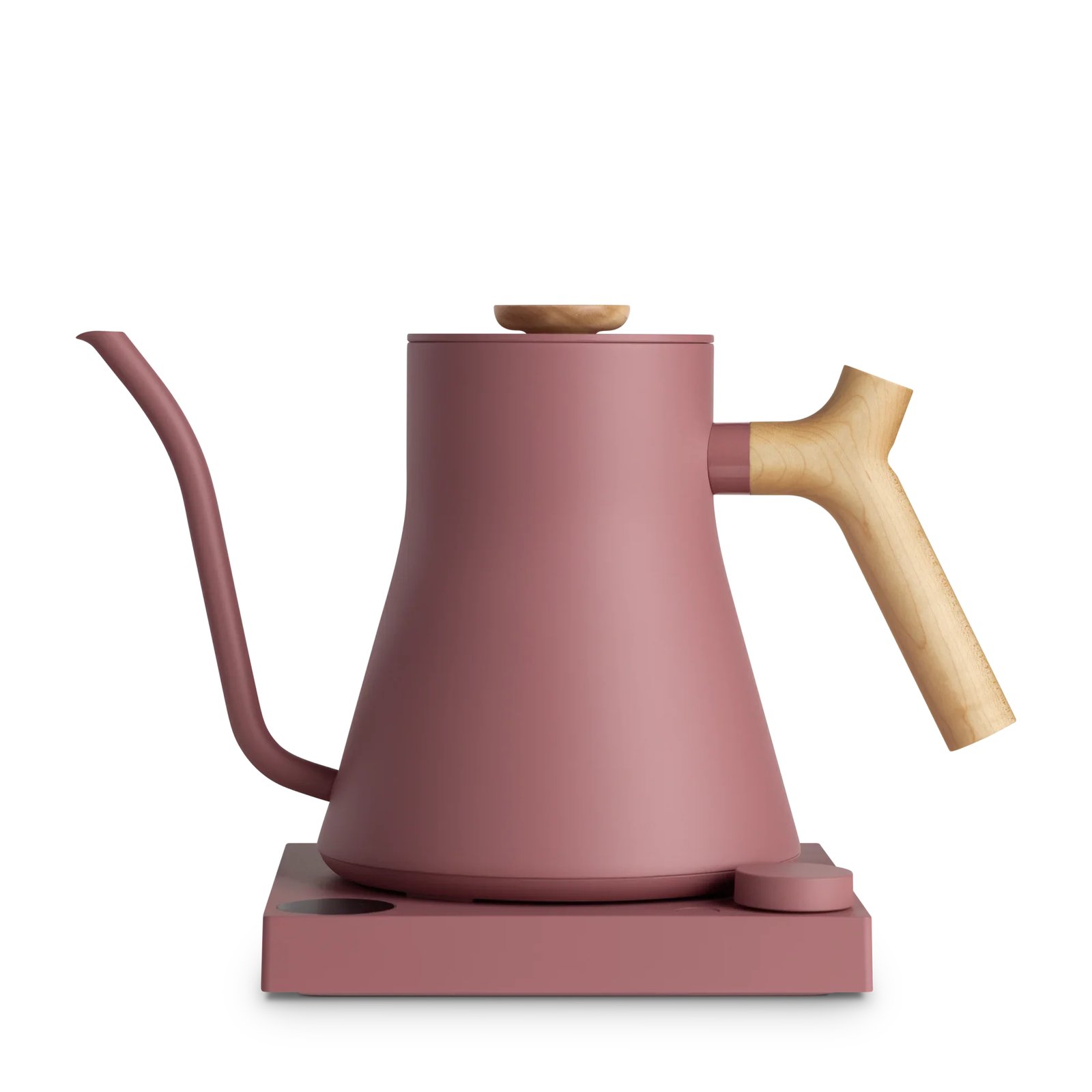
Fellow Stagg EKG Pro Electric Kettle
104-212 °F to the degree, priced accordingly
Model
Stagg EKG Pro
Capacity
30 oz / 0.9 L
Dimensions
11.10 × 6.77 × 7.7 in
Temp control
104-212 °F to the degree
Material
304 18/8 stainless steel
Power
1000-1200 W
Reasons to buy
A 104 to 212 °F range means you sit anywhere inside the SCA band, and move within it when a coffee tastes sour
A published Schedule function heats it to a set temperature at a set time, and a brew stopwatch on the display removes the one extra device most setups need
An altitude setting, 304 18/8 stainless steel, published ETL/FCC/CSA/UL compliance and a two-year warranty
Reasons to avoid
The most expensive item here by a wide margin, and the gap in the cup against the Cosori is close to nothing
A 2.5-foot cord and a permanent 11.10 by 6.77 inch footprint, because Fellow states it must never go on a stovetop
This is the kettle that makes the temperature question go away. The full range is what separates it from preset kettles: a coffee comes out thin and sour, you drop two degrees; bitter, you go the other way. That loop is how people learn to brew, and a preset kettle cannot run it. The case against it is the Cosori below, which puts water in the same band for far less.
Not the right fit if you just want water in the right band without a screen — see the Cosori.
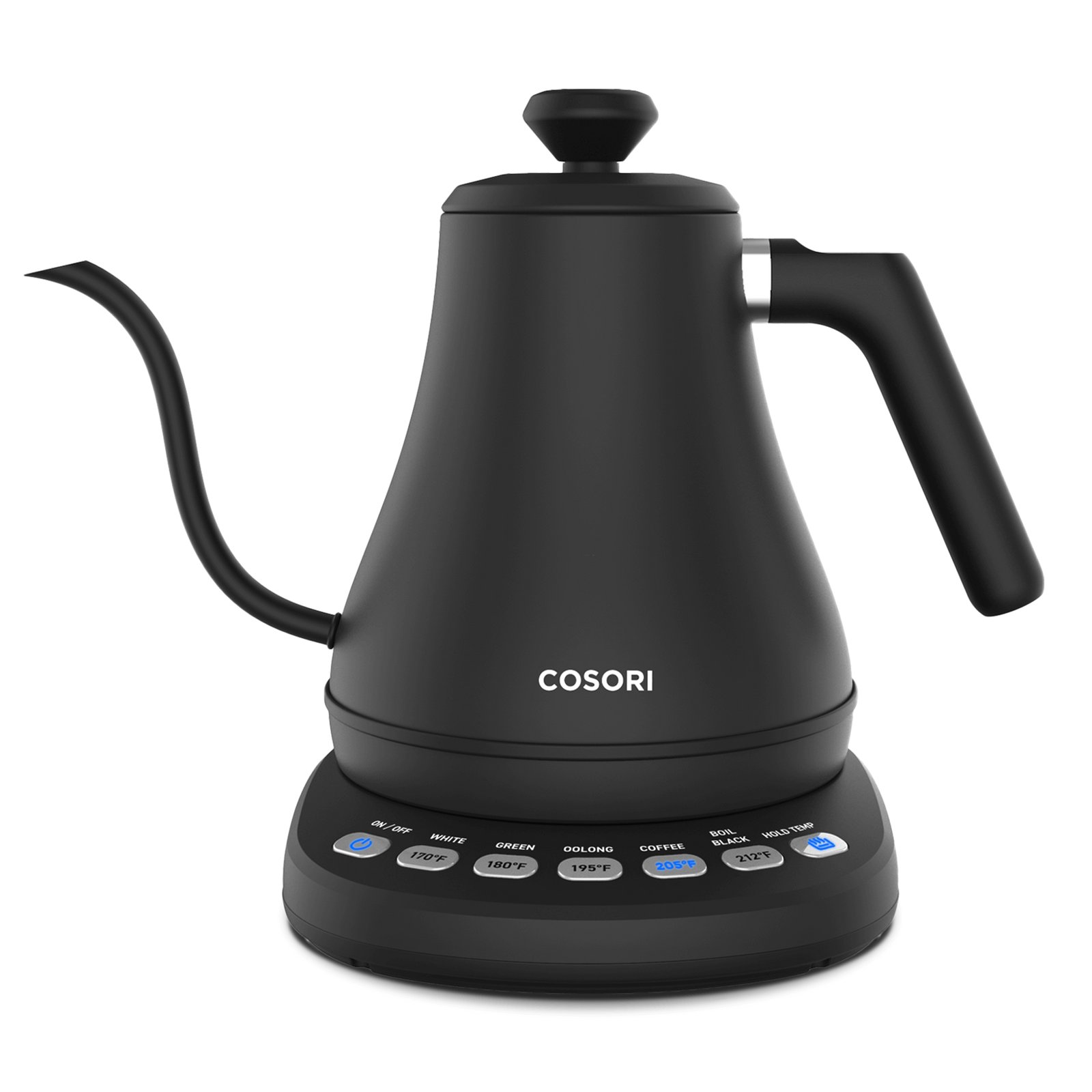
The 205 °F preset sits at the top of the SCA band, where most drip-grind pour-overs want to be
A published 60-minute hold, so the water is still correct after you have ground, rinsed and weighed
Kettle, lid and spout are all food-grade stainless with no plastic touching the water, and 1200 W in a 0.8 L body comes up fast
Reasons to avoid
Presets only — 170, 180, 195, 205 and 212 °F and nothing between them, so the fine-tuning loop is not available
Cosori publishes no dimensions and no weight anywhere, and there is no verified second retailer for this exact model — check the model number before buying elsewhere
This is the kettle most people should buy and I would say so even if it cost more. The preset lands inside the standard, the hold means it is still there when you get back, and 1200 watts brings 0.8 liters up quickly. Choosing 205 instead of 203 is a refinement, not a rescue — the win is having a gooseneck and a thermostat at all.
Not the right fit if you want to set a temperature to the degree — see the Fellow Stagg EKG Pro.
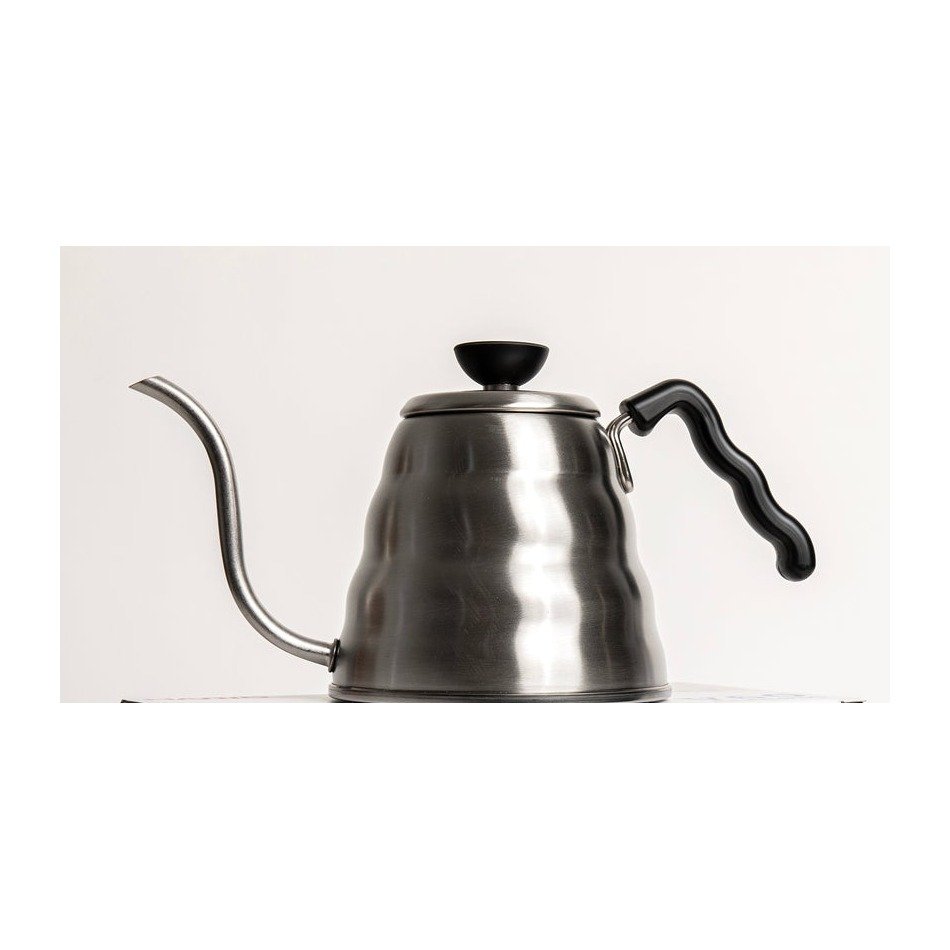
It goes on the stove and lives in a cupboard — zero permanent counter space, the only pick here that manages it
Hario lists it as induction compatible as well as open-flame, so it works on every common US cooktop
The slim spout is the original design most electric goosenecks imitate, and at about 600 g it pours slowly one-handed
Reasons to avoid
No temperature control, so hitting the band means boiling and waiting roughly 30 to 45 seconds, or using a thermometer
Hario publishes an 800 mL practical capacity against the 1.2 L nominal figure, so do not plan on brewing a full liter
This is the kettle for anyone who resents giving an appliance a permanent home. It boils on the stove, pours like a gooseneck should, and then goes away — if counter space is what brought you here, that beats any thermostat. The tradeoff is that temperature becomes your job: boiling water is above the band, so you wait after the boil or use a probe thermometer.
Not the right fit if you want the water at a set temperature without thinking about it — see the Cosori.
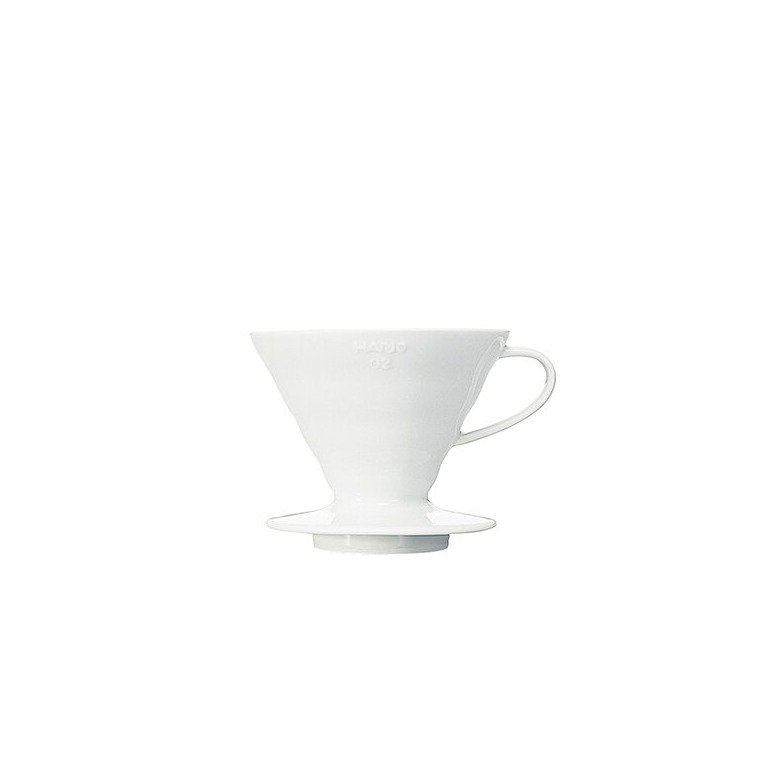
A single large hole and spiral ribs mean the flow rate is set by how you pour, not by the brewer
Porcelain holds heat far better than plastic, so the brew temperature does not crash in the first 20 seconds
The 02 size brews 1 to 4 cups, and its filters are in every coffee shop and most supermarkets — not true of every dripper here
Reasons to avoid
Because the flow is yours to control, a careless pour produces weak coffee, and the learning curve is real for the first week
Porcelain chips, and Hario publishes a weight that includes the box and no hole diameter at all
The V60 is the default for a reason: it removes restrictions instead of adding them. Pour slowly for a heavier cup, quickly for a lighter one — an unusually direct relationship between what you do and what you taste. It is also why it frustrates people: dump the water in and it will happily make you a thin sour cup.
Not the right fit if you want the brewer to cover for an uneven pour — see the Kalita Wave 185.
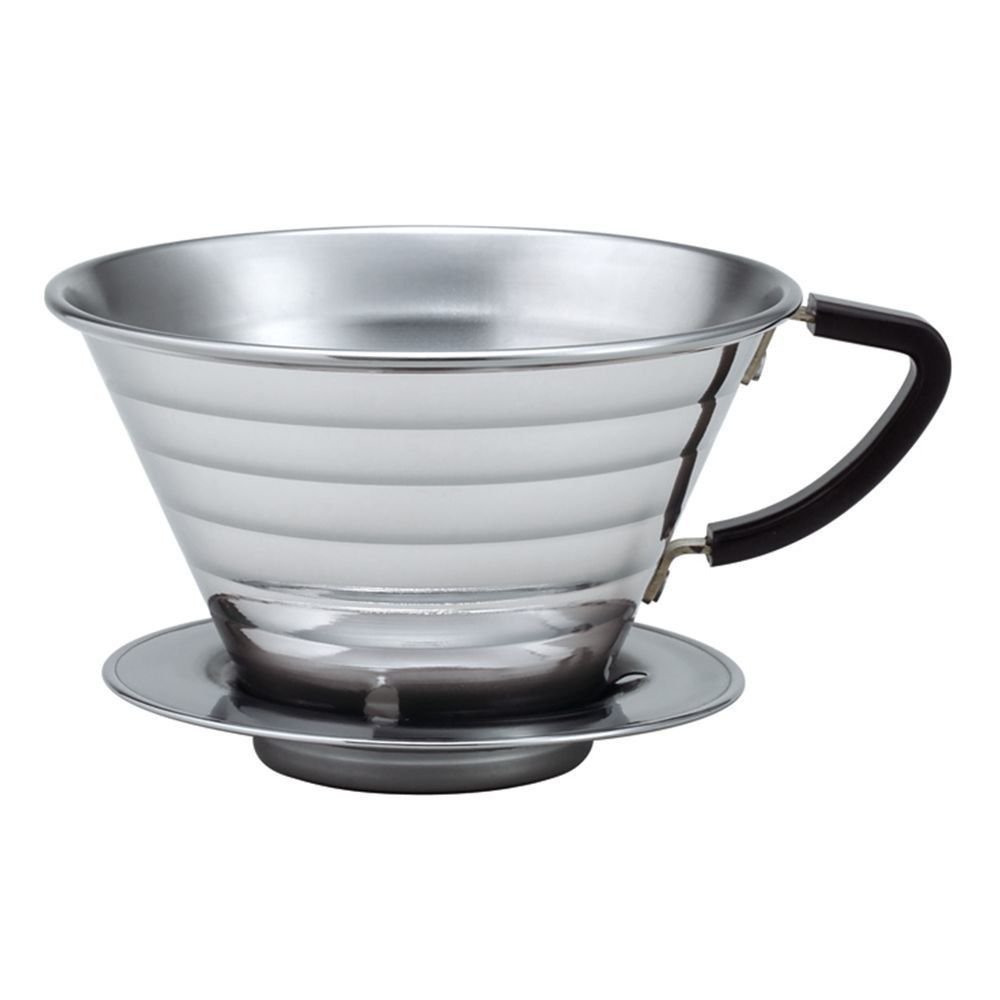
A flat bed and three small holes meter the flow for you, so an uneven pour costs far less in the cup than in a V60
The wave filter holds the paper off the wall, keeping water moving through the bed rather than down the side
Stainless steel, so it survives the drop that would end a porcelain cone, and it goes in the dishwasher
Reasons to avoid
It needs Kalita Wave 185 filters specifically, and those are a specialty order in most of the US rather than a supermarket pickup
Kalita publishes no dimensions, no weight and no stainless grade — the thinnest specification sheet in this guide
The Kalita is the brewer for the morning you are not paying attention. Water works through at roughly the same rate whether your pour was beautiful or not, so the cup lands in the same place day after day. If your V60 results swing wildly, this is a better fix than more practice — and you pay for it in filters the corner shop does not stock.
Not the right fit if you want filters you can buy anywhere — see the Hario V60 02.
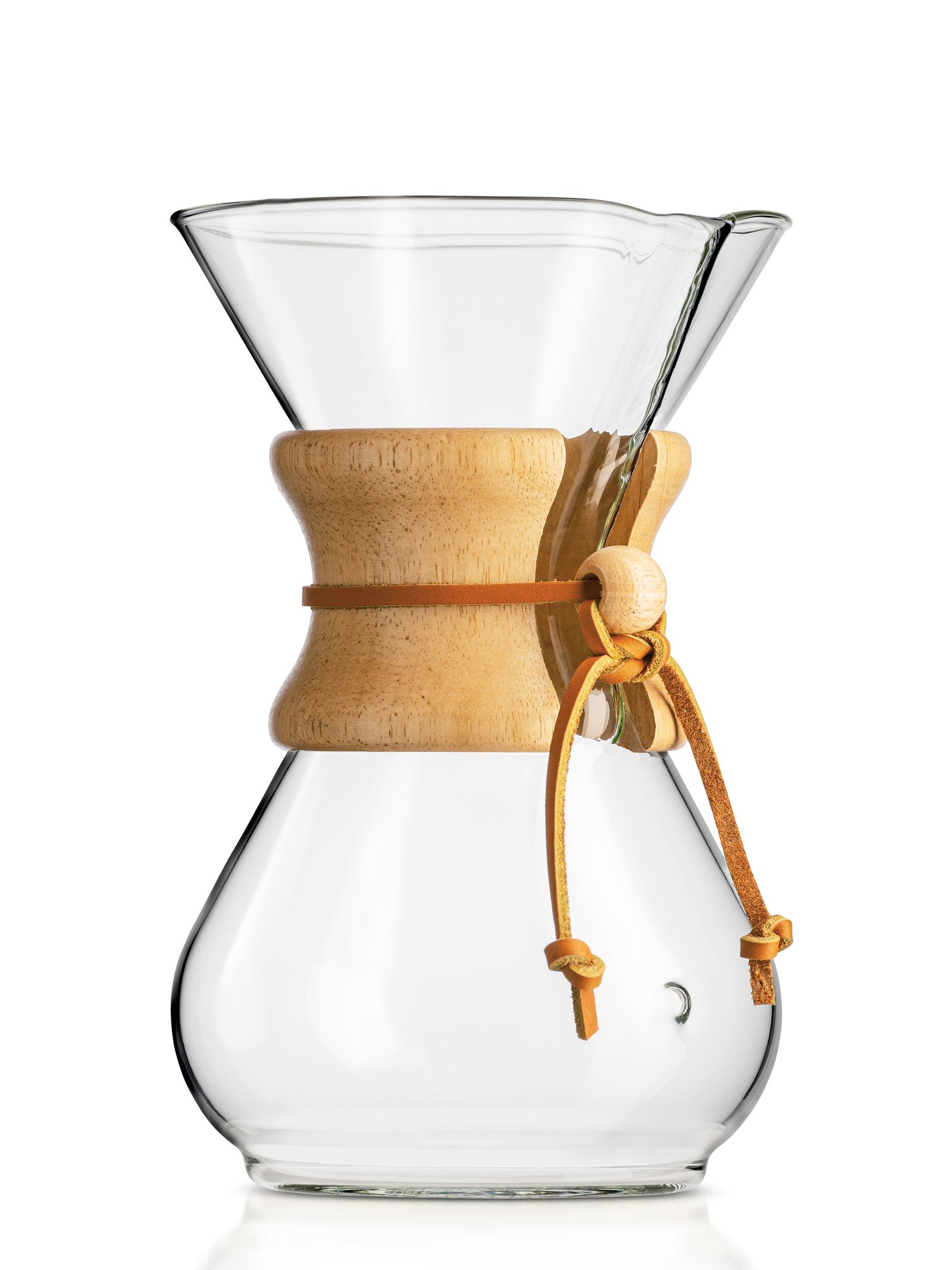
It brews and serves in one vessel, so a setup for two is one object rather than two
30 ounces from a body 8.5 inches tall and 5.125 across, a small footprint for that volume
The thick bonded filters strip more oils and fines than standard paper, and the wood collar makes it the one brewer you would set on a table in front of guests
Reasons to avoid
Chemex filters are thick, specific and considerably more expensive per brew than a V60 paper
Glass with a fixed wood collar, so cleaning the bottom means a bottle brush — and Chemex publishes height and diameter only
For two coffee drinkers this is the most sensible object here: you brew 30 ounces directly into the carafe you pour from, so there is no dripper to rinse. The heavy bonded filter takes out more oil and fines, so the cup is very clean and slightly lighter in body — people either love that or find it thin. Buy carefully: Chemex also sells a Glass Handle Series, and retail pages confuse the two.
Not the right fit if you brew one cup at a time — see the Hario V60 02.
We have not run a side-by-side extraction test on these six and we are not going to imply otherwise. Here is what this ranking is actually built on.
Every specification above came from the manufacturer's own product page, each linked in Sources — nothing from a retailer or another guide, and where a brand publishes no figure the spec block says "not published".
Temperature capability was judged against SCA Standard 310-2021 (90 to 96 °C, 55 g/kg): a kettle that can sit inside that band scored above one that can only reach it, which scored above one that only boils. All six Amazon pages were fetched and each title checked against the product named here — which is how we caught that the commonly cited 6-cup Chemex identifier resolves to the Glass Handle Series, not the Classic.
The verdict
Best overall: the Fellow Stagg EKG Pro, for a 104 to 212 °F range that lets you move inside the SCA band rather than merely reach it. Best value, and the one most people should actually buy: the Cosori Original Electric Gooseneck — a 205 °F preset, a 60-minute hold and 1200 watts for a fraction of the money.
For the brewer, start with the Hario V60 02 in ceramic; switch to the Kalita Wave 185 if your results keep swinging; buy the Chemex Six Cup Classic if two of you are drinking; and if you want none of it on the counter, the Hario Buono goes on the stove. A pour-over setup is also the answer when the drip machines do not fit — check our counter measuring guide, then fix the grinder, which does more for a pour-over than any kettle here.
What temperature should water be for pour-over coffee?
SCA Standard 310-2021 specifies 90 to 96 °C, about 194 to 205 °F. Boiling water at 212 °F is above that band, so with a stovetop kettle, pour off after roughly 30 to 45 seconds off the heat.
How much coffee per cup for pour-over?
The SCA's standard brew ratio is 55 grams per kilogram of water — about 1 part coffee to 18 parts water, or roughly 19 grams for a single 350-gram brew.
Do I really need a gooseneck kettle, or will any kettle do?
A regular kettle dumps a wide fast stream that digs a hole in the bed and runs down the side of the filter. A gooseneck makes the stream narrow and slow enough to aim — the single component that changes a pour-over most, which is why half the picks here are kettles.
V60 or Kalita Wave — which should a beginner buy?
The Kalita, if you want consistency without practice: three small holes and a flat bed meter the flow for you. The V60, if you want to learn, because its single large hole hands all the control to your pour — and it is cheaper, with filters sold everywhere.
Also considered
Fellow Stagg EKG (the non-Pro kettle) — Mechanically the same spout, body and counterbalanced handle as our winner, for less money — but Fellow has consolidated the line, so its own product page now serves the Pro specification at that URL. We will not print a spec block that the manufacturer no longer attaches to the product you would receive.
OXO Brew Adjustable Temperature Gooseneck Kettle — Very likely a good kettle, and we could not verify a single specification for it — oxo.com returns a bot challenge to every automated request, so there was no spec page to quote.
Bodum Pour Over with Permanent Filter — The permanent steel filter lets oils and fines straight through — a legitimate style choice that makes it a different drink from every paper brewer here, into a carafe with no heat retention.
Melitta 6-Cup Pour-Over Cone — Cheap, widely available and plastic — the material that pulls heat out of the brew fastest, exactly when the water is hottest. The porcelain V60 costs slightly more and holds heat far better.