As an Amazon Associate I earn from qualifying purchases. Links marked "at Amazon" are paid links.
How to dial in a grinder for pour-over
 By Chris Y. · Founder & editor
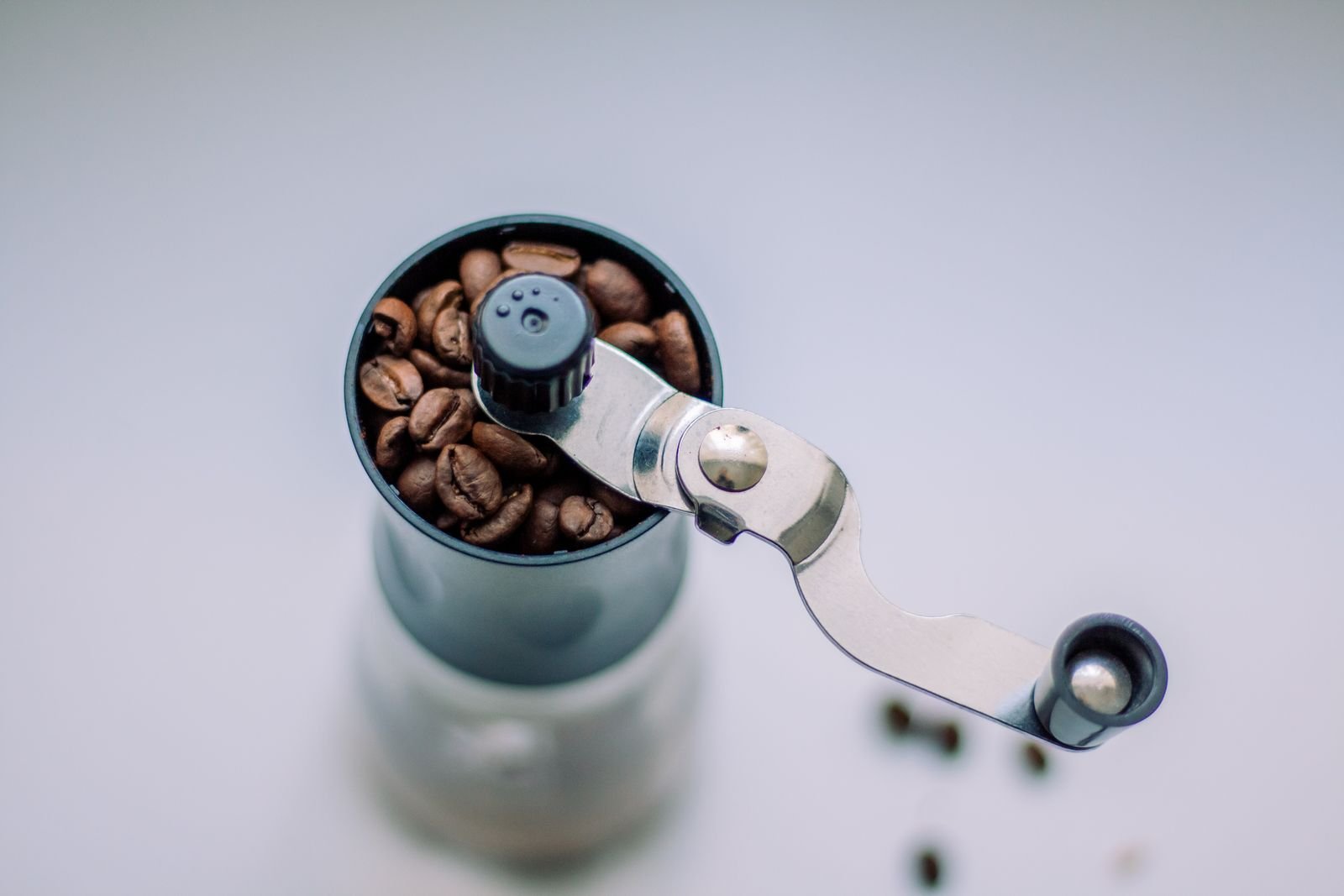
Dialling in a grinder is not a mystery and it is not a taste exercise you need a trained palate for. It is a loop with one variable, one measurement, and a stopping rule. Fix everything except the grind setting, brew, time it, and move one click. Two or three brews later you are done, and you write the number down.
The measurement people usually reach for — "does it taste good" — is the wrong one to start with, because a bad cup has at least four possible causes and you cannot tell them apart by tasting. The measurement to start with is total brew time, because on a fixed dose, a fixed water weight and a fixed pour pattern, brew time moves almost entirely with grind size. That is why this guide is built around a stopwatch rather than a flavour wheel.
The targets below are the SCA's published ones: a brew ratio of 55 grams of coffee per kilogram of water, a brewing temperature of 90 to 96 °C, and a Golden Cup extraction yield of 18 to 22 percent giving a strength of 1.15 to 1.35 percent. You do not need a refractometer to use them. You need them because they tell you which direction to move.
Questions people ask
What ratio should I use for pour-over coffee?
SCA Standard 310-2021 specifies 55 grams of coffee per kilogram of water, which is 19.3 g to 350 g for a single mug — roughly 1 to 18. Anything from 1:15 to 1:17 is a stronger cup and still well within normal practice; what matters for dialling in is that you use the same ratio every brew while you change the grind.
How long should a pour-over take?
For a V60 with about 19 grams of coffee, 2:30 to 3:30 total from first water to last drip is the usual range. A Kalita Wave runs slower because of the flat bed and small holes, and a Chemex slower again because its bonded filter is thicker. The absolute number matters less than keeping it constant once you find yours.
Should I grind finer or coarser if my coffee is bitter?
Coarser, if the bitterness is a dry, hollow, lingering bitterness — that is over-extraction, and coarser grounds extract less. If the cup is bitter and sour at once, grind size is not the cause; that pattern comes from an uneven grind or from water channelling through the bed, and no setting will fix it.
Do I need a refractometer to dial in a grinder?
No. The SCA's targets are an 18 to 22 percent extraction yield and a 1.15 to 1.35 percent strength, and measuring them takes a refractometer costing more than most home grinders. On a fixed dose, water weight, temperature and pour pattern, total brew time moves with extraction, so a stopwatch gets you to the same place for nothing.
How many clicks should I move at a time?
It depends entirely on your grinder's published step size. A Timemore C3 ESP moves 0.0233 mm — about 23 microns — per click, so two or three clicks is a meaningful change for pour-over. A 1Zpresso J-Ultra moves 8 microns per click, so it needs more of them. A Baratza Encore's forty macro steps span the whole brewing range, so one step at a time is plenty.
Why does my grind setting stop working when I open a new bag?
Because roast level and age both change how the coffee grinds and how it flows. Lighter roasts are denser and need a finer setting for the same brew time; very fresh coffee degasses and slows the bed down for the first few days. Re-run the loop on a new bag and expect it to take two brews, not five.
Before you change anything: fix the four other variables
A pour-over has five inputs and you can only learn from one at a time. Lock these four first, and do not touch them again until the grind is settled.
- Dose and water, by weight. SCA Standard 310-2021 specifies a brew ratio of 55 grams of coffee per kilogram of water. That is 19.3 grams of coffee to 350 grams of water, which is a sensible single-mug brew. Round it to 19 and 350 if you like; what matters is that it is the same every time, which means a scale rather than a scoop. Our scale guide covers the ones that read to 0.1 g.
- Water temperature. The same standard specifies 90 to 96 °C, which is 194 to 205 °F. Pick one number in that band — 200 °F is a good default for a medium roast — and use it every brew. If your kettle only boils, wait 30 to 45 seconds after it clicks off.
- The pour. Same bloom, same number of pours, same rough rate. A 45-second bloom with twice the coffee's weight in water, then two or three pours to the target weight, is a fine pattern. It does not have to be the best pattern; it has to be the same pattern.
- The coffee. One bag, and ideally not one that was roasted yesterday — very fresh coffee degasses, which changes the flow through the bed for the first three or four days after roasting and will make your first two brews disagree with each other for reasons that have nothing to do with the grinder.
The loop
Now change one thing, and only this thing.
- Brew at your grinder's middle setting and record the total time from the first drop of water to the last drip through the bed. For a V60 with a 19 g dose, a normal total is 2:30 to 3:30; a Kalita Wave runs slower, a Chemex slower again because of the thicker filter.
- Too fast — under about 2:30 on a V60 — means the grind is too coarse. The water is running past the coffee rather than through it. Go one click finer.
- Too slow — over about 4:00, or the bed visibly stalls with water sitting on top — means too fine. Go one click coarser.
- Brew again with everything else identical, and time it again. Two or three iterations is usually the whole job.
- Write the number down — grinder setting, dose, water, temperature, time. That note is the only reason dialling in is a one-off rather than a weekly chore.
Why brew time works as a proxy
Grind size sets the surface area of the coffee and the size of the gaps between particles. Finer coffee has more surface for the water to dissolve things from, and smaller gaps for the water to get through, so it extracts faster and drains slower. Both effects push in the same direction, which is exactly what makes time a usable stand-in for extraction at home.
The SCA's Golden Cup Standard puts numbers on the target: a solubles extraction yield of 18 to 22 percent, producing a brew strength of 1.15 to 1.35 percent total dissolved solids, or 11.5 to 13.5 grams per liter. Under 18 percent is under-extracted; over 22 percent is over-extracted. Measuring that directly needs a refractometer costing more than most of the grinders in our grinder guide. Brew time, on a fixed recipe, moves in step with it — which is why a stopwatch is the practical instrument and the refractometer is the optional one.
Reading the cup: sour, bitter, or both at once
Once the time is in range, taste becomes useful, because now there is only one plausible cause for each fault.
- Sour, thin, salty, finishes short. Under-extracted. Acids come out of coffee first and sweetness comes out later, so a cup that stops early tastes sharp and empty. Grind finer, or brew hotter within the 90 to 96 °C band.
- Bitter, drying, hollow, lingers unpleasantly. Over-extracted. You have gone past the sugars into the compounds that taste like ash. Grind coarser, or brew at the lower end of the band.
- Sour and bitter in the same mouthful. This is the important one, and it is not a dialling problem. It means some of the coffee is over-extracted and some is under-extracted simultaneously, which happens when the grind is inconsistent — dust and boulders in the same bed — or when the water channelled through one part of it. If changing the grind setting makes both faults move together rather than trading off, the grinder is the problem, not the setting. Our burr versus blade comparison has the numbers behind that.
How big is one click, actually?
This is where the grinder you own decides how fine your control is, and the published figures vary by an order of magnitude.
- Timemore Chestnut C3 ESP: 30 clicks per rotation, published as 0.0233 mm — about 23 microns per click.
- 1Zpresso J-Ultra: 8 microns per click, the finest adjustment 1Zpresso publishes across its range.
- Baratza Encore: 40 stepped macro settings across the whole brewing range, with a published grind rate of 1.3 g/s at setting 10 and 2.2 g/s at setting 30.
- Baratza Encore ESP: the same 40 steps, with 20 of them inside the espresso range — which is why it is a worse pour-over grinder than the plain Encore and a far better espresso one. The difference is set out in our Encore versus Encore ESP comparison.
Practical consequence: on a hand grinder with 23-micron clicks, move two or three clicks at a time for pour-over. On a stepped electric grinder with forty positions across every brew method, move one. On a stepless grinder, mark your starting point with a pencil before you move anything, because there are no detents to count back to.
When the grind is right and the coffee still is not
Three things masquerade as a grind problem.
- Water. The SCA's published water table asks for calcium hardness of 50 to 175 ppm as calcium carbonate, alkalinity at or near 40 to 70 ppm, pH between 6 and 8, and no chlorine. Water outside that will flatten or harshen every brew regardless of the grinder, and no setting fixes it. The full tables — and the fact that the SCA has published two that disagree — are in our water guide.
- Temperature drift. A kettle without a hold loses several degrees while you grind, rinse the filter and weigh. If your first pour is at 200 °F and your last is at 185, the recipe is not fixed and the loop cannot converge. That is the actual argument for a temperature-hold kettle, covered in our pour-over kettle guide.
- Stale coffee. Past about a month from roast, the cup flattens in a way that reads as under-extraction and grinding finer does not recover it. Check the roast date before you blame the grinder.
A worked example
A V60 02, 19 g of a medium-roast single origin, 350 g of water at 200 °F, 45-second bloom with 40 g, then two pours to 350.
- Brew 1, grinder at its mid setting: drains in 2:05. Too fast, and the cup is sharp and thin. One or two clicks finer.
- Brew 2: 2:50, everything else identical. In range. The cup is sweeter and the finish is longer.
- Brew 3, one click finer again to see which side of the range you prefer: 3:20, slightly heavier and a touch drier at the end. Keep brew 2's setting.
Three brews, one variable, one number written on a card. When you change bags — particularly to a lighter roast, which is denser and needs a finer grind for the same time — you run the same loop again and it takes two brews instead of three.
Sources
- SCA Standard 310-2021 — Home Coffee Brewers: Specifications and Test Methods (§6.2 brewing temperature 90–96 °C; §6.7 ratio 55 g/kg)
- Specialty Coffee Association — Coffee Standards, revised 2018 (§5.1 Golden Cup: 18–22% extraction, 1.15–1.35% strength; §4.1 water for brewing)
- Specialty Coffee Association — Coffee Standards index
- Timemore — Chestnut C3 series technical specifications (30 clicks per rotation, 0.0233 mm)
- 1Zpresso — J-Ultra (8 microns per click, 48 mm burrs)
- Baratza — Encore ZCG485 product specifications (40 steps, 1.3–2.2 g/s)