Buy the Breville Bambino Plus. It textures the milk for you — Breville publishes three milk temperatures and three texture levels, delivered by a 266 °F steam wand that shuts itself off — and it reaches extraction temperature in a published three seconds. For a latte at home, automatic microfoam is worth more than any other feature at this money, because the milk is the part that takes months to learn by hand.
Three of the five are Brevilles, and that is not laziness: Breville is the only brand selling a genuinely different milk answer at three prices — automatic texturing on the Bambino Plus, a grinder in the box on the Barista Express, manual control with adjustable PID on the Infuser. The other two beat all three on one specific thing: width for the De'Longhi, price for the Casabrews.
How to shop for an espresso machine for milk drinks
What the machine does with milk, exactly
This is the whole page. The Bambino Plus textures automatically to a chosen temperature and texture; the Infuser and Barista Express give you a manual wand and a PID; the Dedica has an adjustable frother sleeve with hot-milk and cappuccino settings. Three different amounts of skill required.
Heat-up, because a latte is two operations
A milk drink means pulling a shot and then steaming, which on a single-boiler machine means waiting for the element to climb from brew temperature to steam temperature. Breville publishes three seconds to extraction temperature on the Bambino Plus ThermoJet and a 1650 W element on the Infuser. Two of the five publish no heat-up figure at all.
Temperature control you can see
Breville publishes PID holding 200 °F on the Barista Express and 4 °F increments on the Infuser. Casabrews publishes PID holding 90 to 96 °C, the band SCA Standard 310-2021 specifies. De'Longhi names its heating hardware and publishes no temperature.
Counter width, because the grinder goes next to it
A latte setup is two appliances unless the grinder is inside the machine. The Dedica is 15 cm — under six inches — wide, leaving room for a grinder where nothing else here fits. The Barista Express is 15.9 inches wide and needs no grinder beside it.
Portafilter size and what comes in the box
A 54 mm basket is the Breville standard, with an enormous accessory ecosystem around it. The Bambino Plus also ships a 480 ml stainless milk jug and a razor dosing tool.
Best overall
Image: Breville
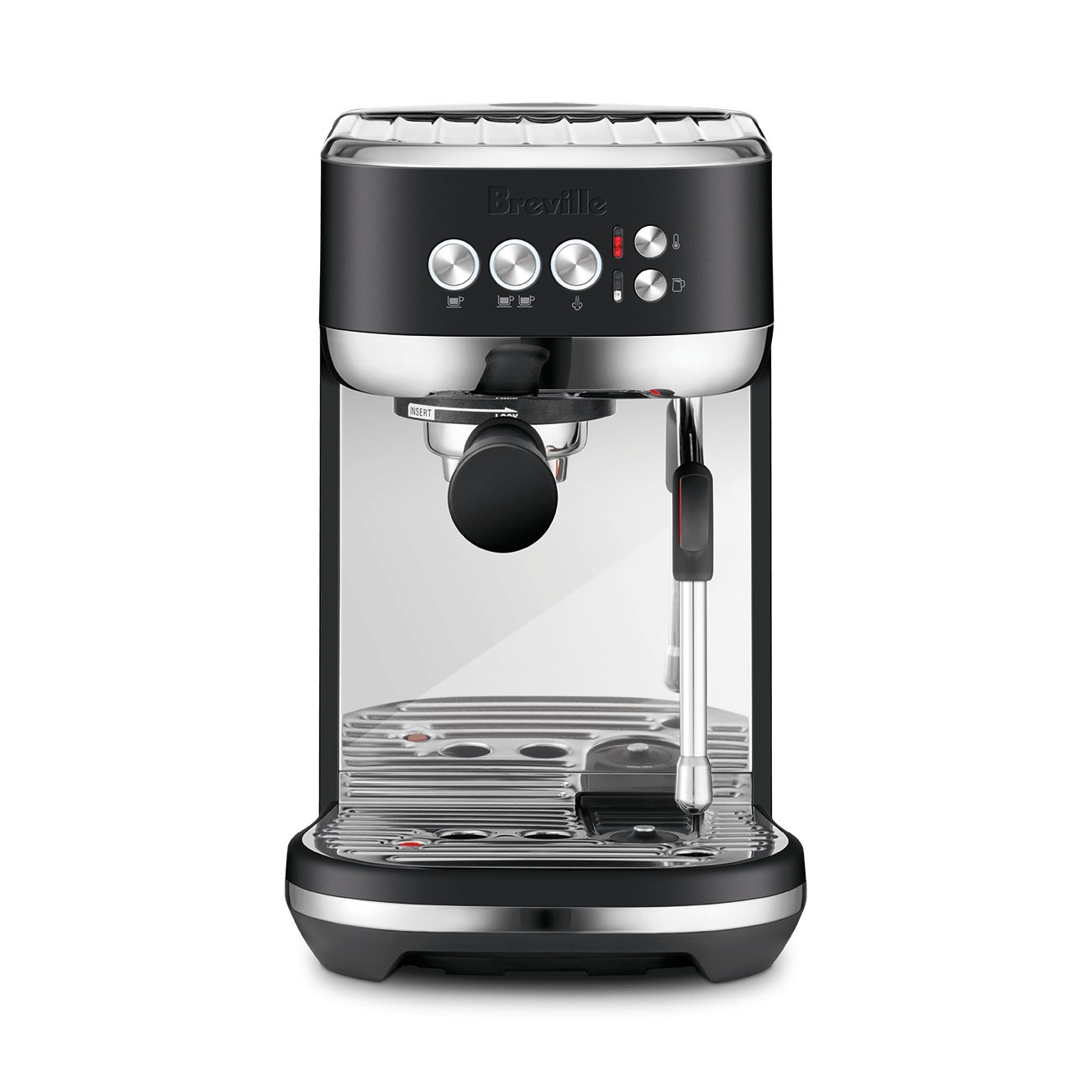
Breville the Bambino Plus
Automatic microfoam, 3-second heat-up
Model
BES500
Dimensions
11.9 × 7.4 × 14.3 in (W × D × H)
Heat-up and milk
3 seconds to extraction temperature (ThermoJet) · automatic texturing, 3 temperatures × 3 textures, 266 °F steam
Pump and portafilter
15 bar Italian pump, 9 bar extraction · 54 mm
Reasons to buy
Automatic milk texturing with three temperature settings and three texture levels, which means the hardest skill in home coffee is a dial rather than six months of practice
A published three seconds from cold to extraction temperature via the ThermoJet, so a latte before work is not a fifteen-minute commitment
Low-pressure pre-infusion before 9 bar extraction from a 15 bar Italian pump, which stops a fresh light roast from channelling
It arrives with a 480 ml stainless milk jug, a 54 mm tamper, the razor dosing tool and both basket types — the only thing missing is a grinder
11.9 by 7.4 inches of counter, genuinely small for a machine that does this
Reasons to avoid
No grinder, and a single-wall basket here exposes a weak one immediately — budget for it
Breville publishes dimensions, steam temperature and pump pressure for it and does not publish the water tank capacity, the wattage or the weight
The milk is the point and this machine solves the milk. Manual steaming costs most people a couple of months and several liters of ruined foam; the Bambino Plus asks you to pick a temperature and a texture. What comes out beats what an untrained hand makes, and loses to a trained one.
The three-second heat-up is the other half. A machine ready before the grinder finishes is a machine you use on a Tuesday. Pair it with a grinder from our espresso grinder guide.
Not the right fit if you want the grinder built in — see the Barista Express.
Heat-up not published by Breville · manual steam wand
Pump and portafilter
15 bar Italian pump, 9 bar extraction · 54 mm
Reasons to buy
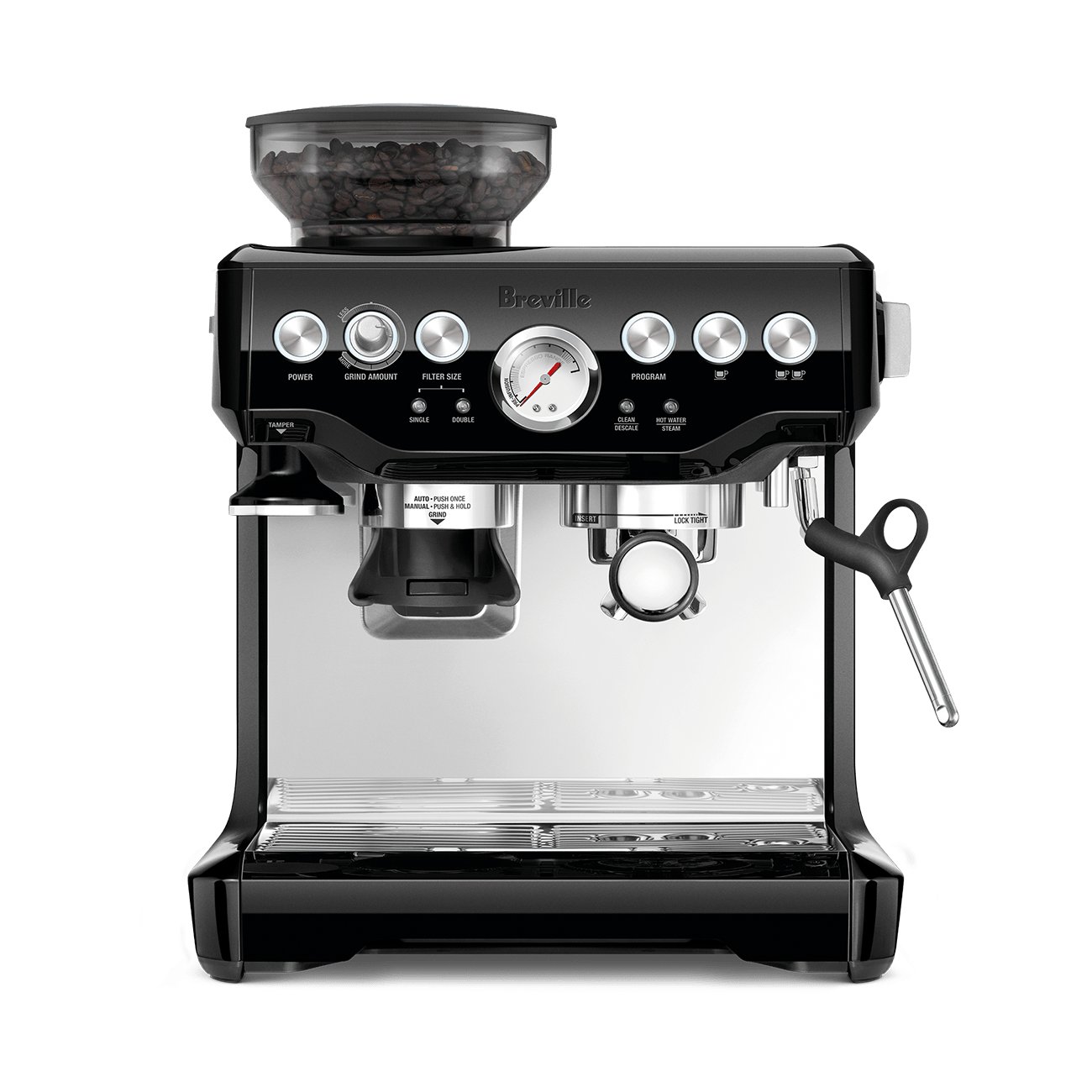
An integrated conical burr grinder with 16 settings and dose control, which makes this one object instead of two and removes the biggest hidden cost of every other machine here
A thermocoil heating system holding 200 °F under PID control, published, which is a figure rather than an adjective
Low-pressure pre-infusion before 9 bar extraction, a 54 mm stainless portafilter, and a dosing funnel and razor trimming tool in the box
Grind, dose, tamp and extract happen in a 15.9-inch footprint that would otherwise be a machine plus a grinder plus the gap between them
Reasons to avoid
Breville's own specification block gives the dimensions as 15.9 by 13.1 by 12.4 inches under a W × D × H heading, which would make this machine shorter than the Bambino Plus — the axis labels cannot be right, so this guide prints no height claim for it
The manual steam wand means the milk skill is yours to learn, and the highest price band here
A built-in grinder is a built-in compromise — 16 settings is fewer than any dedicated espresso grinder in our grinder guide
The machine to buy if you want one purchase, one plug and one thing on the counter. The integrated grinder is not a gimmick — grind, dose and tamp on one body removes the transfer step where beginners lose consistency — and the PID at 200 °F is a real number.
Two caveats. The milk is manual, so it gets better as you do. And Breville's published dimension string does not parse — three numbers under W × D × H that would make it 12.4 inches tall — so we print it and decline to turn it into a fit claim.
Not the right fit if the milk should be automatic — see the Bambino Plus.
Heat-up not published by Breville · manual steam wand, 1650 W element
Pump and portafilter
15 bar with low-pressure pre-infusion · 54 mm
Reasons to buy
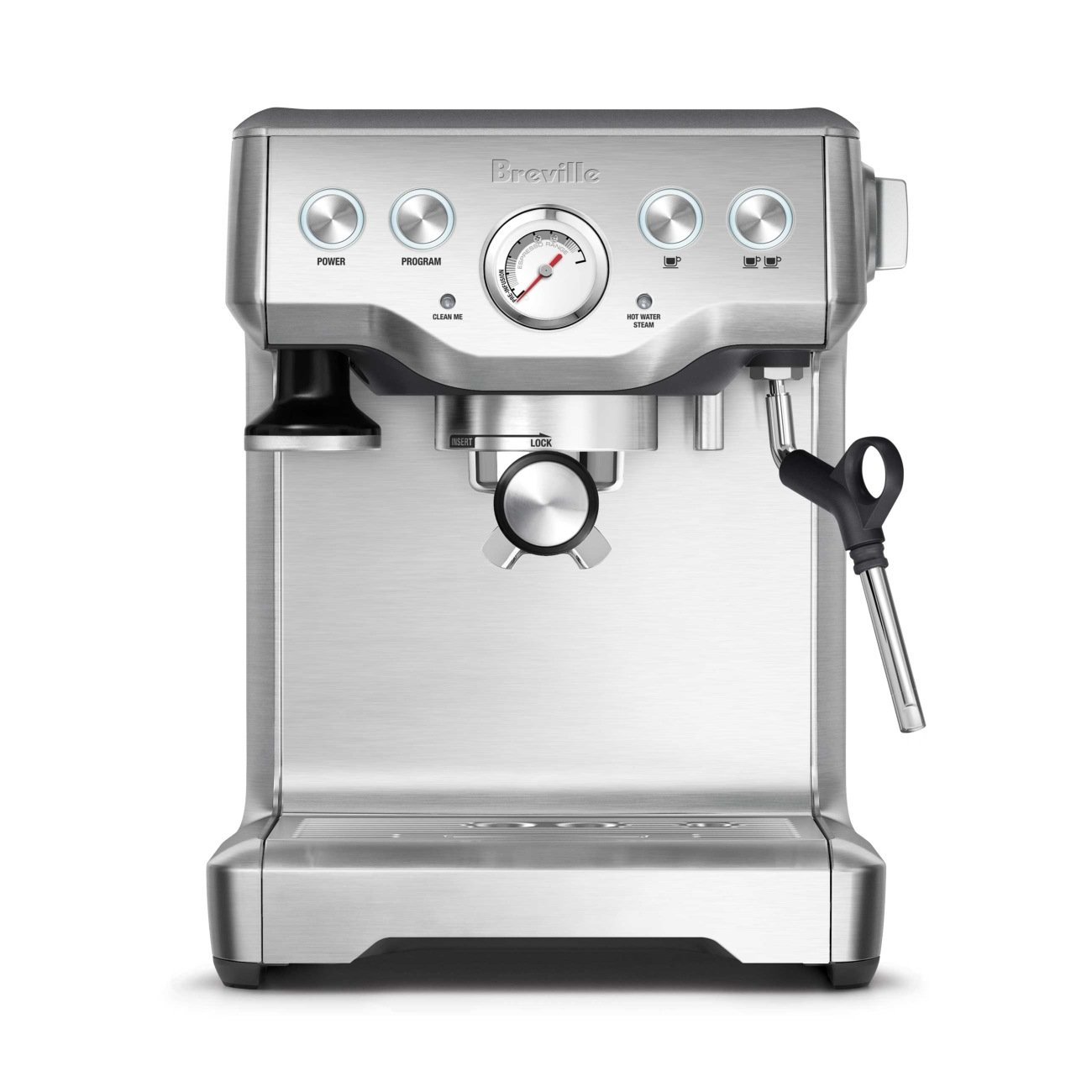
Digital PID temperature control adjustable in 4 °F increments, the only machine here that lets you move brew temperature deliberately rather than accept one
A published 1650 W element for high-pressure steam and faster heat-up, which is what makes a single-boiler machine usable for two milk drinks in a row
Low-pressure pre-infusion at the start of every shot, the feature that separates the Breville line from pressurised-basket machines
13.3 by 10.6 by 12.2 inches, published on all three axes with labels that make sense, which is more than the Barista Express manages
Reasons to avoid
Breville publishes no water tank capacity and no pump pressure figure for this model, and no heat-up time
Manual steaming with no assistance at all, at a price band where the Bambino Plus does it for you
The enthusiast pick in the middle of the range. Four-degree PID steps matter once you are chasing a specific coffee — a light Ethiopian wants a hotter brew than a dark Brazilian — and this is the only machine here that lets you move there on purpose.
1650 watts of steam element recovers between shots fast enough for two drinks back to back. The trade is plain: you steam the milk yourself, at Bambino Plus money.
Not the right fit if you have never steamed milk before — see the Bambino Plus.
Heat-up not published by De'Longhi (Thermoblock) · adjustable manual frother sleeve, hot milk and cappuccino settings
Pump and portafilter
15 bar · filter holder for ground coffee or E.S.E. pods
Reasons to buy
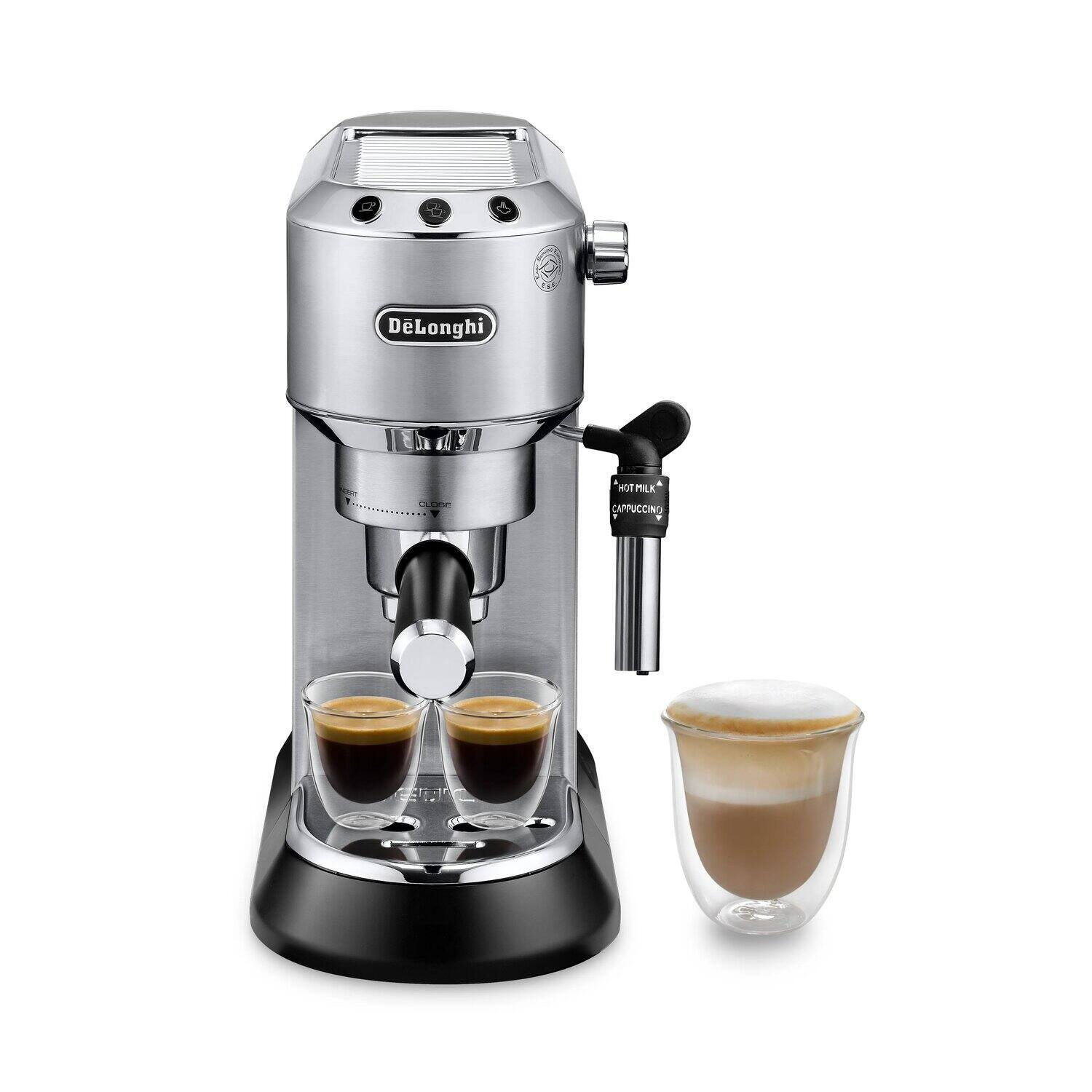
15 centimetres wide — under six inches — which De'Longhi claims makes it the slimmest pump coffee maker available, and on a small counter that is the deciding number
A three-year warranty published by De'Longhi, longer than anything else on this page carries
An adjustable frothing sleeve with distinct hot-milk and cappuccino positions, so the froth level is a setting rather than a technique
A two-level drip tray that takes glasses and tall cups up to 12 to 13 cm, which is the difference between making a latte and making a latte in the wrong glass
Reasons to avoid
De'Longhi publishes a width, a pump pressure and a warranty and does not publish a height, a depth, a weight, a tank capacity or a wattage
A frothing sleeve produces airy froth rather than the dense microfoam a bare wand makes, so latte art is off the table
The answer when the counter is the constraint. Fifteen centimetres means this machine and a hand grinder take less space than a Barista Express alone.
The milk is the compromise. The sleeve introduces air by design, so it makes reliable cappuccino froth and never the glossy microfoam a flat white wants. And the published-specification gap is real — a width and nothing else.
Not the right fit if you want dense microfoam for a flat white — see the Bambino Plus.
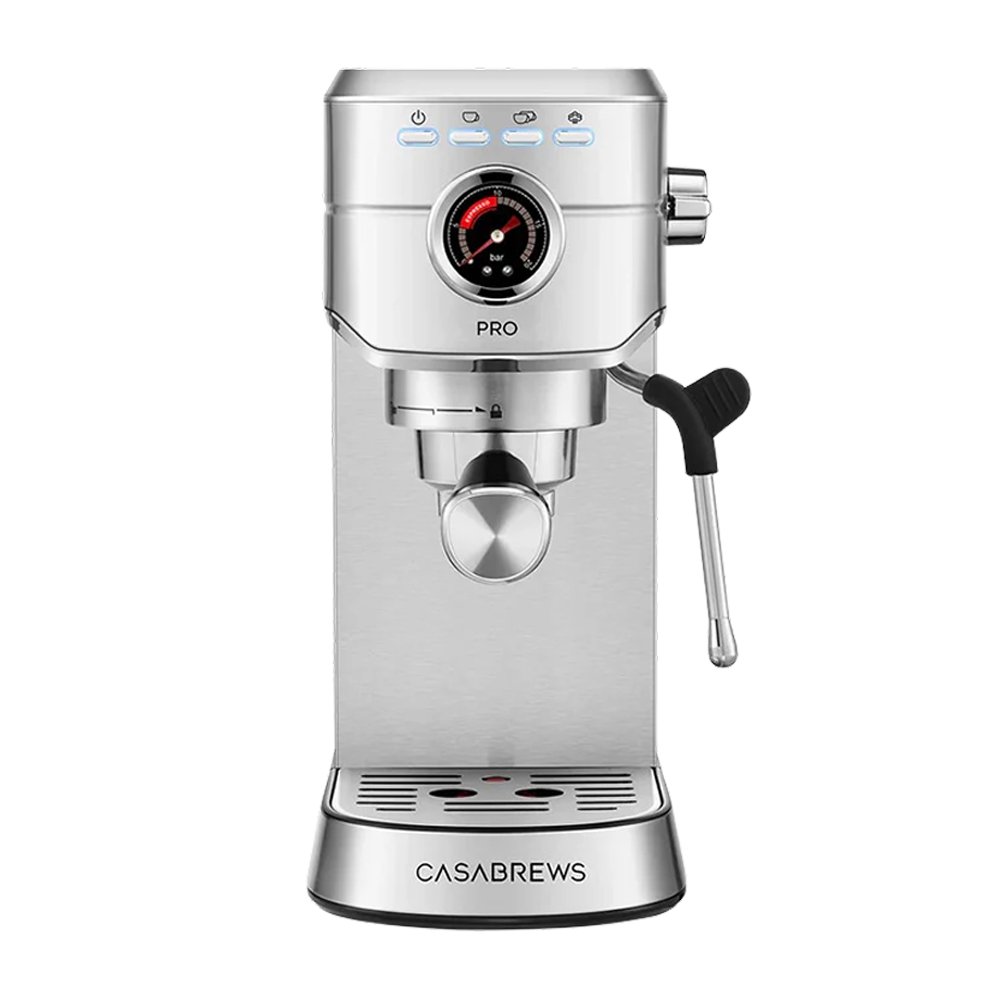
3-second switch from brew to steam · manual steam wand, PID-stabilised
Pump and portafilter
20 bar · portafilter size not published by Casabrews
Reasons to buy
Casabrews publishes a brewing temperature held between 90 and 96 °C under PID control, which is exactly the band SCA Standard 310-2021 specifies — a claim with a number in it, at the cheapest price band on this page
A published three-second switch from brewing to steaming, against the ten to twenty seconds the brand attributes to conventional machines, which is the single most annoying wait in making a latte
Pre-infusion to let the puck bloom before full pressure, a feature usually reserved for machines twice the price
A pressure gauge on the front, so a choked or gushing shot is visible rather than inferred
Reasons to avoid
No published dimensions, no published portafilter size, no published tank capacity and no published wattage — Casabrews sells on features and gives you almost no figures
A 20-bar pump is a marketing number, not a better one; espresso is extracted at 9 bar and everything above that is headroom the machine throttles away
The frother is a manual wand with no assisted mode, so the milk half of the drink is entirely your skill on the least documented machine here
The least costly machine here that makes a claim you can check. A published 90 to 96 °C under PID is the SCA band, and a brand willing to print the range has measured it.
What you are not getting is documentation. No dimensions, no portafilter size, no wattage, and a 20-bar headline that says nothing about the shot. Buy it to get into milk drinks cheaply and expect to outgrow it.
Not the right fit if you want to know what size it is before it arrives — see the Breville the Infuser.
Nobody here has steamed milk on these five machines, and this page is not going to imply otherwise. Here is what the ranking is built on.
Every figure in every spec block came from the manufacturer's own published product page, each linked in Sources — dimensions, heat-up claims, milk system description, pump pressure and portafilter size. Where a brand publishes no figure, the table says "Not published" rather than taking one from a retail page.
Temperature claims were checked against SCA Standard 310-2021, which specifies 90 to 96 °C. Only two of these five brands publish a brewing temperature at all: Breville states 200 °F under PID for the Barista Express and a 4 °F adjustment increment on the Infuser, and Casabrews states 90 to 96 °C under PID for the 5418 Pro.
Where a published dimension string cannot be correct we print it and refuse to convert it into a fit claim — Breville lists the Barista Express as 15.9 by 13.1 by 12.4 inches under a W × D × H heading, which would make it shorter than the Bambino Plus. All five Amazon pages were fetched and each page title checked against the product and the color version named here.
The verdict
Best overall: the Breville Bambino Plus — automatic milk texturing across three temperatures and three textures, a published three-second heat-up, and an 11.9 by 7.4 inch footprint. For a latte at home it removes the one part that takes months to learn.
Best all-in-one: the Barista Express, grinder included, PID at 200 °F. Best temperature control: the Infuser, PID adjustable in 4 °F steps with a 1650 W steam element. Narrowest counter: the De'Longhi Dedica Deluxe at 15 cm and a three-year warranty. Cheapest with a real claim: the CASABREWS 5418 Pro, PID held between 90 and 96 °C.
None of these makes good espresso with a bad grinder. Read our espresso grinder guide before you split the budget.
Do I need an automatic milk frother to make a latte at home?
No, but it removes the part that takes longest to learn. Hand-steaming to a glossy microfoam is a two- or three-month skill; the Bambino Plus does it to a chosen temperature and texture on day one. The manual machines here all beat it — eventually, in trained hands.
What temperature should espresso be brewed at?
SCA Standard 310-2021 specifies 90 to 96 °C, which is 194 to 205 °F. Breville publishes 200 °F for the Barista Express under PID and Casabrews publishes the 90 to 96 °C range. De'Longhi publishes a Thermoblock and no temperature — hardware, not a claim about the water.
Is a 20-bar pump better than a 15-bar pump?
No. Espresso is extracted at about 9 bar, and every machine on this page — 15-bar Brevilles and the 20-bar Casabrews alike — regulates down to roughly that. Breville is explicit about it, publishing a 15 bar pump and 9 bar extraction. A higher headline bar number is marketing headroom, not a better shot.
How long does a latte take on these machines?
Breville publishes three seconds to extraction temperature on the Bambino Plus. Add grinding, tamping and about 30 seconds of steaming and one latte is three to four minutes from cold. The fifteen-minute warm-up rule belongs to heavier boilers than these.
Which milk jug size should I use?
The Bambino Plus ships a 480 ml (16 fl oz) stainless jug, right for one 8-ounce latte — a jug wants roughly twice the milk volume so the foam has room. Two drinks at once wants a larger jug, a separate purchase on every machine here.
Also considered
De'Longhi La Specialista Arte Evo (EC9255M) — A built-in grinder, eight grind settings, three temperature profiles and cold brew — it should have been on this list. De'Longhi's US pages publish a warranty line and no dimensions, wattage, tank capacity or pump figure we could read, so there is nothing to rank it on.
Gaggia Classic Evo Pro — A commercial 58 mm portafilter and a bare steam wand at a sensible price, and the previous revision already leads a section of our beginner espresso guide. Putting the Evo here would be the same machine under a second heading.
Breville the Bambino (BES450) — The Bambino Plus without the automatic milk texturing, and it leads our beginner guide on published heat-up time. On a page about milk drinks the missing feature is the whole subject.
Nespresso machines with an Aeroccino — A pod machine plus a milk frother makes a good latte with no skill at all. It is also the dearest coffee per cup by a wide margin, and with no grind, dose or temperature to adjust there is nothing here to rank.
Any machine sold only with a pressurised basket — A dual-wall basket manufactures its own back-pressure and ignores your grind, producing foam that looks like crema and a shot you cannot improve. With no single-wall option, the ceiling is fixed on the day you buy it.