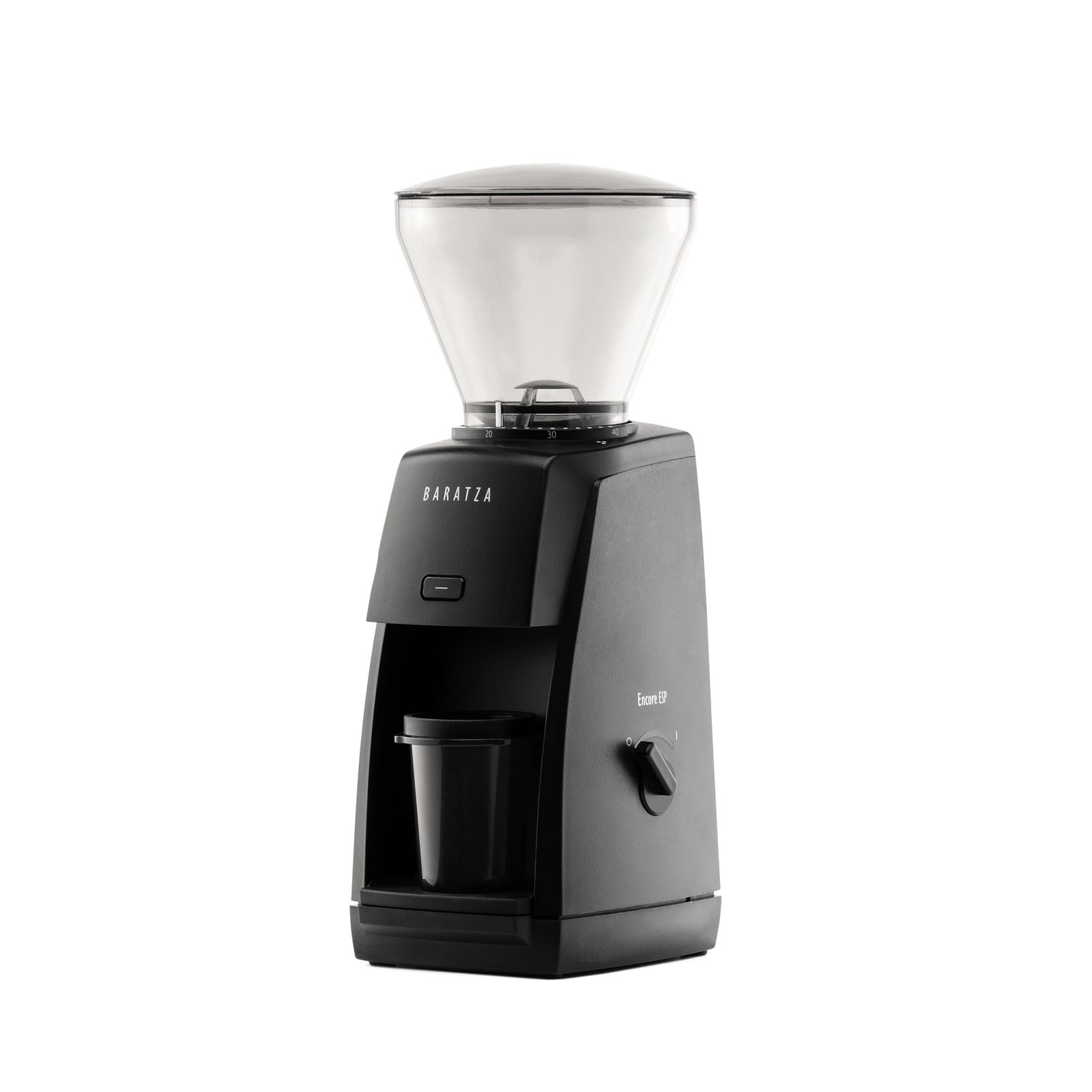
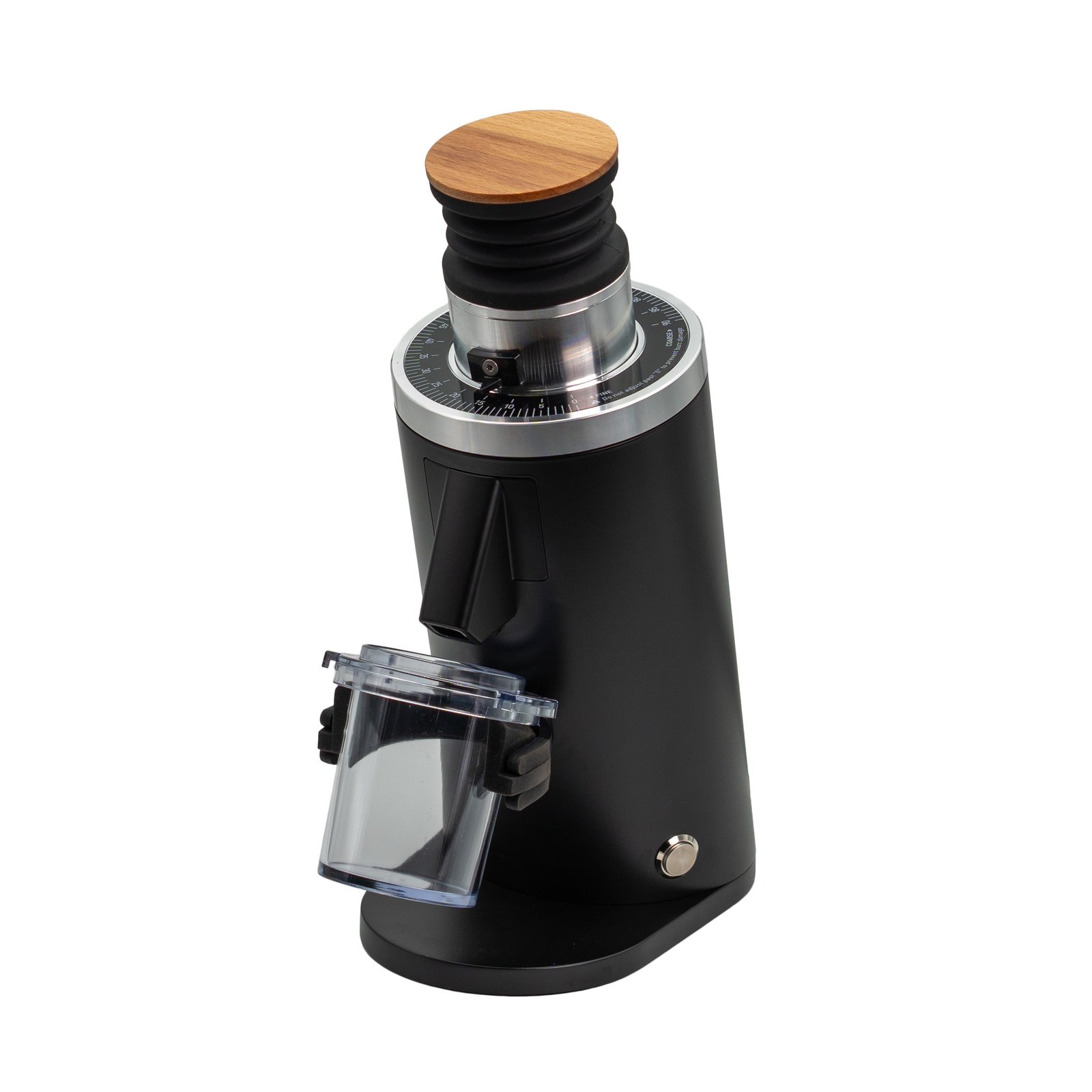
Buy the MiiCoffee DF54. It has 54 mm flat burrs, a stepless adjustment with no detents to fight, and a published retention under 0.1 gram, which together are the three things that let you move a shot by two seconds instead of ten. If that is more grinder than the machine cost, the Baratza Encore ESP is the cheapest electric grinder that genuinely reaches espresso, with 20 of its 40 steps inside the espresso range.
A Bambino-class machine — the Bambino Plus, the Dedica, a Gaggia Classic — is a 54 or 58 mm portafilter with a real pump behind it and no grinder inside. Fill Breville's published 18-gram basket with what a general-purpose grinder produces and the shot runs in eight seconds or chokes, and no tamping fixes it: the grinder cannot make a small enough change.
That is the selection criterion here, and it is a number: how finely you can adjust inside the espresso range. Everything below publishes it in some form — microns per click, clicks per rotation, steps inside the band, or stepless — and this guide ranks on it.
How to shop for an espresso grinder
How small a change you can make near espresso
Espresso lives in a grind range a few tens of microns wide, so 40 settings spread across every brew method leave perhaps four usable espresso positions. 1Zpresso publishes 8 microns per click, Timemore 0.0233 mm, Baratza 20 of 40 steps inside the espresso range, and the DF54 is stepless.
Burr type and size
Flat burrs cut a narrower particle distribution and tend to give a sweeter, more separated shot; conicals are more forgiving and cheaper to build. Size sets the throughput: 54 mm flat (DF54), 48 mm conical (J-Ultra), 40 mm conical (Encore ESP), 38 mm conical (C3 ESP). Bigger is faster, not automatically better.
Retention, and whether the dose you weighed is the dose you get
Grounds left inside a grinder come out stale in the next shot, which is why single-dosing exists. MiiCoffee publishes under 0.1 gram of retention on the DF54 and nobody else here publishes the figure at all — which tells you which were designed for espresso and which were adapted to it.
Footprint, because the machine is already on the counter
A Bambino Plus is 11.9 by 7.4 inches before you add anything. The DF54 is 4.5 inches wide and 12 tall, the Dose Control Pro 8 by 6.3 by 13.5, the Encore ESP 13 by 15 centimetres, and the hand grinders take a drawer.
What the manufacturer will actually publish
Two of the five brands here publish burr size, adjustment resolution, capacity, dimensions and weight. Breville publishes a settings count and a dimension string and no burr size. Where a brand leaves a figure out, this guide names the brand and says so.
Best overall
Image: MiiCoffee
MiiCoffee DF54 Single Dose Coffee Grinder
Stepless 54 mm flats, 0.1 g retention
Model
DF54
Burrs
54 mm stainless flat · 150 W motor
Adjustment
Stepless
Size and dose
4.5 × 7 × 12 in (W × D × H) · 20 g hopper, 50 g with bellow
Reasons to buy
Stepless adjustment, so moving from a 25-second shot to a 30-second one is a nudge rather than a jump to the next detent
Custom 54 mm stainless flat burrs, a narrower particle spread than any conical here and the reason the shot tastes separated rather than muddy
Published retention under 0.1 gram, with a blow-out funnel to empty the dead space — weigh 18 grams in, get 18 grams out
An ionizer in the exit chute that MiiCoffee says kills static, plus an anti-popcorn disc — the difference between grounds in the cup and grounds on the counter
4.5 inches wide, the narrowest electric grinder here, and it comes with a 58 mm dosing cup that sits directly in a portafilter
Reasons to avoid
10 pounds of aluminum at the top price band on this page, which is a serious fraction of what the machine cost
Single-dose by design — a 20-gram hopper without the bellow means you weigh beans for every shot, every time
This is the grinder that makes a Bambino-class machine behave like a real espresso setup, and the reason is boring: stepless adjustment plus near-zero retention closes the feedback loop. You change the grind, pull a shot, and taste the change you made rather than the change plus four grams of yesterday.
The 54 mm flat burrs are the other half: flats and conicals genuinely taste different, and the flat separates the flavours in a light roast. What you accept is the price band, the weight and weighing beans in before every shot.
Not the right fit if the grinder should cost less — see the Baratza Encore ESP.
Baratza splits the range deliberately — 20 of the 40 macro steps sit inside the espresso band, which is what the plain Encore does not do
40 mm M2 conical burrs and a published 70 W motor, so it is quiet, it runs cool, and it is the cheapest electric on this page by a distance
It comes with a portafilter holder, so the grounds go where they are meant to rather than into a cup and then into a basket
Baratza publishes dimensions, burr size, capacity and wattage, and sells replacement parts rather than replacement grinders
Reasons to avoid
Stepped, not stepless — twenty positions finds a workable shot and not always a perfect one, particularly on a light roast
No published retention figure, and a conical grinder with a hopper holds grounds between doses
The right first espresso grinder and the one most Bambino owners should buy. Twenty steps inside the espresso range is the point: you can walk the grind finer one click at a time and watch the shot time move.
You give up the last increment of precision and you give up knowing what the machine holds back. At this money, with published parts and a 70-watt motor that will still be running in five years, that is a good trade — and if you outgrow it, the DF54 is what you outgrow it into.
Not the right fit if you want to change grind without hitting a detent — see the MiiCoffee DF54.
Dimensions not published by 1Zpresso · 35-40 g catch cup
Reasons to buy
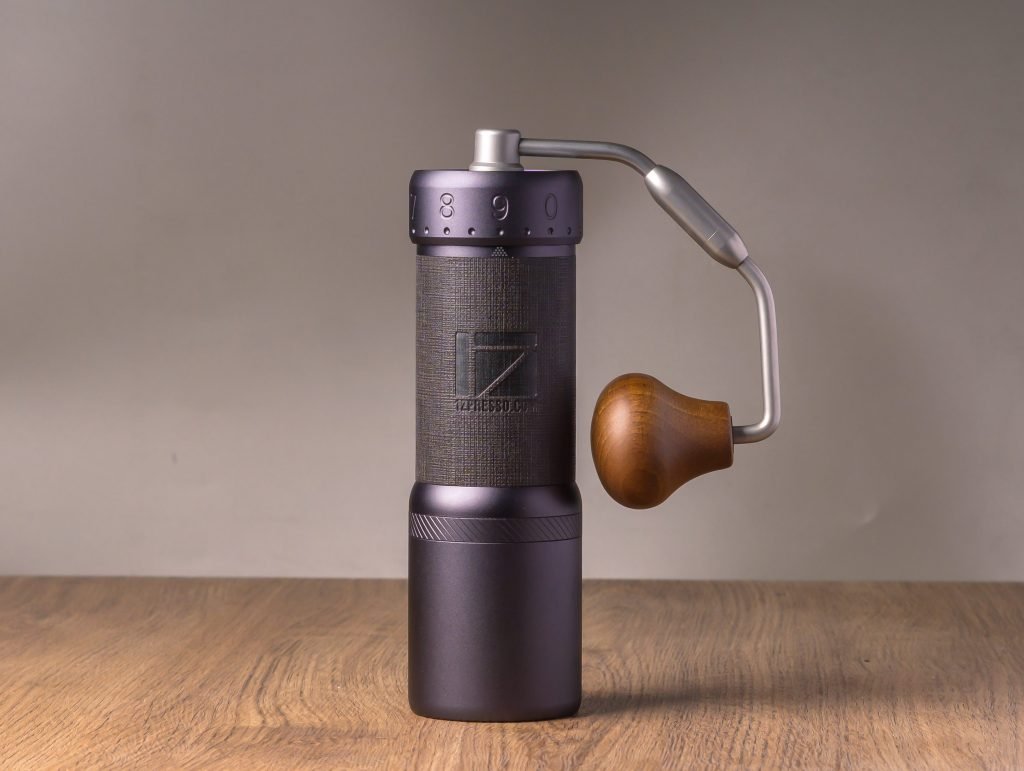
8 microns of movement per click, the finest adjustment 1Zpresso publishes across its whole range and finer than anything else on this page
External adjustment, so you change the grind without taking the grinder apart or losing your reference point
48 mm conical burrs with an espresso-specific geometry and a coating 1Zpresso says speeds the grind, in a body that weighs 670 grams and takes no counter space at all
A magnetic catch cup that twists off in one movement, which matters when you do this twice a morning
Reasons to avoid
You turn it yourself, and 18 grams of espresso-fine coffee is genuine effort — this is the trade the whole category is built on
1Zpresso publishes weight, burr size and adjustment resolution and no overall dimensions, so the drawer question is unanswered
The most precise adjustment on this page belongs to a grinder with no motor. Eight microns per click is finer than most electric grinders offer at any price, and on a Bambino-class machine that resolution is exactly what you are short of.
It is also the pick that asks the most of you. Grinding 18 grams fine enough for a single-wall basket is thirty to forty seconds of real work before you have even turned the machine on. If your counter is full and your budget is not, this is the grinder; if you want to press a button, it is not.
Not the right fit if you make two coffees before work — see the Baratza Encore ESP.
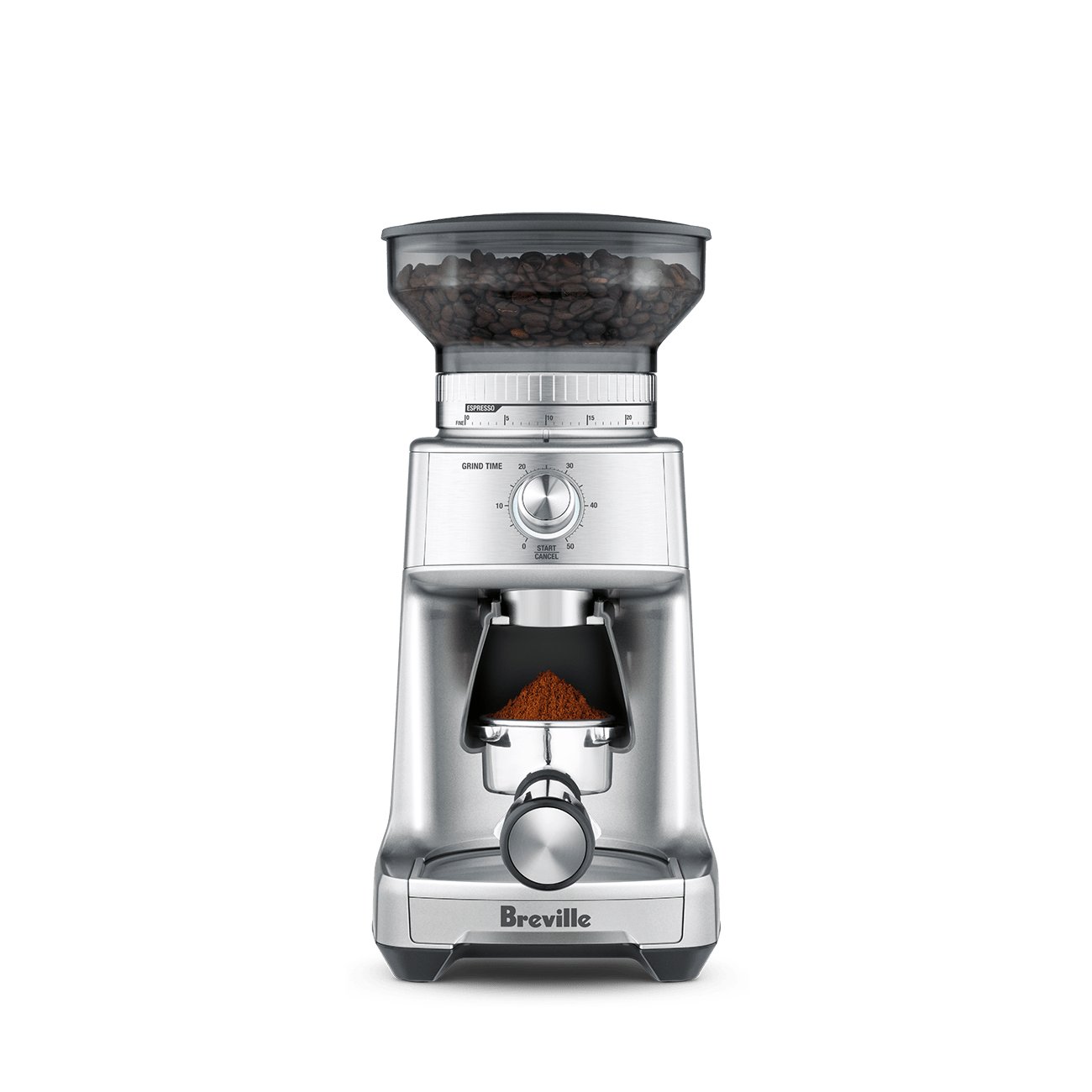
Stainless conical, size not published by Breville · wattage not published
Adjustment
60 settings
Size and dose
8 × 6.3 × 13.5 in (W × D × H) · hopper capacity not published
Reasons to buy
60 grind settings, the most positions of any electric grinder here, spread across espresso to French press
It ships with portafilter cradles for both 50-54 mm and 58 mm baskets plus an adjustable razor dosing tool, so it is set up out of the box for a Bambino-class portafilter
A hopper and a timer rather than single-dosing, which means you load beans once a week and press a button twice a day
8 inches wide by 6.3 deep — it fits beside a Bambino Plus on a counter that would not take the DF54 and a bean canister
Reasons to avoid
Breville publishes a settings count and a dimension string and will not tell you the burr diameter, the hopper capacity or the wattage
60 settings spread across every brew method is not the same as 20 concentrated in espresso — many of those positions are of no use to you
13.5 inches of published height, the tallest electric here, which matters on a counter with a cabinet over it
The convenient one. A hopper, a timer, a dosing tool and cradles for both portafilter sizes make this the grinder that fits into a morning rather than into a hobby, and the Breville-to-Breville pairing on the counter is not nothing if you care what your kitchen looks like.
What I cannot tell you is what is inside it. No burr diameter, no hopper capacity, no wattage — three figures every other brand on this page publishes. Sixty settings sounds like more precision than the Encore ESP's forty and probably is not, because Baratza put half of its forty where espresso lives.
Dimensions not published by Timemore · 20 g catch cup
Reasons to buy
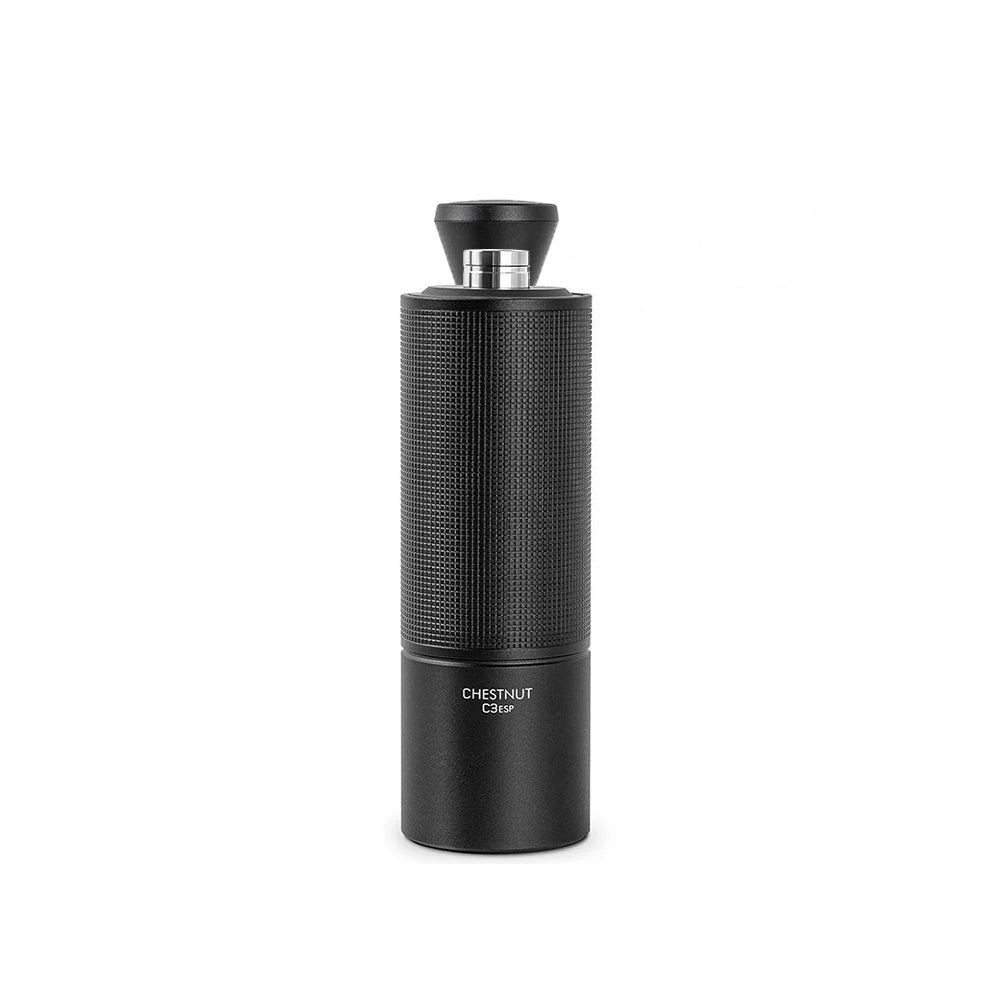
0.0233 mm per click — 23 microns — published by Timemore, which is finer resolution than any electric grinder here except the stepless DF54
It is in the cheapest price band here, which makes it the least costly object on this page that can genuinely dial in an espresso shot
38 mm conical burrs in a hand grinder that fits a drawer, so it adds nothing to a counter already holding a machine
A 20-gram capacity is exactly one double basket, so there is no dose maths
Reasons to avoid
38 mm burrs and a hand crank means espresso-fine 18 grams is slow and physical, noticeably harder work than the 48 mm J-Ultra
Timemore publishes no dimensions and no weight
If the budget is gone after buying the machine, this is the answer, and it is a much better answer than a cheap electric grinder. Twenty-three microns per click is real precision, and precision is the only thing standing between a Bambino and a decent shot.
The cost is in your arm. Where the J-Ultra has 48 mm burrs and a coating to speed things up, this has 38 mm and determination. For one or two shots a day it is entirely reasonable, and it is the pick we already recommend in our burr versus blade comparison.
Not the right fit if you pull four shots a morning — see the MiiCoffee DF54.
We have not pulled shots with these five grinders. Here is what the ranking is built on.
Every figure came from the manufacturer's own page, linked in Sources. Where a brand publishes no figure the table names the brand and says so — Breville gives 60 settings and a dimension string for the Dose Control Pro and no burr size, capacity or wattage.
Ranking went on adjustment resolution in the espresso range first, because that is the failure mode a Bambino-class machine has: too coarse and the shot gushes, too fine and it chokes. A grinder whose smallest change jumps past both is unusable whatever else it publishes. Retention was the tie-breaker.
Every Amazon page linked above was opened, its title matched to the product named here and its buy box checked — which matters because the Encore and the Encore ESP are different grinders under nearly the same name.
The verdict
Best overall: the MiiCoffee DF54 — stepless 54 mm flat burrs and a published retention under 0.1 gram, which is what turns grind adjustment into a feedback loop instead of a guess. It costs more than some Bambino-class machines, and it is still the right answer if espresso is the point.
Best value: the Baratza Encore ESP, with 20 of its 40 steps inside the espresso range and a published 70-watt motor. Finest adjustment of all: the 1Zpresso J-Ultra at 8 microns per click, by hand. Most convenient: the Breville Dose Control Pro, if you can live without knowing its burr size. Cheapest that works: the Timemore Chestnut C3 ESP at 23 microns per click.
If you are still choosing the machine, our beginner espresso guide ranks those on published heat-up time, and our milk-drink guide covers the ones with a steam wand worth using.
Not usefully. Both use the same 40 mm conical burrs in different ranges: the ESP puts 20 of its 40 macro steps inside the espresso band, where the plain Encore bottoms out at a fine drip grind. That is the whole difference, and it is the difference between a shot and a gusher.
Do I need a single-dose grinder, or is a hopper fine?
A hopper is fine if you drink one kind of coffee. Single-dosing exists because retained grounds come out stale in the next shot — MiiCoffee publishes under 0.1 gram on the DF54 and no one else here publishes the number. If you switch beans often, retention decides it.
How fine is espresso grind, in numbers?
Fine enough that useful adjustments are measured in tens of microns. 1Zpresso publishes 8 microns per click for the J-Ultra and Timemore 23 microns for the C3 ESP, and one click on either visibly moves a shot's run time. That is why settings spread evenly across every brew method fail at espresso.
Is a hand grinder realistic for daily espresso?
For one or two shots, yes — thirty to forty seconds of cranking for an 18-gram dose, more on the 38 mm C3 ESP than the 48 mm J-Ultra. For four shots on a weekend morning, no, which is why the electric picks rank where they do.
Will a better grinder fix a pressurised basket?
No, and this is worth knowing before you spend. A pressurised dual-wall basket creates its own back-pressure and largely ignores your grind, which is why it works with pre-ground. The grinder starts to matter when you move to the single-wall basket — and then it matters more than anything else on the counter.
Also considered
Eureka Mignon Specialita — 55 mm flat burrs, stepless, and the grinder most often recommended alongside a Bambino. Eureka's site renders its product pages entirely in JavaScript and serves no specification table, so there is no first-party burr size, dimension or wattage to rank it on.
Baratza Sette 270 — Grinds directly into the portafilter with almost no retention and is a genuinely great espresso grinder. It sits well above everything else here on price, which puts it outside this guide rather than below its bar.
Breville Smart Grinder Pro (BCG820) — 60 settings and a better display than the Dose Control Pro, and it already leads a section of our pour-over and drip grinder guide. Its extra settings spread across brew methods rather than concentrating in espresso, so it adds nothing the BCG600 does not.
Fellow Opus 2 — Stepless, well documented, and genuinely capable at the coarse end. Fellow positions it as an all-brew-method grinder and its espresso range is the shallowest part of it, which is the exact failure this page is written to avoid.
Any blade grinder — A blade chops for as long as you hold the button and produces dust and boulders in the same batch. There is no setting, so nothing to dial in, and a single-wall basket will choke or channel on every shot. Numbers in our burr versus blade comparison.