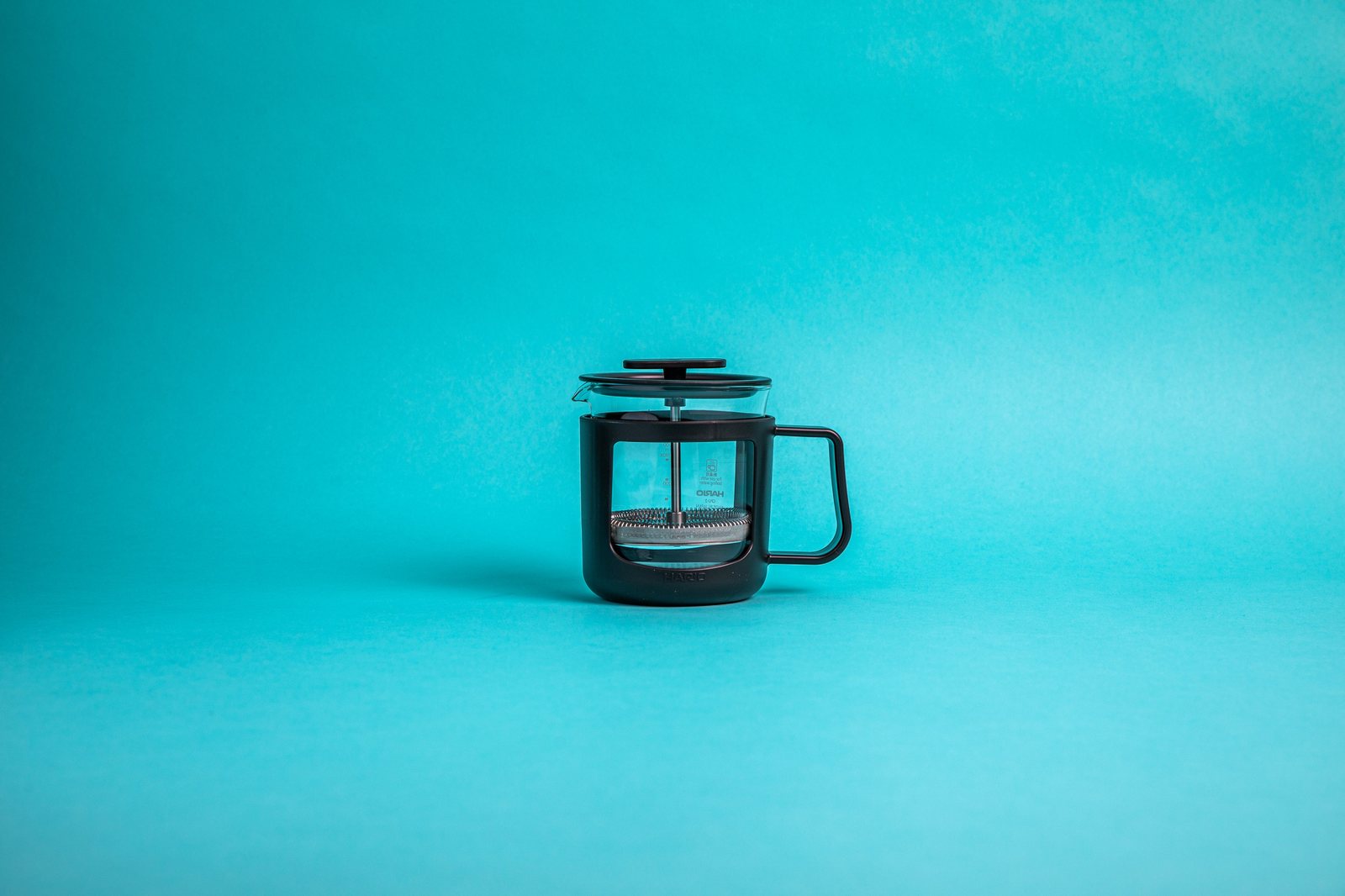
Buy the Hario Cafe Press U in 300 ml. A French press has a floor as well as a ceiling: below a certain volume the plunger screen sits above the coffee bed and the brew does nothing. Espro is the only brand here that publishes that floor, and on its 32 oz press it is 24 oz — three mugs, minimum, from the size of press most people are sold. The Hario holds 300 milliliters in total, which is two cups, and Hario prints the outside as 139 by 93 by 116 mm so you know what you are putting in the cupboard.
If you want a slightly bigger one with a dual filter, the GROSCHE MADRID is 350 mL for about the same money. If you want the cleanest cup of the group and do not mind spending, the Espro P7 in 18 oz is double-walled steel and filters twice.
This guide exists because the default French press is a 34 oz eight-cup, and an eight-cup press making one mug is a cold, weak cup of coffee. Buy the press that matches the number of people at the table.
How to shop for a small French press
Total capacity, and the brew floor underneath it
A press works by holding the grounds under water and then under the screen. Too little liquid and the screen never reaches the bed. Espro publishes a minimum brew size — 24 oz on the 32 oz P3 — and nobody else on this page publishes one at all, which is why buying small is safer than buying big and under-filling.
Published outside dimensions
Both Hario presses print width, depth and height in millimeters. GROSCHE publishes a capacity and no dimensions. Espro publishes dimensions for some models and, on the P3, prints the same block for both sizes it sells. Cupboard space is a real constraint on a thing that lives on a counter.
One filter or two
A single mesh screen lets fines through, which is the silt in the last inch of a press cup. GROSCHE puts a second filter in the lid; Espro puts a second micro-filter inside the first and calls it double filtration. Both Harios are single-screen and taste like it, in the traditional way.
Glass or steel
Glass shows the brew and takes no flavor; steel keeps the coffee hot for the fifteen minutes a two-cup brew actually takes to drink, and survives a tiled floor. The two cheapest picks here are glass and the most expensive is double-walled steel.
What happens when the beaker breaks
It will. GROSCHE and Espro both sell replacement beakers as catalog items; Hario's presses come apart entirely for cleaning and the glass is a standard Hario part. Check that before you buy anything with a glass body.
Best overall
Image: Hario USA
Hario Cafe Press U 300 ml
Two cups, and every dimension published
Model
CPU-2-B
Capacity
300 mL practical · 2 cups
Size
139 × 93 × 116 mm (W × D × H)
Filter
Single stainless mesh
Reasons to buy
300 milliliters is genuinely a two-cup press, not an eight-cup press you are told to half-fill, so the plunger screen always reaches the bed
Hario publishes width, depth and height in millimeters plus a 90 mm diameter, which no other brand on this page does for its small press
116 mm tall means it lives in a drawer or on a shelf rather than owning a piece of counter
The black holder is removable for cleaning and the body is Hario's heatproof borosilicate glass, made in Japan
A loose stainless mesh that lets some fines through on purpose — the full-bodied, oily press cup people buy a press for
Reasons to avoid
One screen and no second filter, so there is silt in the last mouthful unless you grind coarse and pour carefully
Glass, with a plastic holder, in a category where the alternative is double-walled steel
300 mL is two small cups and there is no way to stretch it
This is the press the category should be built around. The problem with French press at home is not the brewing, it is that the standard size makes three times as much coffee as one person wants, and a half-filled press brews badly.
Hario simply sells a small one, prints its dimensions, and charges the least money here for it. There is a 600 ml version of the same press if two of you drink two cups each — and at 172 mm tall it is the same object, taller.
Not the right fit if you want a filter that removes the fines — see the Espro P3.
Two filters for the price of the single-screen Hario — the main screen on the plunger and a second in the lid, so grounds are stopped twice on the way to the cup
350 mL is the largest of the three cheap presses here and still a genuine two-cup brew
A chrome housing that keeps the borosilicate beaker off every surface it touches, with grips that stop it sliding out when you wash it
The beaker lifts out of the frame for cleaning, and GROSCHE sells the replacement beaker as a stock item rather than as a warranty claim
Reasons to avoid
GROSCHE publishes a capacity in two units and not one dimension, so the cupboard question is unanswerable before it arrives
The brand's own store prices in Canadian dollars, so the button here goes to Amazon
A chrome-and-glass press is heavier and more fragile than the same volume in steel
The value pick. You get a second filter and 50 milliliters more coffee than the Hario for the same money, and the cup is noticeably cleaner in the last inch.
What you do not get is a number for how big it is. That matters less on a press than on a machine, but it is the one thing separating this from the winner, and it is entirely within GROSCHE's power to fix.
Not the right fit if you need to know it fits the shelf — see the Hario Cafe Press U.
Espro's double micro-filter is the finest filtration in this group and the reason a P3 cup has no silt in it at all
18 oz is two large mugs, which is the size this page is about, and it costs the same as the two single-screen presses
A twist-lock latch holds the carafe in the frame while you pour, which is the failure mode that breaks glass presses
Espro is the only brand here that publishes a minimum brew size at all, and it sells replacement glass and replacement filters as catalog parts
Reasons to avoid
The 18 oz variant's page prints the 32 oz specification block — 6.1 by 4.3 by 9.51 inches, 1.8 lb, 32 oz capacity, 24 oz minimum — and asking the site for each size separately returns the same block both times
Borosilicate glass in a polypropylene frame, so it is the least durable thing here
The paper filters and the tea micro-filter are sold separately
The cup is the argument. Two filters, one inside the other, take out the fines that a single screen leaves behind, and at this price nothing else comes close to it for clarity.
The specification sheet is the problem, and it is worth saying plainly: on the day this was written, Espro's own page served the 32 oz numbers for the 18 oz press. The capacity in the table above is the one printed on the variant name, not the one in the spec block, and the size cell says so.
Not the right fit if you want the numbers on the page to match the product — see the Espro P7, which publishes two size blocks.
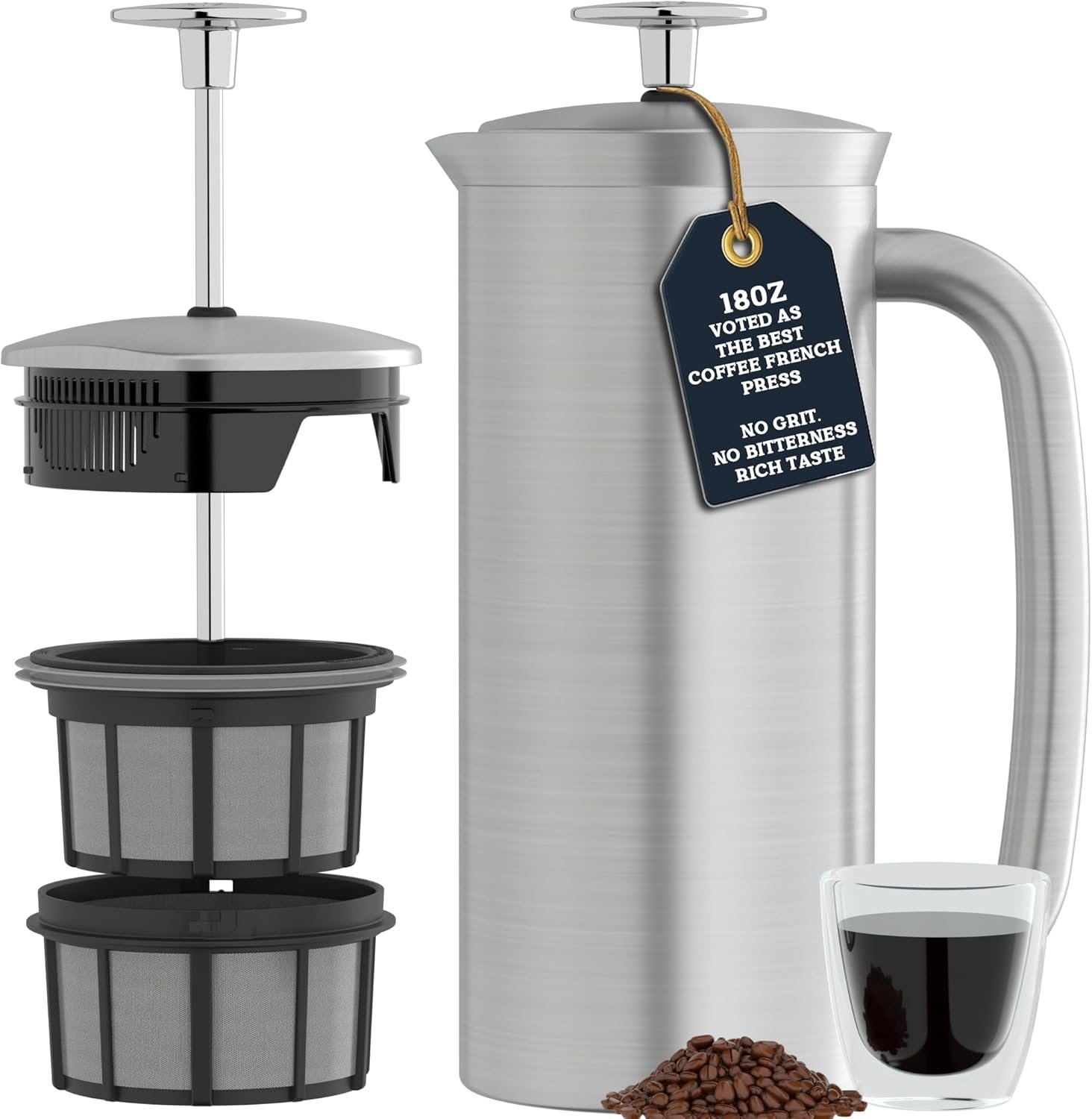
Double-walled stainless steel, so the second cup is as hot as the first — the thing glass presses cannot do and the reason a small press is usually drunk too fast
Espro publishes the water-to-coffee relationship explicitly — 27 oz of water in, 18 oz of coffee out, which is the clearest statement of press yield anywhere on this page
The same double micro-filter as the P3, so the clarity is identical and the heat retention is not
Shatterproof, rustproof and BPA-free, which makes it the one press here you can take camping
Reasons to avoid
The most expensive thing on this page by a wide margin, in its own band above everything else
You cannot see the brew, so the bloom and the plunge are done blind
Espro's P7 page prints two dimension blocks without labelling which belongs to the 18 oz and which to the 32 oz; the smaller set is the one in the table above
If you brew two cups and drink the second one twenty minutes later, this is the press that makes that a good idea. Everything else here is room temperature by then.
It costs roughly three times the cheap three, and the cup is the same as the P3's. You are paying for steel and for heat, not for flavor.
Not the right fit if you want to watch the brew — see the Hario Cafe Press U in glass.
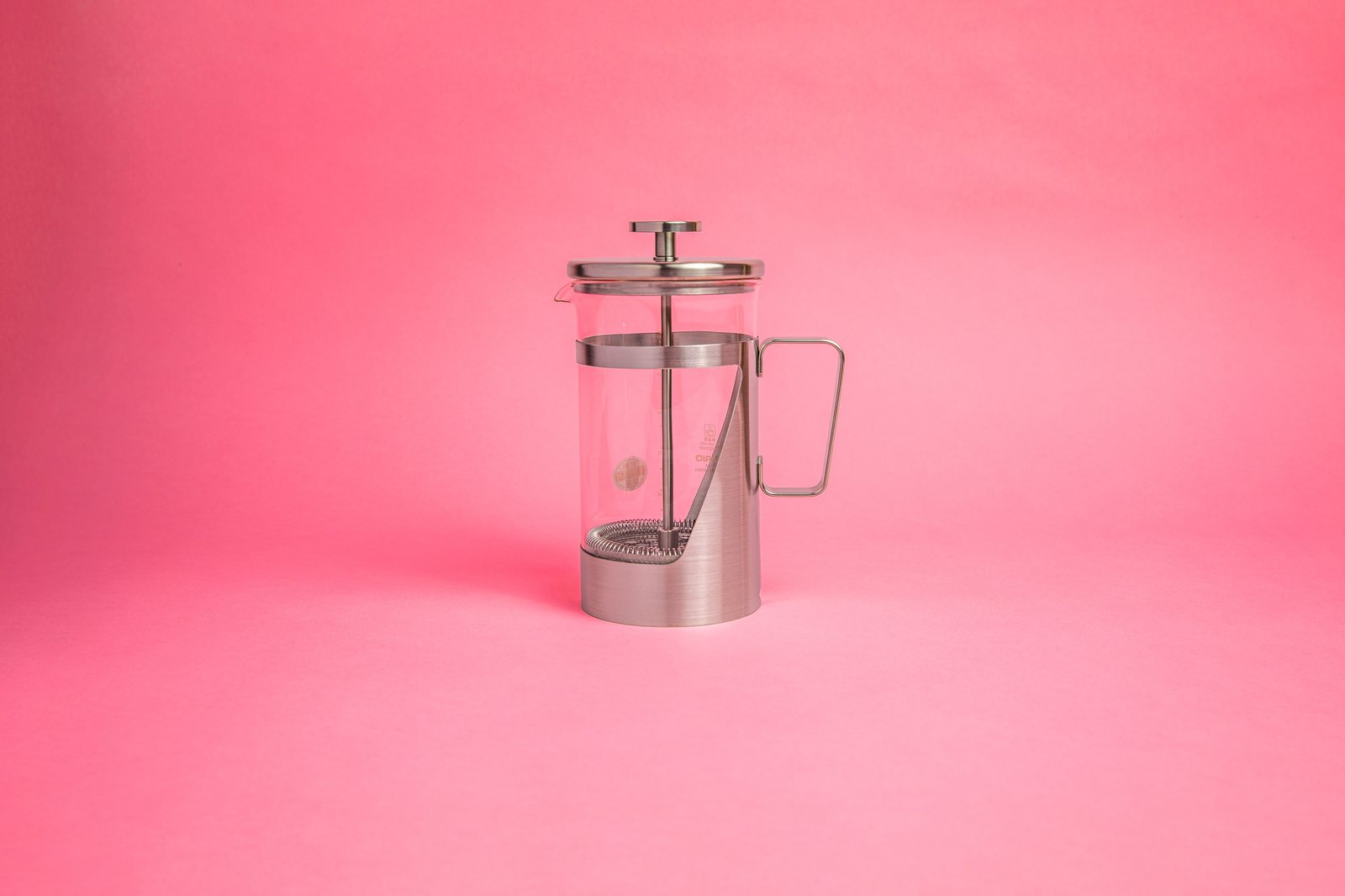
Millilitre markings printed on the glass, so a recipe with a water weight can be followed without a scale on the counter
The same 300 mL two-cup volume as the winner with a hairline stainless frame instead of black plastic, and Hario publishes all three dimensions again
The glass section lifts out completely, which makes it the easiest press here to clean properly
Made in Japan, and the beaker is a standard Hario part rather than a proprietary one
Reasons to avoid
Roughly twice the money of the Cafe Press U for the same capacity and the same single mesh screen
128 mm tall against the Cafe Press U's 116, so it is slightly less of a drawer object
The same brew as the winner in a nicer object. The markings are the genuinely useful part — a two-cup press is the one size where people stop weighing, and a scale line on the glass keeps the ratio honest.
It is here on looks and on the markings. If the money matters more than either, the Cafe Press U makes the same coffee.
Not the right fit if you want the cheapest two-cup press — see the Hario Cafe Press U.
Nobody brewed with these five for this page. Here is what the ranking is built on.
Every capacity, dimension and filter description came from the manufacturer's own product page, linked in Sources. Hario publishes in millimeters and Espro in inches; both appear here in the maker's own unit.
The Espro P3 spec-block problem was checked rather than assumed — the page was requested once for each of the two variants Espro sells, and returned an identical block both times.
Every Amazon page was opened, its title matched to the exact model and size named here, and its buy box checked. Two picks ship with a brand-store button because that is where the verified page was.
The verdict
Best overall: the Hario Cafe Press U 300 ml, because a two-cup press should hold two cups rather than be a six-cup press you are told to under-fill, and because Hario is the only brand here that prints all three dimensions at this size.
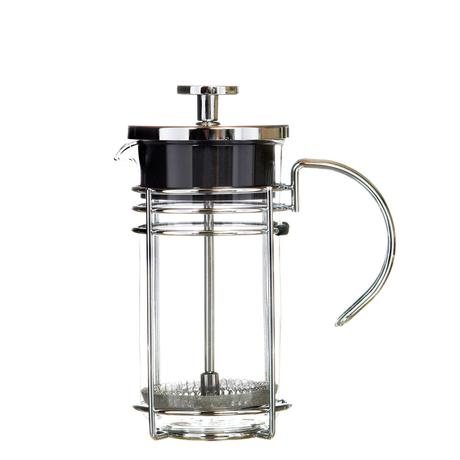
Best value: the GROSCHE MADRID at 350 mL with a second filter in the lid for the same money. Cleanest cheap cup: the Espro P3 18 oz, with the caveat about its spec sheet written into the pick. Best insulated: the Espro P7 18 oz, 18 oz of coffee from 27 oz of water and still hot twenty minutes later. Nicest object: the Hario Harior 7, with milliliter markings on the glass.
The rule underneath all of it: buy the press that matches the number of cups you actually drink. An eight-cup press is not a two-cup press with room to spare, and the scale you already own will tell you what you are really brewing.
Around 1 part coffee to 15 parts water by weight — so about 20 grams of coarse grounds for the Hario's 300 milliliters, or 23 grams for the GROSCHE's 350. Start there and adjust by taste rather than by the scoop that came in the box.
Why does my French press coffee have silt in the bottom?
A single mesh screen has holes big enough to let fines through, and a grinder that produces a lot of fines makes it worse. The two Espro presses filter twice and remove almost all of it; with a single-screen press, grind coarser and stop pouring an inch from the bottom. Our burr vs blade page covers where fines come from.
Can I brew one cup in a big French press?
Not well, and Espro is the brand that says so out loud: it prints a 24 oz minimum brew size on its 32 oz press. Below that the plunger screen stops above the coffee bed, so the grounds never get pressed and the coffee keeps extracting in the cup.
How long should a small press steep?
Four minutes from the pour, then plunge slowly and decant. A two-cup press cools much faster than an eight-cup one, which is the argument for the double-walled steel P7 — in glass, the coffee is lukewarm by the time you go back for the second cup.
What grind size does a French press need?
Coarse — the coarsest setting you would use for anything. Fine grounds slip through the screen, over-extract during the four-minute steep and make the plunge hard work. If your grinder cannot hold a coarse setting, that is the thing to fix first.
Also considered
Bodum Chambord and Bodum Brazil — The presses everybody pictures when they hear the words, and both are made in three-cup sizes that would fit this page perfectly. Bodum's own site serves a script-rendered shell to an automated request, so there is no first-party capacity, dimension or material to read and nothing to link as a source.
Frieling double-walled stainless press — A 17 oz insulated steel press with a two-stage filter, which on paper competes directly with the Espro P7 for less money. Frieling's site has no product pages left — the page sitemap was last modified in 2023 and the search returns nothing — so there is no published specification behind it.
Stanley Classic Stay-Hot French Press 48 oz — Insulated steel, a lifetime warranty and the same thinking as the P7. It is 48 oz, which is six mugs, which is the exact problem this page was written about. Nothing wrong with it; wrong page.
GROSCHE SEVILLE and DUBLIN, 34 fl oz — Both are the standard eight-cup size, and both are good. A 1000 mL press asked to make one mug leaves the screen above the bed, which is the failure Espro's published minimum describes. Buy these if there are four of you.
ESPRO P5 and P6 in 32 oz — The same double filtration as our picks in the big size. They are better presses than the 18 oz versions in every respect except the one this page is ranked on, and Espro's own 24 oz minimum brew size makes them the wrong purchase for one or two people.