Buy the AeroPress Original unless you regularly make coffee for three people at once. These two brewers are usually argued about on taste, and the argument is settled earlier than that by two published numbers. AeroPress prints a 10 oz capacity — one to two cups. Espro prints a 24 oz minimum brew size on its 32 oz press, because below that the plunger screen never reaches the coffee bed. One tool has a ceiling and the other has a floor, and they do not overlap.
So the honest version of this comparison is: if you drink one or two cups, the press you were about to buy cannot properly be filled that low and the AeroPress is the right tool. If you brew a pot for a table, the AeroPress has to be run three times and the Espro P3 is the right tool.
Taste does differ, and it differs in a predictable direction. A press screen lets oils and fines through, which is the heavy, textured cup people buy a press for. A paper AeroPress filter takes both out, which is the clean, sweet cup people buy an AeroPress for. Neither is better; they are different drinks made from the same beans.
Better for one or two cups
Image: AeroPress
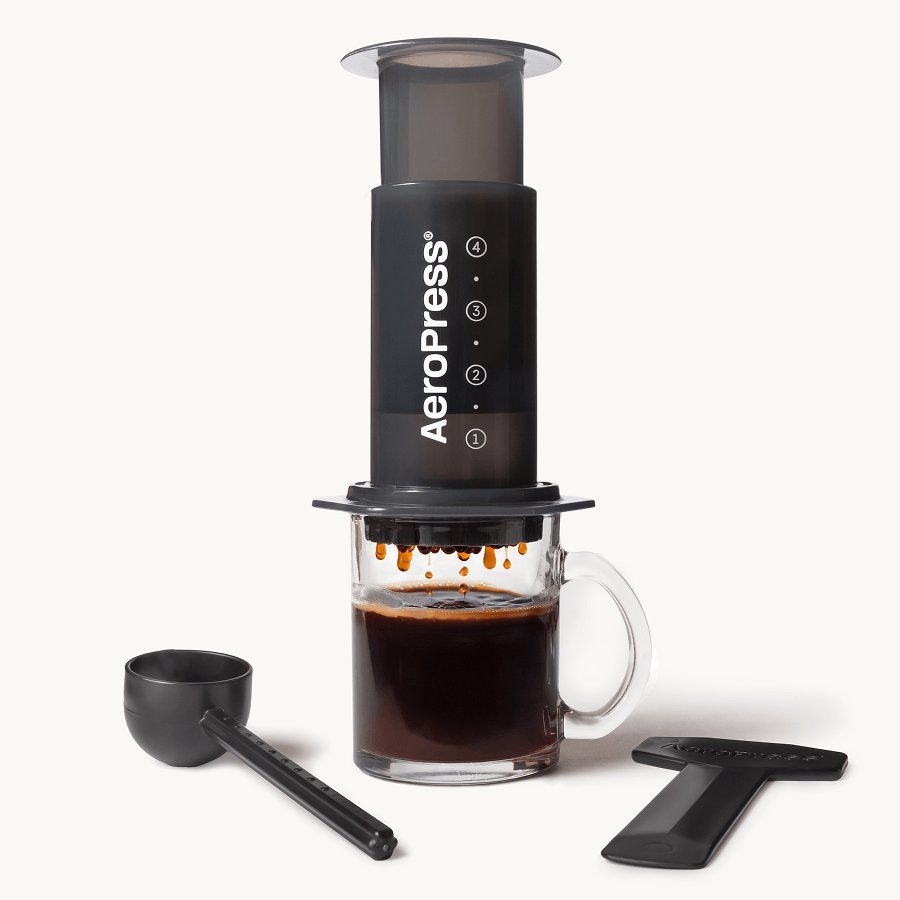
AeroPress Original
Ten ounces, two minutes, no floor
Model
85A01
Brews
10 oz · 1-2 cups
Size
5.25 H × 4.2 W in
Filter
Paper micro-filter, disposable
Reasons to buy
AeroPress publishes a 10 oz capacity and no minimum at all, so a single small cup is a normal use of the tool rather than a compromise
5.25 inches tall and 4.2 across — it lives in a drawer, in a bag or in a hotel room, and there is no glass in it to break
Brew and clean in about two minutes, because the plunger wipes the chamber as it goes and the puck ejects in one piece
A paper micro-filter removes the fines and most of the oils, so there is no silt and nothing to strain
Made in the USA with a one-year warranty, and every part — chamber, plunger, seal, cap — is sold separately
Reasons to avoid
Ten ounces is the hard ceiling; a second person means a second brew
The paper filters are a consumable, and forgetting to buy them stops coffee entirely
It makes a clean cup by design, so if you want the oily, heavy texture of press coffee this is the wrong object
The AeroPress wins the common case by simply not having a floor. Most people making coffee at home are making one or two cups, and that is the exact volume a French press handles worst.
It is also the more forgiving brewer. Steep time, grind and water temperature all move the result less than they do in a press, because the plunge ends extraction decisively rather than leaving grounds sitting in the liquid.
Not the right fit if you are making coffee for a table — see the Espro P3.
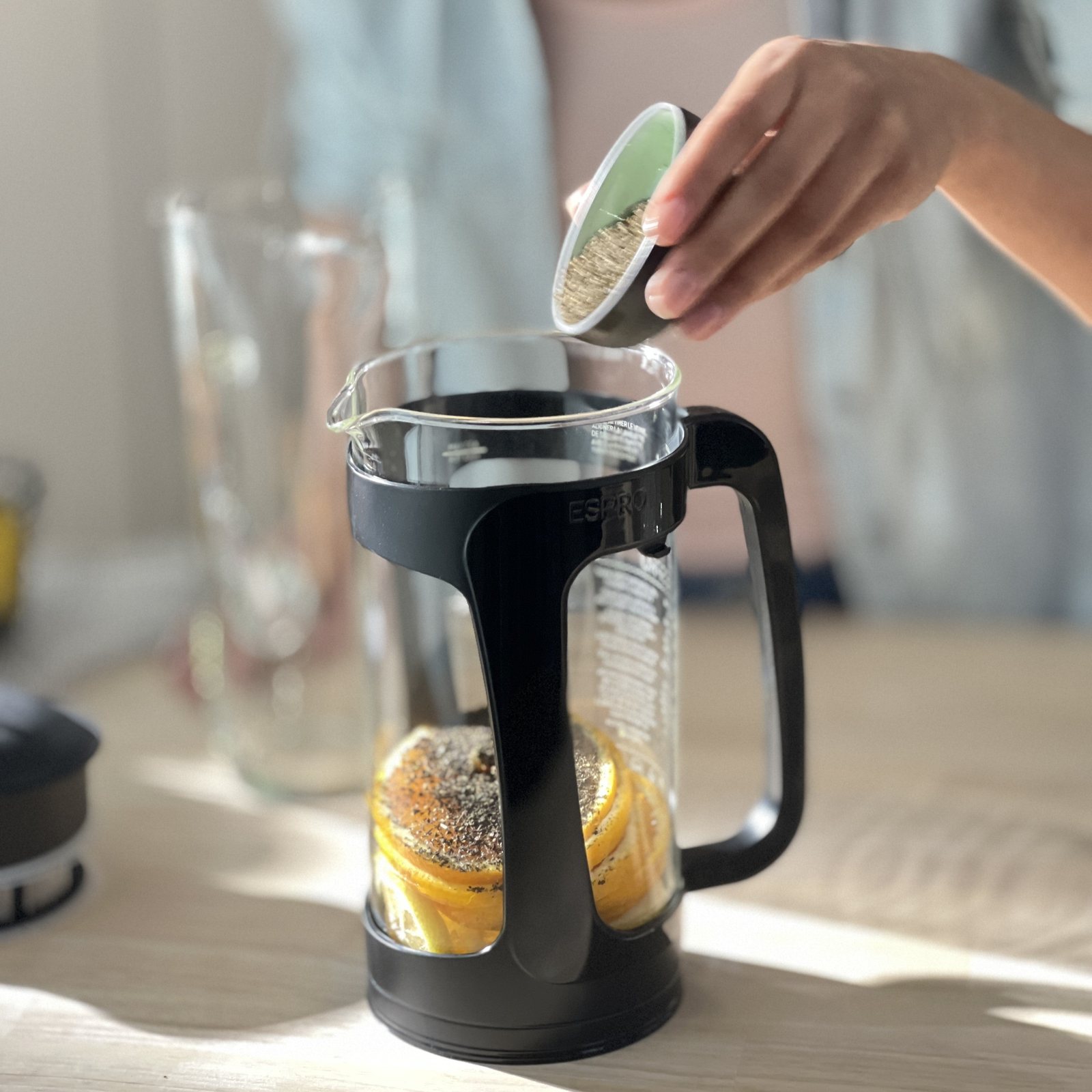
32 oz in one brew — three large mugs — for the same money as the AeroPress, which is the whole argument for a press
Espro's double micro-filter is two screens nested together, and it removes almost all of the fines a single-screen press leaves in the cup
Nothing to buy again, because the filter is a permanent part rather than a paper consumable
Espro publishes the dimensions and the minimum brew size, which almost no press maker does, and sells the glass and the filters as spare parts
A twist-lock latch holds the carafe in the frame while you pour, which is the moment cheap glass presses break
Reasons to avoid
The 24 oz minimum brew size is a real constraint — below it the plunger screen sits above the bed and the coffee keeps extracting after you press
Borosilicate glass in a plastic frame, so it is the more fragile object and the one that cannot go in a bag
Espro prints the same specification block on both the 18 oz and 32 oz variants of this press, so check the size on the product name rather than in the spec table
The press is the right tool when the volume is right. Thirty-two ounces of immersion coffee in four minutes with no filters to buy is genuinely hard to beat, and Espro's double screen removes the one thing people actually dislike about press coffee.
The texture is the other reason to choose it. A metal screen passes the oils; paper does not. If you want coffee that coats the mouth rather than coffee that tastes clean, no AeroPress recipe gets you there.
Not the right fit if you make one cup at a time — see the AeroPress Original.
Nobody ran a taste panel for this page. Every capacity, dimension, minimum and filter description comes from the two manufacturers' own product pages, linked in Sources.
The 24 oz minimum brew size is quoted from Espro's own specification block for the 32 oz P3, and the 10 oz capacity from AeroPress's own details block for the Original.
Both Amazon pages were opened and their titles matched to the exact model named here, and both brand stores were checked for a live US cart on the day this was written.
The verdict
Buy the AeroPress Original if you make one or two cups, if you travel, or if you want a clean cup with no silt. Ten ounces, two minutes, nothing to break, and no minimum brew size to work around.
Buy the Espro P3 32 oz if you brew for a table, if you want the oily texture only a metal screen gives, or if you would rather never buy a filter again. Just respect the 24 oz floor Espro publishes.
They cost about the same, which is why plenty of kitchens end up with both. If you are choosing one, choose it on the number of mugs rather than on the taste argument — the taste argument has no winner and the volume question does.
Neither, inherently — strength is a ratio, and both are brewed to whatever ratio you choose. The AeroPress is usually brewed stronger because it is often diluted afterwards, and a press is usually brewed at about 1 part coffee to 15 parts water and drunk as it comes.
Can I use a French press for one cup?
Not properly in a big one. Espro publishes a 24 oz minimum for its 32 oz press, and the reason is mechanical: the plunger screen has to reach below the water line to press the grounds. A small press is the answer — our two-cup press guide covers the ones sized for it.
Does the AeroPress make espresso?
No. It makes a concentrated cup at a fraction of the pressure an espresso machine uses, and the result is closer to a strong filter coffee than to a shot. Attachments exist that raise the pressure, but none of them reach nine bars.
Which is easier to clean?
The AeroPress, by a distance. The plunger wipes the chamber as it travels and the puck ejects into a bin in one motion. A press needs the grounds scraped out of a wet carafe and the filter assembly taken apart to rinse properly.
What grind does each one need?
Coarse for the press — the coarsest your grinder holds — because the grounds sit in water for four minutes and then get pressed through a screen. Medium-fine for the AeroPress, because the paper filter catches the fines and the contact time is short. Our grind size chart has the maker figures for both.