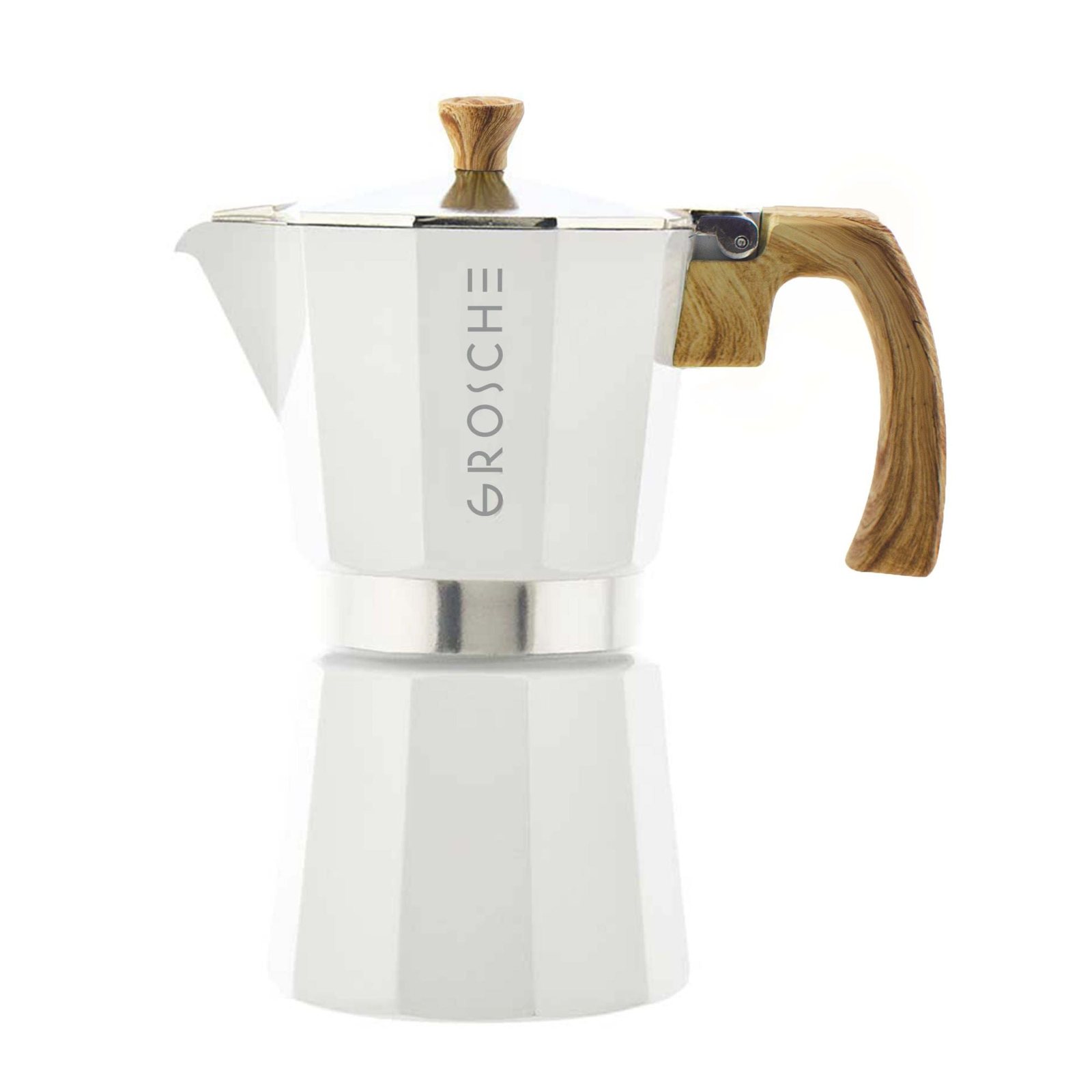
Buy the GROSCHE MILANO in the 6-cup size. The thing nobody tells first-time buyers is that a moka pot "cup" is an espresso serving of roughly two ounces, not a mug — Bialetti publishes the whole table on its own product page, and it reads 1 cup = 2 oz, 3 cup = 4.4 oz, 6 cup = 9.1 oz, 9 cup = 14.2 oz. A three-cup pot makes 4.4 ounces of coffee in total. That is one small cup, for two people, with nothing left over.
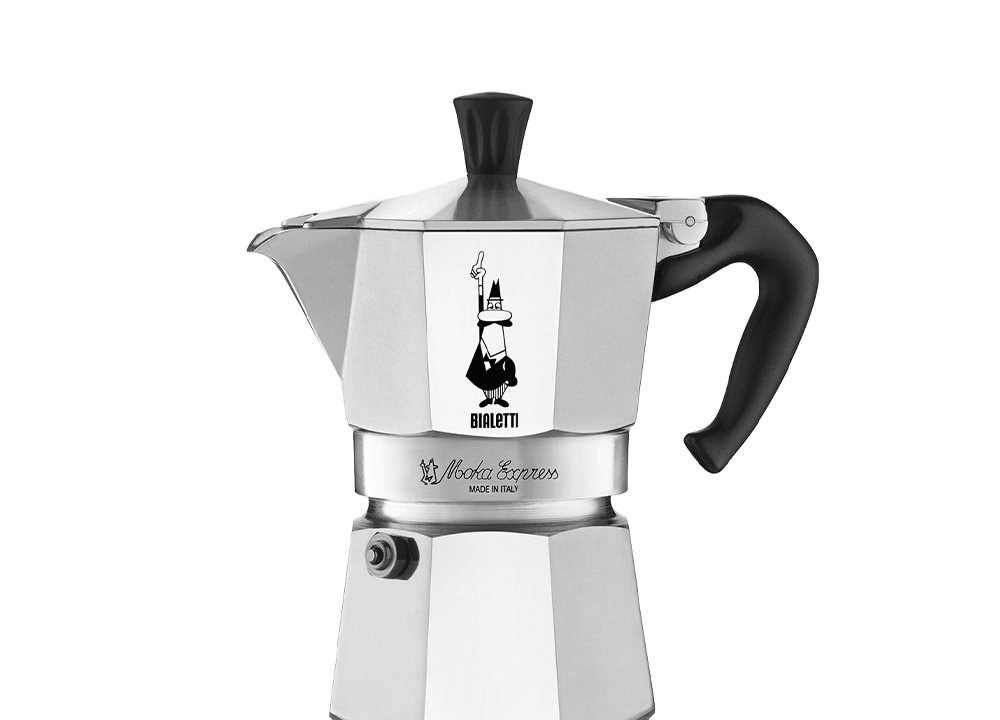
The MILANO 6-cup publishes 9.3 oz, costs the least of anything here, and puts a burn guard on the handle, which is the part of a moka pot that hurts. If you want the shape everyone pictures, the Bialetti Moka Express is the original and the one that prints the conversion table. If your hob is induction, three of the five pots here work on it with no adapter at all.
The other thing worth knowing before you spend: aluminum pots are washed with warm water and nothing else, forever. Stainless ones go in a dishwasher. That is most of the difference between the cheapest pot on this page and the most expensive one.
How to shop for a moka pot
How much coffee it actually makes
This is the number the category hides behind the word "cup". Bialetti publishes a full conversion — 2 oz per cup — and GROSCHE prints an ounce figure on its aluminum pots. Two picks here publish nothing, and that is recorded in the table rather than guessed at.
Whether it works on your stove
Aluminum is not magnetic, so a classic moka pot does nothing on an induction hob. Bialetti sells an adapter plate; three pots here have a steel boiler and need no adapter at all. Check what your kitchen has before you check anything else.
The handle and the safety valve
A moka pot is a small pressure vessel with a hot metal handle. GROSCHE publishes a certified Italian safety valve and a burn guard built into the handle; Bialetti has had a patented safety valve since long before it was fashionable. This is the part of the specification that is about your hand.
Aluminum or stainless
Aluminum conducts heat faster, costs far less and must be hand washed with water alone — no detergent, no dishwasher, because the seasoned layer inside is doing real work. Stainless can be washed properly, survives a dishwasher and costs two to three times as much.
What you can replace
Gaskets perish and filter plates clog. GROSCHE and Cuisinox both sell gaskets, funnels and filter plates as separate parts by size, and Cuisinox sells a replacement bottom boiler. A moka pot should be a twenty-year object, and it only is if the rubber ring is a catalog item.
Best overall
Image: GROSCHE
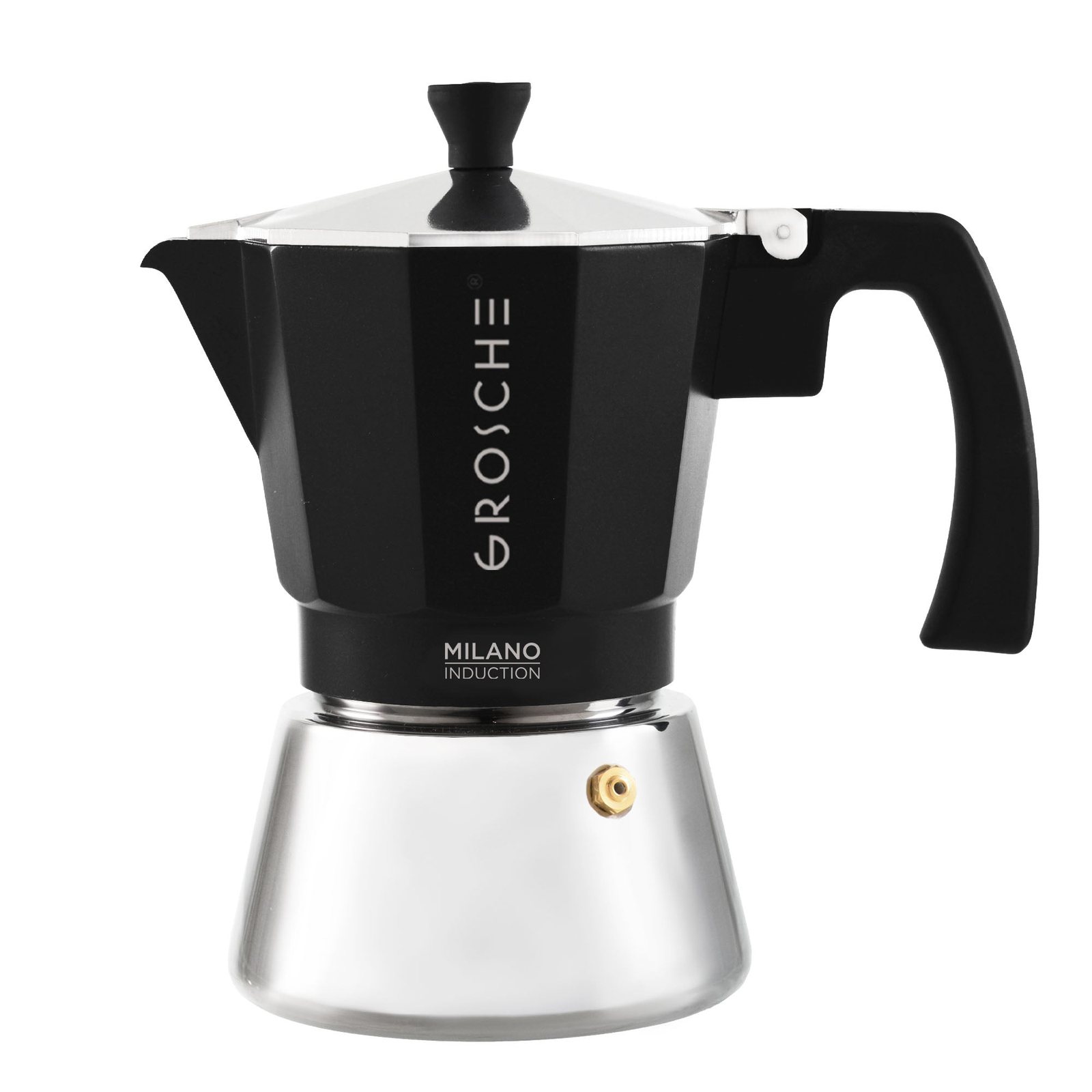
GROSCHE MILANO Stovetop Espresso Maker, 6 cup
9.3 oz, and a guard on the handle
Model
GR 329 · 6 cup
Yield
9.3 oz published
Stovetops
Gas, electric, propane, glass
Body
Food-safe aluminum
Reasons to buy
GROSCHE prints the yield in ounces on the product itself — 9.3 oz for the six-cup — so you are choosing a volume rather than decoding a word
A burn guard built into the soft-touch handle, which is the one design change that matters on a pot you lift off a flame
A certified Italian safety valve, and GROSCHE sells the funnel filter and the silicone gaskets as separate parts by size
The cheapest pot on this page, and it is sold in 3, 6, 9 and 12-cup sizes so the ounce figure can be matched to the number of people
Food-safe anodized aluminum, which heats fast enough that the brew is over before the pot has time to scorch the coffee
Reasons to avoid
GROSCHE states plainly that it does not work on induction stoves, and there is no adapter in the box
Hand wash only, with no dishwasher and no detergent, for the life of the pot
GROSCHE's own store prices in Canadian dollars, so the button here goes to Amazon
This wins because it answers the question the category refuses to answer. Nine point three ounces is a large mug of moka coffee or two small ones, it is printed on the product, and the pot that prints it costs less than the pot that does not.
The burn guard is the other reason. Everyone who owns a moka pot has grabbed the handle wrong once. GROSCHE is the only brand here that treats that as a design problem rather than as user error.
Bialetti publishes the entire cup-to-ounce table on the product page — 1 cup = 2 oz through to 18 cup = 27.3 oz — which is the piece of information this whole guide is built on
The octagonal body has been made since 1933 and the gaskets, funnels and filter plates for it are stocked by half the internet
A patented safety valve, an ergonomic handle, and no filters, pods or detergent needed for the life of the pot
Sold in six sizes on one published scale, so you can pick the ounce figure rather than the marketing word
Reasons to avoid
Three cups is 4.4 oz — a single small coffee — and it is the size most first-time buyers are sold
Rinse with warm water only, no soap and no dishwasher, which rules it out of a shared kitchen where somebody else does the washing up
The archetype, and still a completely reasonable purchase. What earns it a place above the newer pots is not nostalgia; it is that Bialetti is the brand that publishes the conversion table, and the table is the reason anybody buys the right size.
Buy it in six cups rather than three unless you genuinely want one small coffee. Bialetti says 9.1 oz for the six and 4.4 for the three, and the difference between those two numbers is the difference between a mug and a mouthful.
Not the right fit if you want more than one small cup — see the GROSCHE MILANO 6-cup.
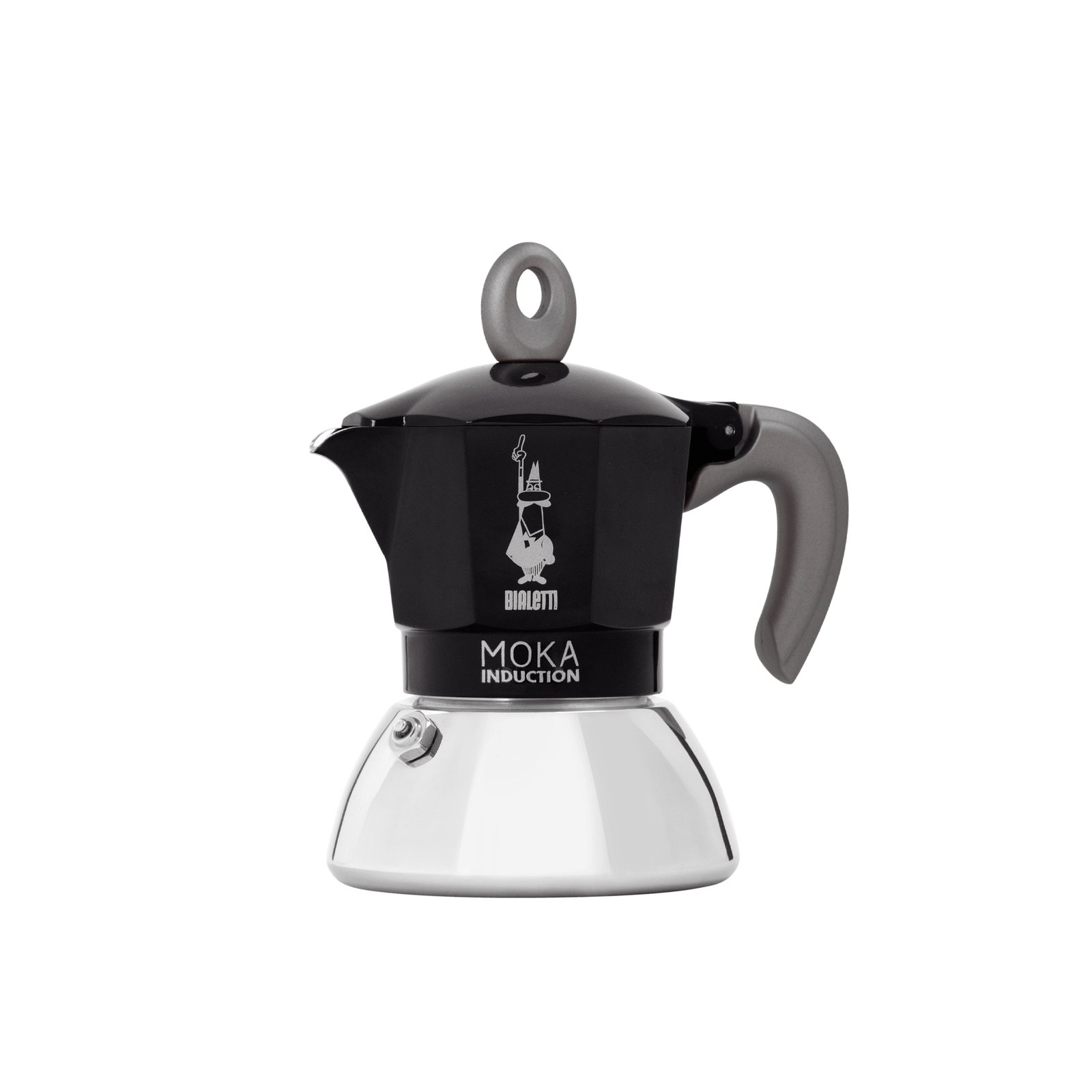
A stainless steel boiler with a conical base, so it works on an induction hob with no adapter plate and no lost heat
The octagonal aluminum upper chamber is the classic Moka Express shape, so the pour and the brewing behavior are the familiar ones
Two cups is 3.3 oz on Bialetti's own published scale, which is a single strong espresso-style coffee
Bialetti's US store shows it in stock with a working cart, which not every product in its range does
Reasons to avoid
Two cups is the smallest yield on this page, and there is no way to make more in it
A two-material body means the aluminum half still wants hand washing even though the boiler could take more
More money than the aluminum-only Moka Express for less coffee
The neat answer to the induction problem. Rather than selling you a separate steel disc to put under an aluminum pot, Bialetti made the half that touches the hob out of steel and left the half that touches the coffee alone.
It is the smallest pot here and priced above the classic, which is the cost of the boiler. If you have induction and drink one coffee, this is the pot; if you have induction and drink two, look at the six-cup steel pots below.
Not the right fit if you need more than one coffee at a time — see the MILANO Steel.
A stainless boiler under an aluminum upper chamber, so it brews on every hob type including induction with nothing bought separately
The same certified safety valve and handle burn guard as the aluminum MILANO, in the six-cup size that makes a real mug
GROSCHE lists it as dishwasher safe, which no all-aluminum pot on this page can claim
The gaskets, funnels and filter plates are the same stocked spare parts as the rest of the MILANO range
Reasons to avoid
GROSCHE publishes an ounce yield for the aluminum MILANO and none for this one, which is an odd thing to drop from a sibling product
The heaviest six-cup pot here at a kilogram empty
Costs noticeably more than the aluminum version of the same size and shape
The pot to buy if your kitchen is induction and one coffee is not enough. It keeps everything that makes the aluminum MILANO the winner — the valve, the guard, the spare parts — and swaps the boiler for steel.
The missing ounce figure is a genuine irritation on a page ranked by yield. The aluminum sibling of the same nominal size publishes 9.3 oz, and there is no reason to think the steel one differs much, but this guide prints what the maker prints.
Not the right fit if your hob is gas or electric — see the cheaper aluminum MILANO.
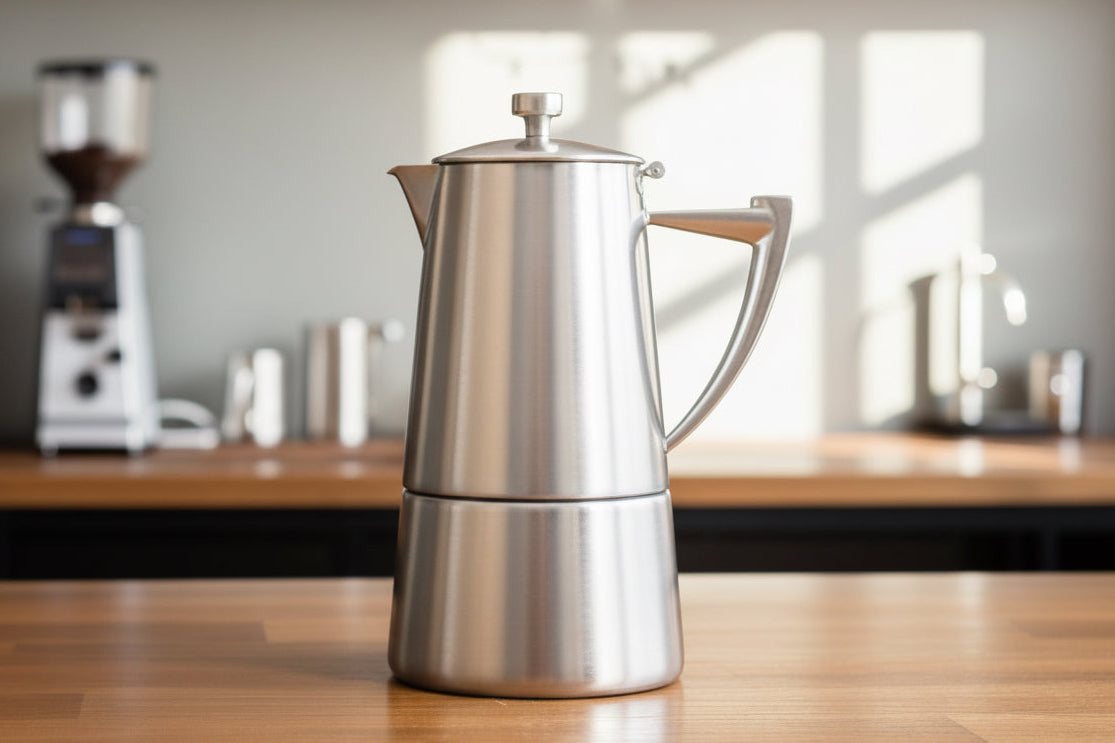
Heavy-gauge 18/10 stainless steel all the way through, so the whole pot washes properly and nothing has to be seasoned or protected
Cuisinox publishes the base diameter and the height for every size — 4.0 inches across and 8 inches high for the six-cup — which is the only pot here you can check against a burner ring before buying
An induction-ready base, so it works on every cooking surface without an adapter
Cuisinox stocks the gasket, the funnel filter, the reducer and even the replacement bottom boiler as ordinary parts, which is how a moka pot becomes a lifetime object
A reducer is sold for the six-cup, so the same pot can brew a smaller dose properly rather than half-filling
Reasons to avoid
Roughly three times the money of the aluminum MILANO for the same nominal six cups
Cuisinox publishes dimensions and materials and no yield in ounces or milliliters at all
Steel takes noticeably longer to come up to pressure than aluminum, which is a real difference on a weekday morning
The pot for someone who wants to buy one moka pot and never think about it again. Everything that fails on a cheap pot — the gasket, the filter plate, the boiler — is a stock part here, and the body is a single material that can be washed like any other pan.
It is also the only brand on this page that publishes a base diameter, which on a stovetop appliance is exactly the number a small burner ring cares about. Four inches across, eight inches tall, and a reducer in the catalog for the mornings you want less.
Not the right fit if you want the fastest, cheapest route to moka coffee — see the MILANO 6-cup.
Nobody brewed with these five for this page, and there is no lab behind it. Here is what the ranking is built on.
Every yield, material, stovetop claim and dimension came from the manufacturer's own product page, linked in Sources. Bialetti's cup-to-ounce table is quoted from the Moka Express page; where a brand publishes no ounce figure, the table says so by name rather than converting from a rival's scale.
Every Amazon page was opened, its title matched against the exact model and size named here, and the buy box checked. That is how the GROSCHE steel pot was identified as the black-steel induction model rather than the aluminum one.
Bialetti's US store was checked for stock on each pot named, which is why one Bialetti product appears in the rejects rather than the picks.
The verdict
Best overall: the GROSCHE MILANO 6-cup, because 9.3 ounces is printed on the product, the handle has a guard on it, and it costs the least on this page.
The original: the Bialetti Moka Express, which publishes the cup-to-ounce table everyone else relies on — buy it in six cups, not three. Small induction: the Bialetti Moka Induction 2-cup, steel boiler, no adapter. Induction for two: the GROSCHE MILANO Steel 6-cup, dishwasher safe. Best built: the Cuisinox Roma, all 18/10 steel, 4.0 inches across the base and a replacement boiler in the catalog.
Before you buy any of them, do the arithmetic in the title. Multiply the cup number by two ounces, look at your favorite mug, and buy accordingly.
Bialetti publishes 9.1 oz for its six-cup and GROSCHE publishes 9.3 oz for the aluminum MILANO. That is one large mug or two small ones. The whole scale, from Bialetti's own page, runs 1 cup = 2 oz, 3 cup = 4.4 oz, 6 cup = 9.1 oz, 9 cup = 14.2 oz, 12 cup = 22 oz and 18 cup = 27.3 oz.
Is moka pot coffee actually espresso?
No. A moka pot brews at a few bars of pressure against the nine a pump machine uses, so there is no real crema and the extraction is different. It is its own drink — strong, syrupy, closer to espresso than to drip. If you want espresso proper, our beginner espresso guide covers the machines that get there.
Will a moka pot work on an induction hob?
Only if the boiler is steel. Aluminum is not magnetic, so the classic pots do nothing on induction unless you buy an adapter plate. Three picks here need no adapter: the Bialetti Moka Induction and the GROSCHE MILANO Steel both put a steel boiler under an aluminum top, and the Cuisinox Roma is steel throughout.
Why should I not use soap on an aluminum moka pot?
Detergent strips the thin oil layer that builds up inside an aluminum pot, and that layer is part of why the coffee stops tasting metallic after the first few brews. Bialetti's own instruction is warm water only. A stainless pot like the Cuisinox has no such layer and washes like any other pan.
What grind should I use in a moka pot?
Finer than drip and coarser than espresso, and never tamped — fill the funnel level and knock it flat. Too fine and the pressure builds until the safety valve is the only way out; too coarse and the water runs through sour. Our grind size chart has the maker figures.
Also considered
Bialetti New Brikka, 2 and 4 cup — The one moka pot that raises pressure with a weighted valve to produce a genuine crema, and Bialetti publishes its own scale for it — 2 cup = 3.3 oz, 4 cup = 5.7 oz. On the day this was written Bialetti's US store showed it as available soon rather than in stock, and the Amazon page exposed no buy-box price to our check, so we could not place it honestly on the price ladder.
Alessi 9090 — The stainless moka pot in the design museums, and a genuinely better object than anything here. It is sold through dealers at a price that moves, and Alessi does not publish a yield in ounces either, so it is an expensive purchase with two of the three numbers this page ranks on missing.
Unbranded aluminum moka pots — The cheapest way to own a moka pot and the reason so many people think moka coffee tastes of metal. No published safety-valve certification, no replacement gaskets by size and no maker page to read. When the gasket perishes in a year, there is nothing to buy.
Electric moka pots — A moka pot with its own heating base, which removes the stove question entirely. They also remove the one control a moka pot gives you — the flame — and the brands selling them publish far less than the stovetop makers do. Worth revisiting when one of them prints a yield and a temperature.
The 12 and 18-cup sizes — Bialetti publishes 22 oz for the twelve-cup and 27.3 oz for the eighteen. They exist and they work, but a moka pot must be brewed full to brew properly, so a big pot is a commitment to making a lot of coffee every time. Buy the size you drink, and use a reducer if you own a bigger one.