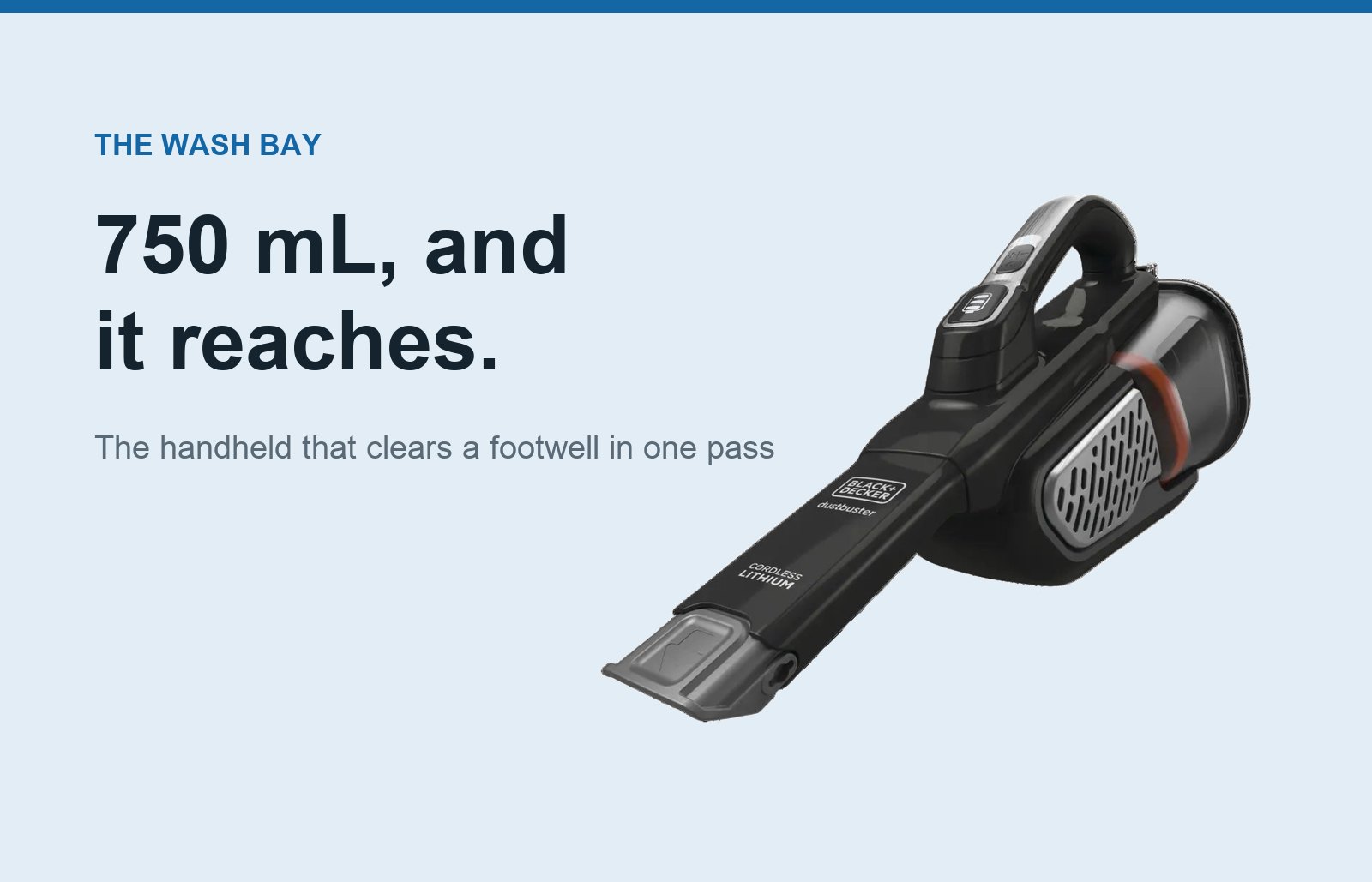
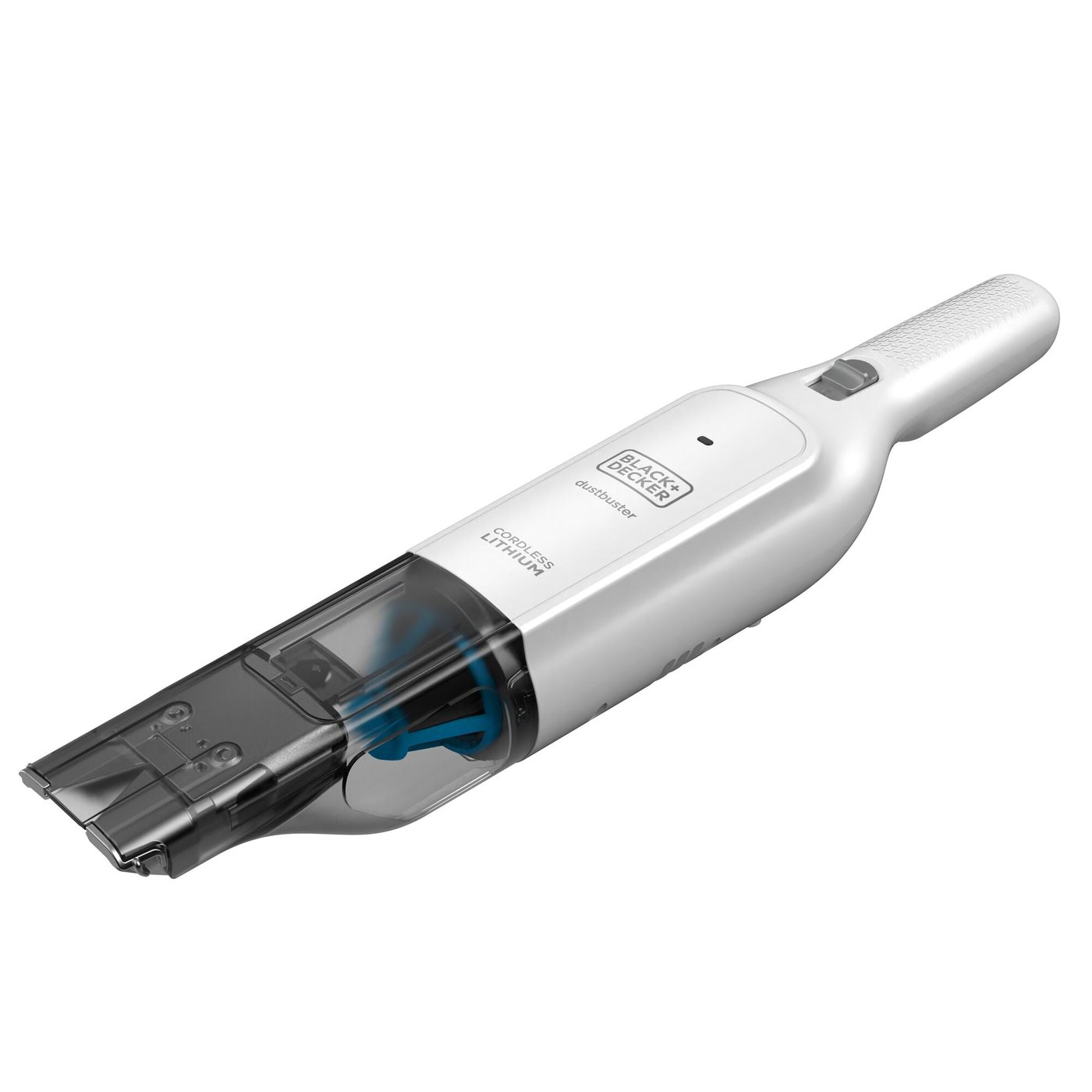
For most cars the answer is the BLACK+DECKER dustbuster AdvancedClean+ ($$): a 750 mL bin, two speeds, and a long crevice tool that reaches under a seat without dismantling anything — and the only pick here that works out of the box with no tool platform to buy into.
A car interior is a hostile job: 3-inch gaps between seat rails, sand welded into carpet by a wet floor mat, and a power outlet that dies with the ignition — which is why a cordless handheld beats the shop vac in the garage. If you already own cordless tools, buy the vacuum that takes the battery you have — the DEWALT wet/dry on 20V MAX, the Milwaukee M18 2-gallon on M18, or the CRAFTSMAN V20 kit if you are starting from nothing.
Air flow, not suction, is the number that moves sand. Where a manufacturer publishes CFM it is in the spec block; where a brand publishes nothing but a marketing multiple, the table shows a dash rather than a borrowed figure.
How to shop for a cordless car vacuum
Air flow in CFM, if it is published
Sealed suction moves a coin; air flow moves sand out of carpet pile. Milwaukee and CRAFTSMAN publish 45 CFM, WORX publishes 22 CFM, and several brands publish nothing at all — which tells you something on its own.
Bin volume you can empty over a bag
A 7 oz dirt cup fills twice doing one footwell. Anything from 750 mL up does a whole car without a trip to the trash, and a 2-gallon tank does the car plus the garage floor.
A crevice tool that stays with the vacuum
The tool you need is the narrow one, and it is always the one missing. On-board storage is the difference between a two-minute job and a hunt through a drawer.
Wet pickup, or a clear warning that there is none
Spilled coffee and a wet floor mat are the most common interior emergencies. Two of these six are rated for wet debris; the WORX is explicitly dry-only and liquid will damage it.
Filters you can wash and re-buy
A filter sold as a proprietary cartridge at a quarter of the tool price is a subscription. DEWALT, WORX and CRAFTSMAN all publish washing instructions, which keeps the running cost near zero.
Battery platform before brand loyalty
A bare tool on a battery you already own is the cheapest capable vacuum you can buy. Buying a sixth charger for a sixth platform is how garages end up with a shelf of dead packs.
Best overall
Image: BLACK+DECKER
BLACK+DECKER dustbuster AdvancedClean+ 20V MAX
A 750 mL bin, dry messes only
Power
20V MAX
Bin
750 mL
Wet pickup
No — dry only
Battery in box
Yes
Model
HHVK515J00FF
Reasons to buy
A 750 mL bin does an entire sedan interior without emptying — more than triple what the pocket-sized vacuums hold
The long crevice tool reaches the seat rails and the gap between console and seat, the two places every car hides sand
Two speeds: low doubles the run time for vents and the dash, high is for carpet
A battery indicator tells you whether there is enough charge to finish the car before you start
Works out of the box — no separate battery, charger or platform to buy into
Reasons to avoid
Dry debris only; a wet floor mat or a spilled drink needs the DEWALT or the Milwaukee
BLACK+DECKER publishes no CFM figure, so its air flow cannot be compared on paper against the tool-brand vacuums
This is the vacuum for someone who wants a clean car and no new hobby, and the bin is the reason. At 750 mL you do the whole interior including the trunk and empty once; the handhelds that cost half as much fill in the driver's footwell.
The long crevice tool is the second reason: most interior dirt sits under the front seats, in the seat-rail channels and in the seam where the backrest meets the base, and all three want a narrow tool with a hand behind it.
Not the right fit if the mess is wet, or you already own 20V MAX batteries — see the DEWALT wet/dry.
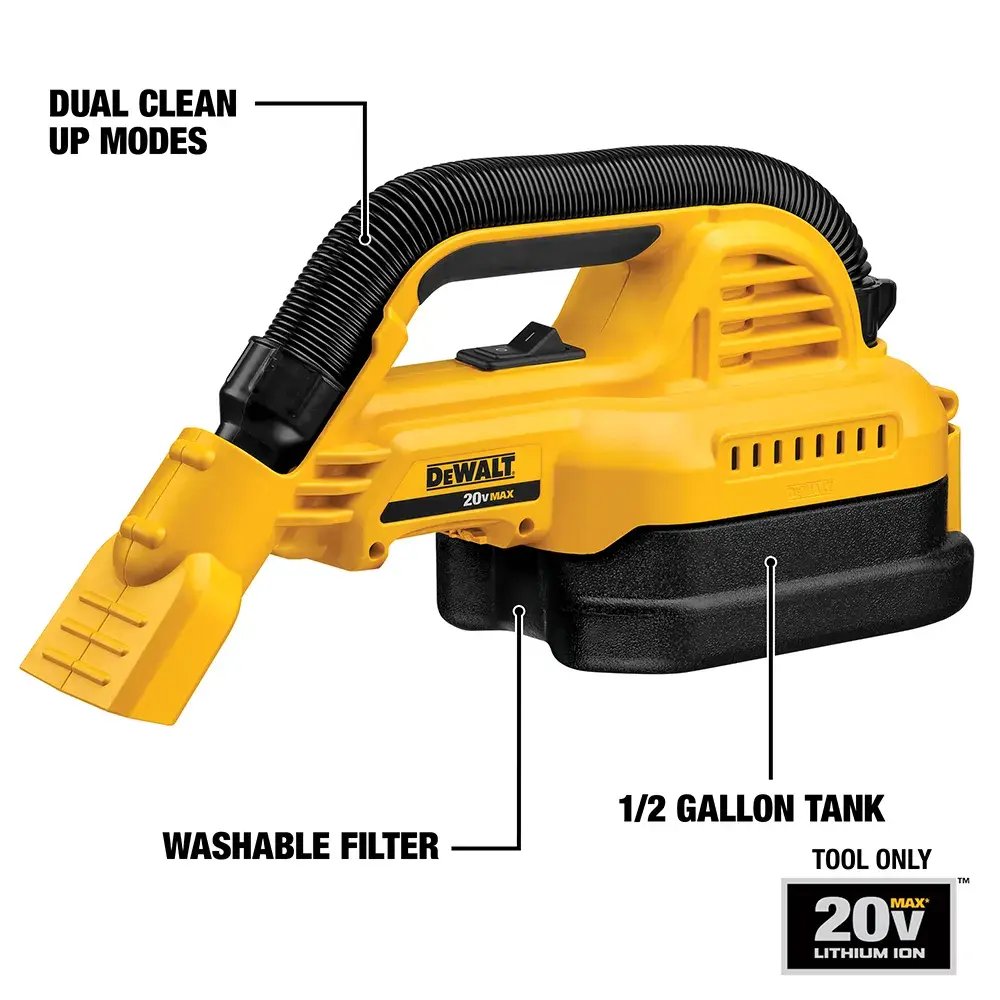
Rated for wet and dry pickup, so a soaked floor mat is a five-minute job instead of a towel-and-hope job
A Gore HEPA wet/dry filter DEWALT rates at trapping 99.97% of dust at 0.3 microns — the only published filtration figure on this page
Two modes: a front utility nozzle for open carpet and an extendable rubber hose for the gaps
Washable filter, so the running cost after purchase is nothing, and it runs on any 20V MAX pack you already own
Reasons to avoid
Sold as a bare tool; with no 20V batteries in the house this is the most expensive option here once you add a pack and charger
Half a gallon is generous for an interior and small for garage work — the Milwaukee holds four times as much
If you own DEWALT cordless tools this is a ten-second decision, and the wet rating is what earns it a place: a dry-only vacuum turns one spilled coffee into a wet-vac rental or a week of smell.
The hose is better than it looks: heavy-duty rubber keeps its shape when pushed into a seat-rail channel instead of collapsing like a corrugated shop-vac hose.
Not the right fit if you have no 20V MAX batteries — the CRAFTSMAN V20 kit includes a battery and charger for less.
45 CFM with 32 inches of water lift — the strongest published figures of any cordless vacuum here
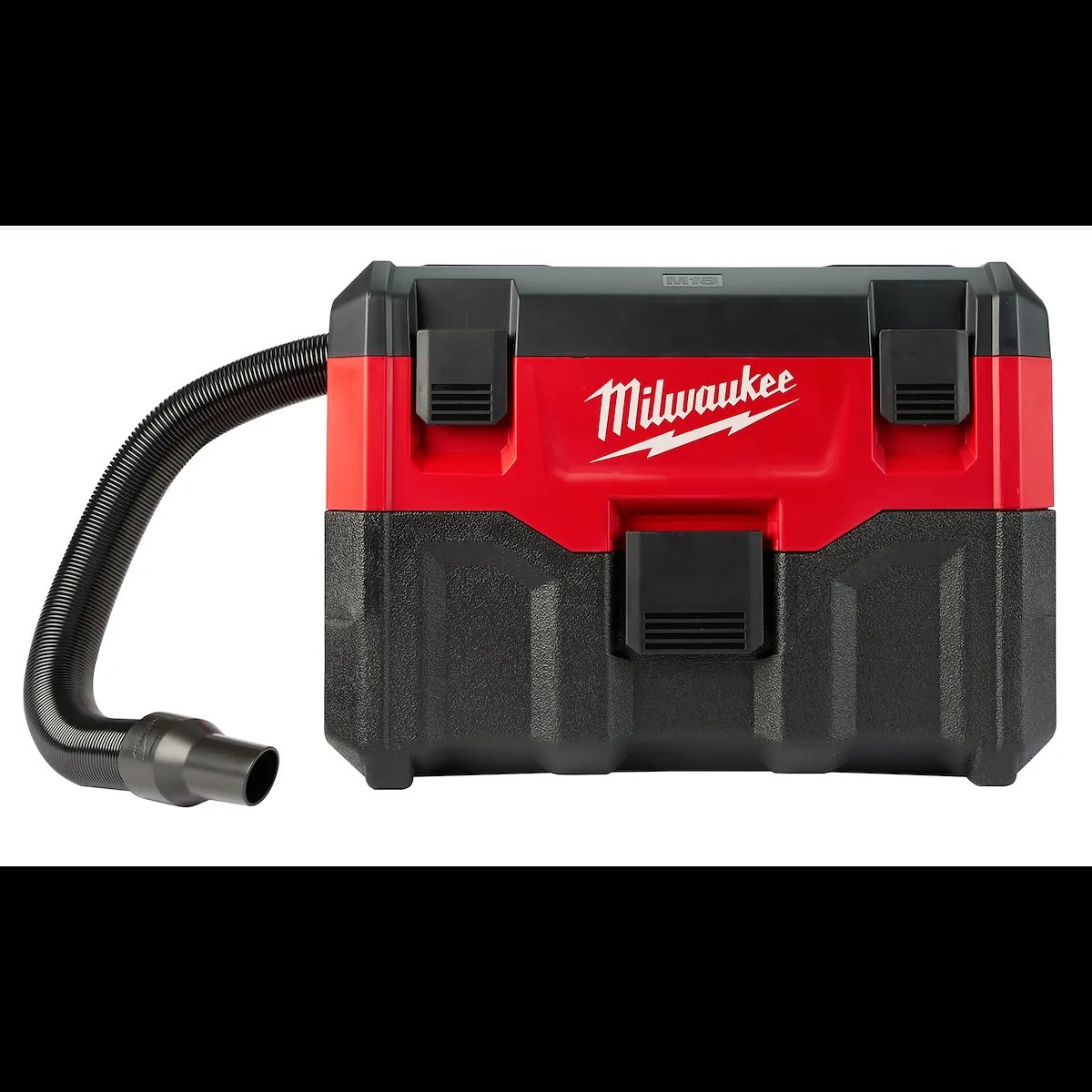
A 2-gallon tank does the whole car, the trunk liner and the garage floor before it needs emptying
Milwaukee rates 30+ minutes of clean-up on one M18 HIGH DEMAND 9.0 battery, which is longer than anyone actually vacuums
Ships with a 6-foot hose, crevice tool, utility nozzle and a HEPA filter, so nothing else is needed
Reasons to avoid
It is a 2-gallon canister, not a handheld — it sits on the driveway and you work off the hose
Bare tool on the most expensive battery platform here; an M18 pack and charger cost more than some complete vacuums
Too big to live in a trunk, which rules it out as the emergency vacuum
This is the one to buy if the car is only half the job. The 6-foot hose means the vacuum stays outside while you work inside, which is far less awkward than a handheld in a rear footwell, and the same tool handles sawdust and a flooded drain pan.
Its published numbers are why it wins rather than its badge: 45 CFM, 32 inches of water lift, 30+ minutes on a 9.0 pack. The catch is honest — it is heavy, and only sensible if the M18 batteries are already there.
Not the right fit if you want something that lives in the trunk — take the dustbuster or the WORX Cube Vac.
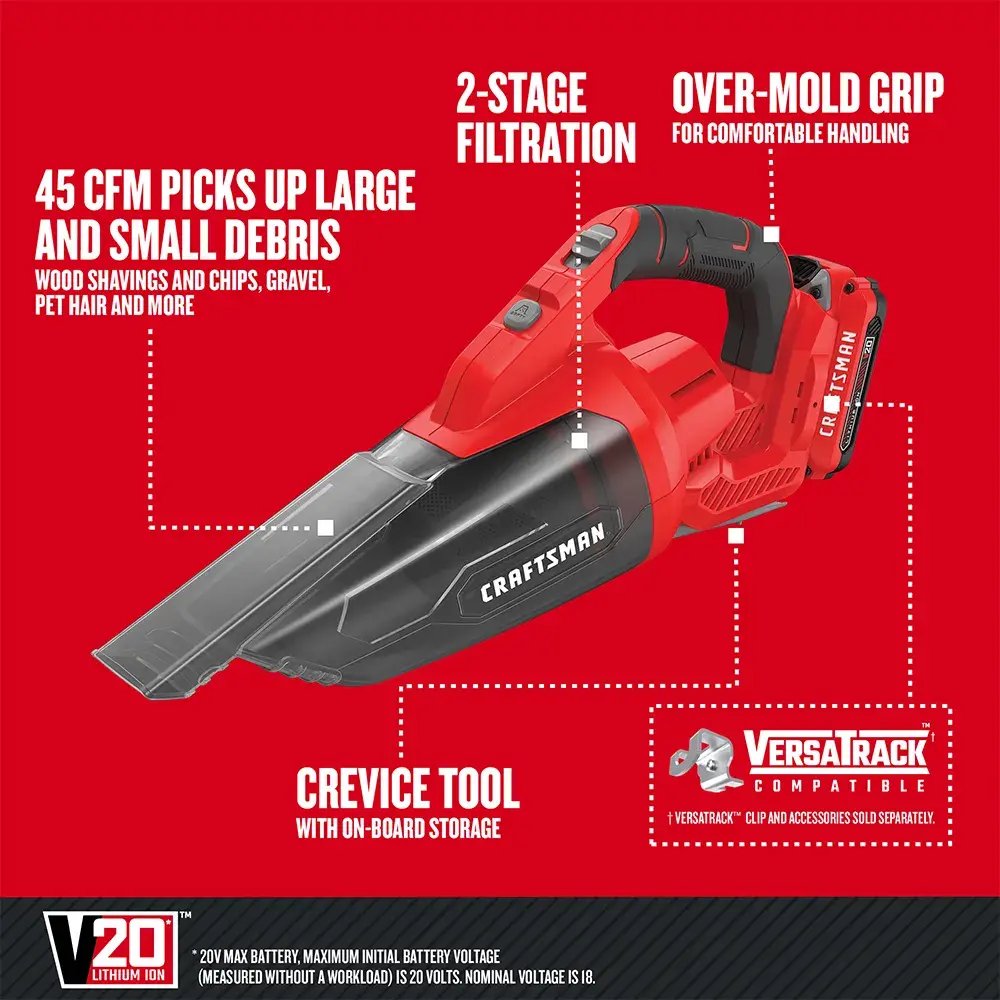
Up to 45 CFM, matching the Milwaukee canister's published air flow in something you hold in one hand
Battery and charger included, so it is a complete tool and the start of a 20V platform at once
Two-stage filtration keeps suction up as the bowl fills instead of choking halfway through the back seat
The crevice tool clips into the base of the tool, which is the only place it will not get lost
3-year limited warranty, the longest cover of the handhelds here
Reasons to avoid
Brushed motor, so it will not match a brushless tool for life expectancy under heavy use
CRAFTSMAN calls the bowl large but publishes no volume, and it is visibly smaller than the dustbuster's 750 mL
Dry debris only
The CRAFTSMAN is the value pick for someone with no cordless platform at all: battery, charger and a published 45 CFM, a number most handheld brands will not print — and the same pack then runs a drill and an inflator.
Its weakness is the number CRAFTSMAN will not publish. On a full interior clean the bowl gets emptied more than once; on a weekly tidy of the front seats that never comes up.
Not the right fit if you need wet pickup or a bigger bin — the DEWALT covers both.
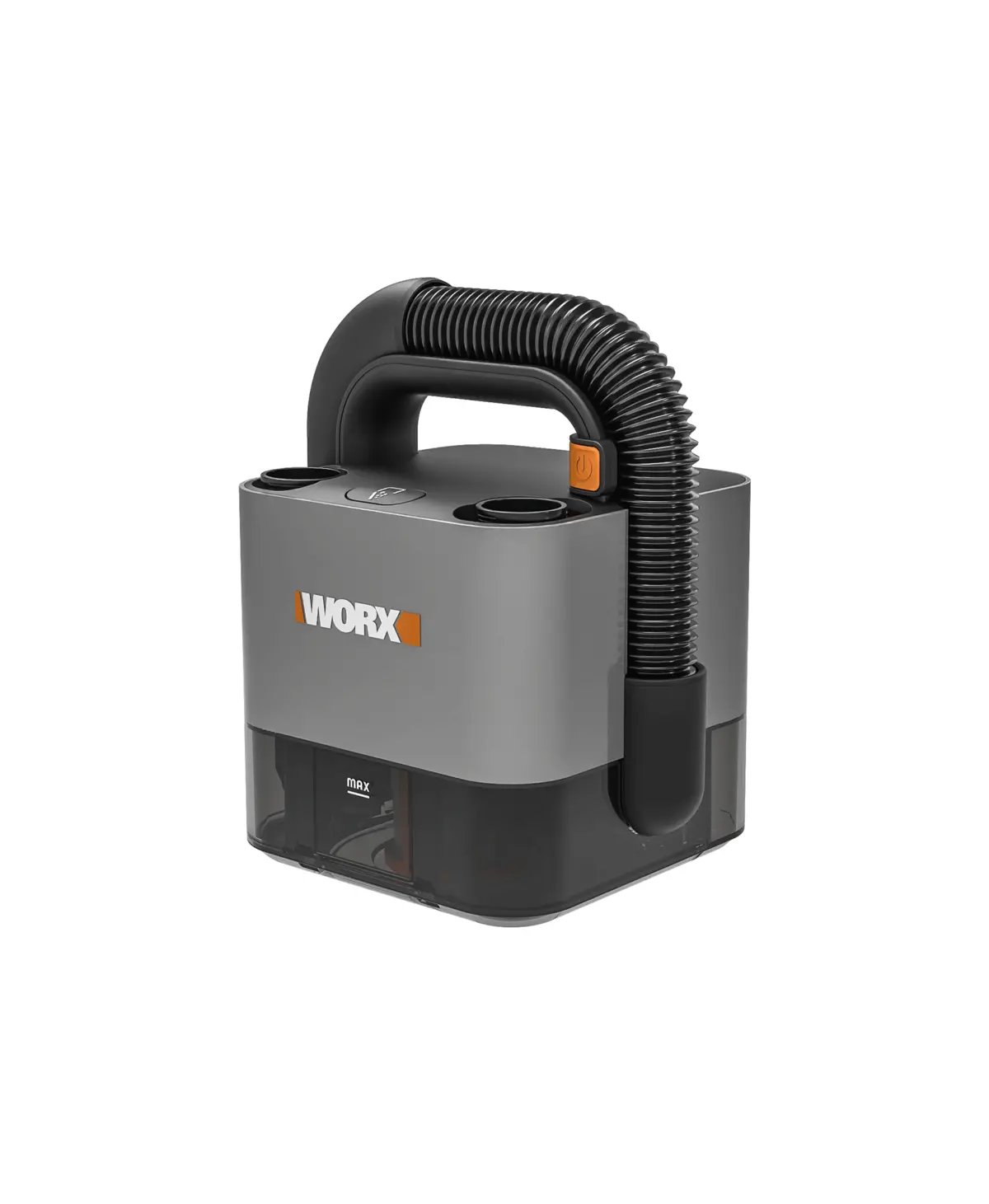
3 lb with the battery in, so it sits on the passenger seat while you work rather than fighting your wrist
A 3-foot flexible hose reaches under the seats from the door — no crawling into the footwell behind a handheld
22 CFM published air flow, with a crevice nozzle and brush attachment in the box
Washable HEPA-type filter; WORX specifies a warm-water rinse and 24 hours of drying
Reasons to avoid
A 7.0 oz dirt cup is the smallest here — a sandy footwell fills it, and the cup is not removable
10 minutes of run time on high with the included 2.0 Ah battery, 25 on low
Dry debris only; WORX is explicit that liquids will damage it
The Cube Vac wins one specific job and loses the rest. That job is the gap: a small box sitting outside the car with a 3-foot hose feeding into a footwell or between a seat and a console, which is far easier than aiming a handheld into a space your forearm does not fit.
Everything else is a compromise to go in knowing: ten minutes on high with a 7 oz cup means a whole-car clean takes two sittings and a battery change.
Not the right fit if you want to clean the entire car in one run — the dustbuster's 750 mL bin is ten times the capacity.
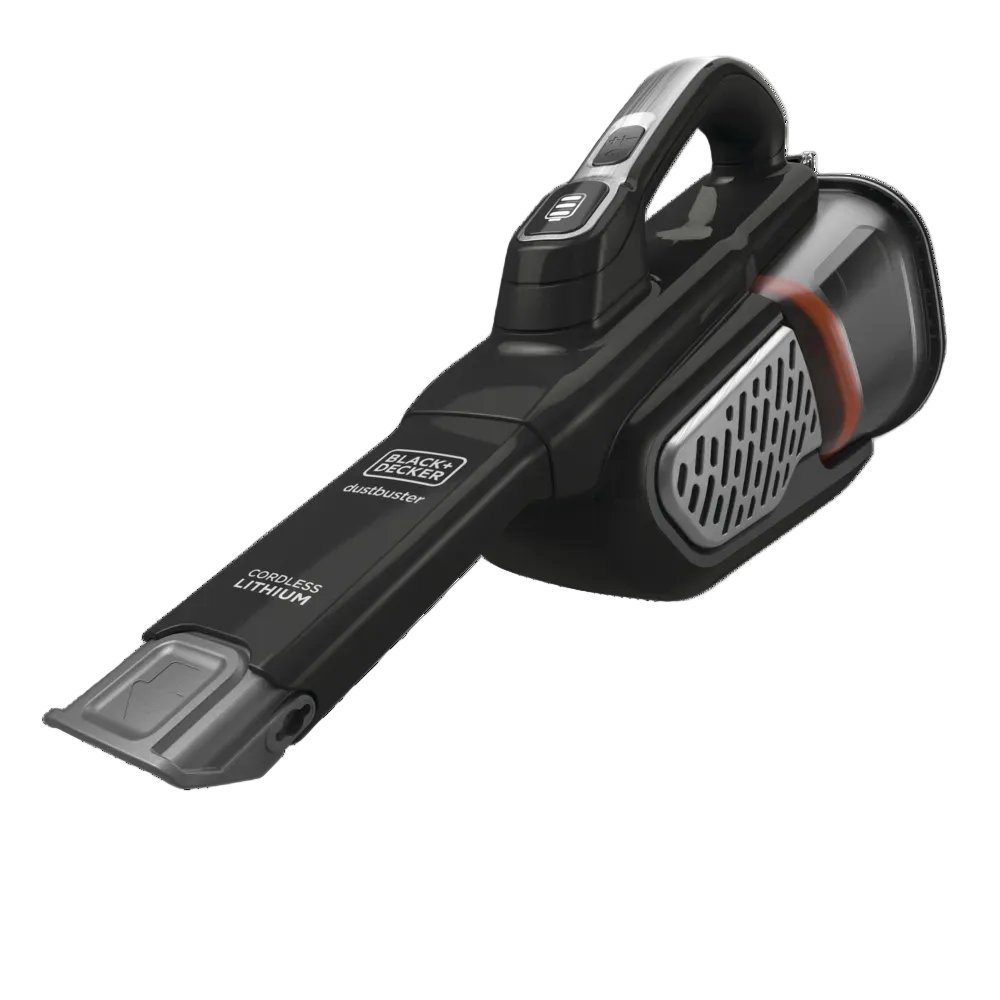
The cheapest way to stop borrowing the house vacuum and dragging an extension cord into the driveway
An extra-wide nozzle clears open carpet quickly, which is most of the floor area in a small car
Light enough to use one-handed over the whole interior without a break
Reasons to avoid
12V MAX, so it runs out of push on packed-in sand where the 20V tools keep going
No published bin volume or air flow — the spec sheet is marketing multiples only
There is a real case for the cheapest vacuum here: the one used every second week beats the excellent one you have to set up. For crumbs, dust and what a dog leaves on a back seat, 12V is enough.
What you give up is reach and stamina. The wide nozzle is the wrong shape for seat rails, and year-old sand in a floor mat needs the air flow of a 20V tool. Buy this to keep a clean car clean, not to rescue a neglected one.
Not the right fit if the carpets have not been vacuumed in a year — start with the Milwaukee or the 20V dustbuster.
None of these vacuums has been run over a carpet by us. The ranking is built from what each manufacturer publishes — air flow in CFM, bin volume, filtration rating, run time — because sealed-suction multiples and kPa marketing figures are not comparable across brands. A dash in the table means the brand publishes no figure for that row.
Every pick was measured on paper against three real gaps: the 2 to 3-inch channel a front seat rail sits in, the wedge between a seat base and the console, and the space under a rear bench. A vacuum needing a tool you have to go and find fails all three.
Wet pickup is a hard yes or no, taken from the manufacturer's own rating rather than an assumption. Running a dry-only vacuum over a wet mat is how they die.
Filters were checked for two things: whether the brand says you can wash them, and whether a replacement has its own part number. Milwaukee lists its HEPA filter as 49-90-1900; that is the standard the others were held to.
Battery platform was treated as part of the price. A bare tool is only cheap when the batteries are already in the garage, and every bare-tool pick says so in its spec block.
The verdict
Best overall: the BLACK+DECKER dustbuster AdvancedClean+. A 750 mL bin, a long crevice tool and two speeds is the combination that cleans a whole car without a battery swap or a trip to the bin, and it needs no other purchase to work.
Best value: the CRAFTSMAN V20 kit if you own no cordless platform, because the battery and charger are in the box and 45 CFM is published rather than implied. If 20V MAX or M18 packs are already in the garage, buy the matching bare tool and pay about half.
Whatever you buy, vacuum before you wash rather than after — grit tracked out of the cabin ends up on the paint. The order of operations is in how to wash a car without swirl marks.
Is a cordless car vacuum strong enough, or do I need a shop vac?
For interiors, cordless wins on reach. The strongest cordless unit here publishes 45 CFM and 32 inches of water lift, which pulls sand out of carpet pile; the advantage a corded shop vac has is run time, not what it lifts out of a footwell you can reach.
How long does a car interior take to vacuum?
About 20 minutes for a sedan: 5 minutes per front footwell including the seat rails, 5 for the rear bench, 5 for the trunk and mats. A 7 oz dirt cup needs emptying two or three times in that job; a 750 mL bin does not need emptying at all.
Wet/dry or dry only?
Dry only is fine for most car messes and costs less. Buy wet/dry if you have children, a dog, or a leaking sunroof — the two wet-rated picks here are the DEWALT DCV517B and the Milwaukee 0880-20, and both also handle a flooded garage floor.
Also considered
12-volt socket-powered car vacuums — They run off the accessory socket, so the engine has to run or the battery drains, and the cord reaches three quarters of the way around the car. Cordless solved this a decade ago.
Shark UltraCyclone Pet Pro+ — A capable handheld, but Shark publishes no air flow, no bin volume in millilitres and no filtration rating for it, so there is nothing to compare against the picks above.
Bissell handheld car vacuums — Same gap: suction claims and run-time estimates, but no published CFM or bin volume to hold them to.
Corded 2.5-gallon garage vacuums — Better value per gallon, wrong tool for an interior — the session goes on moving an extension cord, and the hose is too stiff for seat rails.