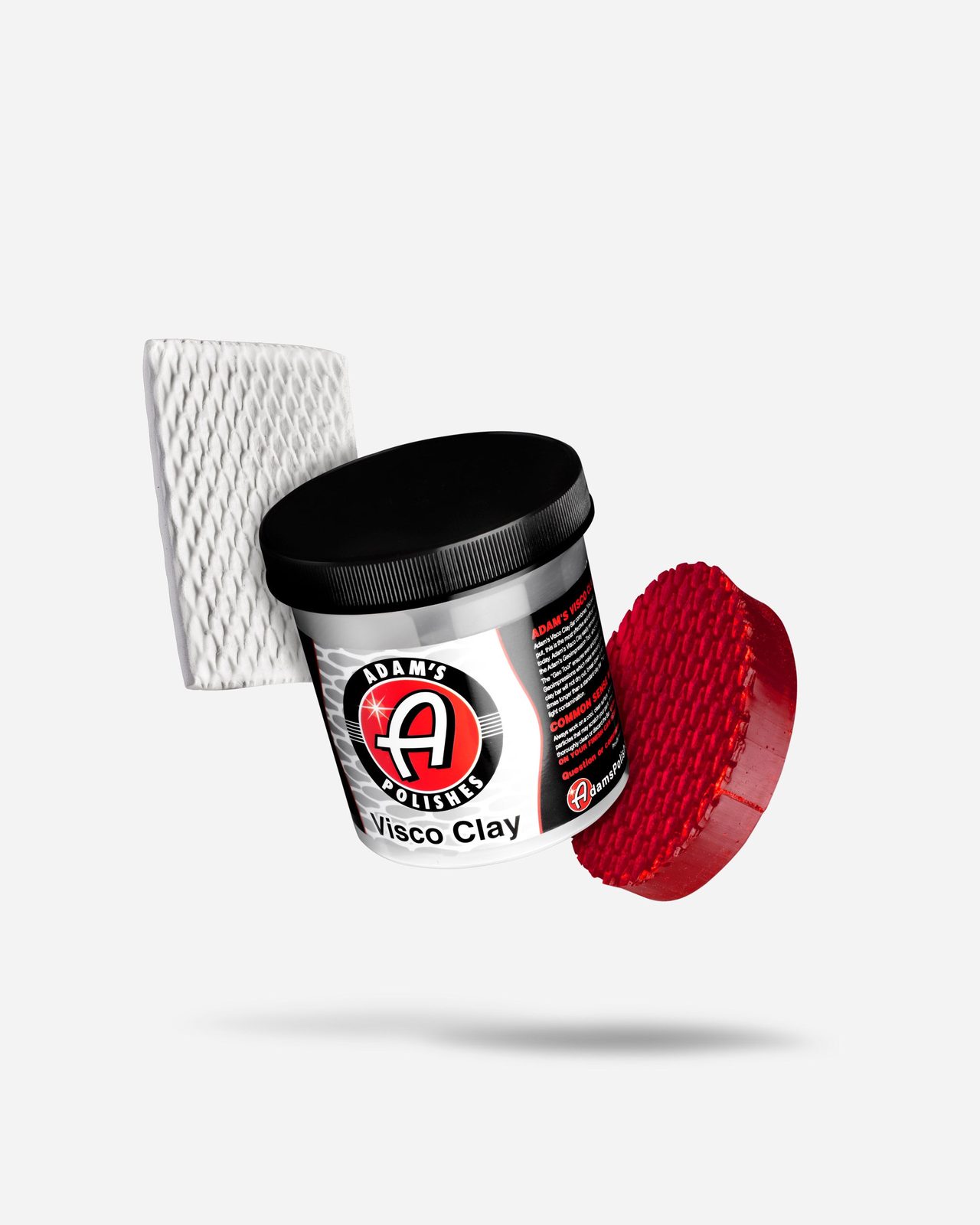
Buy the Adam's Visco Clay Bar ($$$). It is an 80 g bar that ships with a hand tool, and the tool is what makes it the right first purchase: it keeps the clay off the floor, and a bar that hits the floor is finished.
The number that quietly decides this whole aisle is how many times you get to use the thing. A traditional bar is done the moment you drop it. Adam's says its Clay Mitt is good for 20 to 40 uses. Mothers' Speed Clay 2.0 is a rubber polymer pad you rinse and put back in the drawer. That is the difference between a consumable and a tool, and it is bigger than any price difference here.
Every figure below — bar weight in grams, block dimensions in inches, reuse counts — comes from the manufacturer's own page. Where a maker publishes nothing, the table says so.
How to shop for a clay bar
Published weight or dimensions
Adam's prints 80 g for the Visco bar and 2.5 × 1.5 × 4.25 in for the Clay Block. Chemical Guys prints 100 g. Mothers prints 80 g and 100 g bars depending on the kit. A bar with no published weight is a guess about how many cars it covers.
How many times you can reuse it
This is the real running cost. A bar is done when it is dropped; Adam's rates the Clay Mitt at 20 to 40 uses; the rubber pads rinse clean under a tap. Over three years the reusable options cost a fraction of what bars do.
Grade, and whether the maker admits it marks paint
Adam's says outright that the Clay Mitt is a medium grade that can leave light micro-marring and is best used before a machine polish. That honesty is worth more than a softer claim, because marring is exactly what the aggressive options do.
Whether a lubricant comes with it
Clay dragged over dry paint scratches it. Mothers sells a California Gold Clay Kit variant that packs a 16 oz instant detailer with the bar; Adam's sells its bars in combination with Detail Spray. Buying the clay alone and forgetting the lubricant is the classic first mistake.
Recovery after a drop
A traditional bar picks up driveway grit and has to be binned. A foam-backed block or a mitt can be rinsed under a tap and carried on. Adam's built the Clay Block around exactly that failure, which is why it is on this page.
What else it works on
Five of the six products here are rated by their makers for glass, chrome or smooth plastics as well as paint, which matters because bonded fallout on a windshield is what causes the wiper judder people blame on the blades.
Best overall
Image: Adam's Polishes
Adam's Visco Clay Bar
80 g, and a tool so you stop dropping it
Form
Clay bar + tool
Size
80 g
Reuse
Knead; discard if dropped
Model
CLY1000
Reasons to buy
The geoimpression tool holds the bar, which is the single change that stops the most common and most expensive mistake in this category
Adam's publishes the weight — 80 g — so you know what you are buying rather than guessing from a photograph
The tool re-presses the pattern into the clay to give you a fresh working face, so one bar lasts further than an unpatterned one
Adam's says the viscoelastic formula will not dry out or break down in the jar, and it ships in a jar rather than a wrapper
Sold as a kit or as a bare refill, so the second bar costs less than the first
Reasons to avoid
The most money on this page for a consumable that is still ruined by one drop on concrete
80 g is the smallest bar weight here, against 100 g from Chemical Guys for less than half the money
Claying is not difficult, it is just unforgiving: the bar is soft, your hands are wet, and the floor is right there. Adam's is the only maker in this guide that treats that as the design problem and sells the fix in the box. The re-pressed working face is a real second benefit, because a clogged bar is what makes people press harder and mar the paint.
It costs roughly double the Chemical Guys bar and weighs less. You are paying for the tool and the jar, and on a first attempt that is money well spent.
Not the right fit if you want the most clay for the money — the Chemical Guys OG bar is 100 g.
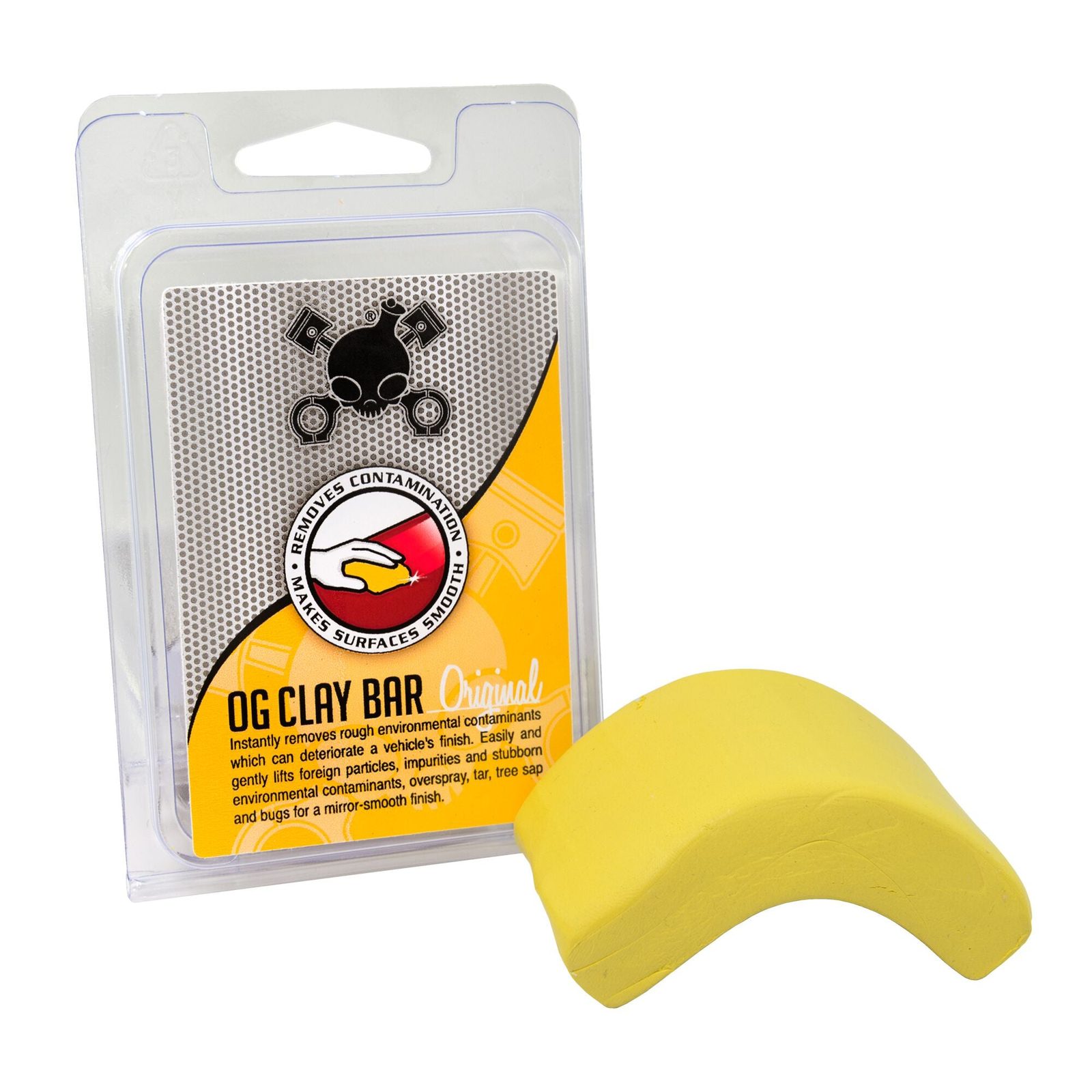
100 g, the heaviest single bar in this guide, for roughly half what the Adam's bar costs
Light to medium duty is the correct grade for a car that is washed regularly — the aggressive grades are for neglected paint and they mar
Chemical Guys rates it for paintwork, glass, plastic and metal, so one bar decontaminates the windshield as well
Sold on its own or bundled with Clay Luber, so the lubricant question is answered in the same order
Reasons to avoid
No tool and no jar: it arrives as a bar in a wrapper, and the first time it leaves your hand it is over
Light and medium are sold as separate products, so a genuinely neglected car needs a second purchase
This is what clay costs when you take away the packaging. A hundred grams is enough for several cars, the light or medium grade is the one a home washer actually wants, and Chemical Guys prints the weight and the grade on the page. Buy it with a bottle of lubricant and keep it off the ground.
Not the right fit if you know you will drop it — the Clay Block rinses clean and carries on.
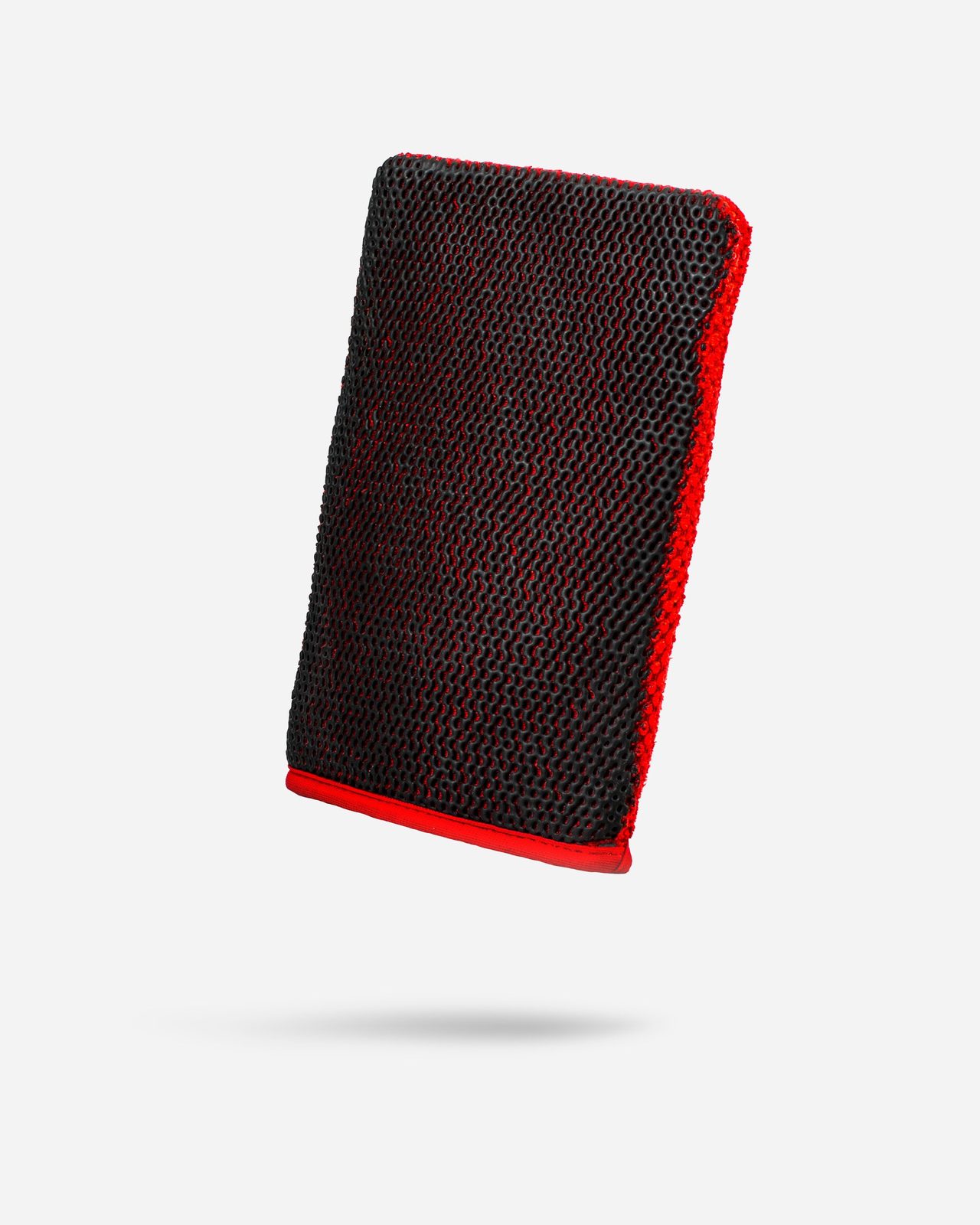
Adam's publishes a reuse figure — 20 to 40 times — the only reuse number anyone in this aisle prints, and the reason its cost per car is the lowest of any product here that publishes one
The mitt's face covers far more area per pass than a bar, which is what turns claying a whole car from an afternoon into an hour
Rinses clean under running water with your hands, so a dropped mitt is an inconvenience rather than a loss
Rated by Adam's for paint, wheels, glass and chrome
Medium grade, which cuts through fallout a light bar will not touch
Reasons to avoid
Adam's states plainly that it can leave light micro-marring that then needs polishing out — this is a step before a machine polish, not a standalone job
No published dimensions, so the working face size is unknown until it arrives
Among the most money on this page, and it is a tool you still have to buy lubricant for
If you are going to polish the car afterwards, this is the fastest way through the decontamination step, and the published 20 to 40 uses makes it the cheapest per car of anything here that names a number. If you are not going to polish afterwards, Adam's own warning about micro-marring is the reason to take a light-grade bar instead.
Not the right fit if you are not polishing afterwards — take the light-duty bar and accept the extra time.
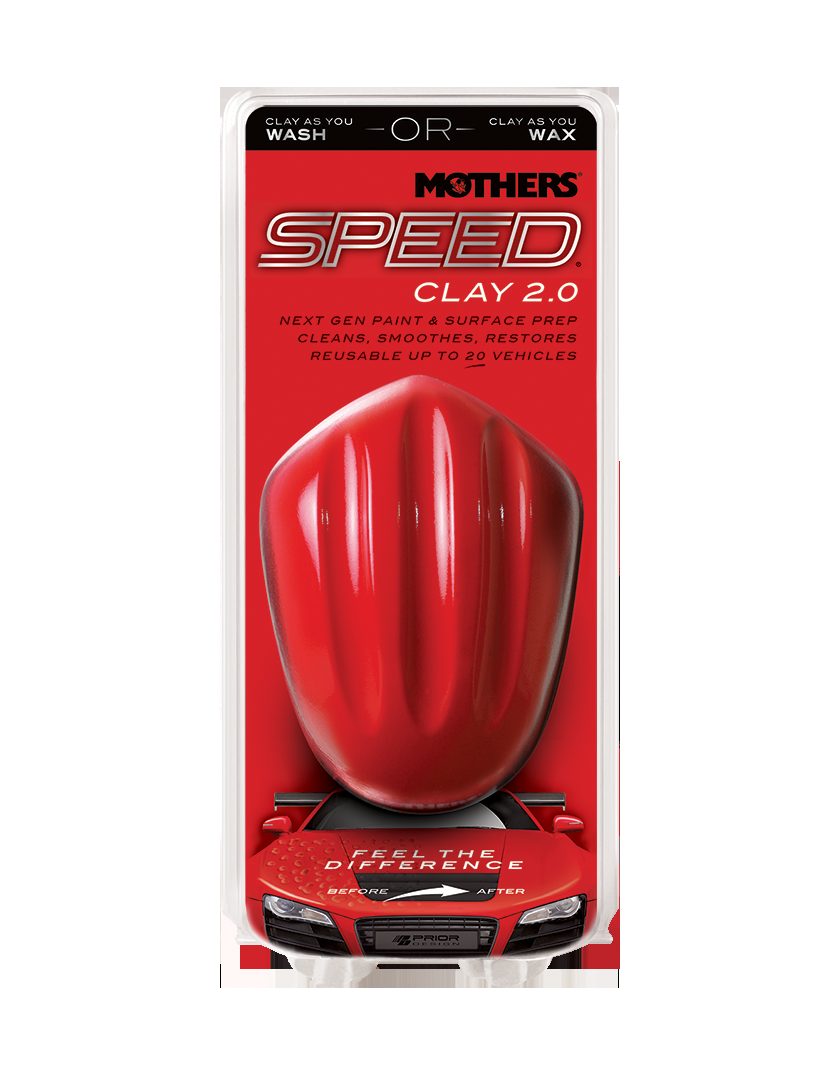
Mothers describes it as a patented rubber polymer that shears contaminants off rather than pulling them into clay, so nothing is consumed
Designed to be used during the wash or during a spray wax, which folds decontamination into a job you were doing anyway
Rated for paint, chrome, glass and smooth plastics, and it lists water spots explicitly among the things it removes
Nothing to drop and nothing to bin, so over a few years it costs a fraction of what replacing bars does
Reasons to avoid
Mothers publishes no working-face dimensions and no reuse count, so the only durability claim is the word durable
A rubber pad has less give than clay, and on a curved surface that means more care around edges and badges
The argument for this one is that it removes the reason people skip claying, which is the setup. You already have soap and water on the car; the pad goes over the panel during the wash, and the paint comes out smooth. It is not the most thorough option on this page, but it is the one most likely to actually get used twice a year.
Not the right fit if the car has heavy bonded fallout — start with the medium-grade mitt and polish afterwards.
Three 80 g bars in one box, so the first drop costs a third of the purchase rather than all of it
Mothers sells a separate California Gold Clay Kit with a 16 oz instant detailer if you also need the lubricant, so both halves of the job come from one brand
Mothers publishes the bar weight — 80 g each — and sells a 100 g bar separately if you want a heavier one
Rated for paint, chrome, glass and smooth plastics, and the bars keep in the box between uses
Reasons to avoid
Three ordinary bars and no tool, so nothing here reduces the odds of dropping one, and no lubricant is in the box
80 g bars, matching Adam's rather than the 100 g Chemical Guys bar
This is the box to buy if you have never clayed a car. Three bars turn the learning mistake into a shrug rather than a second order, which is the single most useful thing you can give a first-timer in this category. Buy a detailer spray at the same time, because there is none in the box.
Not the right fit if you only want one bar and the most clay per dollar — that is the Chemical Guys OG bar.
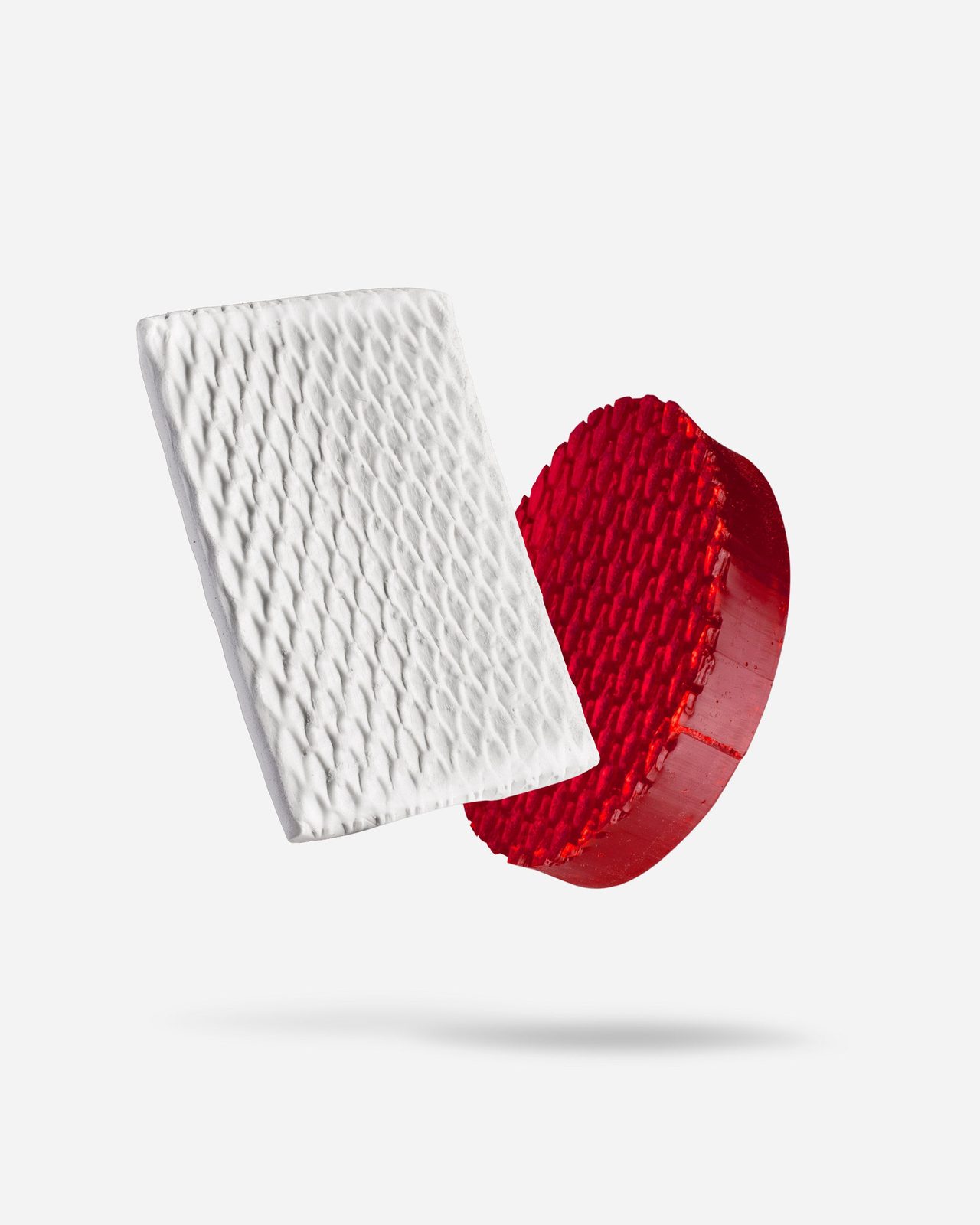
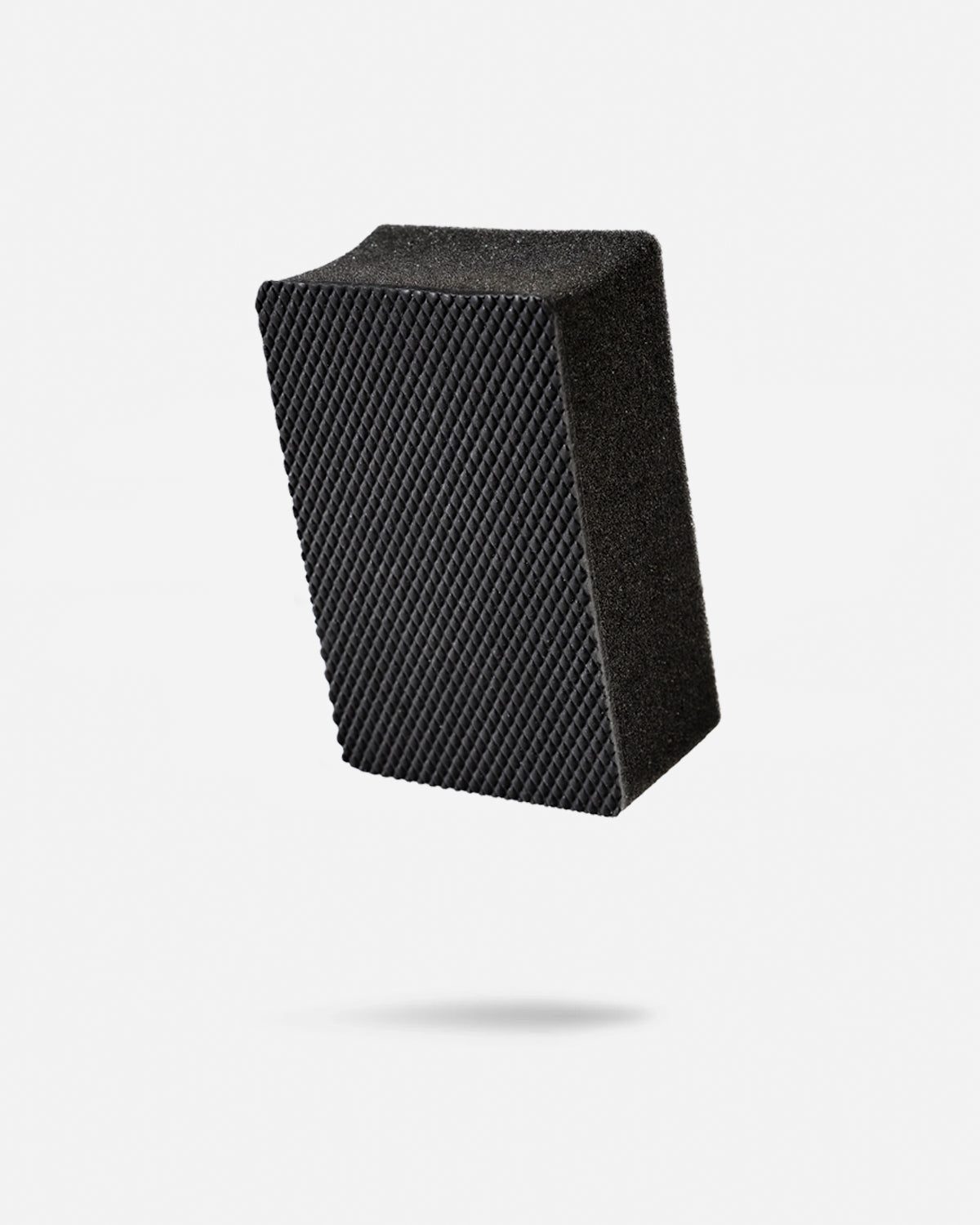
The only product on this page with its full dimensions published — 2.5 × 1.5 × 4.25 in — so you know how it sits in your hand
Foam backing gives you something to grip, which Adam's says outright is there to stop you dropping and contaminating the clay
Cheapest thing in this guide and reusable, which is a combination nothing else here manages
Sits between a bar and a mitt: more control than a mitt, more surface than a folded bar
Reasons to avoid
Adam's publishes no reuse count for it, unlike the 20 to 40 uses it prints for the Clay Mitt
A small working face, so a full-size truck is a long afternoon
This is the sleeper on the page. It costs less than a bar, it survives the floor, and it is the only product here whose dimensions you can check against your own hand before ordering. For a driveway washer doing one or two cars twice a year, it is arguably the most sensible purchase in the guide — just not the fastest.
Not the right fit if you need to cover a large vehicle quickly — the Clay Mitt has the bigger face.
Nothing here has been run against a car by us. Every weight, dimension and reuse figure above is quoted from the manufacturer's own product page, and those pages are linked in Sources.
A product had to publish at least one checkable number — a bar weight, a set of dimensions or a reuse count — or be excluded. Several well-known clay products publish none of the three.
The comparison job is one mid-size sedan whose paint feels rough after a normal two-bucket wash, decontaminated with a spray lubricant and then protected, on a driveway.
Price bands were set from the price behind the button on this page on the date above, and re-read against every comparative sentence in the text.
Grade claims are taken from the maker's own wording. Where a maker warns that its product can mar paint, that warning is printed in the pick rather than left out.
The verdict
Best overall: the Adam's Visco Clay Bar, because the tool in the box addresses the one failure that ruins a clay bar, and the 80 g weight is published.
Best value: the Chemical Guys OG Clay Bar at 100 g for the least money per gram. Lowest cost per car among the products that publish a number: the Adam's Clay Mitt at 20 to 40 uses, if you are polishing afterwards. Most likely to actually get used: Mothers Speed Clay 2.0, because it works during the wash.
Not sure which form suits you? Clay bar vs clay mitt runs the two against each other on the same car.
Wash and dry it, then put your hand in a thin plastic bag and run it lightly over the paint. Bonded fallout that your eyes cannot see feels like fine sandpaper through the bag. If the paint feels like glass, skip claying and go straight to protection.
Can I use a clay bar without lubricant?
No. Clay dragged across dry paint marks it immediately. Use a detailer spray or a dedicated clay lubricant and keep the surface wet the whole time — Mothers sells a Clay Kit variant with a 16 oz instant detailer for exactly this reason, and Adam's recommends its Detail Spray with the Clay Mitt.
How often should a car be clayed?
Once or twice a year for a car parked outside, less for a garaged one. It is a preparation step rather than a maintenance step: you clay before you wax, seal or coat, because protection applied over bonded fallout locks the fallout in.
Does clay remove scratches?
No. Clay removes what is stuck on top of the clear coat — rail dust, overspray, tree sap, brake dust. Scratches are in the clear coat and need polishing. Adam's is explicit that its medium-grade mitt can even add light marring that a polish then removes.
What happens if I drop the clay bar?
Bin it. A bar that has touched the ground has picked up grit that will be dragged across your paint on the next pass. That single failure is why the reusable options in this guide exist and why the Adam's bar ships with a tool to hold it.
Is a clay mitt better than a clay bar?
Faster, not gentler. Adam's rates its mitt at 20 to 40 uses and says it can leave light micro-marring, which is fine before a machine polish and not fine as a final step. A light-duty bar is the safer choice if the car is not going to be polished afterwards.
Also considered
Heavy-duty and aggressive-grade clay bars — Sold for neglected paint and industrial fallout, and they mar clear coat on the way through. A regularly washed car wants light or medium, and the heavier grades commit you to a machine polish afterwards.
Clay towels sold without a grade or a reuse figure — The polymer-coated towels are a real category, but the ones reaching marketplaces publish neither an abrasive grade nor how many washes the coating survives, so there is nothing to hold the seller to.
All-in-one clay and coating products — Combining decontamination with protection means the protection goes on while the fallout is still being lifted. The two steps want different lubricants and different pressures, and doing them separately takes about twenty minutes longer.
Kitchen substitutes and modeling clay — Automotive detailing clay is a graded abrasive suspended in a specific polymer. Craft clay has neither the grade nor the release properties, and the failure mode is a paint correction you did not budget for.