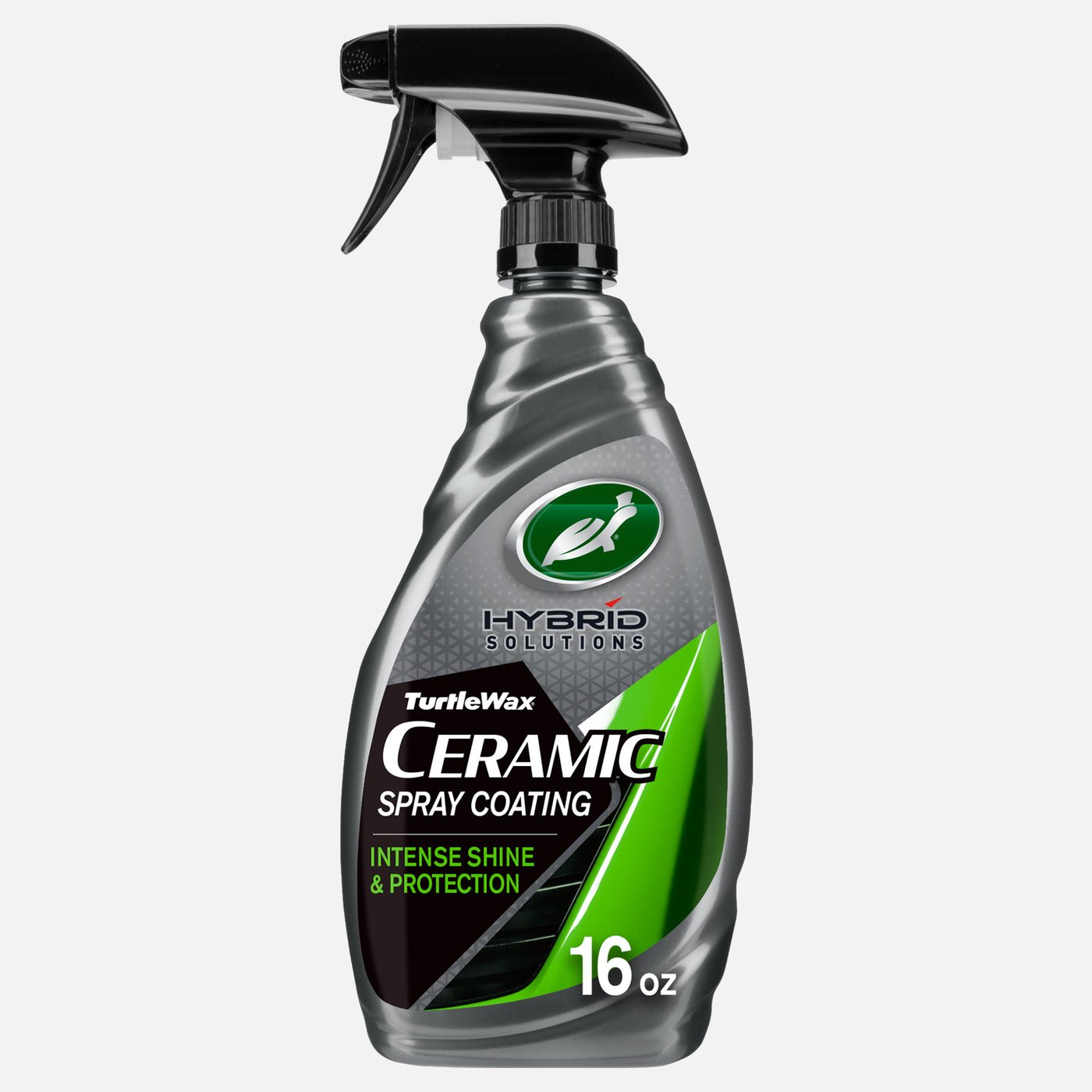
Buy the Turtle Wax Hybrid Solutions Ceramic Spray Coating ($). It is a spray-on, wipe-off coating applied a 2 foot by 2 foot panel at a time, and Turtle Wax's own instructions let you add a second coat after a 24-hour cure — which is as close to foolproof as this category gets on a first attempt.
A spray ceramic is not a real coating and does not pretend to be. What it is, is a wax replacement that beads harder, lasts months rather than weeks and takes about twenty minutes on a washed car. If you have never used one, the cheapest bottle teaches you the technique without punishing a mistake.
The numbers worth comparing are durability and how thin you can spread it. Chemical Guys publishes up to 12 months for HydroCharge+; Adam's publishes contact angles of 110 to 118 degrees and a sliding angle under 15 degrees for its Graphene spray; Turtle Wax publishes the panel size and the cure time. Everything below comes from those pages, linked at the bottom.
How to shop for a ceramic spray coating
Published durability
Chemical Guys states up to 12 months for HydroCharge+ and up to a year for HydroSlick; Adam's states 1+ years for its graphene spray. Where a brand publishes nothing, treat it as a seasonal product.
Contact angle, where it is published
Contact angle is how tightly water balls up. Adam's publishes 110 to 118 degrees and a sliding angle under 10 to 15 degrees for the graphene spray — the only measured hydrophobicity figures in this category.
How forgiving the application is
A beginner's coating has to tolerate being left a minute too long. Spray-and-wipe products worked 2 x 2 feet at a time, like the Turtle Wax, forgive that; gels and true coatings do not.
Bottle size against the job
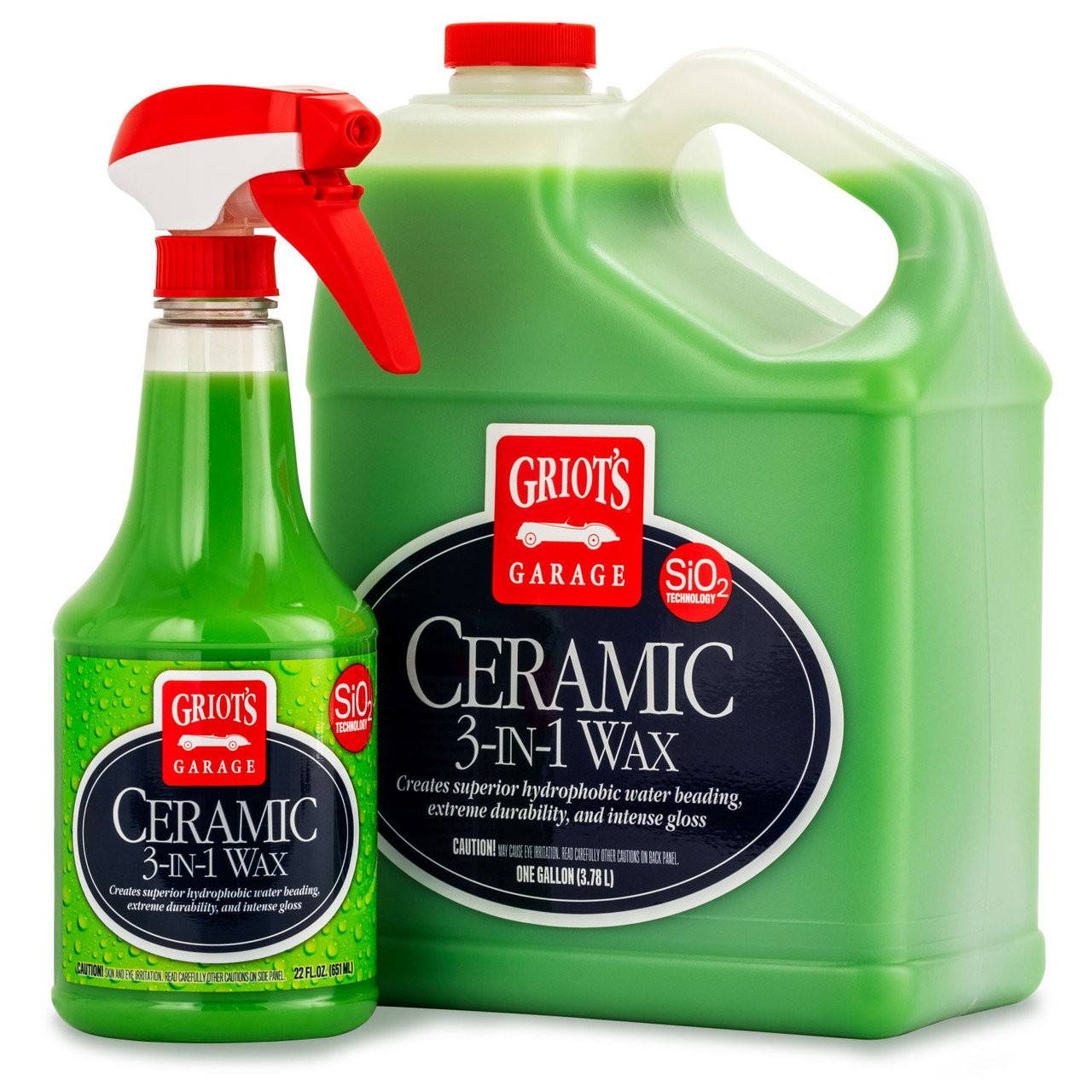
A sedan takes a few ounces a coat. Sizes here run 12 oz on the Adam's graphene spray, 16 oz on the Turtle Wax and Chemical Guys bottles, 22 oz on the Griot's and 24 oz on the Mothers CMX.
Whether it can top an existing coating
HydroCharge+ and CMX are both sold as boosters over an existing coating or sealant, which makes them useful later even if you move to a professional coating.
What it does to your wash routine
Coated paint is easier to wash but hates strong degreasers. Plan on a pH-neutral shampoo afterwards — the wheel cleaners and all-purpose sprays that strip road film also strip a spray ceramic early.
Best for a first attempt
Image: Turtle Wax
Turtle Wax Hybrid Solutions Ceramic Spray Coating
16 oz, and a 24-hour second coat
Size
16 fl oz
Chemistry
SiO2 hybrid
Durability
Not published by Turtle Wax
Application
Spray on, wipe off, 2 × 2 ft panels
Second coat
After 24 h cure
Model
53409
Reasons to buy
The instructions give you a panel size — 2 feet by 2 feet — which is the single most useful thing a first-time user can be told
A published 24-hour cure before a second coat, so layering is a decision with a number attached rather than a guess
The cheapest way to find out whether you enjoy this job at all, at a fraction of what a professional coating costs
Widely stocked, so a top-up bottle is never a special order
Reasons to avoid
Turtle Wax publishes no durability figure for it, so plan on checking the beading each season rather than trusting a calendar
Sixteen ounces is a lot of product for one car, and an opened bottle does not last forever
This is the bottle to learn on. The technique — wash, dry, mist two sprays on a small panel, spread with one towel, buff with a second — is identical to every other product here, and doing it wrong with this one costs very little.
What you do not get is a published durability number, which is why it is not the pick for someone who already knows they want a year of protection. As a first ceramic, the combination of low cost and clear instructions beats a longer claim you cannot check.
Not the right fit if you want measured hydrophobic figures — the Adam's graphene spray publishes contact and sliding angles.
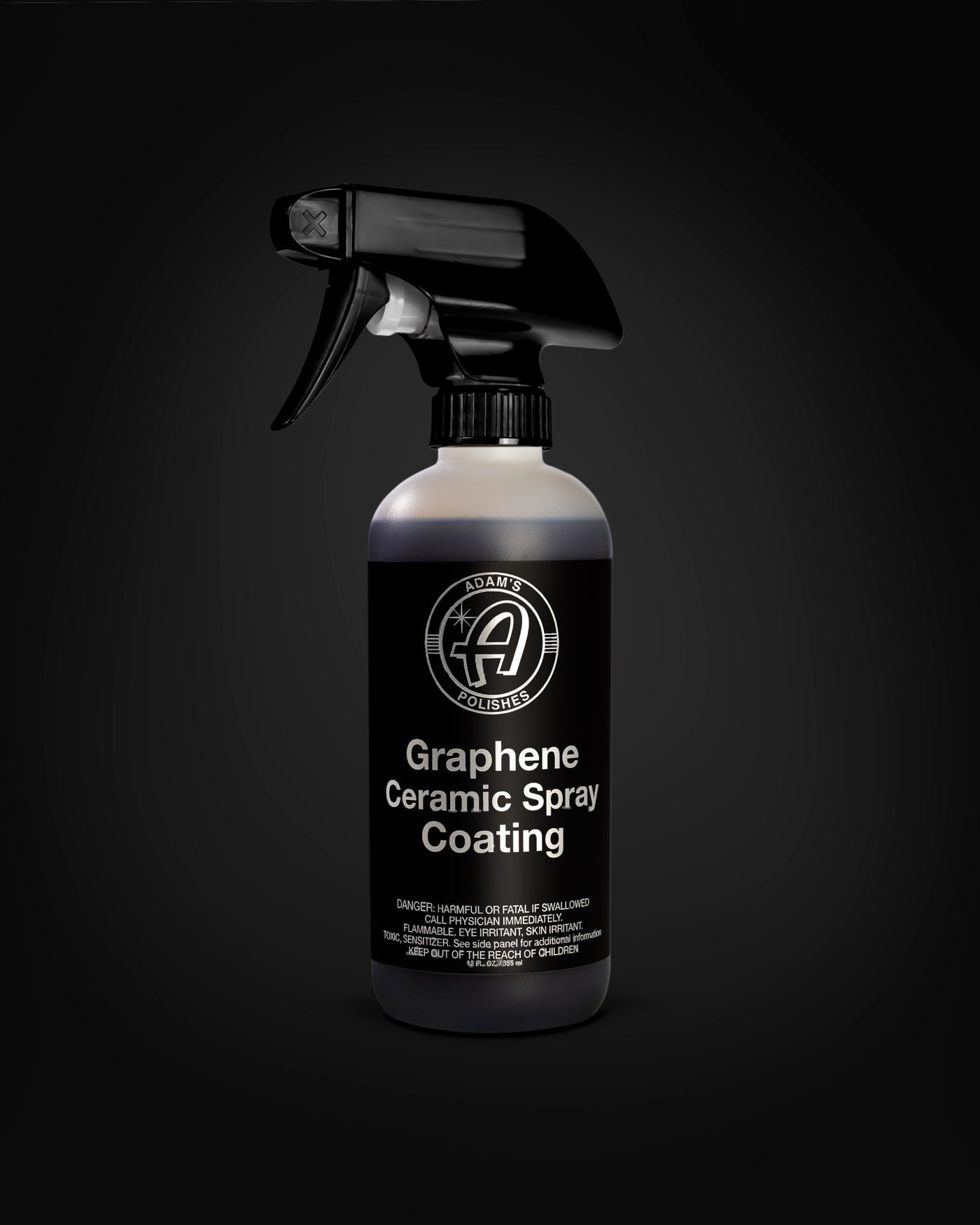
The only product here with measured hydrophobicity — 110 to 118 degree contact angles and water leaving the panel below a 15 degree slope
Adam's states over a year of protection, and adds UV tracing technology so you can see under a UV light where you have already sprayed
Rated for paint, glass, headlights, chrome, trim, wheels and bed liners, so one bottle covers the whole car
Works as a standalone coating or as a topper over an existing ceramic, which keeps it useful if you upgrade later
Adam's says it is less prone to water spotting than its previous ceramic spray, which is the failure mode beginners hit first
Reasons to avoid
Twelve ounces is the smallest bottle in this guide, and the most expensive per ounce
Cannot be shipped by air, so delivery is slower and some remote addresses are excluded
If you want to compare products by anything other than a marketing adjective, this is the bottle that lets you. Contact angle, sliding angle and hardness are all published, and a sliding angle under 15 degrees is the specification that translates into water leaving the car at highway speed instead of drying into spots.
The UV tracer is a genuinely good idea for a first coating, because the classic beginner error is a missed section you will not see until it rains. What holds it back is size and cost — 12 ounces at this price is a considered purchase, not an experiment.
Not the right fit if you want the largest bottle for the money — the Mothers CMX is 24 oz.
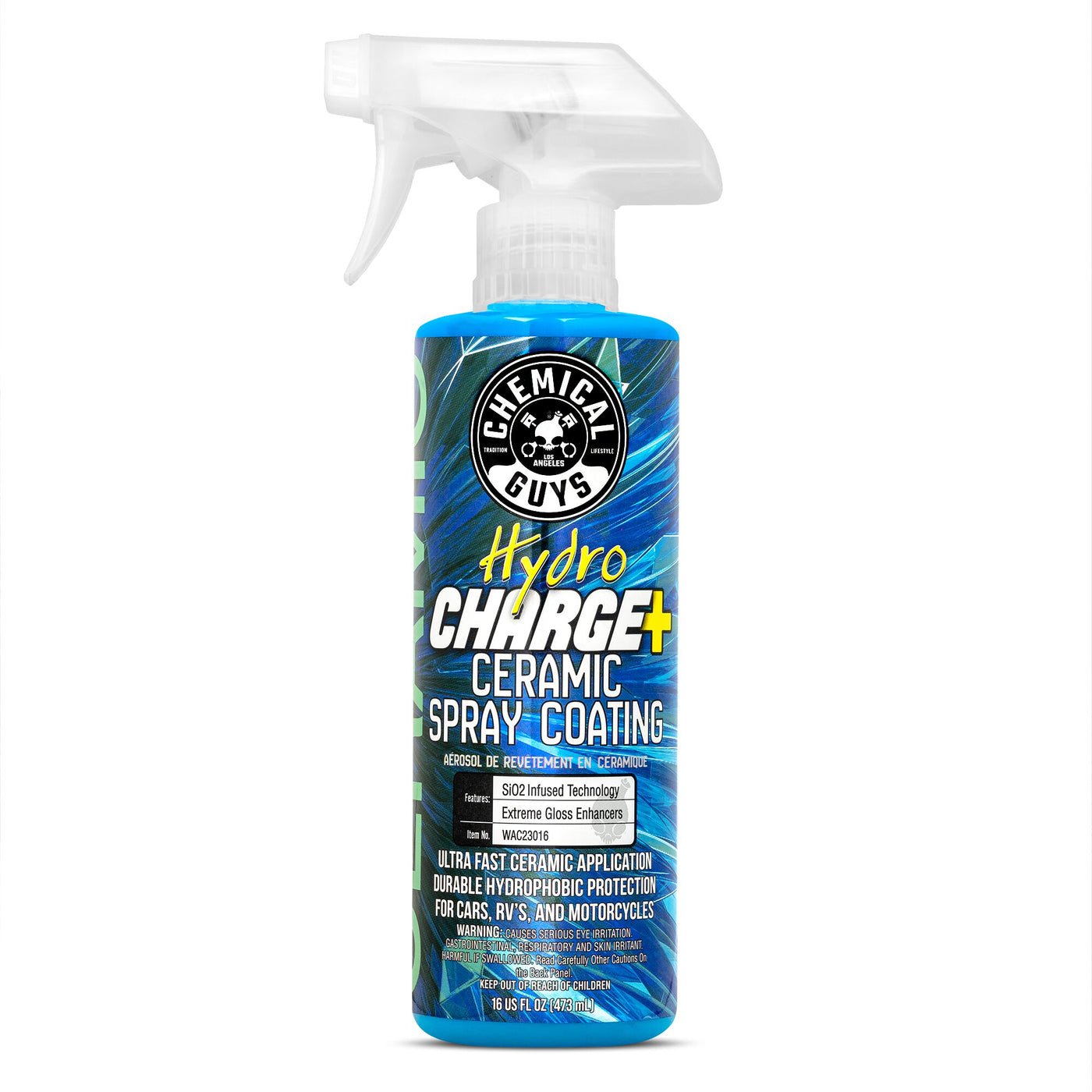
Chemical Guys publishes up to 12 months of protection, the longest firm claim in this guide
Designed to be reapplied weekly or every other week as a booster, so one bottle covers both jobs
SiO2 chemistry that layers over an existing coating rather than fighting it
Instant beading on application, which makes it obvious whether you missed a panel
Reasons to avoid
"Up to" is doing work in that 12-month claim — on a car parked outside expect to be topping up long before then
No published contact angle, so the hydrophobic performance is a claim rather than a measurement
It carries the highest sticker of the six today, and it is a 16 oz bottle against 22 and 24 oz bottles that cost half as much
The honest way to use a spray ceramic is as a rolling top-up: a full application after a proper wash, then a light one every few washes. HydroCharge+ is sold for exactly that pattern and the 16 oz bottle supports it.
Treat the 12-month figure as a ceiling under ideal conditions rather than a plan. Used as a booster it will keep a car beading indefinitely, which is a more useful promise than a number on a bottle.
Not the right fit if you want one application to last a year untouched — no spray here reliably does that.
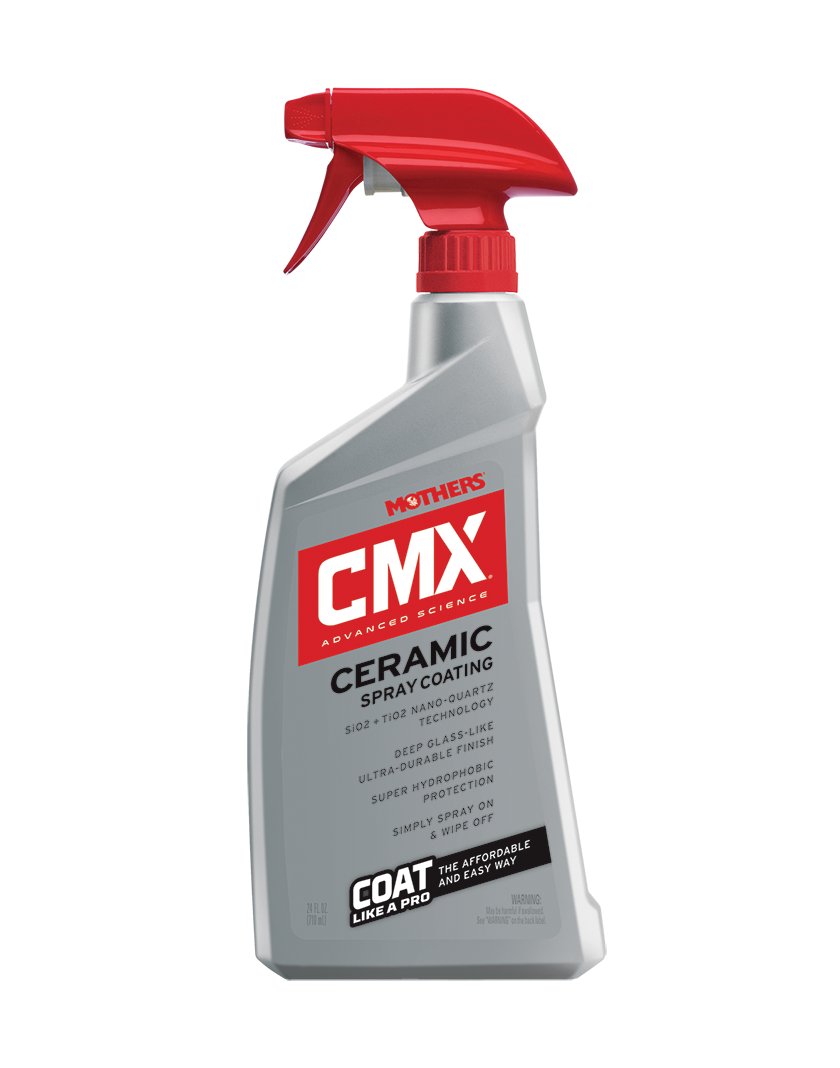
Twenty-four ounces, the largest bottle here, and it sits in the cheapest band on the page — nothing else gives you this much product for this little
A titanium dioxide component alongside the silica, which Mothers says is what keeps the optical clarity on dark paint
Explicitly sold to be layered for more depth, so a second coat is part of the design rather than a workaround
Reasons to avoid
Mothers publishes no durability figure at all, so there is nothing to hold the product to
The largest bottle is only an advantage if you have more than one car or reapply often
For a household with two cars, the arithmetic is simple: 24 ounces of a layerable coating covers both several times over, and Mothers has been making paint chemistry for long enough that the blend is not an experiment.
The missing durability claim is the gap. You will find out how long it lasts by watching the beading, which is fine for a maintenance product and frustrating if you wanted a number before buying.
Not the right fit if you want a published durability claim — HydroCharge+ states up to 12 months.
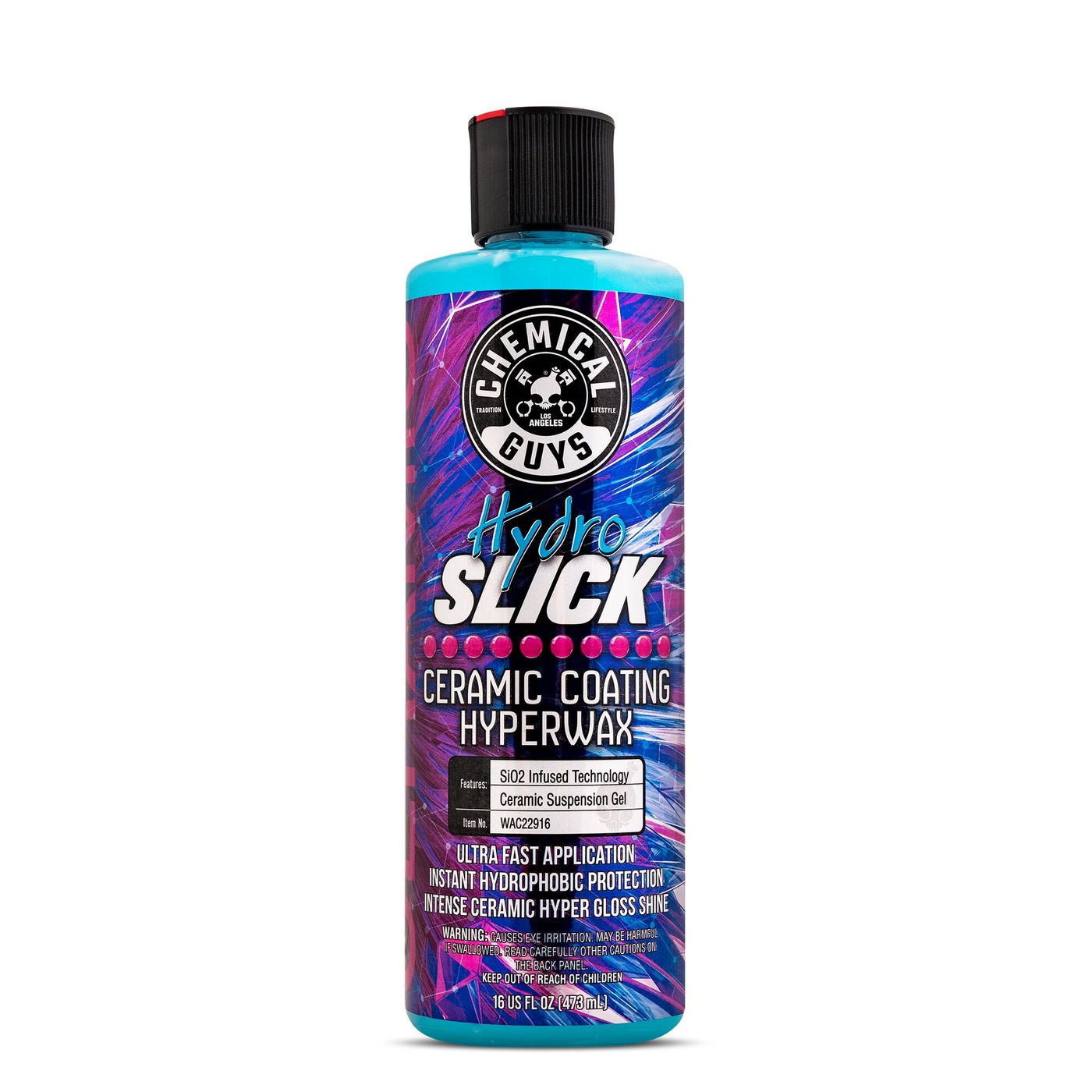
Applied with an applicator and buffed like a wax, so anyone who has waxed a car already knows the motion
Chemical Guys states up to a year of protection from a single application
Gel form means it stays where you put it instead of misting onto trim and glass
Sixteen ounces of gel is several applications, and the jar does not evaporate the way a sprayed product can
Reasons to avoid
Slower than a spray — this is an afternoon on a car rather than twenty minutes
Buffing a gel needs more towels and more care in the sun, which is exactly where beginners struggle
This is the product for someone who wants the annual-protection job done properly once and then forgotten. The application is deliberate and the finish is the glossiest in this guide by reputation, which is what the gel form buys you.
It is the least beginner-friendly product on the page, and that is why it sits fifth. If you have never coated a car, do it with the Turtle Wax bottle first and come back to this when the technique is automatic.
Not the right fit if this is your first coating — start with the Turtle Wax spray.
Rated by Griot's for paint, wheels, plastic and rubber trim, so one bottle finishes the whole car including the parts people skip
Twenty-two ounces, second only to the Mothers bottle for volume
Silane polymer and SiO2 blend formulated and made in-house rather than relabelled
Sprays and wipes in the same motion as the Turtle Wax, so the learning curve is identical
Reasons to avoid
Griot's publishes no durability figure and no contact angle, so the only thing you can check before buying is the size of the bottle
Being rated for wheels is only useful if you also clean them properly first — coating baked-on brake dust achieves nothing
A product rated for four surfaces is a compromise on each of them, and the pages that publish numbers are all paint-only
The all-surface rating is the reason to buy it. Trim, wheels and plastic are where a car looks tired first, and a product you can spray on all of them means the ten-minute tidy-up actually happens.
As a paint coating it is competing with bottles that publish more. Buy it if you want one product for every surface; buy something else if you want a number to compare.
Not the right fit if you want measured performance figures — see the Adam's graphene spray.
Nothing here has been sprayed on a car by us. Durability claims, contact angles, bottle sizes and cure times are quoted from the manufacturers' own product pages, which are linked in Sources.
Products had to publish at least one checkable figure — a size, a cure time, a durability claim or a measured angle. Sprays whose makers publish only adjectives are named in the rejects.
The comparison job was a washed, dried mid-size sedan in shade, coated a panel at a time, with a second towel for the final buff and a second coat where the maker allows one.
Durability claims were read as ceilings, not plans. "Up to 12 months" describes a garaged car in mild weather; a car parked outside through a winter is a different test that none of these pages describe.
Where a maker publishes a measured angle — Adam's is the only one here — that was weighted above any durability claim, because it is the only number in the category that was produced by a measurement rather than a marketing decision.
Nothing in this guide replaces a real professional coating. These are spray-on products that behave like a very good wax, and the guide is written on that basis.
Still deciding whether to coat at all? Ceramic spray vs paste wax compares the two on effort, durability and what each one actually does to the finish.
Check price at AmazonBest for a first attempt: Turtle Wax Hybrid Solutions Ceramic Spray Coating
Questions people ask
How long does a ceramic spray coating actually last?
The published claims are up to 12 months for Chemical Guys HydroCharge+ and 1+ years for Adam's graphene spray, both on cars that are washed properly and kept out of harsh chemicals. On a car parked outside and washed at a coin wash, plan on a top-up every few months and judge by the beading.
Do I need to polish the paint first?
For the best result, yes — a coating locks in whatever is underneath, including swirl marks. For a first attempt, a thorough wash, a decontamination step and a clean dry surface are enough. Polishing is the next project, not a prerequisite.
What is contact angle and does it matter?
It is the angle a water droplet makes with the paint. Higher means tighter beads: Adam's publishes 110 to 118 degrees for its graphene spray. The more useful number is the sliding angle — under 10 to 15 degrees means water runs off a gently sloped panel instead of sitting there and spotting.
Can I put a ceramic spray over wax?
No. A coating needs to bond to clean paint, and a layer of carnauba is exactly what stops that. Strip first with a dedicated prep spray or a strong wash, then coat. The reverse — a spray ceramic first, wax on top — is pointless but harmless.
How much do I use on one car?
A few ounces per coat on a sedan, applied two sprays at a time to a 2 x 2 foot section as Turtle Wax directs. A 16 oz bottle is several full applications, which is why the 24 oz Mothers bottle only makes sense for more than one car.
Also considered
"9H" coatings sold only through marketplaces — 9H describes a pencil hardness test on a cured film, not on your paint, and a seller with no product page has published nothing to check. The hardness number in this category is decoration.
Meguiar's Hybrid Ceramic Wax — A popular product we could not include honestly — the manufacturer's site did not respond to any automated request while this guide was written, so there was no maker page to quote specifications from.
Spray waxes labelled ceramic with no SiO2 claim — If the page will not say what the chemistry is, the word ceramic on the front is marketing. Every product above at least names its chemistry.
Two-part professional coating kits — Genuinely more durable and genuinely unforgiving. High spots that are not levelled within minutes need machine polishing to remove, which is not a beginner's first job.
Ceramic-infused car wash soaps as a substitute — They add a little protection during a wash, which is a nice extra and not a coating. Use one after you have coated the car, not instead.