As an Amazon Associate I earn from qualifying purchases. Links marked "at Amazon" are paid links.
How to remove water spots from car paint
 By Chris Y. · Founder & editor
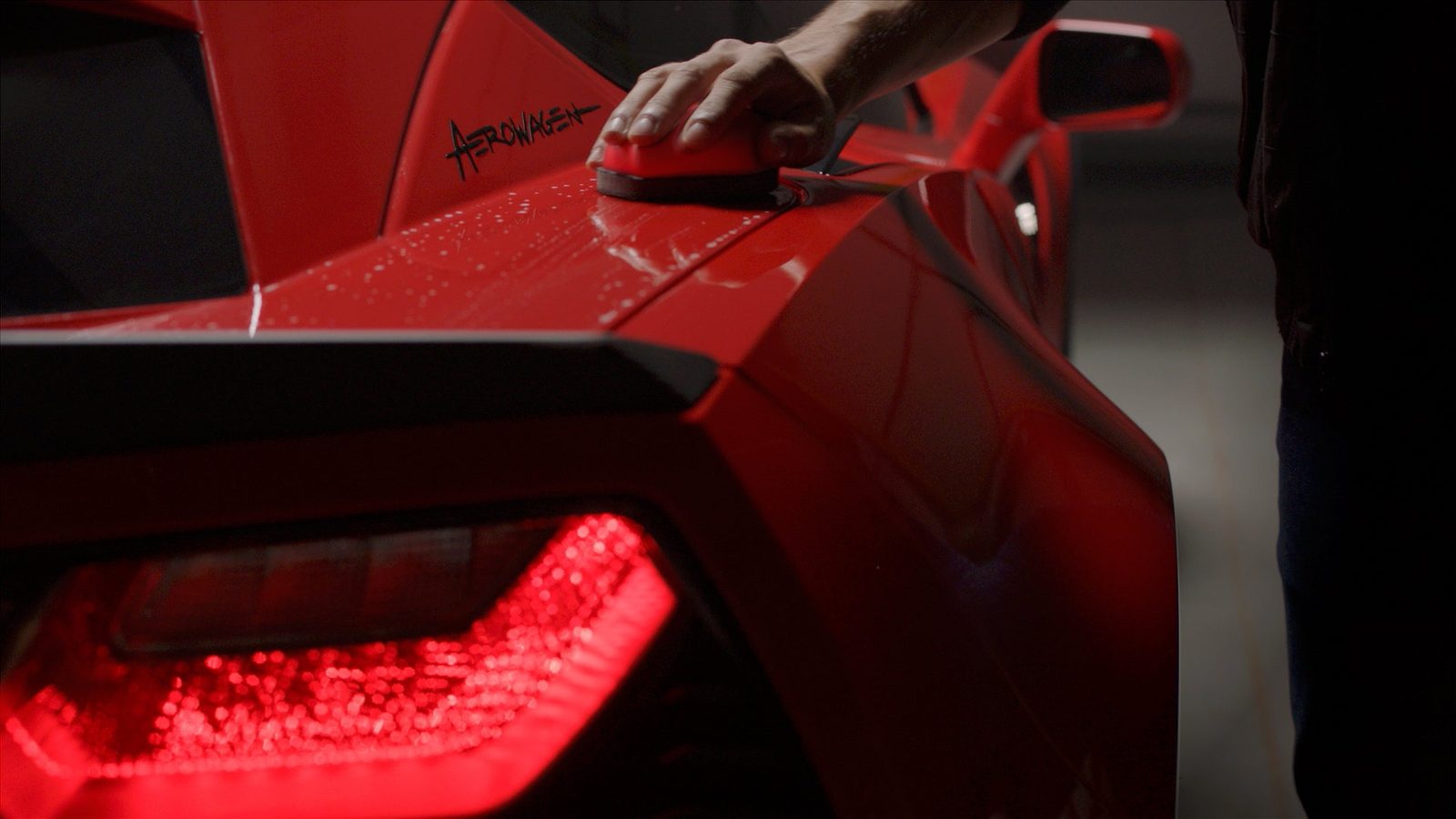
A water spot is not dirt. Adam's puts it plainly on its own product page: water spots are caused by hard water, rich in dissolved minerals such as magnesium and calcium, allowed to evaporate on a surface. The water leaves; the minerals stay. That is why wiping harder does nothing.
How you remove them depends entirely on how long they have been there. Adam's is explicit that ordinary cleaners and detail sprays are not sufficient unless the spot is caught very shortly after it dried, and that baked-in stains need either physical abrasion such as claying or an acid-based cleaner to penetrate, neutralize and dissolve the minerals.
This page walks the four severities in order, names the products that do each job, and finishes with the only fix that actually prevents them.
Questions people ask
Will vinegar remove water spots from car paint?
Sometimes, and it is a poor trade. Diluted acetic acid does dissolve mineral deposits, but it is uncontrolled on a car — it runs into seals and trim, it strips wax, and it has no thickener so it will not stay where you put it. The dedicated removers use a mild acid with surfactants and a thickener for exactly those reasons.
Can water spots damage paint permanently?
Yes, if they are left in the sun long enough to etch. At that point the mineral is gone and what is left is a shallow depression in the clear coat, which only polishing removes. Fresh spots damage nothing at all, which is why the speed of your response matters more than the product you use.
Why does my car spot even when I wash it in the shade?
Almost always water hardness. The USGS classifies anything above 180 mg/L as very hard, and at that level rinse water leaves a visible deposit within minutes regardless of temperature. Dry the panel immediately, or filter the water.
Do ceramic coatings prevent water spots?
They reduce them and do not prevent them. A coated panel sheets water off faster so less is left standing, but whatever does stay behind still carries the same minerals. A coated car in a hard water area still needs drying.
Is a water deionizer worth it?
If your water is hard and you wash at home regularly, it is the only fix that addresses the cause instead of the symptom. Adam's publishes the capacity figures — 560 gallons at 100 ppm for the basic unit, 1,120 for the standard — and those numbers fall fast in genuinely hard water, so check your local report before buying the smallest one.
Should I use a water spot remover on a ceramic-coated car?
Check the label. Adam's rates its Water Spot Remover as safe on ceramic and graphene coated surfaces, which not every acidic product is. Anything unlabeled should be assumed to shorten the coating's life.
Why your tap water spots and your neighbor's might not
Hard water is water carrying dissolved calcium and magnesium, and the US Geological Survey publishes the standard classification in milligrams per liter as calcium carbonate:
| Classification | Hardness, as calcium carbonate | What it means on paint |
|---|---|---|
| Soft | 0 to 60 mg/L | Air drying leaves little or nothing |
| Moderately hard | 61 to 120 mg/L | Visible spots on dark paint if left to dry in sun |
| Hard | 121 to 180 mg/L | Spots on every color, every time, if not dried |
| Very hard | More than 180 mg/L | Spots form before you finish rinsing the far side |
This is the reason two people can follow identical routines and get different results. If you are in a hard or very hard area, the mineral load is doing the damage, and no amount of technique changes the chemistry of what comes out of the hose.
Severity 1: fresh spots, still on the surface
A spot that dried this morning is a mineral deposit sitting on top of the clear coat, and nothing has bonded yet. Adam's says ordinary cleaners work on these if you catch them very shortly after they dry, and that is the window you want to be in.
- Rewash the panel, or spray it with a detail spray and a plush microfiber towel.
- Work one panel at a time and dry immediately rather than letting the rinse water flash off again.
- Check in raking light — a spot you cannot see at midday is often obvious at a low angle.
If the spot is gone, stop here. Everything below is more aggressive than this panel needs.
Severity 2: set spots, still flat to the touch
These are the spots that survive a wash. The minerals have dried into a hard deposit but have not yet etched into the clear coat, and the correct tool is a mild acid that dissolves the deposit rather than an abrasive that grinds it off.
Adam's Water Spot Remover is built for exactly this: a water-based formula with acidic actives and specialty surfactants, thickened so it clings where you put it, and rated by Adam's as safe on clear coat, glass and ceramic or graphene coated surfaces. Chemical Guys sells a gel version of the same idea, its Heavy Duty Water Spot Remover, in a 16 ounce bottle.
- Wash and rinse the car first — these products are designed to work on a clean surface, not through road film.
- Work in the shade, on cool paint. Acid drying on hot paint is how you turn one problem into two.
- Do not let it dwell longer than the label says, and rinse thoroughly afterwards.
- Re-protect afterwards. An acidic cleaner strong enough to dissolve calcium will also thin whatever wax or sealant was there.
Severity 3: bonded deposits you can feel
If you run a hand over the panel through a thin plastic bag and the spots have texture, the deposit has bonded and needs mechanical removal. This is what clay is for. Mothers lists water spots explicitly among the contaminants its Speed Clay 2.0 rubber polymer pad shears off, alongside overspray, rail dust and tree sap.
- Wash the car and leave it wet, or use a dedicated clay lubricant.
- Work the clay in straight lines, not circles, with almost no pressure. The lubricant does the work.
- Check the same panel through the bag again. Smooth means done.
- Protect afterwards — claying strips everything, which is why it is always the step before wax, sealant or a ceramic spray.
Which clay tool to use is its own decision: the best clay bars and clay mitts compares six of them, and clay bar vs clay mitt covers the choice between the gentle form and the fast one.
Severity 4: etching, where the spot is a dish in the clear coat
A spot that has sat through a summer under direct sun can etch — the mineral concentrates, the sun bakes it, and the clear coat under it is left with a shallow depression. No chemical removes that, because there is nothing left to remove. The deposit is gone and the damage is the shape of where it was.
The fix is polishing, which means taking clear coat down to the level of the bottom of the etch. That is a machine polisher job with a light cut compound, and it is the point at which the honest advice is to stop reaching for another bottle. If the etching is deep, a paint correction by someone with the tools is cheaper than three failed attempts and a pile of half-used chemicals.
Glass is a different problem
Water spots on glass are the same minerals on a harder surface, which means they tolerate more aggression and they also hang on harder. Adam's rates its Water Spot Remover for glass as well as paint. What does not work is an ordinary glass cleaner: a streak-free cleaner is formulated to leave nothing behind, not to dissolve calcium. The best car glass cleaners covers the day-to-day product; the spot remover is the separate purchase.
The only real prevention
Everything above is cleanup. There are exactly three ways to stop water spots happening:
- Dry the car properly, immediately. Spots form when water evaporates on the paint, so removing the water before it evaporates removes the mechanism. A large, high-GSM drying towel does a panel per pass — see the best microfiber drying towels.
- Never wash in direct sun. The rinse water on the far side of the car is drying while you are still soaping the near side, and in very hard water that is all it takes.
- Take the minerals out of the water. A deionizer filters the hardness out before it reaches the car, which makes a final rinse genuinely spot-free with no drying at all. Adam's publishes real numbers for its units: the basic model filters up to 560 gallons at 100 ppm of total dissolved solids, and the standard model up to 1,120 gallons. Those are the figures to check against your own water report, because a deionizer in a very hard area exhausts its resin far faster than the headline number suggests.
A ceramic spray coating helps at the margin by making water sheet off rather than bead and sit, which is a real reduction in how much water is left to evaporate — but it is not immunity. The best ceramic spray coatings covers that side of it.
The order, in one list
- Wash. Many spots are not spots.
- Detail spray and a plush towel. Fixes anything fresh.
- Acid-based water spot remover on cool paint in the shade. Fixes anything set but flat.
- Clay, with plenty of lubricant. Fixes anything you can feel.
- Polish. The only thing that touches etching, and the point to consider paying someone.
- Protect, then dry properly every wash from now on.