As an Amazon Associate I earn from qualifying purchases. Links marked "at Amazon" are paid links.
Automatic litter box vs manual scooping (2026), settled on space and money
By Chris Y. · Two cats, one-bedroom apartment; measures the inside of everything
Image: Whisker
The short version — buy the automatic box if you are out of the house for long days, have more than one cat, or physically dislike scooping enough that the box gets skipped. Otherwise buy the hooded pan, spend the difference on litter, and scoop it every day.
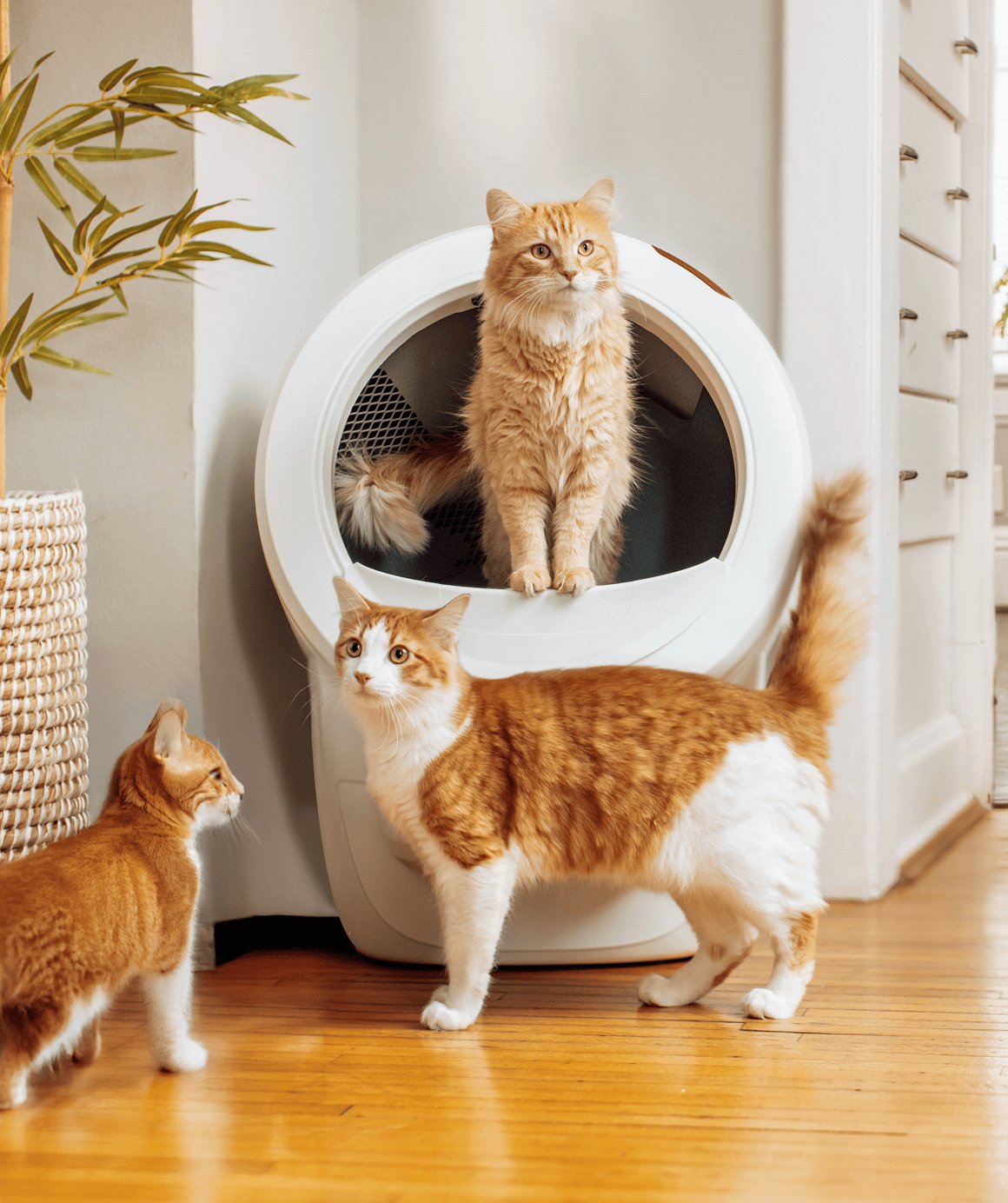
The Litter-Robot 4 is the automatic box worth comparing because Whisker publishes the numbers the decision turns on: 22 inches wide by 27 deep by 29.5 tall, an entryway of 15.75 by 15.75 inches, suitable for cats from 3 to 25 pounds and up to four cats, with a waste drawer that runs up to eight days in a one-cat home.
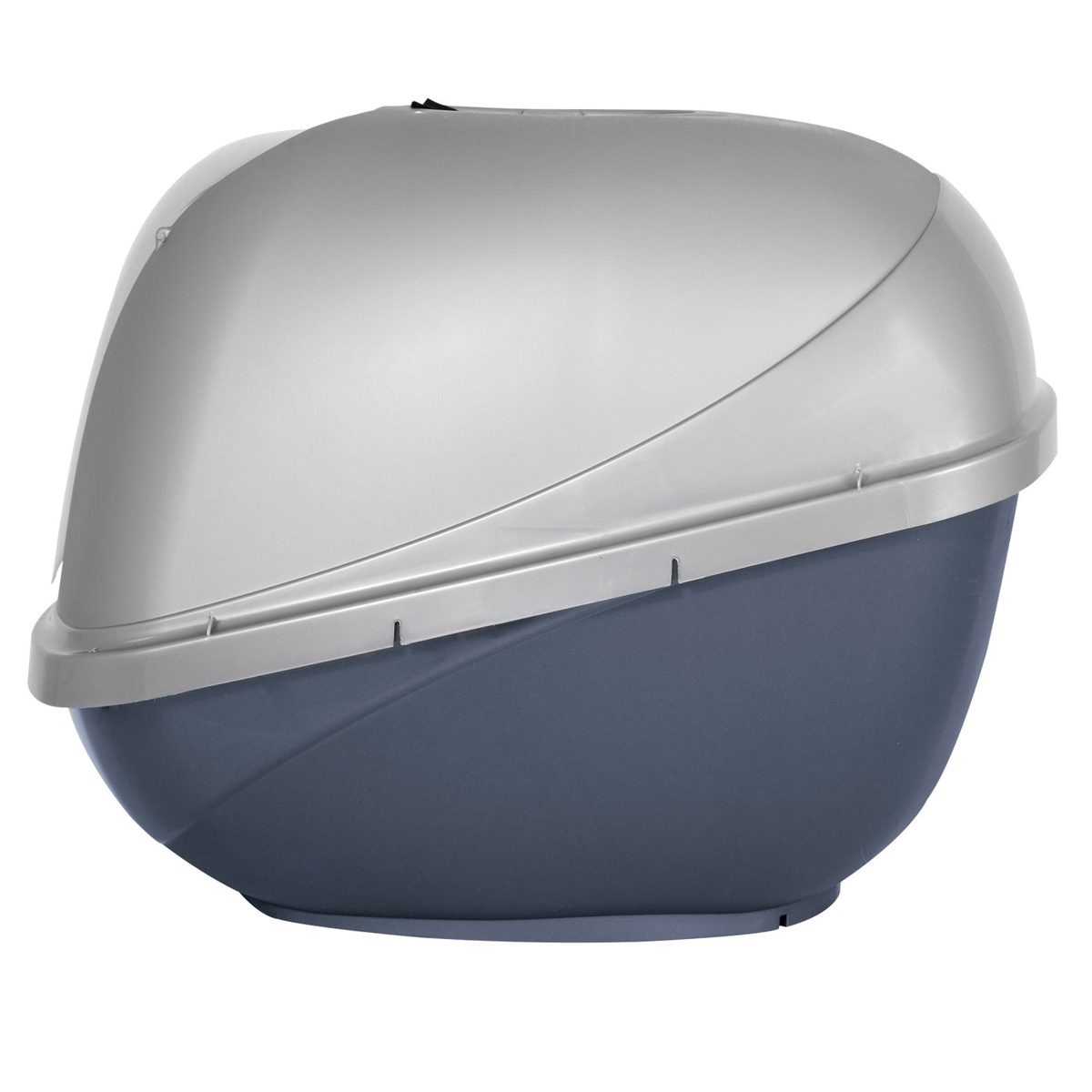
The Petmate Basic Hooded Cat Litter Pan is the other end of the same question: 18.8 by 15.2 by 14 inches, 2.3 pounds, a hood, a removable door and nothing to plug in. It costs a twentieth of the robot and asks for ninety seconds of your day.
How to shop for a litter box
Floor area, not price
The robot needs 22 by 27 inches of floor plus clearance to open, and it stands 29.5 inches tall, which is counter height. The hooded pan is 18.8 by 15.2 inches and 14 tall. In a bathroom where the box lives beside the basin, that difference decides the argument before money does.
The entry your cat will accept
Whisker publishes a 15.75 inch square entryway and a step up into the globe. The hooded pan has a removable door at a lowered entry point. A kitten, a senior cat or a cat with arthritis has a view about this, and the cat's view is final.
What happens when you are away
The robot sifts after each use and drops waste into a sealed drawer that Whisker says goes up to eight days with one cat. A manual box with no scooping is a manual box a cat may stop using by day two.
What happens when the power goes off
An automatic box is an appliance, and an appliance fails. Whisker's own guidance for kittens under three pounds is to run the unit unplugged in semi-automatic mode, which is a useful reminder that the fallback is scooping it yourself.
Total cost over two years
The robot is a single large purchase plus liners and litter. The pan is a small purchase plus litter and a scoop. Neither is the wrong answer, but only one of them still costs the same when you move flat.
Best automatic litter box
Image: Whisker
Whisker Litter-Robot 4
Publishes every number, and takes a lot of floor
Model
Litter-Robot 4
Size
22 x 27 x 29.5 in
Entry
15.75 x 15.75 in
Cleaning
Automatic sift
Reasons to buy
Whisker publishes the full footprint, the entryway size, the cat weight range of 3 to 25 pounds and the 24 pound empty weight, which no manual box maker bothers to do
Sifts after each use so waste is in a sealed drawer rather than in the litter bed, which is the real reason an automatic box smells less
Rated for up to four cats, and the drawer goes up to eight days before emptying in a one-cat household
Weight and laser sensors detect the cat, so a kitten of at least three pounds can use it in automatic mode
Suits large breeds — a 15.75 inch entry and a 25 pound limit covers a Maine Coon, which most hooded pans do not
Reasons to avoid
It is the price of a good sofa, and the running cost includes drawer liners
Twenty-two by twenty-seven inches of floor and nearly thirty inches of height is a large object in a small bathroom
Whisker's own advice for kittens under three pounds is to run it unplugged, so the first months with a kitten are manual anyway
An appliance in the room the cat has to use every day is an appliance whose failure is urgent
The case for the robot is not laziness, it is consistency. A box that sifts after every use is clean at three in the afternoon whether or not anyone was home, and the waste sits in a closed drawer rather than in the bed the cat stands in. For a two-cat flat where the box is in the only bathroom, that is worth a lot.
What you are buying against is floor area and a large sum of money. Measure the 22 by 27 inch footprint on the actual floor before ordering, including room for the drawer to come out, and check that a 29.5 inch tall object in that corner is something you can live beside.
Not the right fit if you are in a studio flat or on a budget — the hooded pan does the same job for a twentieth of the money and half the floor.
Eighteen and a half by fifteen inches of floor, which is two square feet less than the robot and fits beside a lavatory
The hood contains scatter and hides the contents, which is most of what people want from an enclosure in a small flat
The privacy door lifts out, so the cat that refuses a flap still gets the hood
At 2.3 pounds it goes into a bath for a proper wash, which is the thing you cannot do with an appliance
Costs a twentieth of the automatic box, which buys a great deal of litter
Reasons to avoid
Somebody has to scoop it every day, and the box only works as well as that habit
A hood traps odor inside for the cat as well as from the room, which is why some cats refuse an enclosure outright
Petmate publishes the exterior dimensions but no interior floor measurement, so the usable area is a guess
Every hooded pan we probed from this maker, this one included, had no Amazon buy box on the day we checked, so the maker's own store is the place to buy it
This is the default for a reason. A hooded pan with a daily scoop is the cheapest arrangement that keeps a cat happy and a flat tolerable, and at 2.3 pounds it can be emptied, washed and dried in the time it takes to run a bath.
The failure mode is human. If the box gets skipped on the days you are busy, the cat notices before you do, and at that point the automatic box stops being an indulgence and starts being the fix.
Not the right fit if nobody in the house will scoop daily — that is exactly the case the Litter-Robot solves.
Dimensions, entry sizes, cat weight ranges and drawer capacity were read from Whisker's own Litter-Robot 4 page and Petmate's own product page on 12 September 2026.
Amazon availability was checked on the same day. The Litter-Robot 4 in white had a buy box at 699 dollars; five different hooded pans from this maker did not, so the pan is shown with the maker's store, where it was in stock, as the place to buy.
Neither box was used by us. This page compares published specifications and the two routines the makers describe, not a head-to-head trial.
The verdict
Buy the Litter-Robot 4 if you are out for long days, have two or more cats, or know the box does not get scooped daily. The numbers that justify it are published: a 15.75 inch entry, cats from 3 to 25 pounds, up to four cats, and a sealed drawer that runs up to eight days with one.
Buy the Petmate hooded pan otherwise. It is 18.8 by 15.2 inches on the floor, it weighs 2.3 pounds, it costs a twentieth as much, and with a daily scoop it does the same job. Spend the difference on better litter and a second box in another room.
More than people expect. Whisker publishes 22 inches wide, 27 deep and 29.5 tall for the Litter-Robot 4, plus clearance for the waste drawer. The hooded pan here is 18.8 by 15.2 by 14 inches. Mark the larger footprint on the floor with tape before you order anything.
Will my cat use an automatic litter box?
Most do, given a transition. The entryway is 15.75 inches square and there is a step up into the globe, so the cats that struggle are kittens, very old cats and cats with joint problems. Whisker's advice for kittens under three pounds is to run the unit unplugged until they are bigger.
Is an automatic box worth the money?
It is worth it if the alternative is an unscooped box. The robot sifts after every use and seals the waste in a drawer that runs up to eight days with one cat, which is a different level of consistency from a pan scooped when someone remembers. If you already scoop daily, the pan is the better value by a wide margin.
Do automatic boxes work with any litter?
They are built around clumping litter, because the mechanism sifts clumps into the drawer. Non-clumping paper or crystal litter does not work in a sifting box — see our clumping versus non-clumping guide for which one your cat should be on.
How many litter boxes do two cats need?
The standard veterinary guidance is one box per cat plus one, in separate locations. That applies to automatic boxes too, which is the argument people forget when pricing one — two cats in a flat want more than a single machine in a single corner.
Also considered
Open pans with no hood — Cheaper again, and they scatter litter and show the contents from across a studio flat. An open pan is the right answer for a cat that refuses enclosures, and that is a cat problem rather than a design preference.
Automatic boxes with no published dimensions — Several machines in this category publish a photograph and a price. An appliance that takes up a corner of a small flat and has no published footprint or entry size cannot be compared or planned for.
Self-cleaning boxes using proprietary trays — Crystal-tray systems tie the running cost to one supplier's refills. It is a real ongoing cost that the sticker price hides, and it makes the litter choice somebody else's.