As an Amazon Associate I earn from qualifying purchases. Links marked "at Amazon" are paid links.
Clumping vs non-clumping cat litter (2026), settled on scooping and dust
By Chris Y. · Two cats, one-bedroom apartment; measures the inside of everything
Image: Dr. Elsey's
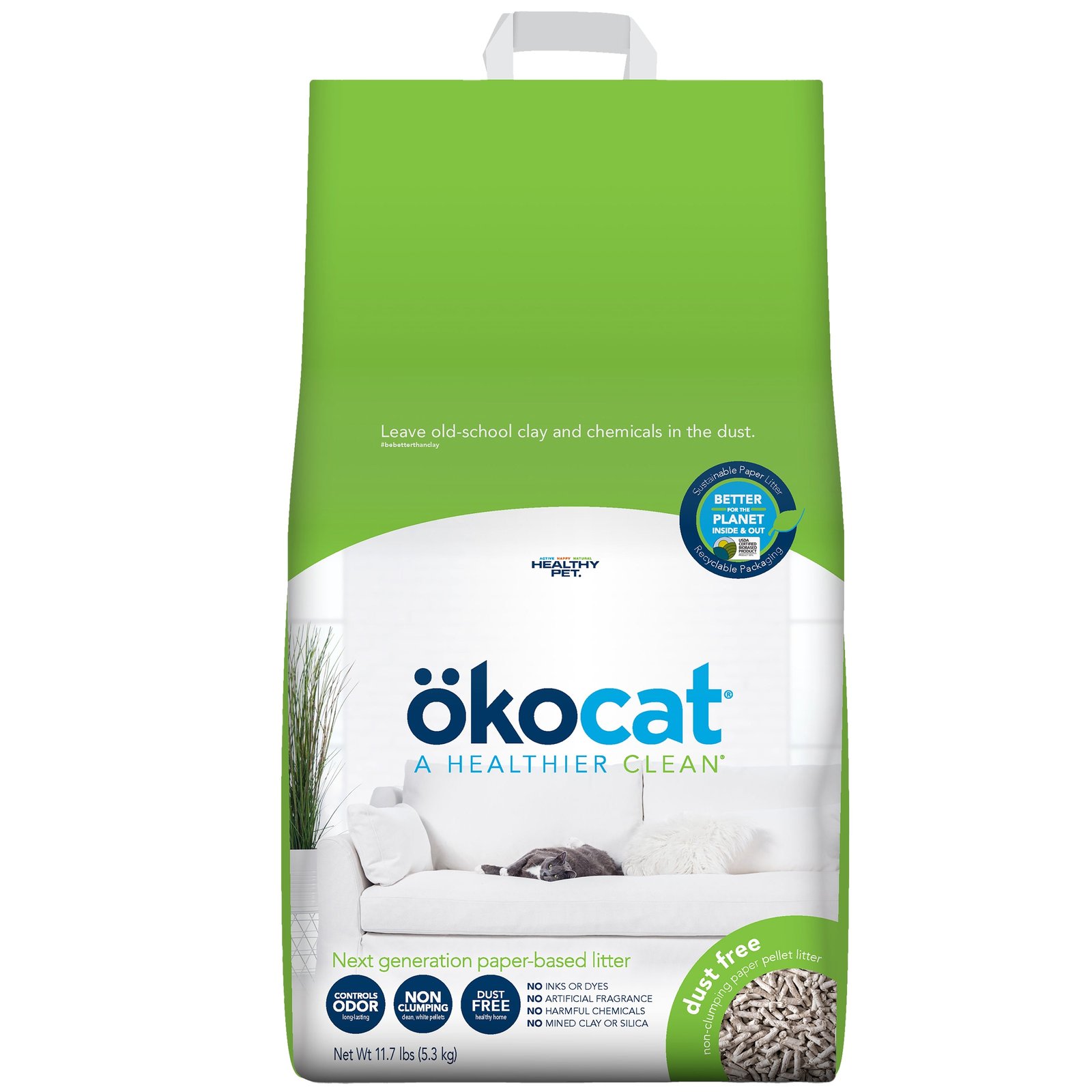
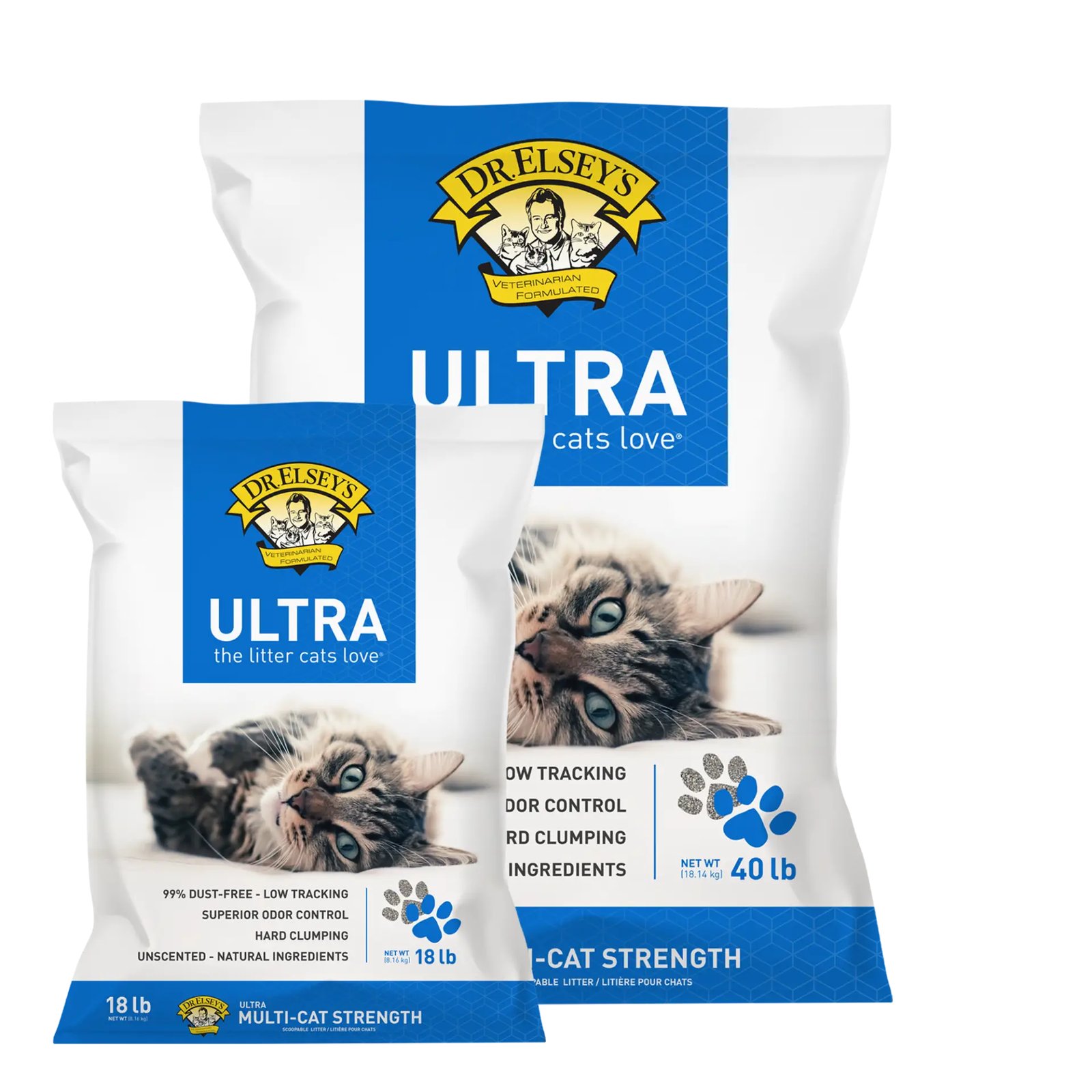
The short version — buy clumping unless the cat or a person in the house has a respiratory problem. Dr. Elsey's Ultra is the one to get for most flats because a hard clump can be lifted out whole, which is what keeps a box in a small apartment from smelling. ökocat's Dust Free paper pellet litter is the one to get when dust is the deciding factor, because it is reclaimed paper rather than clay and the maker aims it at cats with respiratory ailments.
The two types ask for different work. Clumping clay turns urine into a solid lump you scoop daily and top up weekly, and the litter in the box is largely the litter you bought a month ago. Non-clumping absorbs liquid down into the bed, which you scoop for solids daily and then replace entirely on a schedule.
That difference decides everything else: how much you carry home, how the box smells on day five, how much dust settles on a dark floor, and how much of a 700 square foot flat smells of cat when the windows are shut.
How to shop for cat litter
What happens to the urine
Dr. Elsey's describes a hard clump that prevents moisture reaching the bottom of the pan and will not break apart, so the whole deposit leaves the box. ökocat's paper pellets absorb the liquid from the bottom of the pan and expand, so you remove the swollen pellets instead. One is surgery, the other is maintenance.
Dust
Dr. Elsey's publishes a 99 percent dust-free claim for a clay litter. ökocat calls its pellets virtually dust-free and says the litter is ideal for cats with respiratory ailments and homes with allergies. Neither is a measurement, but one is a number and one is an adjective, and in a flat where the box is eight feet from where you sleep this is the first thing to read.
The replacement schedule
ökocat says that with regular scooping the litter can last up to seven weeks, and separately advises replacing the litter weekly. Clumping clay is topped up as it is scooped and fully changed far less often. Read both as the maker's own words, not as a promise about your cat.
What you carry home
A 40 pound bag of clay lasts a long time and has to be carried up the stairs. An 8 pound bag of paper pellets is a different kind of purchase — lighter, more often, and easier in a building with no lift.
Tracking
Dr. Elsey's sells heavy non-tracking granules with medium grain clay; ökocat's pellets are large and low-tracking by size. Both are better than lightweight clay, which is the type that ends up in the hallway. A mat under the box does more than either, and our litter mat guide covers the ones that actually trap granules.
Best clumping litter
Image: Dr. Elsey's
Dr. Elsey's Ultra Premium Clumping Clay
Hard clumps, unscented, forty pound bag
Model
Ultra unscented clay
Bag
18 lb or 40 lb
Type
Hard clumping clay
Dust claim
99 percent dust-free
Reasons to buy
A clump that does not break apart, which means the entire deposit leaves the box rather than crumbling into the bed
Unscented, and the maker's position is that odor is controlled without perfumes or deodorants — a scented litter is a common reason cats stop using a box
Heavy medium-grain granules, which stay in the pan rather than in the hallway
Sold in 18 and 40 pound bags, so a two-cat household can buy the big one and forget about it
Multi-cat strength formulation, which is the version that matters in a flat with two boxes
Reasons to avoid
It is clay, and 99 percent dust-free is not dust-free; a cat with asthma may still react
A 40 pound bag is a 40 pound bag, which is a real consideration on a third floor with no lift
Clay is strip-mined and does not break down, which the paper alternative avoids entirely
Hard clumping is the reason this type dominates. Scooping a solid lump removes the ammonia source completely, so a box in a studio flat can be kept genuinely inoffensive with ninety seconds of work a day and a full change every few weeks.
The unscented position is the other reason to choose this bag over a supermarket one. Perfume is added for the human and is one of the standard triggers for a cat that starts going beside the box instead of in it.
Not the right fit if someone in the house has asthma, or the cat is recovering from surgery — the paper pellets exist for exactly that.
Made of reclaimed paper with no inks, dyes or scents, and marketed for cats with respiratory problems and for homes with allergies
Pellets absorb liquid from the bottom of the pan and expand visibly, so the soiled litter is easy to identify and remove
Large light pellets track less by size, and they are soft enough for a cat recovering from a declaw or paw surgery — the situation vets most often ask for a non-clumping litter
Lighter bags at 8 and 11.7 pounds, which is a different shopping trip from a 40 pound sack
Reasons to avoid
The whole box is replaced on a schedule rather than topped up, so more litter leaves the house over a year
Nothing binds the urine, so a box left two days smells worse than a clumping box left two days
The maker's own guidance is contradictory on longevity — up to seven weeks in one place and a weekly replacement in another
This is the litter to buy for a reason rather than by default. Post-surgical paws, a cat with asthma, an owner with allergies, a kitten that eats litter — each of those is a case where clay is the wrong material and paper is the right one.
Used for the wrong reason it is simply more work. Liquid sits in the bed until you remove the expanded pellets, and the replacement schedule is a calendar entry rather than a habit.
Not the right fit if you want the least daily work and the least smell — the clumping clay is the lower-effort choice.
Every claim here is quoted from the maker's own product page on 12 September 2026 — Dr. Elsey's for the clumping figures and ökocat for the paper pellet guidance — and nothing has been taken from a retailer's description.
Price bands compare each litter at the size shown in the table on the day, which is why a 40 pound clay bag bands higher than an 8 pound box of pellets despite costing less per pound.
Neither litter was tested in a box by us. The comparison is of published specifications and the two maintenance routines the makers themselves describe.
The verdict
Buy Dr. Elsey's Ultra clumping clay unless you have a reason not to. A clump that lifts out whole is the mechanism that keeps a litter box acceptable in a one-bedroom flat, and unscented is the version cats do not object to.
Buy ökocat's Dust Free paper pellets for a specific reason: asthma in the house, a cat recovering from surgery, a kitten that eats litter, or a cat that has refused clay. Then accept the routine that comes with it — scoop solids daily, remove the swollen pellets, and replace the whole box on a schedule.
Clumping, in almost every case. Removing a solid clump takes the ammonia out of the room entirely, which is what matters when the box is in a bathroom eight feet from the sofa. Non-clumping leaves the liquid in the bed until the pellets are removed or the box is changed.
Is clumping litter safe for kittens?
The usual veterinary caution is for very young kittens that eat litter, where a non-clumping paper or pellet litter is the safer choice until the habit passes. That is one of the standard reasons ökocat's paper pellets exist, along with post-surgical paws and respiratory problems.
How often do you change each type?
Clumping clay is scooped daily and topped up, with a full change every few weeks. ökocat's own page says the litter can last up to seven weeks with regular scooping and also advises replacing it weekly, so plan on a weekly change and treat seven weeks as the best case with one very tidy cat.
Does non-clumping litter smell worse?
On day two, yes, because the urine is still in the box. Both makers rely on odor control rather than fragrance — Dr. Elsey's controls odor without perfumes and ökocat fortifies its paper fiber with plant-based odor control to suppress ammonia. Scooping frequency matters more than the material.
What about dust?
Dr. Elsey's publishes a 99 percent dust-free claim, which is good for clay and still means some dust. ökocat calls its pellets virtually dust-free and aims the product at cats with respiratory ailments and homes with allergies. Neither maker publishes a measured airborne figure, so read the wording rather than the word dust-free on the front.
Also considered
Scented clumping litters — Fragrance is added for the owner and is one of the routine explanations for a cat that stops using its box. Both litters here are unscented, which is the right default.
Lightweight clay litters — Lighter granules travel further on paws, which is the most common complaint about clay in a flat with hard floors. Heavy granules and pellets both track less.
Crystal silica litters — They absorb well and they are the type most often refused by cats with sensitive paws, which is the same group of cats a paper pellet litter is bought for. Worth a try only if the cat already likes them.
Tofu and corn clumping litters — Good products in many homes and out of scope for this comparison, which is about the two mainstream mechanisms — a litter that binds urine and one that absorbs it.