As an Amazon Associate I earn from qualifying purchases. Links marked "at Amazon" are paid links.
The best automatic cat feeders, ranked by what happens when things go wrong (2026)
By Chris Y. · Two cats, one-bedroom apartment; measures the inside of everything
Image: Whisker product photo, composition by Hidden Paws
Buy the Whisker Feeder-Robot. It is the only feeder here you can program on the unit rather than only in an app, the only one whose maker advertises working offline, and the only one with a three-year warranty. Its weakness is just as plain: the backup battery is extra, and covers 24 hours in power-saving mode.
Every feeder works in the shop. What matters is 4 a.m. on day two of your trip, when the power blinked or the kibble bridged over the outlet. So the manuals were read for four things: what runs on battery, whether the schedule survives a Wi-Fi outage, how the mechanism clears a jam, and whether it can be anchored.
The answers are less reassuring than the advertising. Two brands publish nothing about the schedule continuing while the internet is down, and appear here with that gap named. Two more shut the Wi-Fi off on battery. One sidesteps it with no radio, no app and no cord: three AA cells, a published twelve months.
How to shop for an automatic cat feeder
What the backup battery actually does
The word covers everything from 24 hours on a built-in cell to 58 hours on four C cells to 12 months on three AA cells. Cell type matters too — three brands specify alkaline and warn against rechargeables.
Whether the schedule runs offline
Only Whisker puts offline operation in its feature list; PETLIBRO documents it in an FAQ. PetSafe and Catit publish nothing saying the schedule keeps dispensing while the internet is down, so nothing here claims it.
How the mechanism handles a jam
Augers bridge and impellers stick; conveyors and carousels do neither. Catit publishes four anti-jam mechanisms, PetSafe uses a conveyor, and the tray feeders have nothing to jam.
Whether a cat can defeat it
A stainless bowl in a holder, an enclosed path, a tamper-resistant lid, or a base you screw to a board. One feeder here is built to be fastened down, the only answer that always works.
Wet food, or dry only
Only two feeders here take wet food, and they differ — a thermoelectric cooler rated for a published 72 hours, or twin ice packs in a carousel with no electronics.
Best overall
Image: Whisker
Whisker Feeder-Robot
32 cups, offline by design, battery sold separately
Capacity
Up to 32 cups (dry)
Power
15 V DC; backup battery sold separately, 24 hours in power-saving
Offline
Brand states meals continue even offline
Meals/portions
Up to 8 a day; 1/8 cup to 1 cup
Jam handling
Food-backup detection plus anti-jam mechanism
Warranty
3 years
Reasons to buy
The schedule can be set on the unit as well as in the app, which is what makes the offline claim credible
The largest hopper here at up to 32 cups, a week of food for one cat
Three-year warranty, where the rest of the category is 24 months or silent
Food-backup detection is a separate feature from anti-jam: one watches the chute, the other clears it
Reasons to avoid
The backup battery is an extra purchase, and Whisker rates it at 24 hours only in power-saving mode
The 1/8-cup dispenser is a separate part, and at 15 inches this is the tallest unit here
Whisker is the only maker here that advertises its failure modes as features, and because the schedule can be set on the feeder as well as in the app, the offline claim has a mechanism behind it — this one is not waiting on a cloud to be told the time. The part I dislike is the battery: a feeder whose whole pitch is reliability should include the cell that covers a power cut. Buy it at the same time.
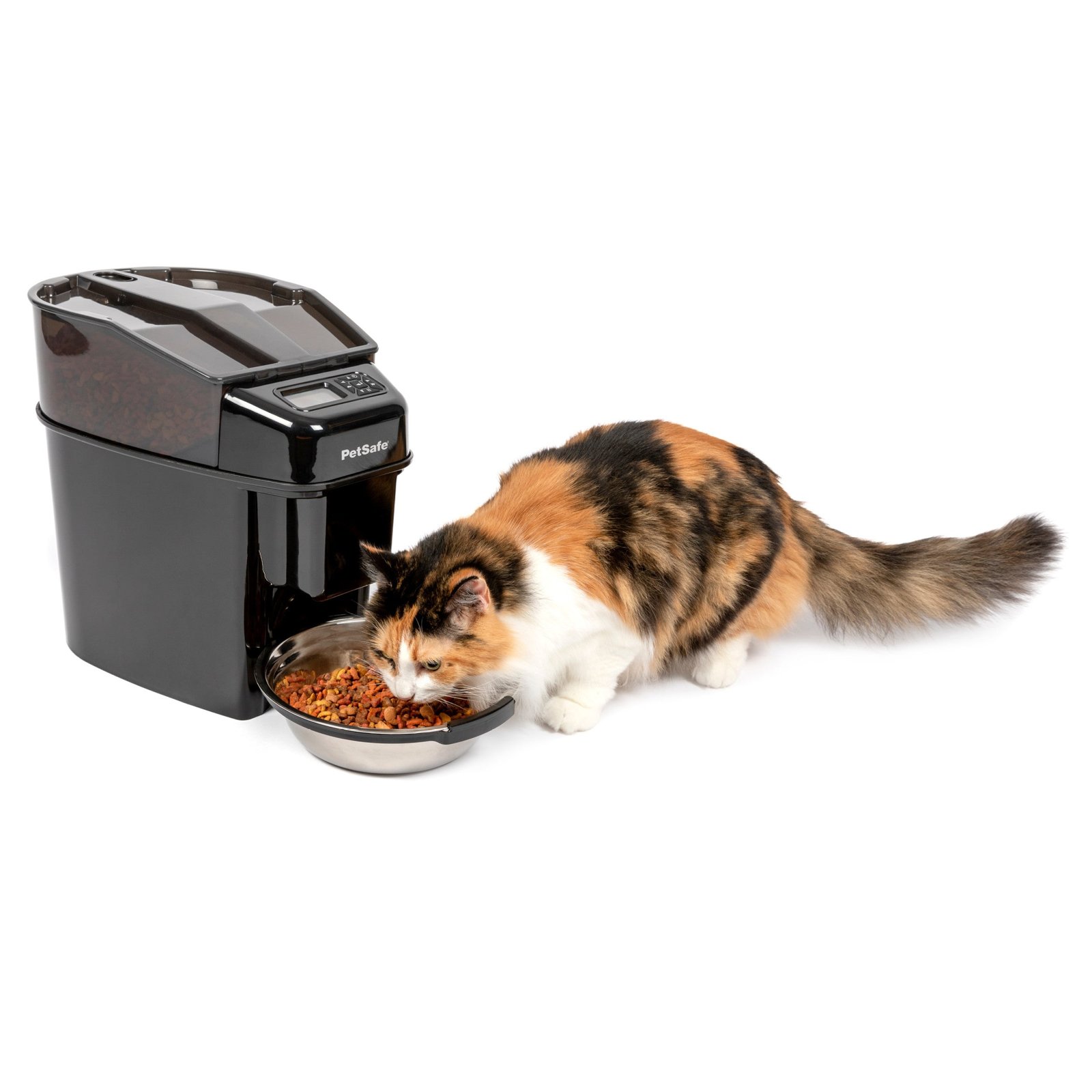
4 alkaline D cells required; wall adaptor sold separately
Offline
No Wi-Fi, no app — a keypad timer
Meals/portions
Up to 12 a day; 1/8 to 4 cups
Jam handling
Conveyor, kibble up to 3/4 in
Reasons to buy
No radio, no app, no account — the whole class of connectivity failures does not exist
The conveyor handles kibble up to three quarters of an inch, the most generous limit here
Pause Feed stops dispensing without wiping the schedule, and Slow Feed spreads a meal over fifteen minutes
Reasons to avoid
Four D cells are required and the wall adaptor is a separate purchase
No remote monitoring, so you find out about a problem when you get home; no published warranty term
If your anxiety is the internet rather than the electricity, this is the answer: no app, no pairing, no firmware, no account. You set a keypad timer, and the conveyor is better at big kibble than every auger here. The flip side is that PetSafe sells it as a battery appliance — four D cells required, mains adaptor an accessory. Buy the adaptor with it and the outage question is answered without electronics deciding whether to reconnect.
Not the right fit if you want to see the cat was fed while you are away — the Granary sends alerts.
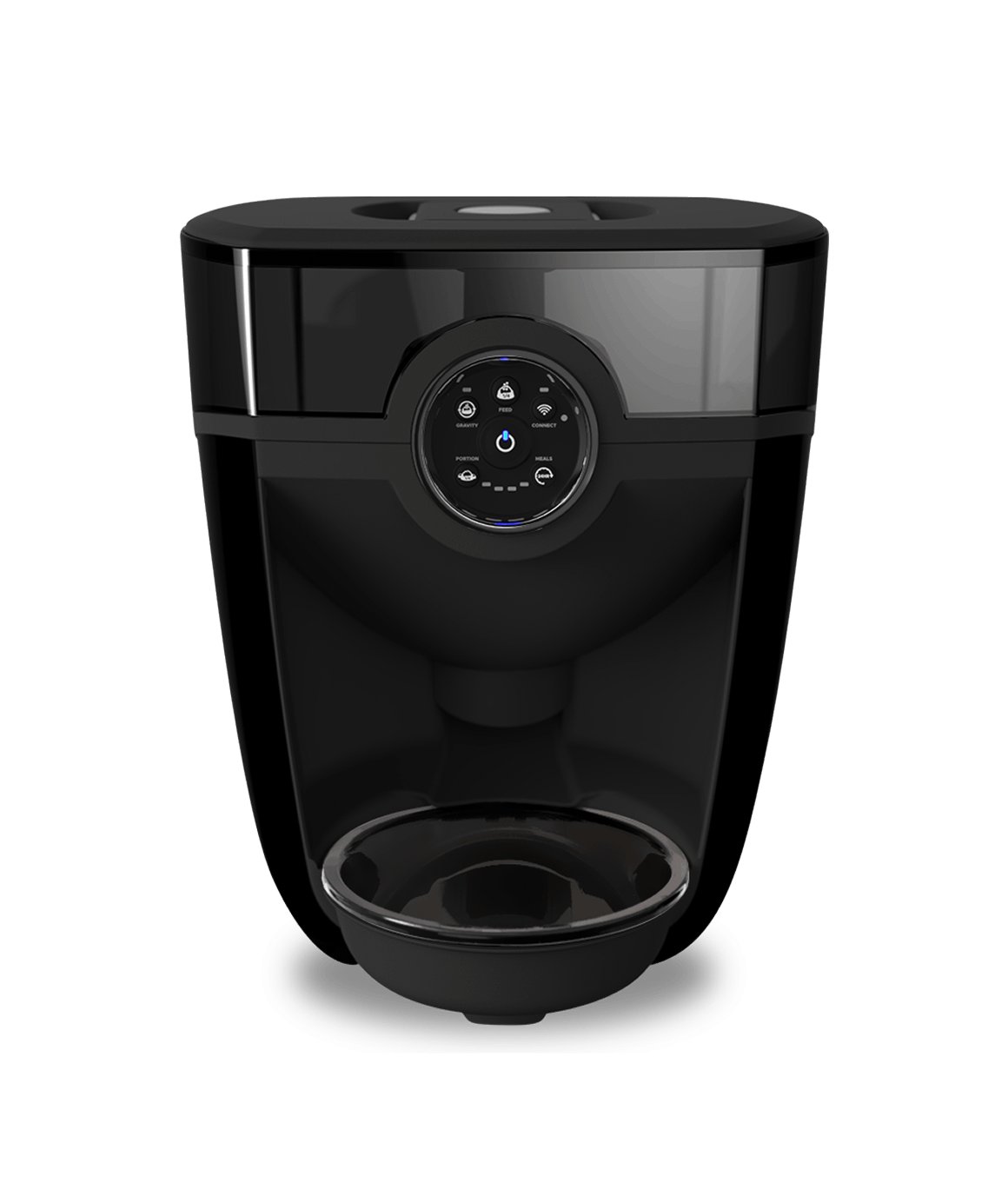
The only brand explaining its anti-jam design in four published parts
If something blocks the impeller it reverses automatically to clear it
About 58 hours of backup on four C cells, the longest published figure here
An airtight lid seal and a desiccant holder, so dry food stays crunchy
Reasons to avoid
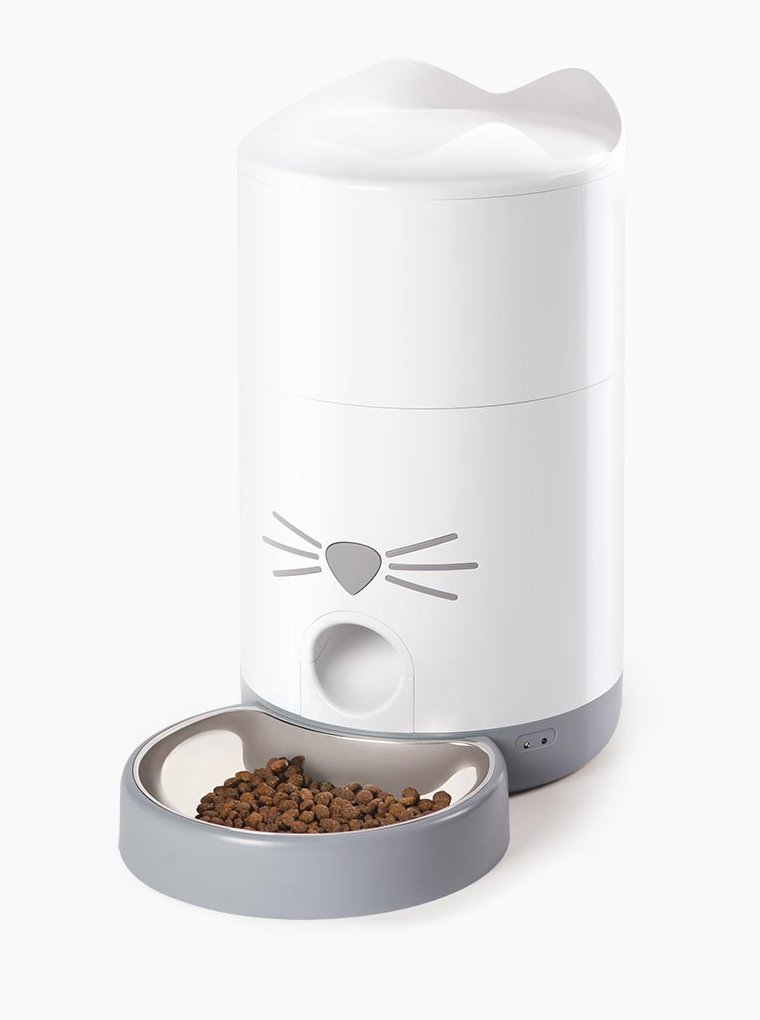
The smallest reservoir here at about 2.9 L, a few days for two cats
Kibble must be 9 mm or smaller, the tightest limit in the guide
Catit's blackout documentation covers mains power only; nothing says the schedule survives a Wi-Fi drop
Read Catit's own description and you can see somebody solved the jam problem properly: an impeller close enough to its housing that particles cannot wedge, low-speed high-torque gearing, a flexible divider brushing stray pellets down, and automatic reverse rotation if it binds — four defences where most brands have a marketing word. Two things keep it off the top spot: 2.9 L is a few days for one cat, and the 9 mm kibble limit rules out dental biscuits.
Not the right fit if your cat eats large kibble — the Simply Feed conveyor handles 3/4-inch pieces.
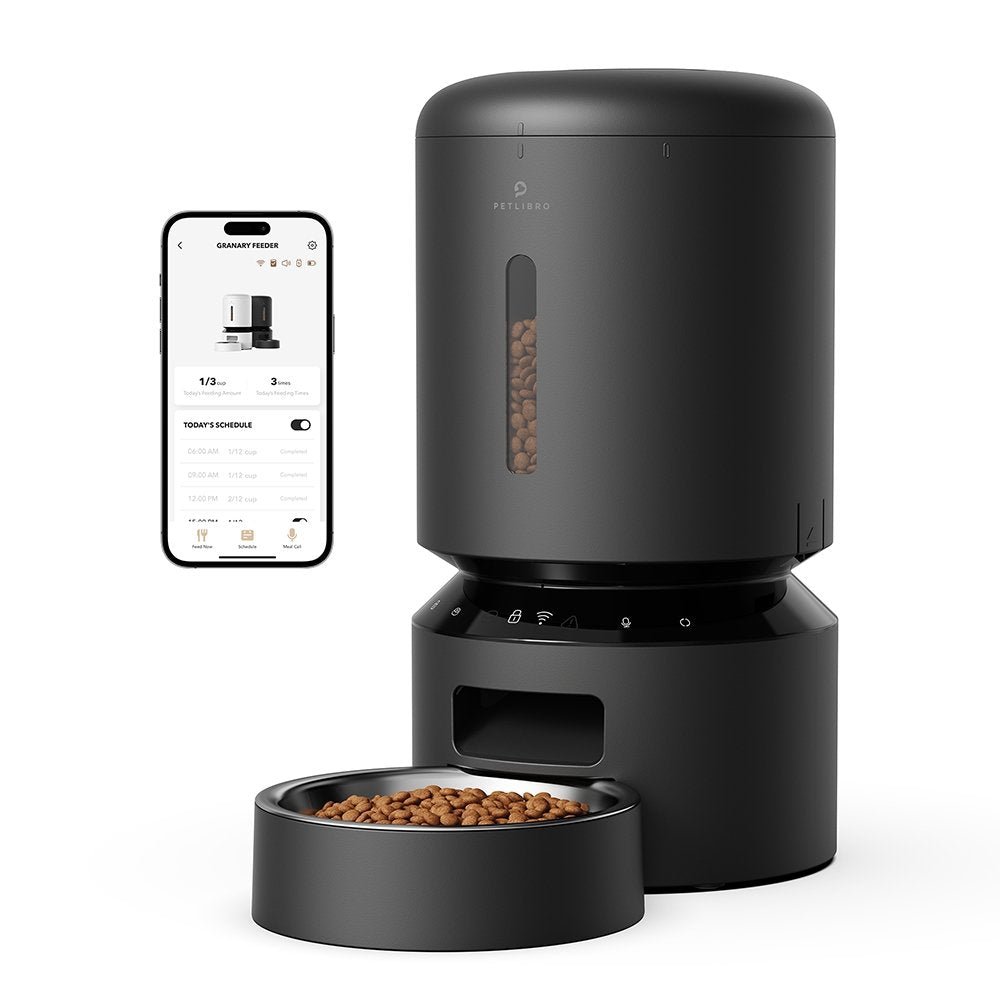
5 liters and good alerts; the radio dies on battery
Capacity
5 liters
Power
DC 5 V adapter; 3 alkaline D cells as backup
Offline
On battery the Wi-Fi is disabled; schedules still run
Meals/portions
1 to 10 a day; 1 to 50 portions of about 20 ml
Jam handling
Divided vane and wide outlet; the app alerts on a blockage
Warranty
24 months
Reasons to buy
Alerts for low food, blockages, malfunctions and low battery — the most complete set here
The finest portions here: a twelfth of a cup, up to fifty a meal
Sealed hopper to outlet, and PETLIBRO publishes exactly what happens on battery
Reasons to avoid
On battery the Wi-Fi shuts down — meals keep coming, remote control does not; alkaline D cells only, and kibble must be 2 to 15 mm
The sensible middle of the category: a 5 L hopper, a vane rather than a screw auger, an app that says when something has gone wrong, a 24-month warranty. Read the outage line, though — on D cells the feeder keeps the schedule and turns the radio off, which is the right engineering decision and also means no confirmation your cat was fed during a power cut. If that is what keeps you awake, the Granary 2 holds Wi-Fi up for a published 24 hours, brand-direct only for now.
Not the right fit if you need to see the cat eat — the Feeder-Robot's offline design suits better.
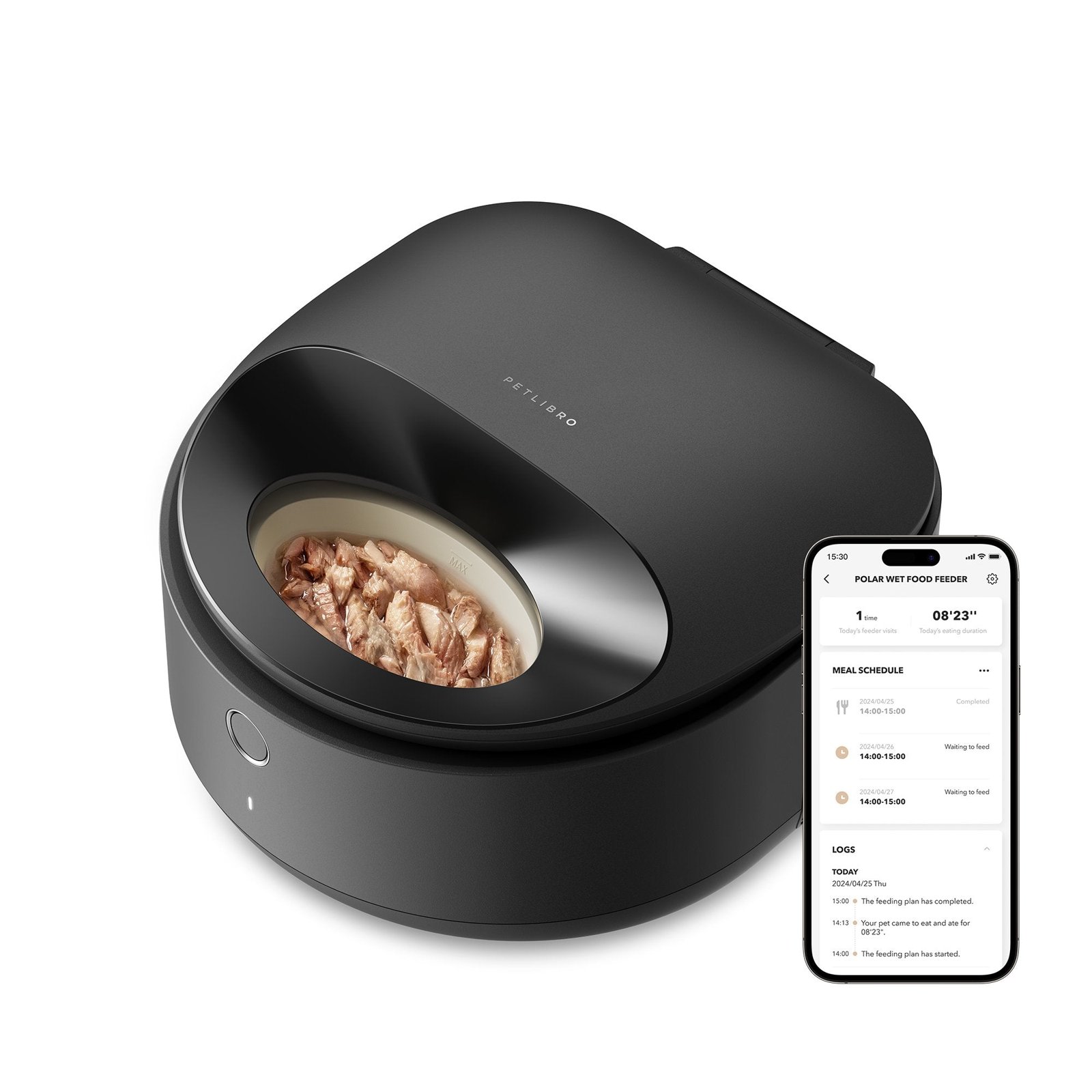
Three meals is the whole capacity — this is a two-day machine, not a week's holiday cover
Corded, and the outage claim depends on three AA cells you buy yourself
For a wet-food cat the honest options are a cooled feeder or nothing, because the FDA's advice is to refrigerate or discard leftover canned food promptly. The Polar is the only unit here that actively refrigerates rather than relying on a frozen pack, and PETLIBRO publishes the lab conditions with the result. The limits are structural: three trays cover a weekend, and the cooling is a mains function — the AA cells keep the schedule, not the cooler.
Not the right fit if you need a week of unattended feeding — the Feeder-Robot holds up to 32 cups of dry food.
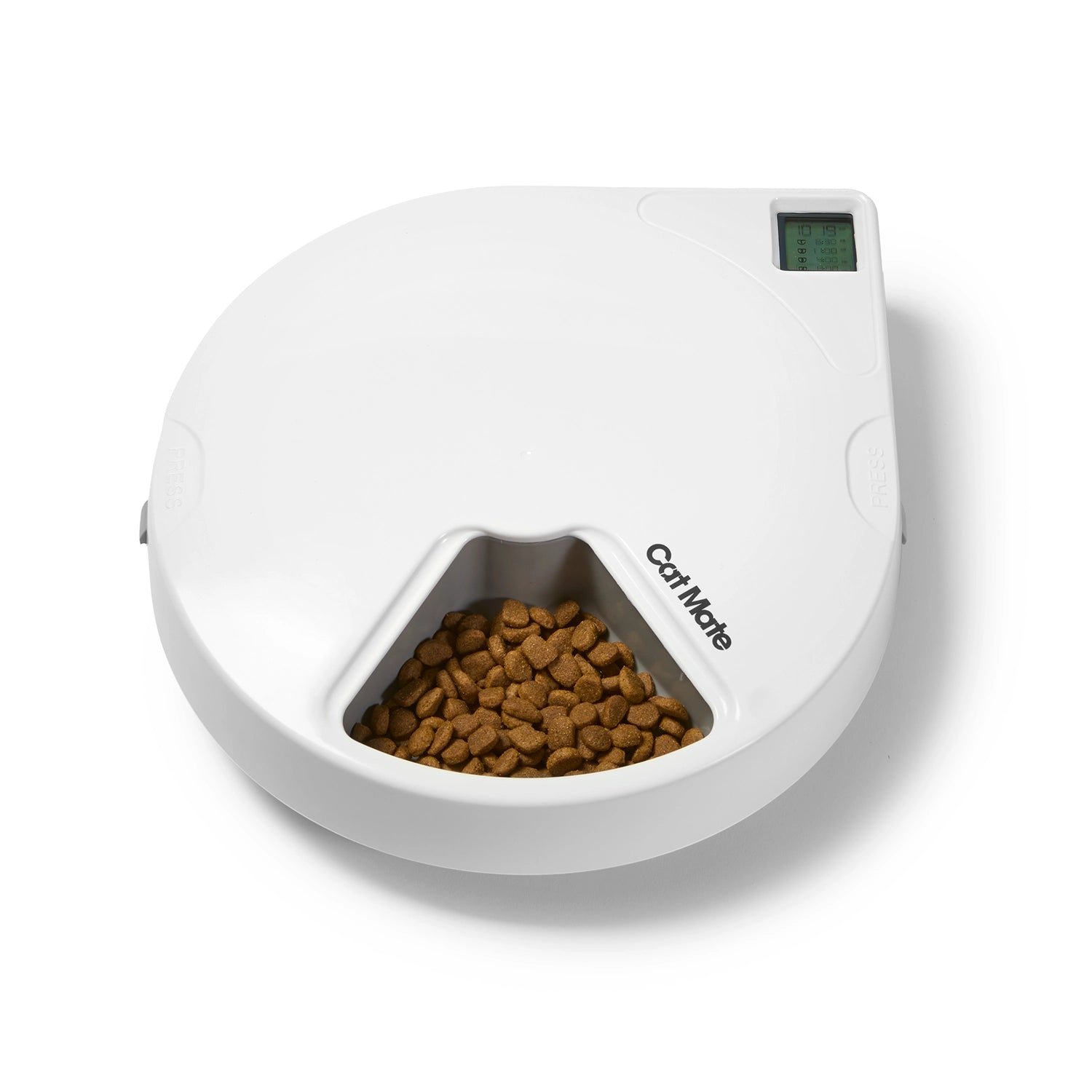
About 12 months of operation from three AA cells, and no cord to lose
Wet, dry or mixed meals, twin ice packs included
Tamper-resistant, and the brand says it can be fastened to a board
Reasons to avoid
Five compartments is a fixed ceiling, and passive ice packs give wet food hours, not days
No alerts at all — you are trusting a timer and nothing else
The feeder for people whose actual fear is the power going out. There is no mains connection to lose: three AA cells run it for a published year, and the mechanism is a lid rotating over five filled bowls — nothing there can jam, disconnect or need a firmware update. It also stays put, because Closer Pets says it can be fastened to a board, which is the only real answer to a determined cat.
Not the right fit if you are away for more than about two days — this holds five meals, full stop.
Manuals were read rather than marketing pages wherever one existed; the PetSafe battery guidance and fault states come from PetSafe's own PDF manual.
Every outage claim is quoted from the manufacturer. Where a brand publishes nothing about the schedule continuing while Wi-Fi is down, this guide says so rather than inferring it from a mains blackout claim — two brands fall into that gap.
Published kibble-size limits were checked against three foods whose makers publish a size: a 6 mm adult kibble, an 11 mm dental biscuit, and a freeze-dried topper too irregular for any auger.
Battery figures are printed exactly as the brand states them, qualifiers included — power-saving mode, average result, measured under laboratory conditions.
A CPSC search for automatic pet feeder recalls returned none — a search-level check, not proof. A dash in the comparison table means the brand publishes no figure for that row.
The verdict
Best overall — the Whisker Feeder-Robot: programmable on the unit, offline operation advertised as a feature, three-year warranty. Buy the backup battery with it. Best where the internet is the unreliable part — the PetSafe Simply Feed, no radio to lose. Best mechanism — the Catit PIXI, four published anti-jam defences.
Take one habit from this page: read the outage paragraph before the feature list. Every brand sells a hopper and an app; only some say what the machine does when the power or the router lets you down, and those are the ones I would trust with a week away.
How many meals a day should an automatic feeder give a cat?
Cornell's Feline Health Center says that once a cat is an adult, at about one year, once or twice a day suits most cases, and kittens under six months do best on three. Every feeder here covers that — the ceilings run from five meals to twelve.
What happens to my feeder in a power cut?
It depends on the model, which is the point of this guide. The published answers run from 12 hours on three AA cells, through about 58 hours on four C cells, to a year on a feeder with no mains connection. Two brands also shut the Wi-Fi off on battery: meals continue, the app goes quiet.
Do automatic feeders work with wet food?
Two of the six here do. One cools trays thermoelectrically for a published 72 hours; the other uses twin ice packs in a carousel. The FDA's advice is to refrigerate or discard leftover canned food promptly, which is why an uncooled dry-food feeder is the wrong machine for it.
What kibble size can these feeders handle?
Between 2 mm and 15 mm for the PETLIBRO vane, up to 9 mm for the Catit impeller, up to three quarters of an inch for the PetSafe conveyor. Measure your kibble first: a feeder that cannot pass your food jams on day one.
Also considered
PETLIBRO One RFID Smart Feeder — The right idea for a two-cat house on two diets — it opens only for the cat wearing the paired tag — but it reads a collar tag rather than the microchip already in the cat, and PETLIBRO's own notes say recognition fails if the mat is not seated. A meal that depends on a collar staying on is not a pick.
Sure Petcare SureFeed Microchip Pet Feeder — The better selective feeder on the merits — it reads the implanted microchip, stores 32 identities through a battery change, three-year warranty. Not a pick because it unlocks a bowl you fill yourself rather than dispensing on a schedule.
PETLIBRO Granary 2 — On paper the reliability winner: a built-in rechargeable cell PETLIBRO says keeps Wi-Fi, camera and schedules up for 24 hours through an outage. Brand-direct only for now, so it is a pick in waiting.
Cat Mate C3000 — A 6.5 lb hopper with a digital timer from a brand I rate, and Closer Pets publishes no battery type, life or anti-jam wording for it. Too many blanks for this guide.
PetSafe Smart Feed 2nd Generation — A good 24-cup feeder with food sensors and four D cells of backup, and PetSafe publishes nothing saying the schedule keeps dispensing while the internet is down. The closest sentence is about a reboot preserving meals, a different claim.