As an Amazon Associate I earn from qualifying purchases. Links marked "at Amazon" are paid links.
The best cat scratchers that don't look like cat scratchers (2026)
By Chris Y. · Two cats, one-bedroom apartment; measures the inside of everything
Photo: rawpixel (CC0)
If your sofa is losing, buy the SmartCat Ultimate Scratching Post — a 32-inch sisal post on a 16 by 16-inch base, which is the closest thing here to the ASPCA's published advice and still looks like a plain column rather than a carpet tree. If you want design rather than equipment, the Hepper Hi-Lo is the birch-plywood one.
The reason most attractive scratchers fail is height, not taste. Cats scratch to stretch the whole body, so a 17-inch sculpture in oak veneer is an object your cat walks past on the way to the sofa arm. The 2016 owner survey in the Journal of Feline Medicine and Surgery found cats scratched their preferred substrate more often when the post was a simple upright or a tree at least three feet high.
So this guide sorts pretty scratchers by whether they clear that bar, and says plainly which ones do not. Two of the five are under three feet and are here anyway, because a board the cat uses beside the sofa beats a tall post in the spare room — and International Cat Care's advice for small homes is to fix a panel to the wall, which is exactly what one of these does.
How to shop for a scratcher you can leave in the living room
Height for a full stretch
The ASPCA's figure is at least three feet. Here the 36-inch Tuft + Paw Zip and the 32-inch SmartCat post clear it, the sculptural pieces do not, and the difference shows up in which one the cat uses.
It cannot move when scratched
International Cat Care notes that products too light to support scratching, or that cannot be fixed to something rigid, move during use and get rejected. A 16.9 lb post on a 16-inch base does not move.
The right surface
Ohio State's guidance is that most cats prefer a rough material they can shred, and names sisal as ideal. The 2016 owner survey found rope was the most-used substrate when offered, while carpet was the most commonly offered. Cardboard suits kittens and older cats.
Replaceable parts
The scratching surface dies first. Hepper and Tuft + Paw sell replacement cardboard or parts; Pioneer Pet sells base and top pieces but not sisal, because the sisal is built into the post during manufacture.
No exposed staples
Two brands here call it out — the fabric ends are tucked inside the post — and it separates a ten-year post from one that snags a claw in year two.
Whether it earns its floor space
In a small apartment a scratcher competes with furniture. The ones that win hang on a wall, double as a bed, or look enough like an object that you stop noticing it is for the cat.
Best for a cat that is destroying the sofa
Image: Pioneer Pet
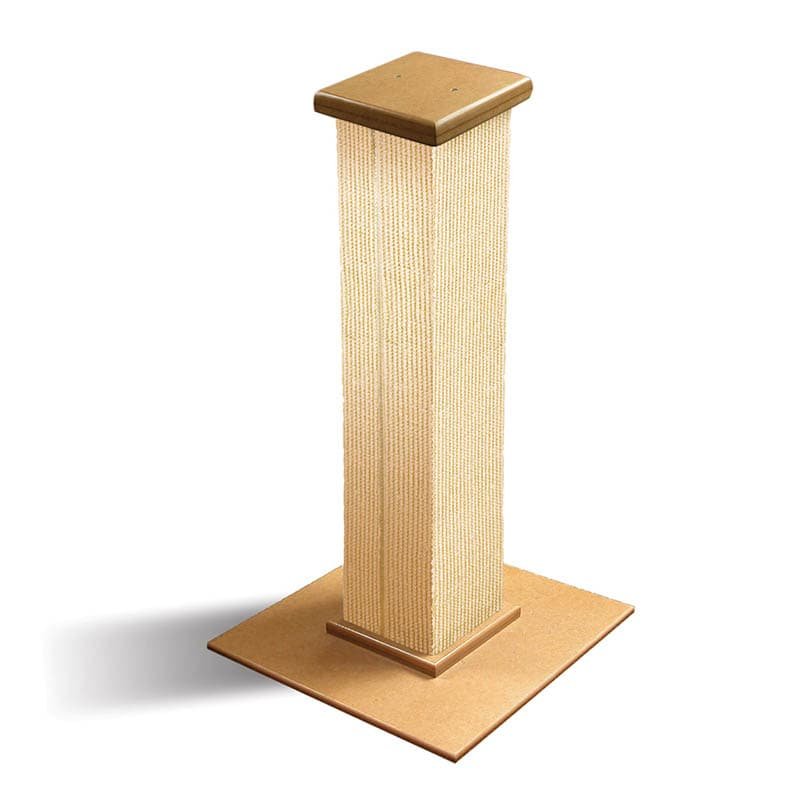
SmartCat Ultimate Scratching Post
32 inches of sisal, 16.9 lb, and entirely plain
Dimensions
16 x 16 x 32.5 in
Post height
32 in
Surface
Woven sisal
Stability
16 x 16 in two-piece base; 16.9 lb unit weight
Replaceable parts
Base, top and bottom pieces sold separately; sisal is not replaceable
Reasons to buy
A 32-inch post, which Pioneer Pet says allows a full vertical stretch — the specification that decides whether a cat uses it at all
16.9 lb with a 16 by 16-inch two-piece base, so it does not rock when a large cat throws its weight at it
Woven sisal rather than carpet, which Pioneer Pet argues is closer to tree bark and does not snag claws the way looped carpet can
No exposed staples anywhere, because the sisal is attached during manufacture rather than stapled on afterwards
Reasons to avoid
The sisal cannot be replaced — when it is shredded, the post is finished, though the base and top pieces are sold separately
It is a beige column; this is the least designed object in the guide
Pioneer Pet does not sell direct, so you are buying it through a retailer
This is the post I recommend to anyone whose problem is furniture damage rather than decor: 32 inches on a 32.5-inch overall height, 16.9 lb so nothing shifts mid-scratch, and the sisal Ohio State's guidance names as ideal. The compromise is that it is plain. A beige column in the corner where the cat already scratches will do more for your sofa than a 17-inch sculpture in the hallway.
Not the right fit if you want the scratcher to be part of the decor — the Hepper Hi-Lo or the Tuft + Paw Zip photograph much better.
Mid-century looks, three angles, no published size
Post height
Not applicable — an angled lounger, not an upright post
Surface
Dense B-flute cardboard laminated into the scratching area
Stability
Solid birch plywood frame with a powder-coated metal core
Replaceable parts
Replacement cardboard sold on the same product page
Reasons to buy
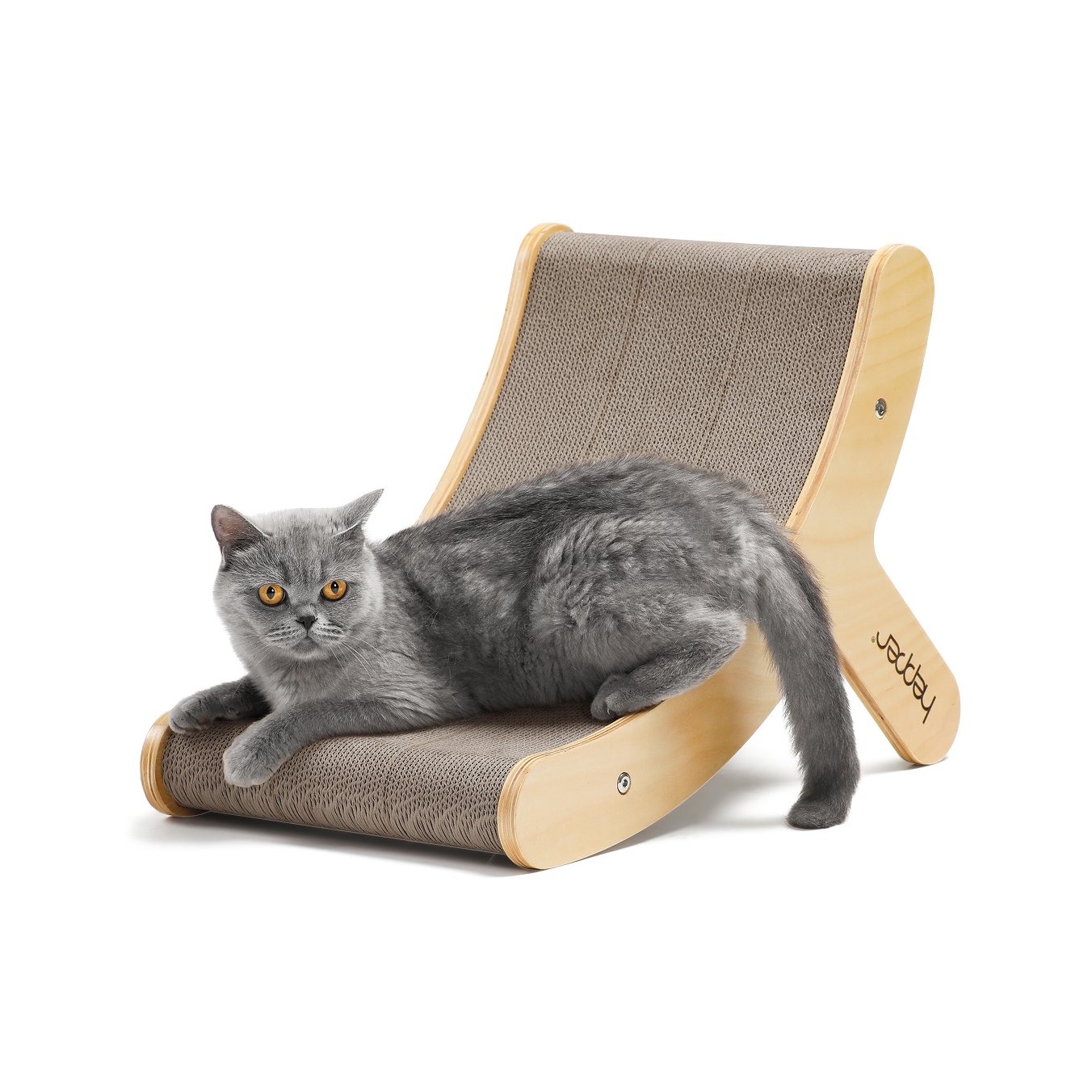
It reads as a small birch-plywood lounge chair, which is the entire brief of this guide
Three positions — high, low and lower — and Hepper recommends using all three to get the most life out of one cardboard insert
Dense B-flute cardboard laminated together rather than the thin corrugate in supermarket scratchers
Solid plywood frame with a metal core, so the geometry holds when a cat throws itself at the angle
Replacement cardboard is sold on the same product page, so the frame outlives the surface
Reasons to avoid
Hepper publishes no dimensions anywhere on its own site, so you cannot plan a spot for it from the spec sheet
An angled lounger does not give a full vertical stretch, so it does not replace a tall post
Cardboard sheds; expect to vacuum around it
This is the one I would put in a living room I cared about: birch plywood with a powder-coated metal core, and three positions that spread the wear across the whole cardboard sheet instead of one groove. Two honest caveats — Hepper publishes not one dimension on its own website, which for furniture is a strange gap, and an angled lounger does not replace a three-foot post. If you own only one, make it the post.
Not the right fit if your cat scratches vertically, up the sofa arm — you want the SmartCat post or the Zip.
28.5 inches that hangs on a wall, short for a big cat
Dimensions
28.5 x 6.5 x 1.5 in
Post height
Wall-mountable, so the height is wherever you hang it
Surface
Carpet over premium plywood
Stability
Weighted body with rubber groundings; aluminum wall mount available
Replaceable parts
Available from the brand on request
Reasons to buy
Flat on the floor, propped on an incline, or mounted vertically on a wall — one object covering three scratching styles
Takes no floor space at all when it is on the wall, which is International Cat Care's specific advice for small homes
Rubber grounding stops it sliding mid-scratch, the failure that makes cheap boards useless
Ships assembled, and the mount lets you lift it off the wall to vacuum
Reasons to avoid
Tuft + Paw says its space-saving profile may not be long enough for XL cats to get a full body stretch, which is an unusually honest thing for a brand to print
Carpet rather than sisal, which is the substrate cats used least often in the 2016 owner survey when alternatives were offered
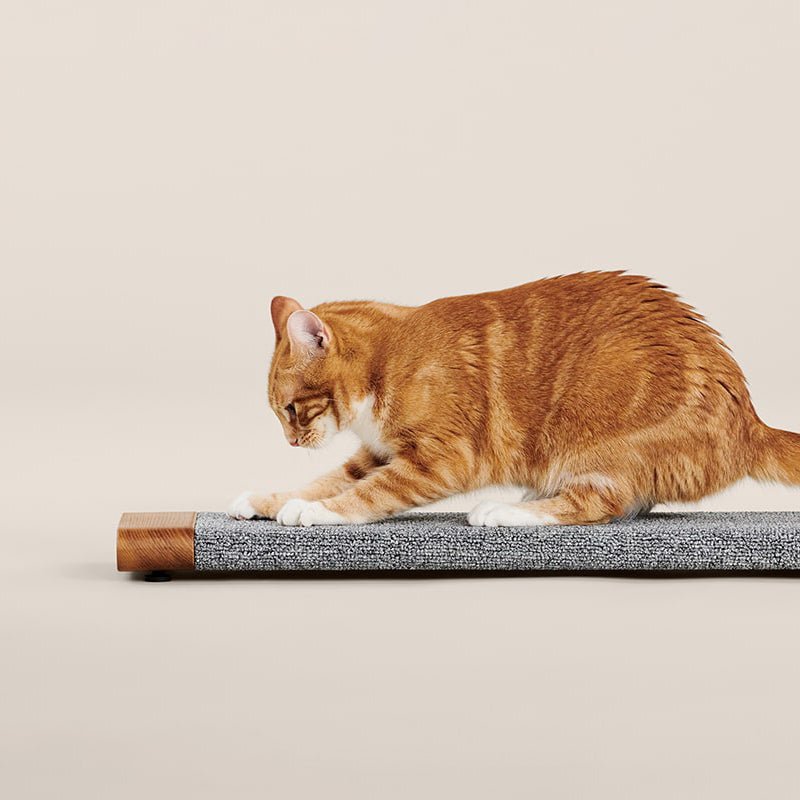
In a studio the wall is the surface nobody is fighting over, and this is the piece that uses it: 28.5 inches long, an inch and a half thick, and hung vertically it reads as a slim gray panel with walnut ends rather than cat equipment. Believe the brand's own warning that it may be too short for a large cat's full stretch — this is the second scratcher, the one by the sofa, and a house with one should make it a tall post.
Not the right fit if this is your cat's only scratcher — start with a three-foot post like the SmartCat.
Three feet of sisal on a plywood base, brand-direct only
Dimensions
36 x 18 x 18 in
Post height
36 in
Surface
Woven sisal fabric
Stability
Extra-wide weighted base plus a tightening screw on the post
Replaceable parts
Available from the brand on request
Reasons to buy
A full 36 inches, which clears the ASPCA's three-foot figure with room to spare
Ash or walnut veneer over premium plywood, so the base reads as furniture rather than as a plinth
The fabric ends are tucked and secured inside the post, so there are no loose ends or exposed staples
A screw on the post itself can be tightened if it ever loosens, which is a repair path most posts do not have
Reasons to avoid
Amazon does not sell it in the US at all, so it is a brand-direct purchase
Tuft + Paw's own pages describe the surface as both sisal rope and sisal carpet; the photographs show woven fabric
Tuft + Paw publishes a 30-day return window rather than a warranty term
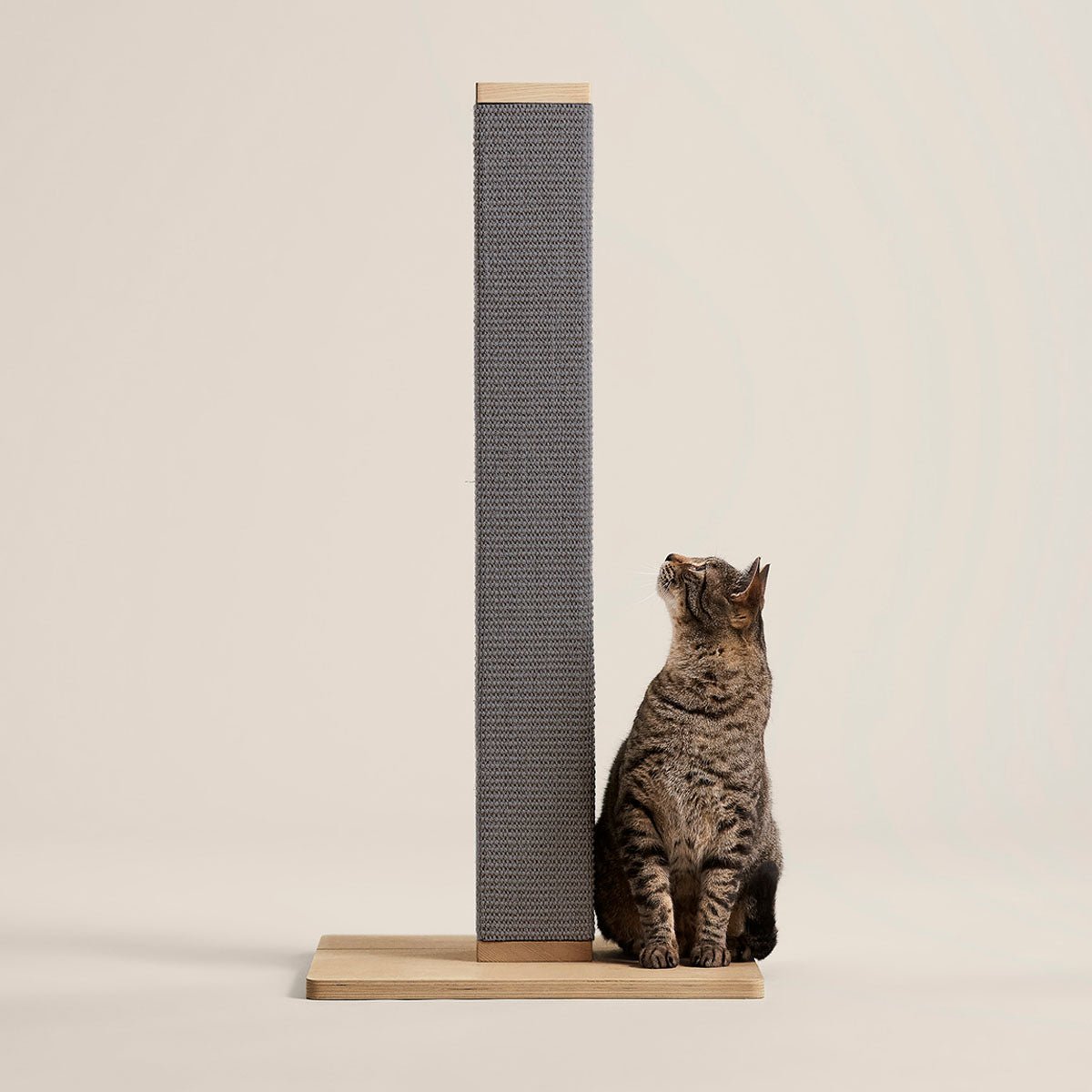
This is what the SmartCat post would look like if a furniture designer had drawn it: 36 inches of woven sisal on an 18-inch ash or walnut base, no carpet, no dangling toys, no exposed staples. Two things keep it off the top spot — you buy it from Tuft + Paw rather than through a retailer, and the brand's own descriptions disagree about whether the surface is rope or carpet. For the cheapest route to a three-foot sisal post, the SmartCat is it.
Not the right fit if you want it tomorrow from a big retailer — the SmartCat post is the same job for less money.
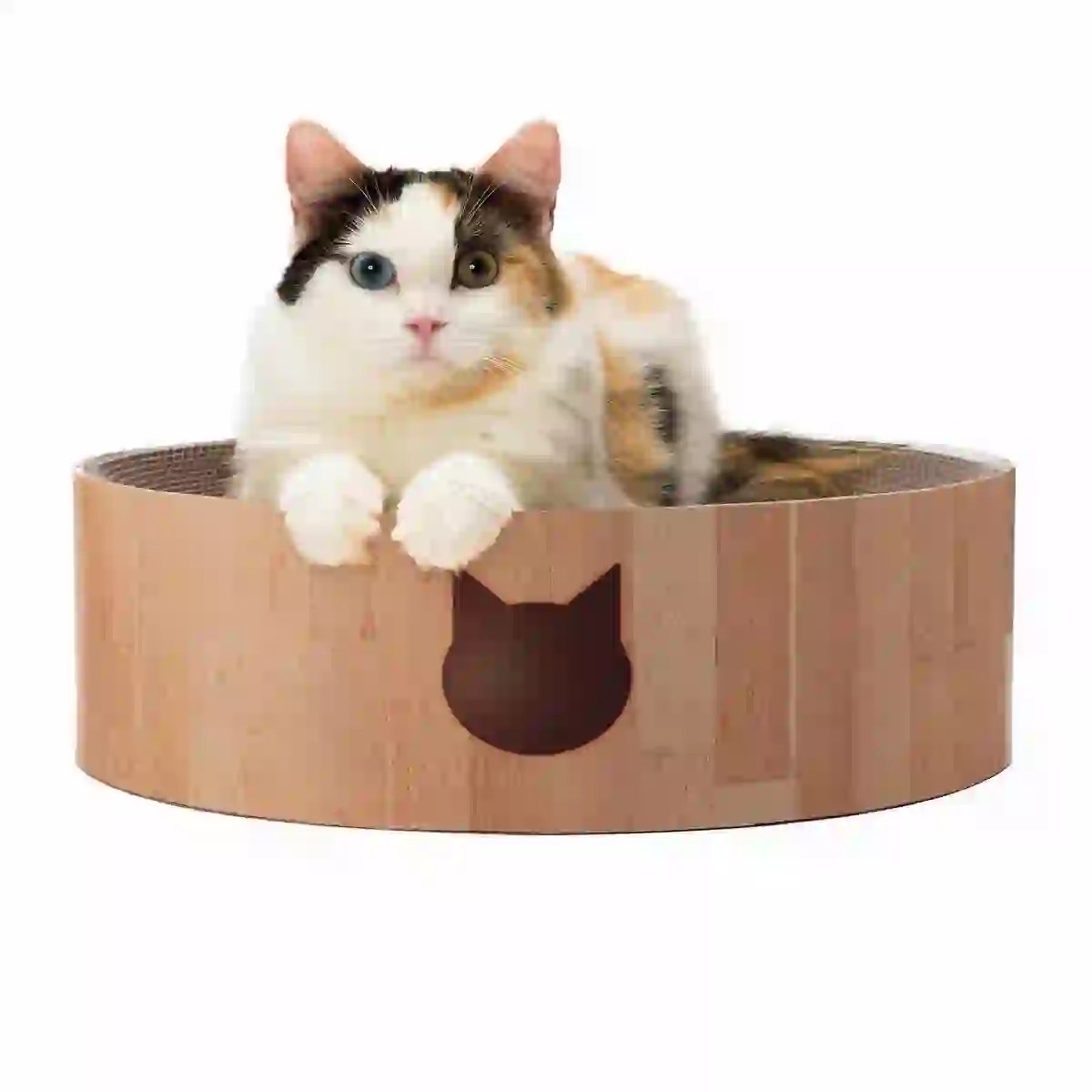
From two steps away it is a basket or a low side table, which is as invisible as cat furniture gets
The bowl shape means the cat lies in it as well as scratching it, so it earns its floor space twice
The curved wall gives a cat something to rake downwards against, which suits cats that shred rugs
Small enough to sit beside a sofa without a conversation about where it goes
Reasons to avoid
Necoichi's own website publishes nothing but the product name and the words "Scratcher, bed" — no dimensions, no material, no weight
A shallow bowl gives no vertical stretch at all
This one answers a question the tall posts cannot: what goes in a room where nothing may look like cat equipment? A wood-grain drum with a corrugated interior reads as a basket, and cats treat it as a bed with a scratching surface built into the walls. The caveat is unusual — Necoichi's website is a single page carrying the product name and a two-word category, so there is no manufacturer specification to quote. Buy it on the shape, not on numbers.
Not the right fit if you need published dimensions before you buy — every other pick here has at least some.
Every candidate had to be documented on its manufacturer's own website. That rule cut three brands whose scratchers are all over social media and whose domains are dead, parked, or unreachable — including the best-known cardboard lounger in the category.
Each product was checked against published welfare guidance rather than taste: the ASPCA's three-feet and no-wobble criteria, Ohio State's substrate advice, International Cat Care's height and one-per-cat-plus-one rule, and the 2016 owner-observation survey in the Journal of Feline Medicine and Surgery.
Dimensions, materials and stability claims are quoted from the brand's own page. A dash in the comparison table means the brand publishes no figure for that row — two of these five leave the dimensions blank — and no gap is filled from a marketplace description.
Nothing here has been lived with. This is a specification and guidance comparison; the one test worth running is your own — put the scratcher where the cat already scratches, not where you want it to live, and see whether the damage stops within two weeks.
The verdict
Best overall — the SmartCat Ultimate, because a 32-inch sisal post on a 16-inch base is what the published guidance describes. Best-looking — the Hepper Hi-Lo, three positions and a replaceable insert, if you accept that Hepper publishes no dimensions. Best for a small apartment — the Tuft + Paw Tab, because a scratcher on the wall uses floor you do not have.
Across this category beauty and height are in tension, and brands resolve it by going short. Buy one tall post that meets the guidance, then buy the pretty one for the room you sit in.
Check price at AmazonBest for a cat that is destroying the sofa: SmartCat Ultimate Scratching Post
Questions people ask
How tall should a cat scratching post be?
The ASPCA's figure is at least three feet, sturdy enough not to wobble, in a rough material such as sisal or burlap. International Cat Care puts it functionally: as tall as your cat standing on its hind legs. Only two picks here clear that bar — a 36-inch post and a 32-inch one.
Sisal, carpet or cardboard — which do cats prefer?
The 2016 owner survey found rope was the substrate most often used when offered, even though carpet was the material most commonly offered. Ohio State names sisal as ideal because it is satisfying to scratch and survives repeated use. Cardboard has a place too: International Cat Care notes kittens and senior cats often prefer it, because it offers less resistance.
How many scratchers does one cat need?
International Cat Care recommends one per cat plus one extra, in different locations. Ohio State adds that you want both vertical and horizontal options, because a cat that shreds the rug and one that shreds the chair leg are telling you two different things.
Can a scratcher go on the wall?
Yes, and International Cat Care specifically recommends it when space is tight — scratching panels fixed to walls, in sisal twine, bark or corrugated cardboard. The Tab in this guide is designed for exactly that, with its own aluminum mount, and it frees the floor entirely.
My cat ignores the new scratcher. What now?
Move it to where the cat is already scratching, not where you want it. The ASPCA's advice is to place posts next to the objects being damaged, offer different surfaces and orientations until you find the preference, then add more of that kind. And do not throw out a shabby post: cats prefer shredded objects because they can get their claws in.
Does a cat tree count as a scratching post?
It can. The 2016 survey found cats scratched their preferred substrate more often when the post was a simple upright type or a cat tree with two or more levels and at least three feet high — so a tall tree with real sisal posts does the job, and a short tree wrapped in carpet mostly does not.
Also considered
PetFusion Ultimate Cat Scratch Lounge — The most recommended cardboard lounger on the internet, and PetFusion's domain now redirects to a parking page offering it for sale. With no manufacturer page there is no published density, no dimensions and no brand image — every spec you read online traces back to a marketplace description.
Catit PIXI Scratchers — The best-looking cardboard-and-oak pieces I found, and Catit's own line about them is the thesis of this guide. Their US product pages currently return a page-not-found, so they are unbuyable rather than unrecommended.
Omlet Switch and Stak — Discontinued. Both have been removed from Omlet's US and UK catalogues, which now list catios, litter furniture, beds and the Freestyle tree.
MYZOO wall units and Katris blocks — The two most sculptural brands in the category, and neither site can be read — one domain does not resolve and the other sits behind a challenge page. No manufacturer specification, no manufacturer image, no pick.