As an Amazon Associate I earn from qualifying purchases. Links marked "at Amazon" are paid links.
Enclosed vs open litter box (2026), and the two cabinets that split the difference
By Chris Y. · Two cats, one-bedroom apartment; measures the inside of everything
Photo: rawpixel (CC0)
The short version — your cat wants the open pan, you want the cabinet, and the compromise that works is an enclosure with a large doorway and real ventilation, scooped daily. Of the two below, the Feandrea HAINS enclosure is the one to buy if your cat is average-sized and the room has space; the Yaheetech side table is the one if the only spot you have is 19 inches wide, provided your cat is under about 12 lb.
Most cat-furniture articles skip what the sources actually say. The ASPCA says to remove covers and liners from all litter boxes, and lists an uncomfortable hood among the reasons cats stop using one. Ohio State says cats generally prefer large uncovered boxes and that covers concentrate odours. Cornell puts it in a line: covers hold odours in.
So why recommend enclosures at all? Because in a 600-square-foot apartment the alternative is not a quiet spare room — it is an open pan beside the sofa, which fails the other half of the same guidance: quiet, accessible, away from food and traffic. An enclosure buys the right location at the cost of airflow, and that trade only works if you scoop daily and the cabinet ventilates.
How to shop for an enclosed litter box
Doorway size
The biggest difference between the two cabinets here. Yaheetech publishes 6.5 x 8 inches; Feandrea publishes no opening figure at all, on a 31.5-inch cabinet with a full barn-door front.
Ventilation
Covers concentrate odour, so back-panel holes and doors that do not seal are what keep an enclosure from becoming a box of ammonia. Yaheetech publishes seven vent holes; the Feandrea's larger volume does some of the same work.
Interior volume per cat
A cat has to stand up and turn around inside, and Ohio State's rule for a box applies to the cabinet around it. 19.8 x 19.8 x 18.3 inches against 15.7 x 19.6 x 17.6 is a real difference for a heavy cat.
How fast you can scoop it
Everything about an enclosure gets worse if scooping is a chore. Both open from the front; the Feandrea's double barn doors beat a single hinged door if the cabinet sits in a corner.
Best enclosure for most cats
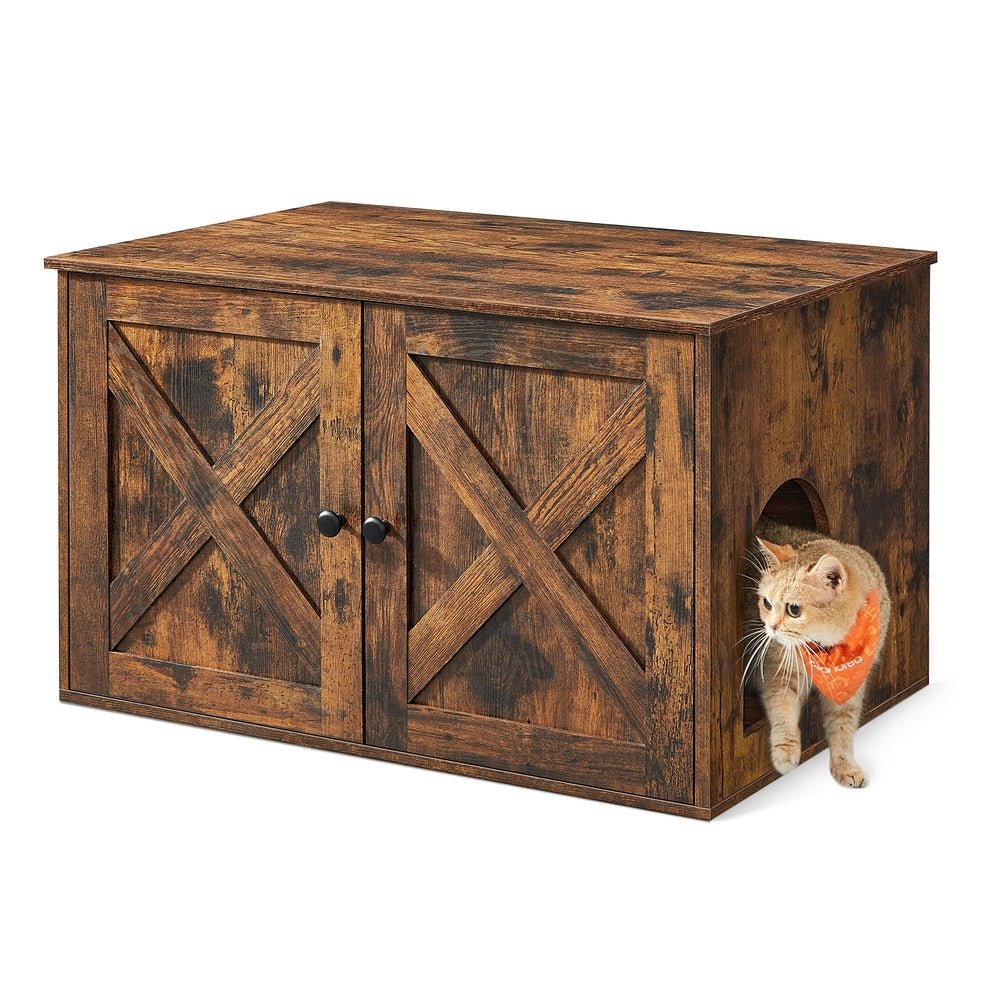
Image: Feandrea / SONGMICS HOME
Feandrea HAINS Litter Box Enclosure
A 29.7-inch compartment, and no published door size
Model
UPCL002X01
Exterior
31.5 x 20.9 x 19.7 in
Interior
19.8 x 19.8 x 18.3 in with divider; 29.7 x 19.8 x 18.3 in without
Top load
132 lb with divider; 22 lb without
Unit weight
35 lb
Reasons to buy
The largest published interior of the two by a wide margin, so an average cat can turn around without touching the walls
Taking the divider out gives a 29.7-inch-wide compartment — room for a pan and a litter mat inside the cabinet
Barn doors open the whole front, so daily scooping takes seconds rather than contortions
Rated to 132 lb on top with the divider in, which is what makes it a genuine side table rather than a box with a lid
Reasons to avoid
Feandrea publishes no entry-opening dimension, so the doorway is an unknown until it arrives
31.5 inches long and 35 lb — it needs a wall and two people
This is the enclosure that concedes least to the welfare objection — with the divider out the compartment is nearly 30 inches wide, which is more air around the pan than most cabinets in this category give you. What you are still accepting is a hood, so if your cat has ever refused a covered box, buy it with a plan to keep the open pan for two weeks and watch which one gets used.
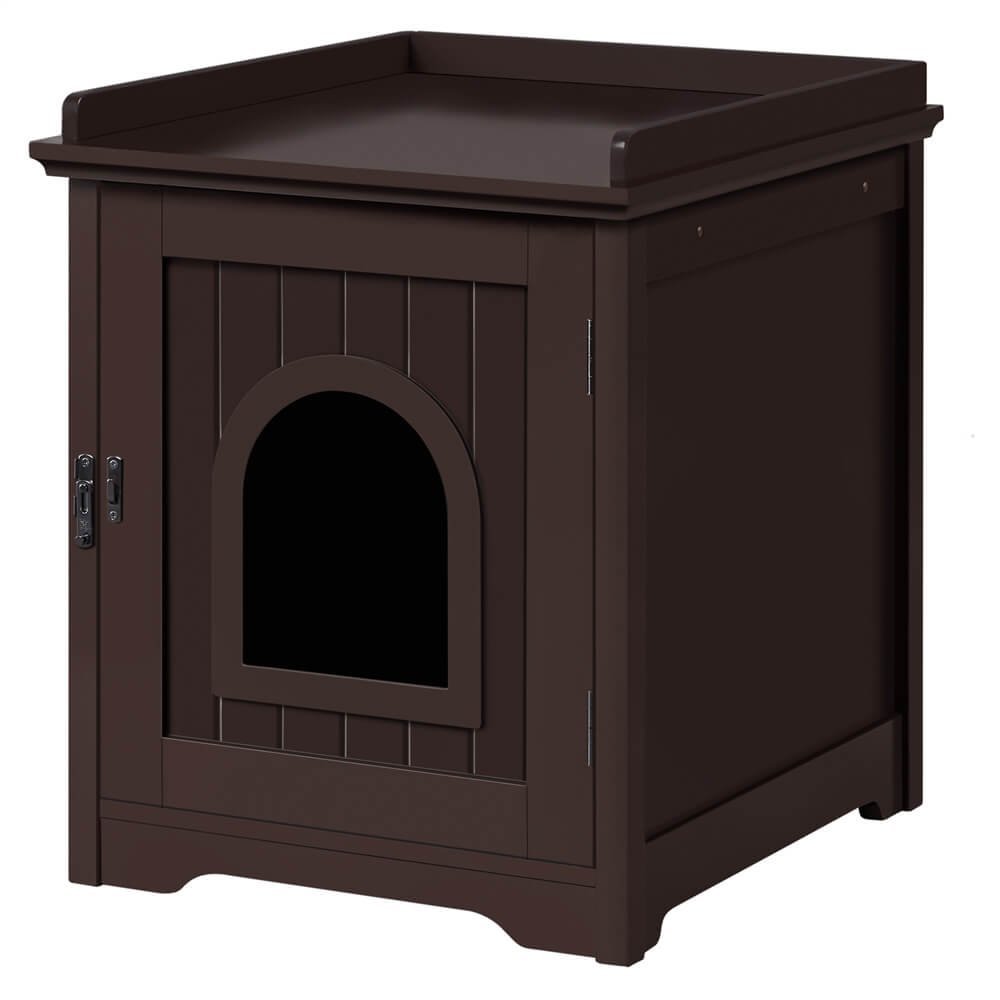
Not the right fit if the only free spot in your home is under two feet wide — see the Yaheetech side table.
19 inches wide — this fits in a bathroom or a hallway where the Feandrea simply does not
The only cabinet in this comparison that publishes its doorway, plus the largest pan it swallows (17.7 x 15 in)
Seven vent holes in the back panel, which is the direct answer to the odour-concentration objection
A magnetic door catch and a latch, so a curious dog does not get the door open
Reasons to avoid
A 6.5-inch-wide doorway is narrow for any cat over about 12 lb, and narrow doorways are exactly what makes cats quit a covered box
17.6 inches of interior height rules out tall hooded pans
Yaheetech deserves credit for publishing the number everyone else hides. A 6.5 by 8-inch doorway is small, and knowing it before you buy is worth more than a prettier cabinet with an unpublished opening: for a slim adult cat this works where nothing else fits, and for a big cat the spec sheet tells you to buy the Feandrea or keep the open pan.
Not the right fit if your cat is over about 12 lb or long-haired — the Feandrea HAINS has far more room.
The primary guidance was read rather than the summary that circulates in cat-furniture articles. The ASPCA, Ohio State's Indoor Pet Initiative and Cornell's Feline Health Center all publish positions on covered boxes, and all three lean the same way.
Both cabinets' figures are quoted from the manufacturers' own product pages. A dash in the table — the Feandrea doorway, most obviously — means the brand publishes no figure, not that one was left out.
A jumbo open pan published at 23 x 18.7 x 12 inches is larger than the interior of one of these cabinets and fits the other with the divider out — the practical test of whether an enclosure holds the box you already own.
Nothing here is a controlled odour test. This is published welfare guidance and published manufacturer specifications, compared against each other and against the pans named above.
The verdict
Best for most households — the Feandrea HAINS enclosure, because its published interior gives a cat the most room to turn around and its doors make daily scooping fast. Best for the smallest spaces — the Yaheetech side table, the only cabinet here that tells you how big its doorway is, for a cat slim enough to use it.
And the honest third option — if your cat has ever abandoned a covered box, keep the open pan and put it somewhere quiet. Every welfare source I checked prefers the uncovered box, and no cabinet on this site is worth a cat that stops using it.
Check price at AmazonBest enclosure for most cats: Feandrea HAINS Litter Box Enclosure
Questions people ask
Do enclosed litter boxes smell worse?
They concentrate it where the cat is. Ohio State states that covered boxes concentrate odours more than uncovered ones, and Cornell says covers hold odours in. You smell less; the cat smells more. Vent holes and daily scooping are what make that trade fair.
Will a cat refuse to use an enclosure?
Some do. The ASPCA lists an uncomfortable hood or liner among the common causes of a cat eliminating outside the box. The test costs nothing: put the enclosure up, keep the open pan for two weeks, and let the cat vote.
How big does the doorway need to be?
Bigger than 6.5 inches for a large cat. Published openings here run from 6.5 x 8 inches to a 10.6-inch cat hole, and Cornell's guidance that larger cats need bigger boxes applies to the opening too. If your cat pauses at the threshold, it is too small.
How often do I need to scoop an enclosed box?
The ASPCA's baseline is scooping at least once a day and a full clean weekly with warm water and unscented soap, replacing the litter. In an enclosure I treat that as a floor, not a target, because the box is inside a cupboard in your living room.
How many boxes should I have if I use an enclosure?
The ASPCA's rule does not change: one per cat plus one extra. Two cats means three boxes. The realistic version in a small apartment is one enclosure in the living area and a plain open pan somewhere quieter — which also gives a cat that dislikes covers a legitimate alternative.