As an Amazon Associate I earn from qualifying purchases. Links marked "at Amazon" are paid links.
Slatwall vs track systems for a garage wall (2026)
By Chris Y. · Founder & editor · reads the installation manual before the product page
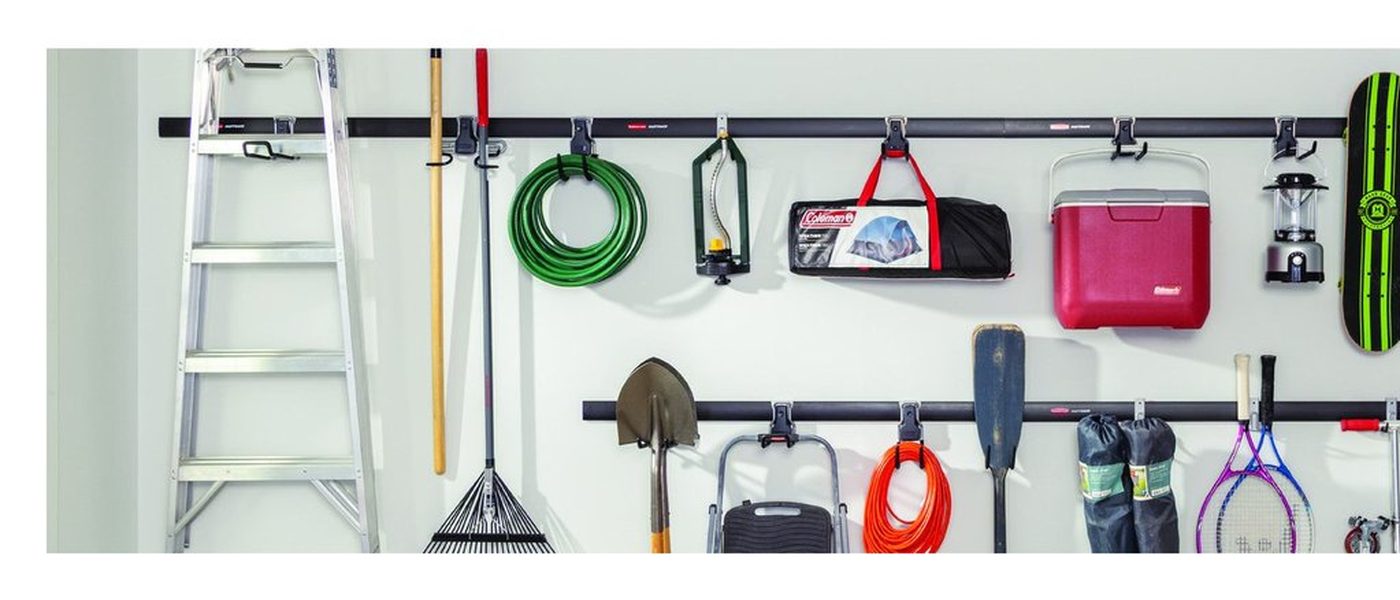
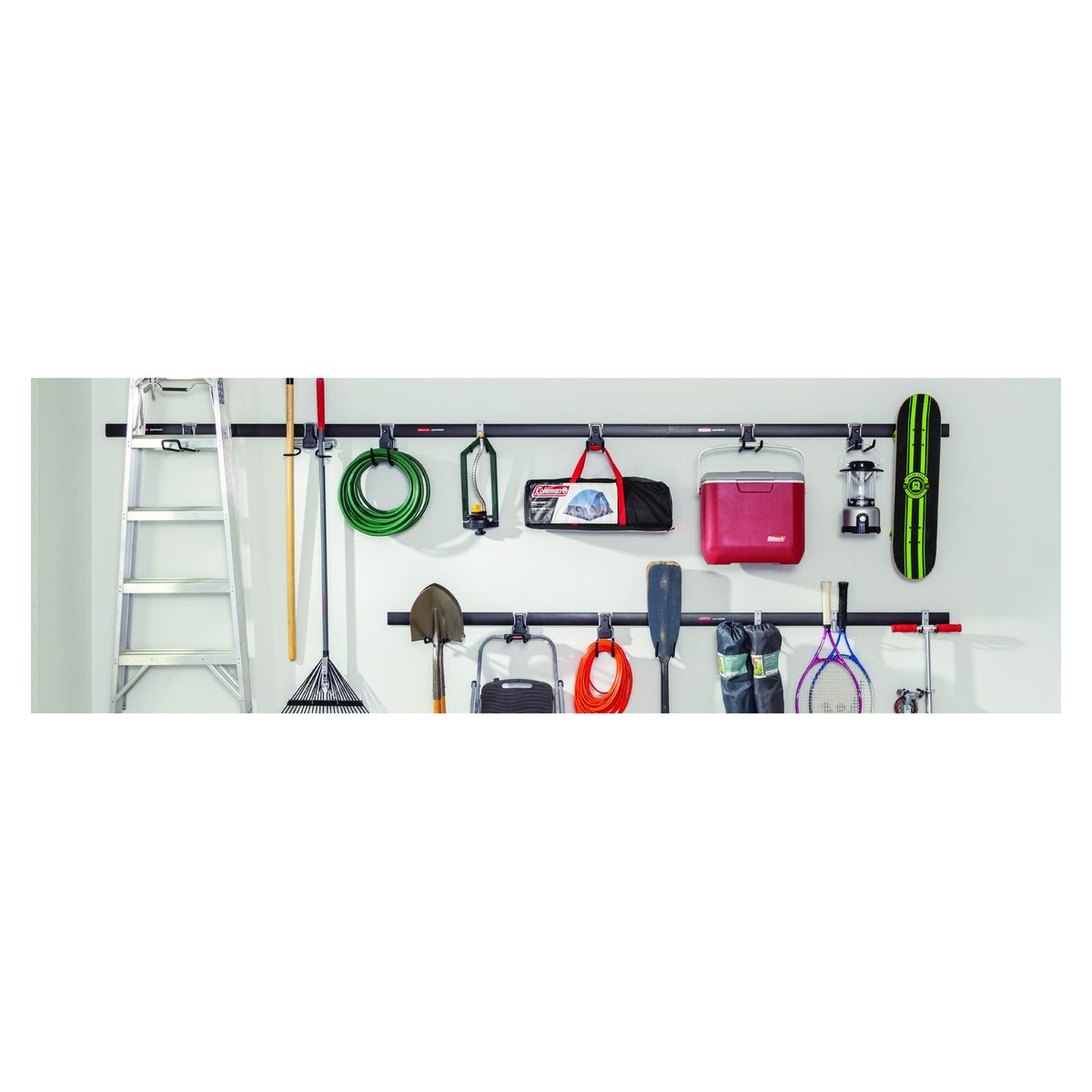
Image: Rubbermaid
The short answer: buy track if you are hanging a dozen big things — ladders, bikes, a wheelbarrow — and slatwall if you are covering a wall and rearranging it constantly. Track costs less per wall and carries more per fastener; slatwall costs more and gives you an infinite number of hook positions.
The two systems are rated in units that cannot be compared directly, which is why every comparison of them online is vague. A Rubbermaid FastTrack rail publishes 1,750 pounds per rail. A Proslat panel publishes 75 pounds per square foot. Neither number tells you what a single hook holds, and that is what actually breaks.
Both systems need studs. Neither is a drywall product, and anything you read about anchors applies to the accessories, not to the rail or the panel. If you have not measured your stud spacing, do that first: how to plan a garage wall.
How to shop for a garage wall system
The unit the rating comes in
Track is rated per rail or per linear foot: 1,750 pounds a rail for Rubbermaid, 75 pounds a linear foot for Gladiator GearTrack. Slatwall is rated per square foot: 75 for Proslat, 100 for NewAge, up to 300 for storeWALL with its install strips.
What one hook actually holds
Rubbermaid publishes 25 to 50 pounds per hook. That is the binding limit in both systems — the rail or panel is almost never the part that fails.
Coverage per dollar
Two rails cover a wall's worth of hanging points for the price of a few square feet of slatwall. Slatwall's cost is the whole surface; track's cost is two horizontal lines.
How often you rearrange
A hook on slatwall moves anywhere in two dimensions. A hook on track moves along one line. If the garage changes with the seasons, that difference is the purchase.
What the wall looks like afterwards
Slatwall covers drywall, dents and all, and reads as a finished room. Track leaves the wall visible with two lines across it.
Buy track if you are hanging heavy things
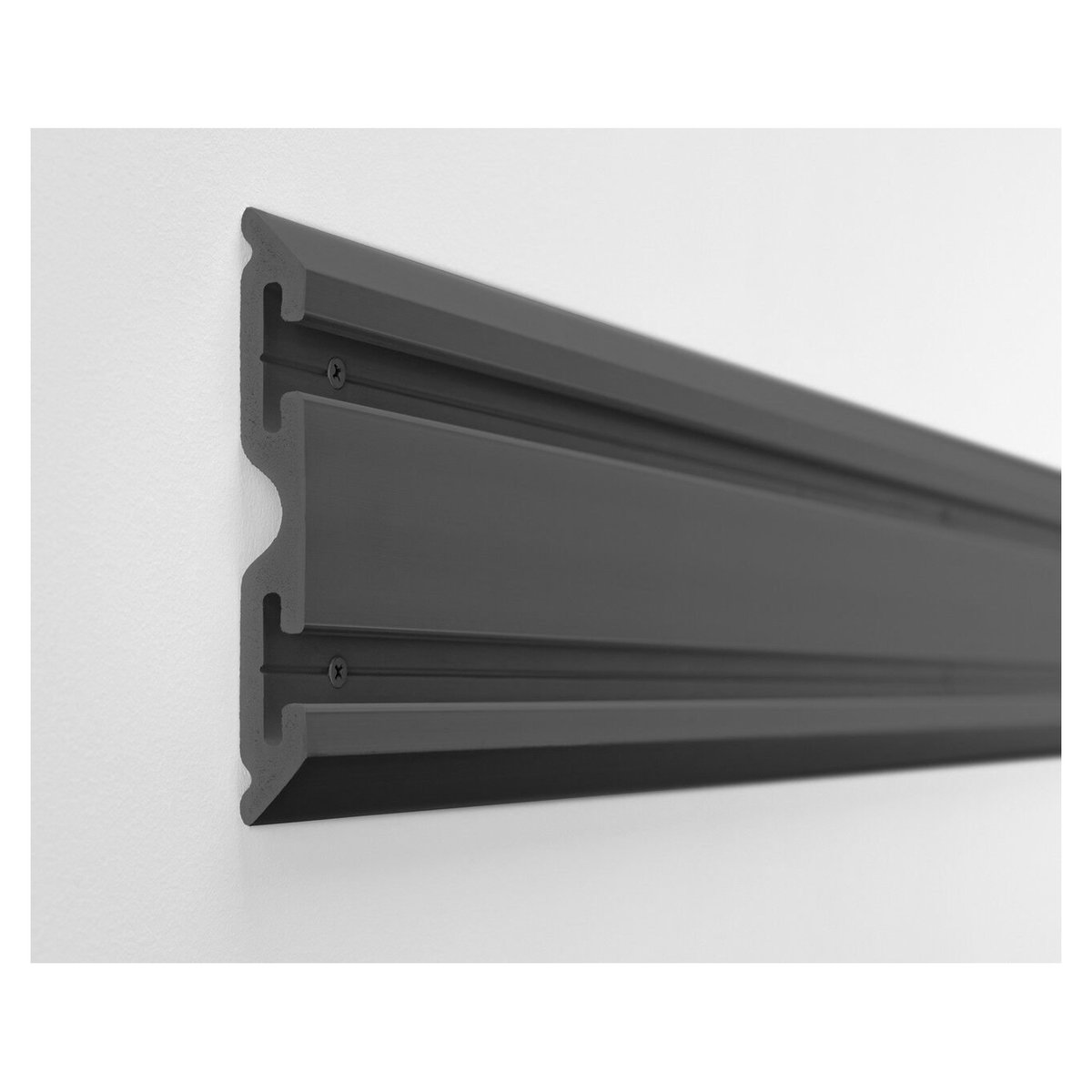
Image: Rubbermaid
Rubbermaid FastTrack Garage Rail, 48 in., 2-pack
1,750 lb a rail, 25–50 lb a hook
Model
1784415
Rated
1,750 lb per rail
Hooks
25–50 lb each
Fixing
Into studs
Length
48 in, sold in 2-packs
Warranty
Limited lifetime
Reasons to buy
The highest published rail rating in the category, and a limited lifetime warranty behind it
Two rails and eight hooks cover a garage wall's worth of long tools for a fraction of a slatwall bill
Hooks lift out and move along the rail in seconds without tools
Sold everywhere, so accessories are easy to add one at a time
Reasons to avoid
Hooks move along one line only, so the vertical position of everything is fixed by where you mounted the rail
The wall stays visible, which some people want and some do not
The rail carries the rating and the hooks do not, so a wall of FastTrack is only as strong as the 25-to-50-pound hook you hang the ladder on
For a garage full of long, heavy, awkward things — ladders, a wheelbarrow, extension poles, a hose reel — track is the right system and this is the strongest published version of it. The 1,750-pound rail figure is not the number you plan with, though. Plan with the 25-to-50-pound hook rating, multiplied by how many hooks you own.
Not the right fit if you want to hang things at any height — slatwall covers the wall in two dimensions, so go to the Proslat panels.
A per-linear-foot rating — 75 pounds — which is the only rating in this comparison that scales with how long your run is
Every Gladiator cabinet, hook and bike hanger clips to the same channel, so the system grows in one direction
A published 10-year limited warranty on the track itself
Two four-foot channels cover a bay in one purchase, for the least money in this comparison
Reasons to avoid
Accessories are proprietary, so the cost of the system is the cost of Gladiator's hook range
75 pounds a foot is well below the Rubbermaid rail figure, though both exceed what any hook will carry
The reason to pick GearTrack over FastTrack is the rest of the catalog. Gladiator's wall cabinets, bike hooks and baskets all hang on this channel, so the wall can become storage, cabinetry or a bike rack later without new holes.
Not the right fit if you want cross-brand hooks — the storeWALL slatwall takes any slatwall accessory.
Covers 32 square feet in one box and turns a plain drywall bay into a finished, hangable surface
PVC does not rot, swell or care about a damp garage the way MDF slatwall does
Takes any standard slatwall hook, so accessories are a commodity rather than a brand decision
Hooks go anywhere in two dimensions, which is the thing track cannot do
Reasons to avoid
Considerably more expensive per wall than two rails, because you are buying the whole surface
75 pounds per square foot is the panel rating, not a hook rating — a single hook is still the limit
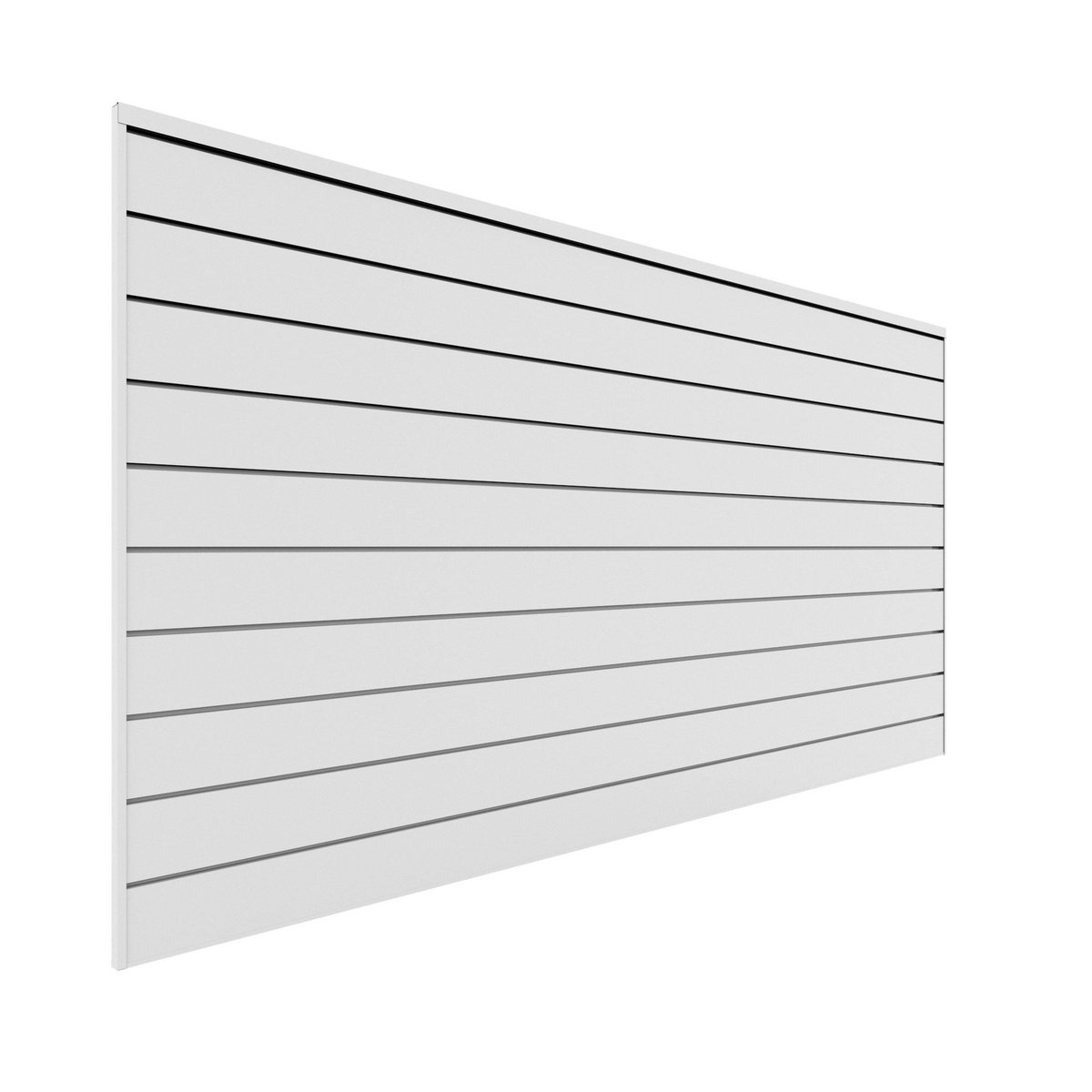
Proslat sells the same panel in four colors under four part numbers: the button below is the white 88102, so check the color code before you order
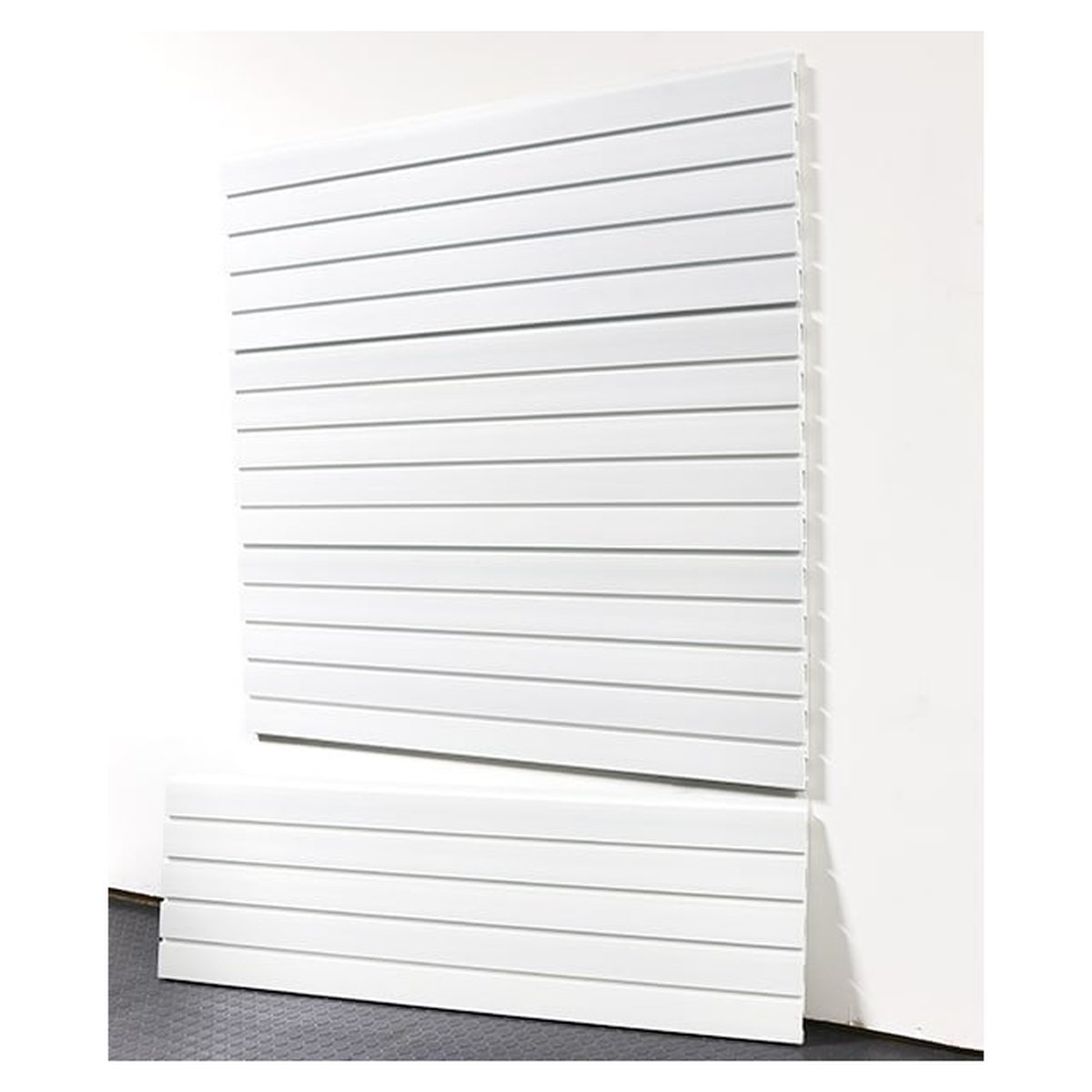
Slatwall is the purchase when the wall itself is the project. It covers dents and mismatched drywall, it makes the garage read as a room rather than a shed, and the hook positions are unlimited — which matters if the garage changes shape with the seasons.
Not the right fit if the budget is for tools rather than walls — two FastTrack rails hang the same ladders for much less.
The highest published slatwall rating here by a factor of three, and the only one that publishes a figure for load held four inches off the wall
The InstallStrip system is what earns the rating, and the maker prints the rating as conditional on using it
Standard slat profile on a PVC panel, so the hook market is open and a damp, unheated garage does not touch it
Reasons to avoid
Top price band in this comparison, and the install strips are part of the system rather than an option
Rated capacity depends on installation exactly as published, which is a discipline the other systems do not demand
The 165-pound figure at four inches out is the most useful number in this whole comparison, because that is how load actually arrives on a wall — on a hook, at a distance, as a lever. Everyone else publishes a flat square-foot rating and lets you guess.
Not the right fit if you are hanging rakes and a hose — FastTrack does that for a quarter of the outlay.
Every rating comes from the manufacturer's own page — Rubbermaid, Gladiator, Proslat and storeWALL — recorded with the unit and condition each brand attaches to it.
Ratings were deliberately not converted into a single unit. A per-rail figure and a per-square-foot figure describe different failure modes, and normalizing them would invent precision nobody published.
The per-hook rating was treated as the binding limit throughout, because that is where load enters both systems.
Every retail page linked here was opened in September 2026 and checked for a working buy box. All four had one, and the pack size and color code behind each button are named in the pick.
The verdict
Buy track — FastTrack for maximum published capacity, GearTrack if you want the cabinet ecosystem — when the job is hanging a dozen large objects and the wall itself does not matter.
Buy slatwall — Proslat for the price, storeWALL when the load is serious — when you are finishing the wall as well as hanging things on it, and when the arrangement will keep changing. Whichever you choose, plan on the hook rating rather than the panel rating, because the hook is the part that lets go.
Check price at AmazonBuy track if you are hanging heavy things: Rubbermaid FastTrack Garage Rail, 48 in., 2-pack
Questions people ask
Is slatwall stronger than a track system?
Per fastener, no. Rubbermaid publishes 1,750 pounds for a 48-inch FastTrack rail and Proslat 75 pounds per square foot of panel; a 4-foot run of each is broadly comparable. The difference is that slatwall spreads load across the wall and track concentrates it on two lines of screws.
Can I hang a bike on garage slatwall?
Yes, with a slatwall bike hook. The limit is the hook rather than the panel — storeWALL publishes 165 pounds four inches out from the wall, which is far more than a bike, and cheaper panels publish only a flat square-foot figure.
Does slatwall need to go into studs?
Yes. Both systems fix into framing. Slatwall panels screw through drywall into the studs behind and the published capacity assumes that; on 24-inch stud spacing you get fewer screws per panel than on 16-inch.
Which is cheaper for a two-car garage wall?
Track, by a wide margin. Two 48-inch rails and a set of hooks cover the long tools on one wall; covering the same wall in slatwall means buying 60 to 100 square feet of panel.
Can you mix slatwall and track on the same wall?
Often the better plan. Panel the section behind the bench where hooks move constantly, and run track along the section where ladders and long tools hang. Both fix to the same studs.