As an Amazon Associate I earn from qualifying purchases. Links marked "at Amazon" are paid links.
Overhead rack vs shelving for a one-car garage (2026)
By Chris Y. · Founder & editor · reads the installation manual before the product page
Photo: Peter Vang / Pexels
The short answer: with 9 feet of ceiling or more, buy the overhead rack first and put the shelving on the back wall later. With 8 feet, buy the shelving first — a shallow unit against the wall costs less usable garage than a rack you duck under every day.
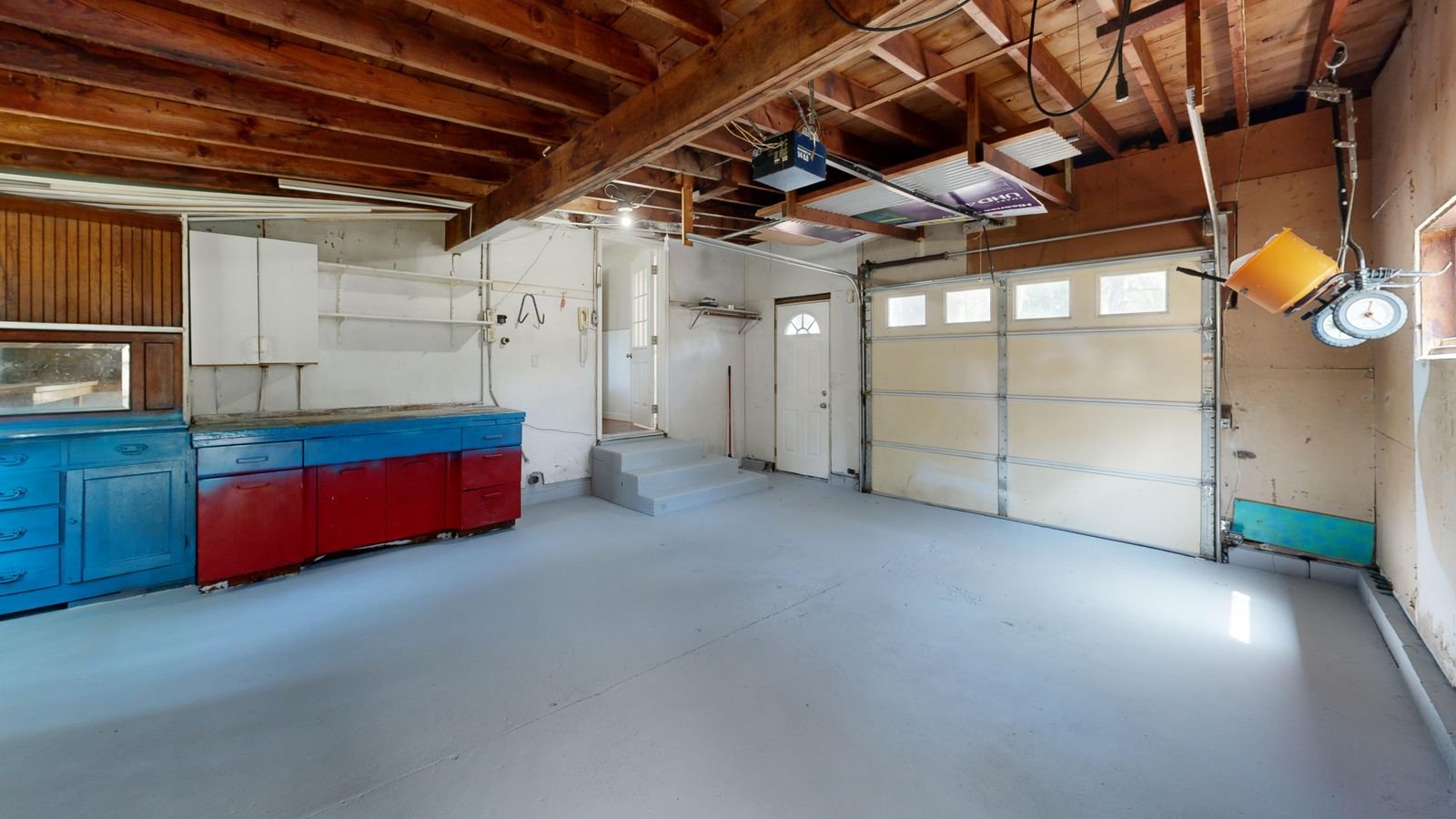
A one-car garage is about 12 feet wide and a car about 6, so you have roughly three feet each side and none of it is really yours once a door opens. An overhead rack takes zero floor; a 24-inch-deep shelving unit takes two feet of that three-foot gap.
The ceiling is not free either. A 4 × 8 rack at its shallowest 22-to-24-inch setting leaves about 72 inches under the deck in an 8-foot garage — less than the 75.3-inch roof height Ford publishes for a 2026 F-150 SuperCrew. In that garage the rack goes over the walkway, not over the car, and it is not free floor space at all.
How to shop for garage storage
Ceiling height decides it, not capacity
At 10 feet a rack at a 40-inch drop leaves 80 inches of headroom and you park under it; at 8 feet the same rack leaves 56. Measure the ceiling, then the opener rail and door track, which hang lower.
Depth is the floor cost of shelving
The standard unit is 24 inches deep, which in a 12-foot bay with a 6-foot car leaves about a foot of walking room. A 12.6-inch unit halves the cost and roughly halves what it holds.
Your building has a vote
A rack needs sound wood joists — manufacturers exclude steel joists, I-beams and concrete — and the code's attic live load for limited storage is 320 pounds across a 4 × 8 footprint. Shelving needs nothing from the building.
How often you touch it, and what the rating buys
A rack is a once-or-twice-a-year store, and anything you need monthly but cannot reach without a ladder ends up back on the floor within a season. Overhead racks publish 150 to 1,000 pounds; free-standing shelving 400 to 2,500 per shelf across four or five shelves.
Time and reversibility
A shelving unit is an hour with a mallet and can be moved or sold. A rack is a ladder, a stud finder, lag screws into your ceiling and a decision about your building.
Buy the rack first if your ceiling is 9 ft or more
Image: FLEXIMOUNTS
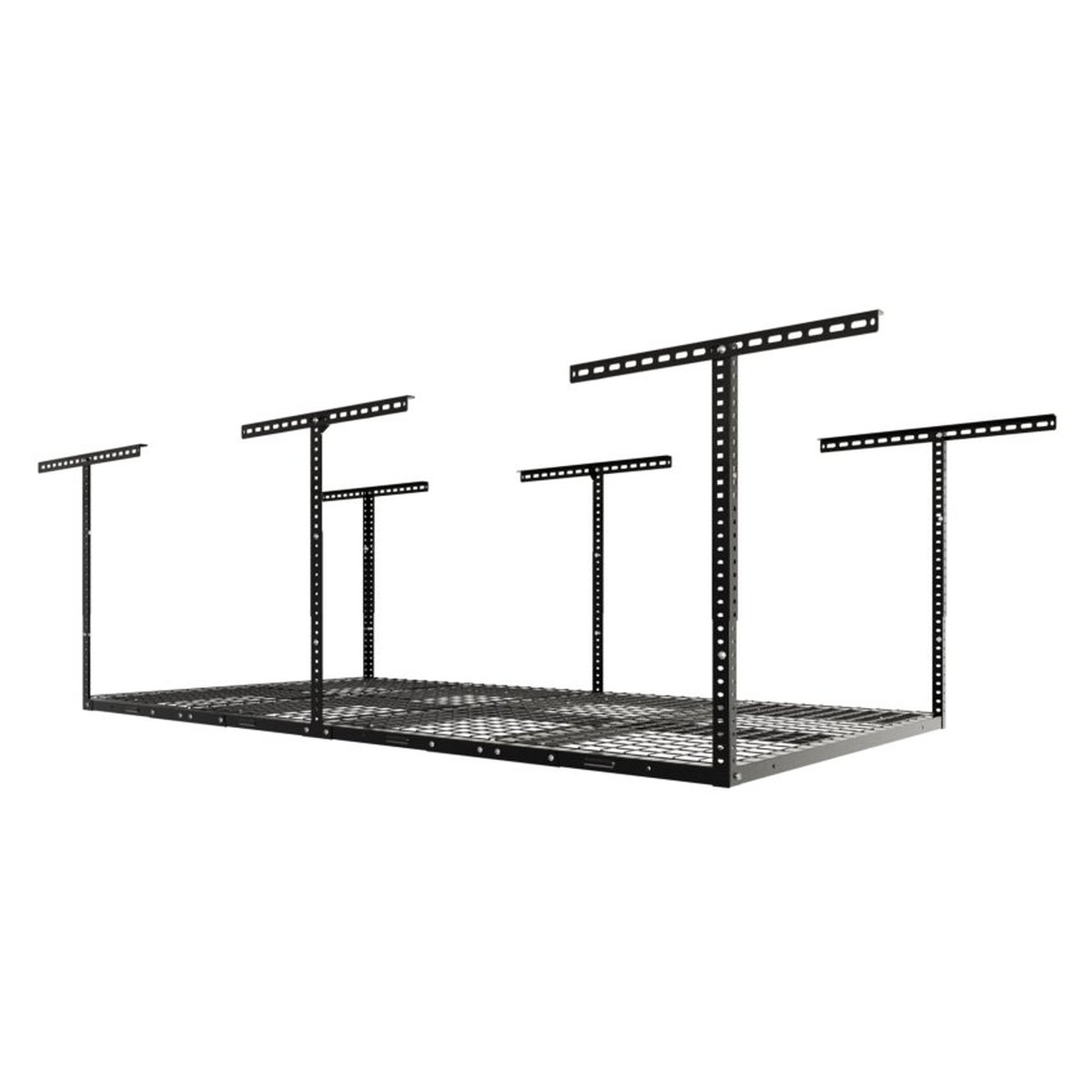
FLEXIMOUNTS Classic 4 × 8 Overhead Rack
0 floor taken, 22–40 in of headroom spent
Model
GR48
Floor cost
None
Headroom cost
22–40 in
Capacity
750 lb rated, 1,200 lb tested
Needs
Wood joists, ≤24 in on center
Install
Ladder, stud finder, drill
Reasons to buy
Takes no floor at all, the only storage in a 12-foot bay that costs nothing on the ground
750 pounds rated with a published 1,200-pound test figure behind it, and 105 cubic feet of volume
Adjusts between a 22 and a 40-inch drop, so one model covers a 9-foot and a 10-foot ceiling
Reasons to avoid
The 22-inch shallowest setting is too deep for an 8-foot ceiling if you also want to park under it
A permanent alteration to your building, and everything on it needs a ladder — the wrong home for anything you use monthly
In a 9 or 10-foot garage this is the first purchase and it is not close: the whole holiday-and-camping category leaves the floor without costing an inch of the space you walk in. Confirm the ceiling first — measure to the ceiling, then the opener rail and the door track, and subtract the drop you plan to use.
Not the right fit if your ceiling is 8 ft, or your garage has engineered roof trusses you have not had checked — buy the shelving below.
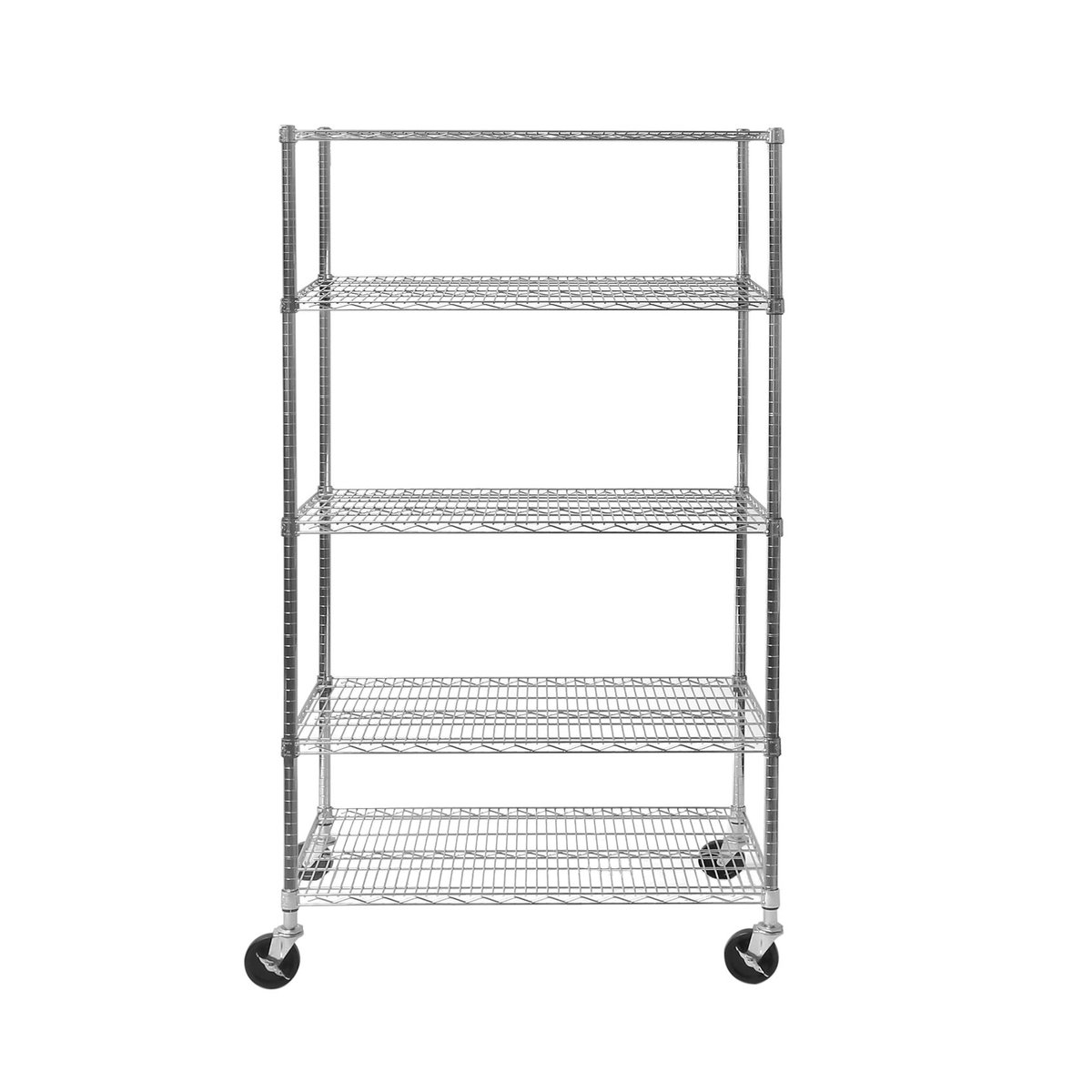
Five shelves at a published 800 pounds each on the leveling feet, and Seville prints the 500-pound figure for the same unit on its casters rather than hiding it
Needs nothing from your building: no joists, no studs, no anchors, nothing to undo if you move
Steel wire throughout, NSF-certified to NSF/ANSI 2, with nothing to swell if the floor floods
Adjusts in 1-inch increments and carries a 10-year limited warranty
Reasons to avoid
24 inches deep is two of the three feet you have beside the car
On its own wheels the whole unit drops to 500 pounds, so the casters are for moving it empty
Wire shelves lose anything smaller than a fist unless you add bins
In an 8-foot garage this is the better first purchase, because the headroom a rack spends is headroom you do not have. Put it on the back wall — the only surface a car door never swings into. It is also the buy if you are renting or the garage has engineered trusses: no version of this damages the building.
Not the right fit if you have 9 ft or more of ceiling and floor is your problem — the rack above takes none of it.
With 9 to 10 feet of ceiling: rack first, because it is the only storage that costs no floor and floor is the scarce resource in a one-car bay. Shelving on the back wall second, a rail or pegboard third.
With 8 feet: shelving first against the back wall, and keep the ceiling for a shallow bracket rack over the walkway rather than a 4 × 8 deck over the car. Either way, whatever you touch more than once a month belongs between 36 and 60 inches off the floor — the fastest way back to a cluttered garage is putting useful things where a ladder is needed.
Check price at AmazonBuy the rack first if your ceiling is 9 ft or more: FLEXIMOUNTS Classic 4 × 8 Overhead Rack
Questions people ask
Is an overhead rack or shelving better for a one-car garage?
Ceiling height decides it. At 9 feet or more the rack wins, because it costs zero floor out of the three feet beside the car; at 8 feet a 4 × 8 rack at its 22-inch minimum leaves about 72 inches of clearance, so shelving wins.
How much floor does garage shelving actually cost me?
The standard unit is 24 inches deep and 48 wide, which in a 12-foot bay with a 6-foot car leaves roughly a foot of walking space once a door opens. A 12.6-inch unit halves the loss and holds about a thousand pounds in total rather than four thousand.
Which holds more weight, a ceiling rack or a shelving unit?
Shelving, by a wide margin — overhead racks publish 150 to 1,000 pounds for the whole rack, free-standing shelving 400 to 2,000 per shelf across four or five shelves. The floor is always the cheaper place to put weight.
Can I put an overhead rack in a garage with roof trusses?
Not on the rack's rating alone. The code's attic live load for limited storage is 320 pounds across a 4 × 8 rack, well under what these racks carry, and engineered trusses are designed for the roof — ask a contractor or engineer first.
Three garages, three answers
The 8-foot detached garage with a truck in it. Shelving on the back wall, a shallow bracket rack over the walkway, nothing over the parking space — a 4 × 8 deck at a 22-inch drop puts the bottom of the rack at about 6 feet 2 in, which clears a sedan and hits a pickup.
The 10-foot attached garage in a newer build. Rack first, using most of the drop range: at a 40-inch drop the deck bottom sits around 6 feet 8 in and you get the full 105 cubic feet. This is the garage the 4 × 8 rack was designed for.
The rented garage, or one with a finished ceiling and unknown framing. Shelving, and nothing else, until you know what is up there. A free-standing unit is furniture: it leaves when you do, and at 800 pounds a shelf it holds more than any rack on this site.
What each one really costs
The rack costs headroom permanently and floor never; the shelving costs floor permanently and headroom never. Nobody prints those two sentences on the box and they are the entire decision. The second-order costs run the same way: a rack costs a ladder every time you use it, and shelving costs the width of a walkway every day you walk past it.
Time is the tiebreaker most people underrate. A boltless unit is a mallet and an hour; a ceiling rack is locating joists, marking a template and driving lag screws overhead — Simpson Strong-Tie publish an allowable withdrawal value of 121 pounds per inch of thread penetration in spruce-pine-fir, so fastener count and thread depth are the load path.
The order I would actually buy in
For a 9 or 10-foot one-car garage: overhead rack, then shelving on the back wall, then a wall rail for long-handled tools, then pegboard above the bench. For an 8-foot garage, swap the first two and use a shallow bracket rack instead of a deck. Either way, read how to plan a garage wall before you drill anything — the five measurements in it are what decide whether any of this fits.