As an Amazon Associate I earn from qualifying purchases. Links marked "at Amazon" are paid links.
PSI vs GPM vs cleaning units: how to read a pressure washer spec
 By Chris Y. · Founder & editor
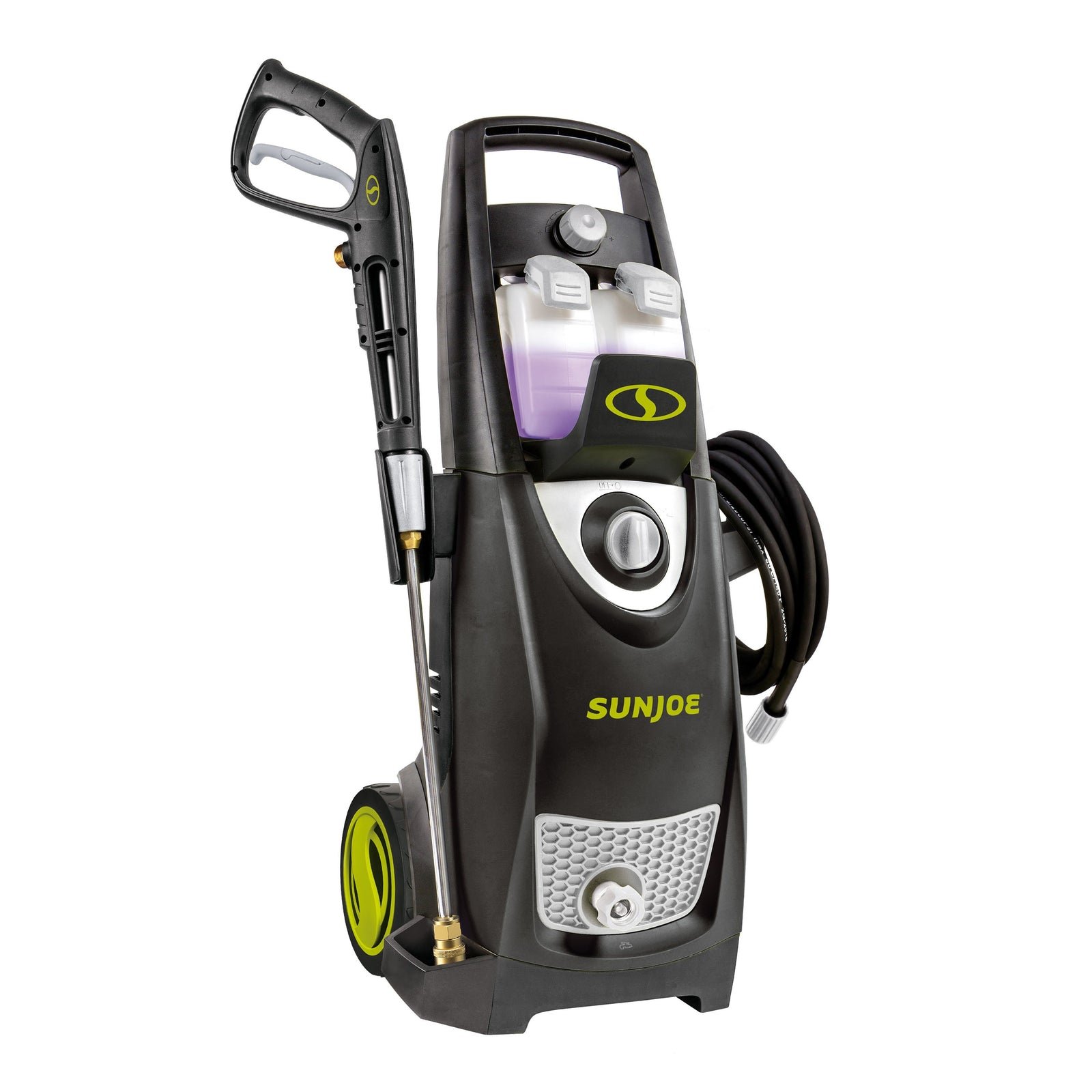
Two machines sit next to each other. One says 2,300 PSI, the other says 2,030 PSI, and the cheaper one is the better car washer. That is not a trick — it is the difference between a maximum and a certified rated figure, and once you can read the two apart the whole aisle makes sense.
There are only three numbers: PSI, which is force; GPM, which is water; and cleaning units, which is the two multiplied. Everything else on the carton is packaging. For washing a car, the one to prioritize is the middle one, because rinsing and foam cannons are both flow jobs.
Every figure below is quoted from a manufacturer's own product page — Westinghouse, Sun Joe, Kärcher, Greenworks, AR Blue Clean and Chemical Guys — and the pages are linked at the bottom. Where a brand publishes a maximum only, the text says so rather than filling the gap.
Questions people ask
Is 2,000 PSI enough to wash a car?
Comfortably. Road film and salt release between about 1,200 and 1,900 PSI with a 25 or 40 degree tip held a foot away. Kärcher sells the K1700 with a 1,700 PSI maximum specifically for cars and household cleaning.
What are cleaning units and are they useful?
PSI multiplied by GPM. They are useful for comparing machines that trade pressure against flow — the five washers in our guide land between roughly 2,040 and 2,800 cleaning units despite cartons that look far apart.
Why do two figures appear for the same washer?
One is a maximum measured at a moment, the other is rated or certified under load. Westinghouse publishes 2,300 PSI maximum and 1,900 PSI rated for the ePX3100, and notes that the 1.76 GPM maximum happens at the lowest pressure.
Do I need 2.0 GPM for a foam cannon?
No, but more helps. Chemical Guys asks a minimum of 1.4 GPM and recommends 2.0; Adam's asks 1.3; Greenworks rates its own cannon at 1.1. Check the cannon's minimum against your washer's rated flow, not its maximum.
Can I use a gas pressure washer on a car?
You can, and most people should not. Gas machines typically run 2,800 to 4,200 PSI with far more flow than paint needs, and the margin for a careless moment is much smaller.
Does higher PSI clean faster?
Up to a point, and then flow takes over. Once the dirt is released, what carries it off the panel is water volume — which is why a 2,000 PSI machine at 1.4 GPM rinses a car faster than a 2,300 PSI machine at 1.2.
PSI: force, and mostly irrelevant above 2,000 on a car
PSI is pounds per square inch of water pressure at the pump. It is what breaks the bond between dirt and a surface, and it is the number every carton leads with because it is the easiest one to inflate.
A car does not need much of it. Road film, bug splatter and winter salt come off between roughly 1,200 and 1,900 PSI with a fan tip at a sensible distance. Every machine in our pressure washer guide clears that, including the gentlest one — Kärcher publishes a 1,700 PSI maximum for the K1700, and nothing on a car needs more.
What extra pressure buys you is risk. At close range a narrow tip will lift a badge, force water past a window seal, or strip paint that has already been repaired once. The pressure at the surface falls quickly with distance and with a wider fan angle, which is why the technique — 25 or 40 degree tip, a foot or more away, moving — matters more than the rating on the box.
GPM: water, and the number that does the work
GPM is gallons per minute through the pump. Flow is what carries loosened dirt off the panel and what rinses a roof in one pass instead of three. It is also the number every foam cannon maker publishes a minimum for:
- Chemical Guys Big Mouth and TORQ Professional cannons: minimum 1.4 GPM, 2.0 recommended
- Adam's Standard Foam Cannon: 1.3 to 5.3 GPM, and 870 to 3,190 PSI
- Greenworks Premium Foam Cannon: rated at 1.1 GPM, up to 3,100 PSI
Notice that the pressure windows are enormous and the flow windows are narrow. A cannon will work anywhere from 500 to 3,500 PSI; it will not work below its stated flow. If you plan to foam a car — and that is why most people buy a washer for a driveway — GPM is the specification that decides the purchase.
Maximum versus rated: the same machine, two honest numbers
A maximum is measured at a moment, often with the trigger just cracked or at the lowest pressure setting. A rated or certified figure is what the machine sustains while it works. Manufacturers that publish both make the gap obvious:
| Machine | Maximum | Rated / certified |
|---|---|---|
| Westinghouse ePX3100 | 2,300 PSI / 1.76 GPM | 1,900 PSI / 1.24 GPM |
| Sun Joe SPX3000 | 2,500 PSI (carton) | 2,030 PSI / 1.2 GPM certified rated |
| Kärcher K1700 | 1,700 PSI / 1.2 GPM | CETA certified figures |
| Greenworks 5118202 | 2,000 PSI / 1.2 GPM | Not published separately |
| AR Blue Clean AR390SS | 2,000 PSI / 1.4 GPM | Not published separately |
Westinghouse is unusually clear about it: the 1.76 GPM maximum is stated to occur at the lowest pressure. That is the key to the whole spec sheet. The maximum pressure and the maximum flow do not happen at the same time, so multiplying two maximums together describes a machine that does not exist.
Cleaning units: the one number that combines both
Cleaning units are simply PSI multiplied by GPM. They are a shorthand for total cleaning capability, and they are the only fair way to compare a high-pressure, low-flow machine with a low-pressure, high-flow one. Using the rated figures where they exist:
| Machine | Figures used | Cleaning units |
|---|---|---|
| Westinghouse ePX3100 | 1,900 × 1.24 (rated) | ≈ 2,356 |
| Sun Joe SPX3000 | 2,030 × 1.2 (certified) | ≈ 2,436 |
| AR Blue Clean AR390SS | 2,000 × 1.4 | ≈ 2,800 |
| Greenworks 5118202 | 2,000 × 1.2 | ≈ 2,400 |
| Kärcher K1700 | 1,700 × 1.2 (maximums) | ≈ 2,040 |
Five machines that look very different on their cartons land within about 25 percent of each other on total capability. That is not a coincidence, and the reason is the wall socket.
Why an electric washer cannot be a 4,000 PSI machine
A household circuit in North America supplies 120 volts at 15 amps, which is 1,800 watts before anything else on the circuit is counted. The washers above draw 13 to 14 amps, so roughly 1,560 to 1,680 watts.
The water power a pump produces is PSI × GPM ÷ 1,714, in horsepower. Run the Sun Joe's certified figures through it: 2,030 × 1.2 ÷ 1,714 is about 1.42 hp, or a little over a kilowatt of water power. From 1,560 watts of electricity, that implies a pump and motor package working at roughly two-thirds efficiency, which is about right for a consumer axial pump.
Now try the number on a marketplace carton claiming 4,000 PSI at 2.0 GPM: 8,000 cleaning units is 4.67 hp of water power, or about 3,480 watts before losses — more than twice what the plug can deliver. The machine cannot do it. The figure is either a momentary spike into a closed trigger, or fiction.
This is the single most useful piece of arithmetic in the aisle. Multiply the two headline numbers, divide by 1,714, and if the answer is much above 1.5 hp on a machine with a standard plug, the specification is not describing sustained performance.
What certification means here
Sun Joe describes the SPX3000's figures as certified rated, and its retail description names the Pressure Washer Manufacturers' Association rating. Kärcher describes the K1700 as CETA certified. Both mean the numbers were produced by a defined test rather than by whoever wrote the carton. When we checked the PWMA's own website while writing this guide on September 12, 2026, it did not load over a valid secure connection, so every figure here is quoted from the manufacturers' pages instead.
The practical rule: a certified 2,030 PSI is a stronger claim than an uncertified 3,000, and a brand that publishes rated flow alongside maximum flow is telling you something the others are not.
What to actually buy for a car
- Rated flow of 1.2 GPM or more. That clears the Greenworks cannon at 1.1 GPM and sits just under the Chemical Guys minimum of 1.4 — match the cannon to the machine before you buy either.
- Rated pressure between about 1,500 and 2,000 PSI. Enough for winter film, not enough to do damage with a careless second of a narrow tip.
- A 25 or 40 degree tip for paint, and never the 0 degree one. Every machine here ships both.
- An inlet temperature you respect. Kärcher publishes a 104°F maximum for the K1700; warm water belongs in the foam cannon bottle, not the inlet hose.
- Enough hose that the machine stays put. 25 feet gets around a sedan; 20 feet means moving it once.
Read the carton in that order — flow, rated pressure, tip set, hose — and the PSI number on the front stops mattering almost entirely.
Sources
- Westinghouse — ePX3100 Electric Pressure Washer (rated and maximum figures)
- Sun Joe — SPX3000 Electric Pressure Washer (certified rated figures)
- Kärcher — K1700 Electric Pressure Washer (CETA certification, inlet temperature)
- Greenworks — 2000 PSI 1.2 GPM Electric Pressure Washer
- AR Blue Clean — AR390SS (2,000 PSI at 1.4 GPM)
- Chemical Guys — Big Mouth Max Release Foam Cannon (flow minimums)