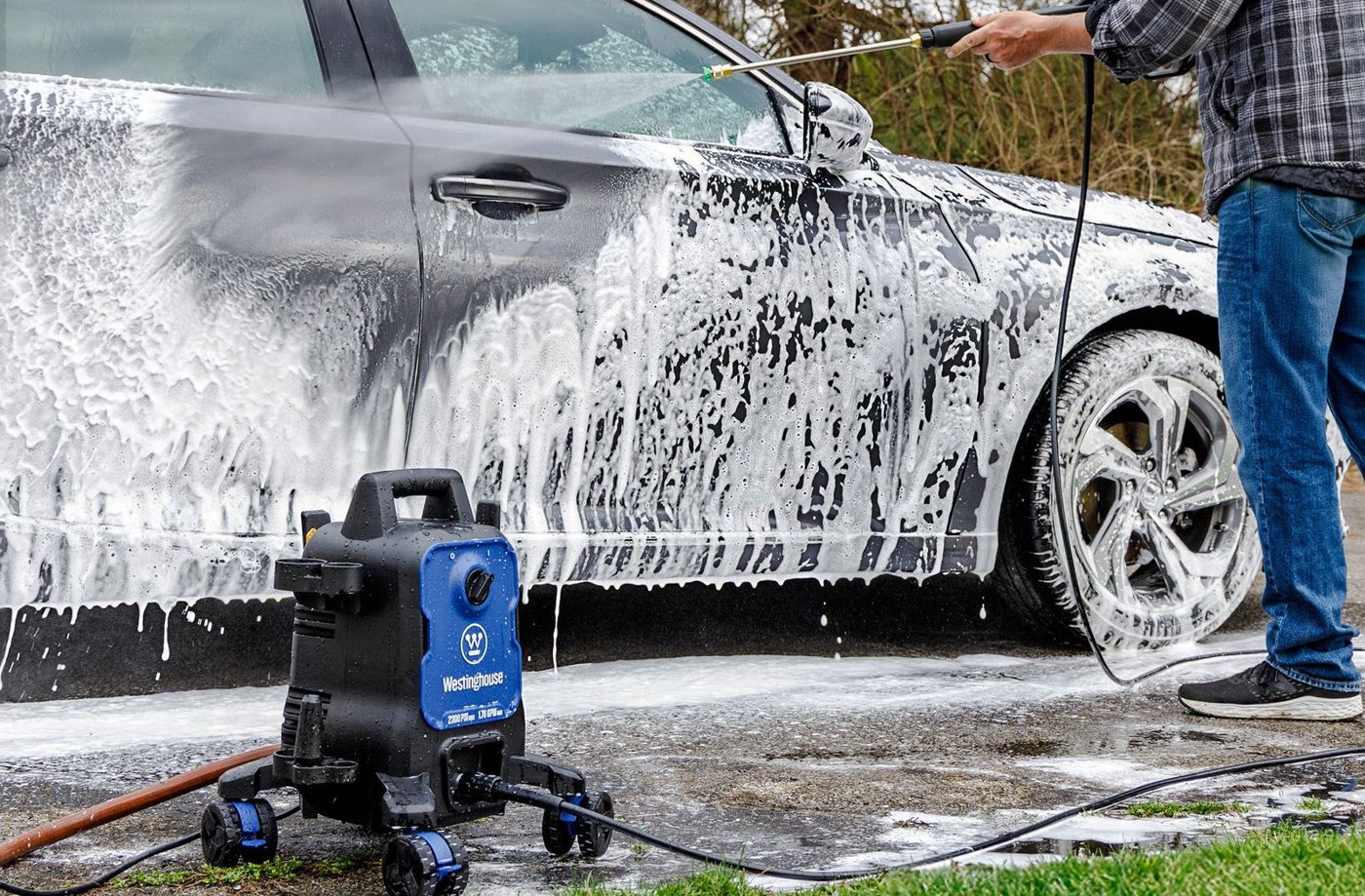
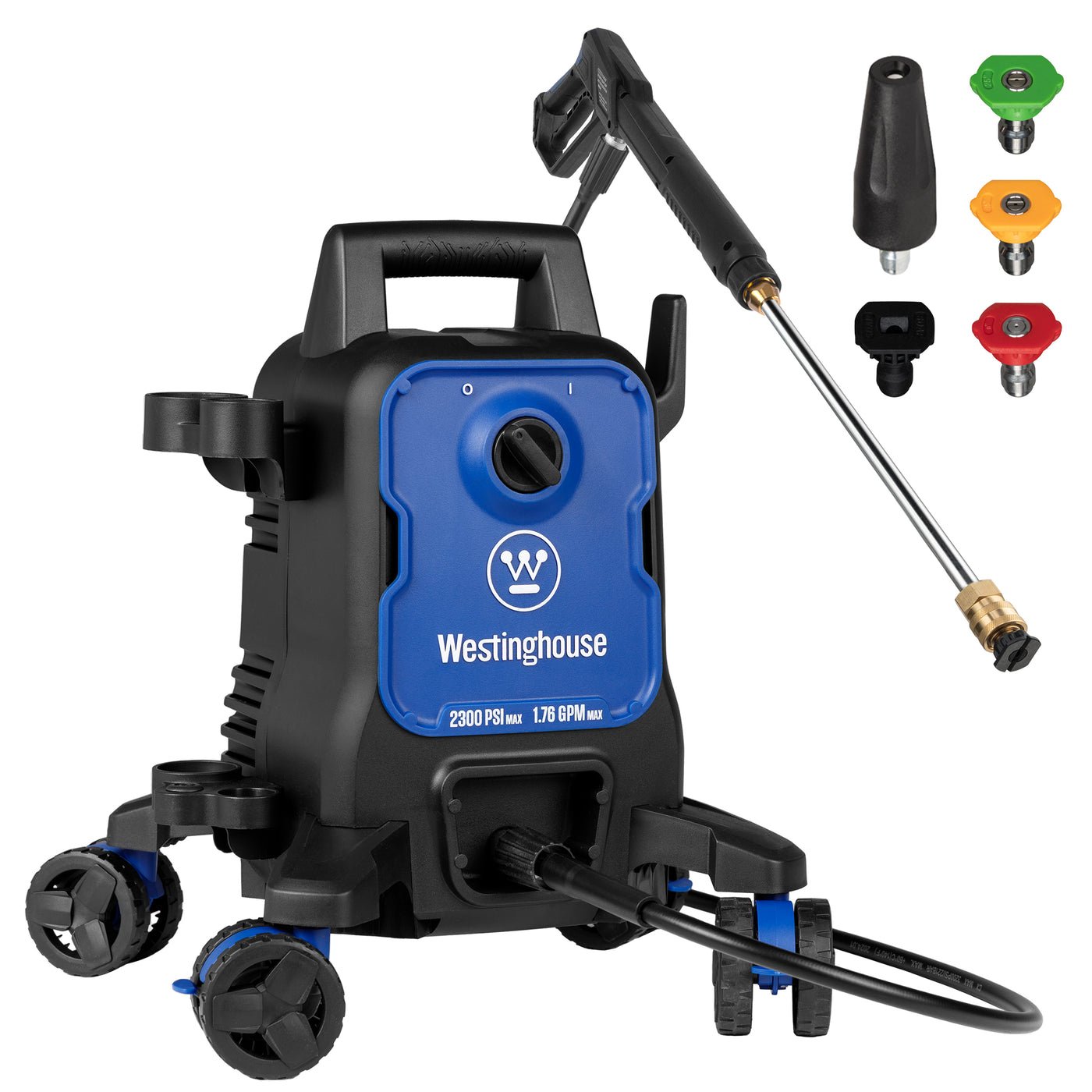
Buy the Westinghouse ePX3100 ($). Westinghouse publishes both numbers that matter — 1,900 rated PSI and 1.24 rated GPM, with 2,300 PSI and 1.76 GPM as the maximums — and at 19 pounds and 16.5 inches tall it is the machine most likely to still be used in year three rather than shoved behind the bikes.
For a car, flow does more work than pressure. Rinsing a roof and running a foam cannon are both flow jobs, and almost every cannon maker publishes a minimum in GPM rather than PSI. Past about 2,000 PSI you are adding risk to trim, badges and old clear coat without cleaning the car any faster.
The trap in this aisle is the number on the carton. "Max PSI" is measured at a moment, not during work; the figure to compare is the rated or certified one — 2,030 PSI certified rated on the Sun Joe SPX3000, 1,900 rated PSI on the Westinghouse. Every specification below is the manufacturer's own, and the sources are linked at the bottom.
How to shop for an electric pressure washer
Rated PSI, not maximum PSI
Maximum is a peak; rated is what the machine holds while it works. Sun Joe publishes 2,030 PSI certified rated against 2,500 maximum, and Westinghouse publishes 1,900 rated against 2,300. Compare like with like.
Rated GPM
Flow rinses, and flow is what a foam cannon needs — most ask 1.1 to 1.4 GPM minimum. The washers here run 1.2 to 1.4 GPM rated, which is the band a driveway wash lives in.
Weight and height, because storage decides use
The Westinghouse is 19 lb and 16.5 inches tall; the Kärcher K1700 is 20.7 lb. A washer you can carry out with one hand gets used on a Saturday morning; a 40-pound trolley does not.
Hose length before you have to move the machine
AR Blue Clean ships 30 feet on a reel, Westinghouse 25 feet, Sun Joe and Kärcher 20. A sedan on a driveway needs about 25 feet to get all the way round without dragging the unit twice.
How the soap gets applied
Onboard tanks are convenient and weak; a foam cannon on the wand is the real answer. Sun Joe carries two 0.9 L tanks, Kärcher half a gallon, Westinghouse 20 oz — useful for a pre-soak, not a substitute for a cannon.
Total Stop System on the trigger
TSS shuts the pump down when the trigger is released instead of letting it cycle against a closed valve. Sun Joe and AR Blue Clean both name it; it is the single feature that most affects how long a cheap pump survives.
Best overall
Image: Westinghouse
Westinghouse ePX3100 Electric Pressure Washer
19 lb, and both numbers published
Rated pressure
1,900 PSI (2,300 max)
Rated flow
1.24 GPM (1.76 max)
Hose
25 ft easy-coil
Weight
19 lb
Height
16.5 in
Detergent tank
20 oz
Model
ePX3100
Reasons to buy
Publishes rated figures as well as maximums — 1,900 PSI and 1.24 GPM rated — which is the honest way to read any washer and is rarer than it should be
19 pounds and 16.5 inches tall, so it lives on a shelf rather than in the way, and comes out for a quick wheel rinse
Four-wheel steering with anti-tipping, which matters more than it sounds when you tug 25 feet of hose around a car
Pro-style gun with five quick-connect tips, including the 25 and 40 degree fans that are the only two a car should see
Three-year limited residential warranty from a brand that publishes its manual as a PDF, and it is the least money of the five machines here
Reasons to avoid
The 1.76 GPM maximum is measured at the lowest pressure, so do not expect cannon-friendly flow at full pressure
A 20 oz detergent tank is a pre-soak, not a wash — budget for a foam cannon on top
This is the washer that fits how a car actually gets cleaned at home. Enough pressure to strip a winter's road film at 1,900 rated PSI, enough flow to rinse a roof without walking the hose back and forth, and light enough that the whole operation is a ten-minute setup.
It is also the one machine here that tells you the truth twice. Publishing rated pressure and rated flow alongside the marketing maximums is a small thing, but it is the difference between planning a foam cannon purchase and discovering after the fact that your washer cannot run one.
Not the right fit if you want the gentlest possible machine near old clear coat — the Kärcher K1700 tops out at 1,700 PSI.
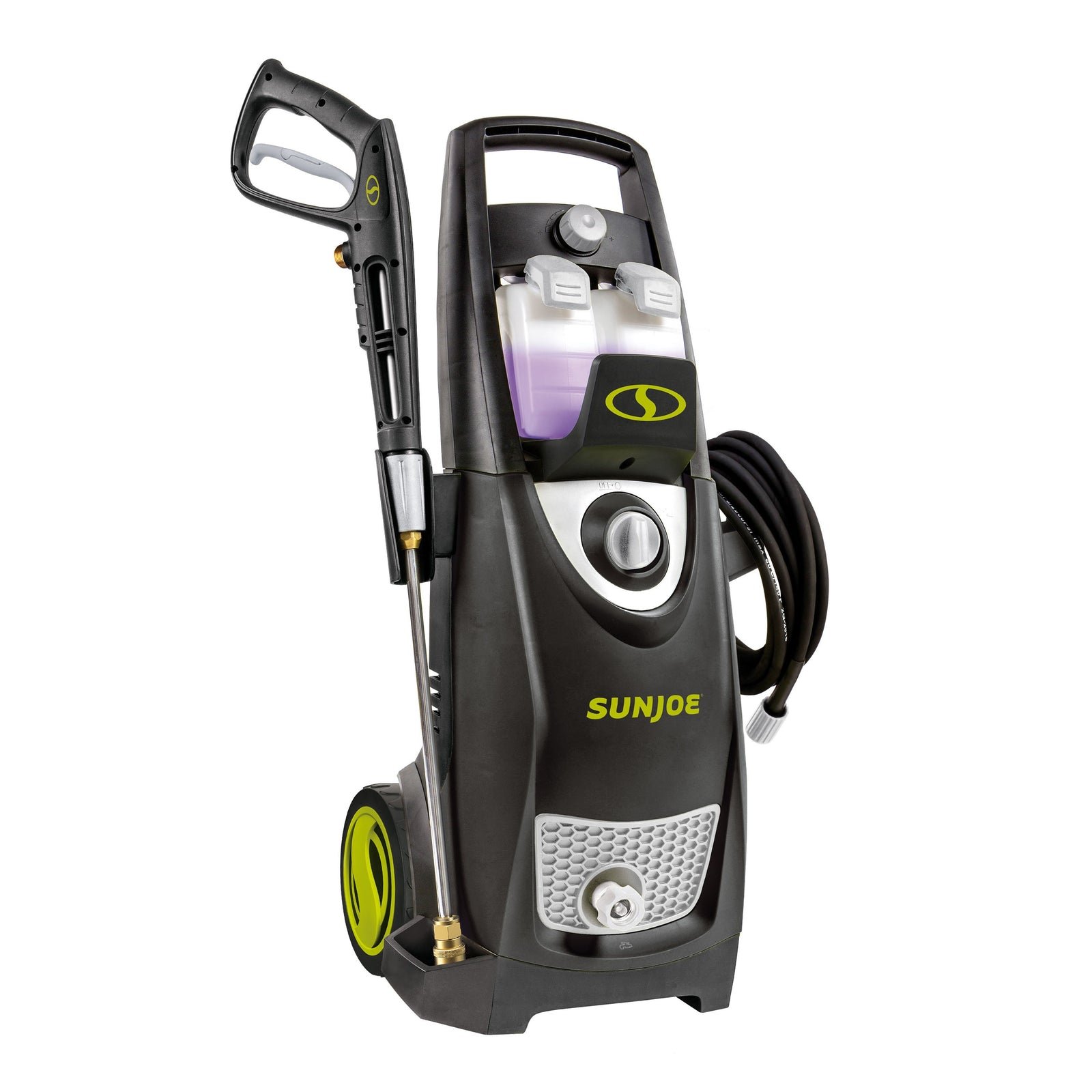
2,030 PSI and 1.2 GPM certified rated, which is a properly measured figure rather than a peak
Two removable 0.9 L detergent tanks, so wheel cleaner and shampoo can both live on the machine
A 35-foot power cord, five nozzles and a 34-inch extension wand in the box, which is more kit than anything else here ships with
Total Stop System cuts the pump when the trigger is released, the feature that keeps cheap pumps alive
Reasons to avoid
The 20-foot hose is the shortest here, so the machine gets dragged at least once per car
Nothing about it is light or quiet, and the plastic frame feels its price
The SPX3000 is the default first pressure washer for a reason. The certified figures put it right in the middle of the useful band for car work, and it arrives with the tanks, nozzles and extension wand that the other machines here make you buy or do without.
What it is not, today, is the cheap one. It sits above the Westinghouse on price while weighing more and shipping five feet less hose, so the case for it is the kit in the box rather than the money.
Not the right fit if you want the machine to be easy to carry out and put away — the Westinghouse is 19 lb and costs less.
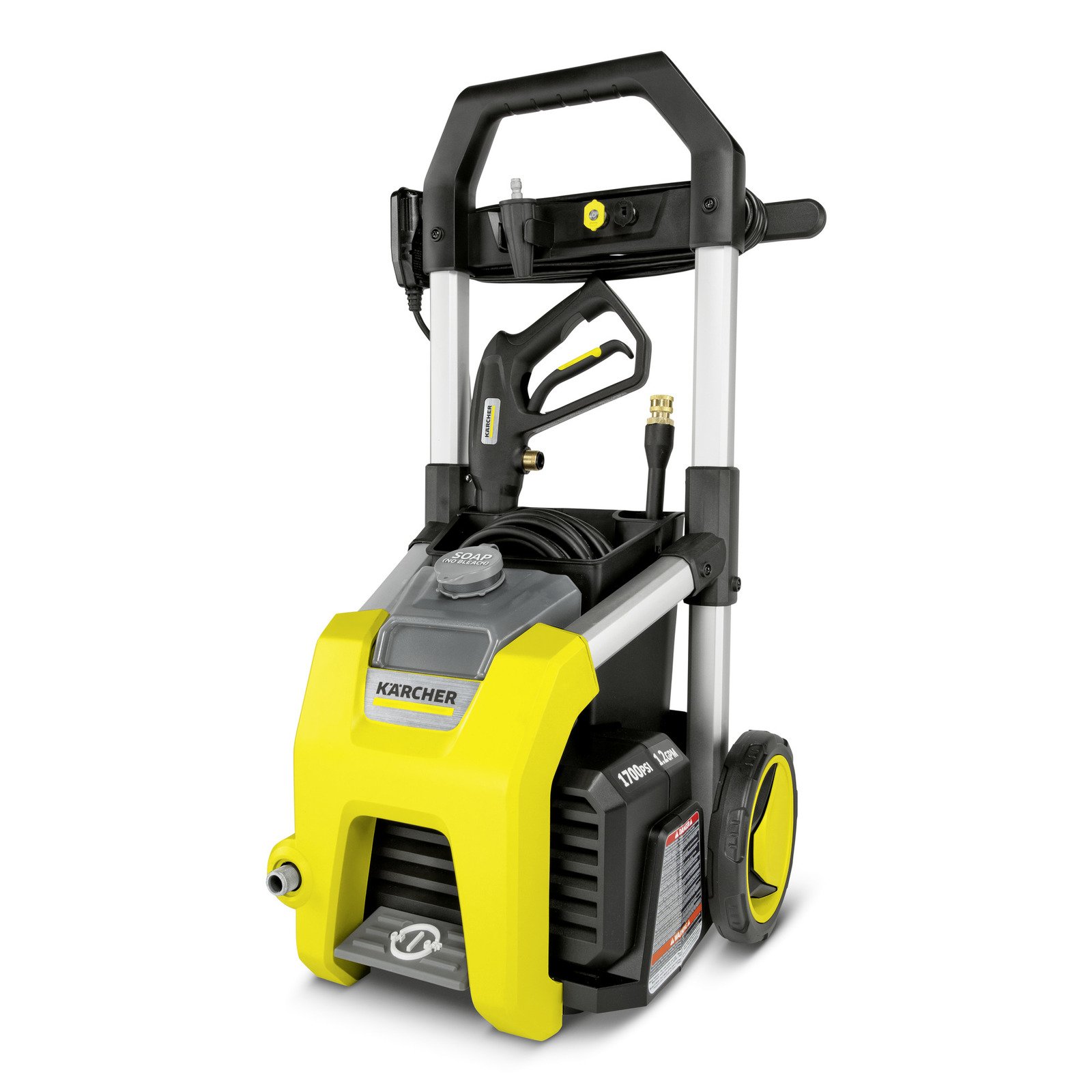
A 1,700 PSI ceiling means there is no setting on the machine that will lift a badge or force water past a door seal
CETA certified, so the pressure and flow figures were measured to a published standard rather than asserted
Half-gallon removable detergent tank, the largest onboard soap capacity here
Metal hose connections and a three-year limited warranty, which is not what the price suggests
Reasons to avoid
1.2 GPM maximum leaves no headroom for a foam cannon that asks 1.4 GPM minimum
20-foot hose, and at 20.7 lb it is the heaviest of the light machines
It costs more than the Westinghouse while producing 200 PSI less and publishing only a certified maximum, so the gentleness is the whole argument
If the car is the only thing this washer will ever clean, a 1,700 PSI ceiling is a feature rather than a limit. Nothing on a car needs more, and the machines that offer more mostly tempt you into using it on the wrong part.
The compromise is flow. At 1.2 GPM maximum the K1700 sits at the bottom of what foam cannons want, so pair it with the Greenworks cannon rated at 1.1 GPM rather than a unit that asks for 1.4.
Not the right fit if you also want to clean a driveway or fence — pick the SPX3000 for more working pressure.
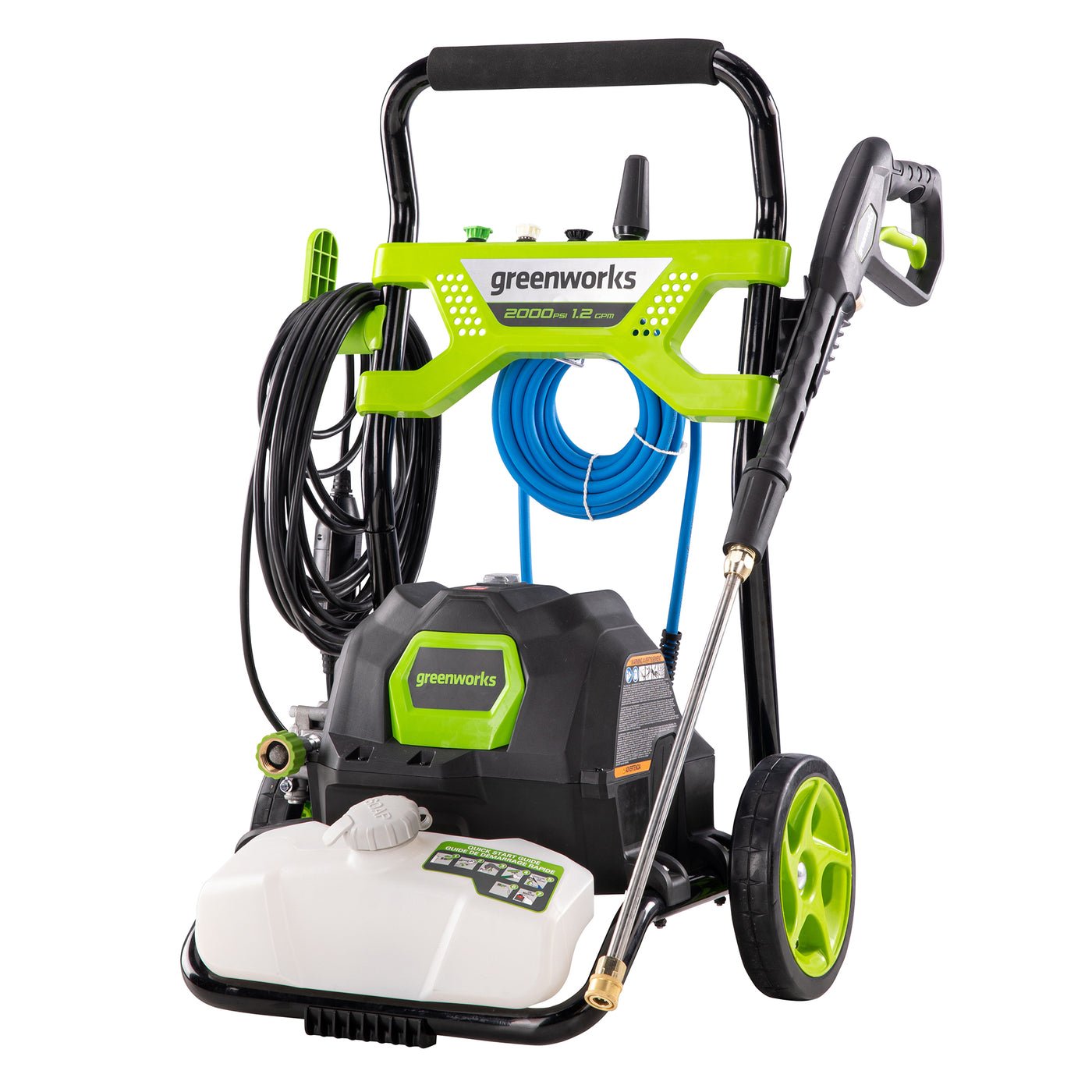
2,000 PSI at 1.2 GPM from a 14-amp motor, which is the same working band as the Sun Joe
Three-year limited tool warranty, matching the Kärcher and Westinghouse cover
Greenworks sells a matching foam cannon rated at 1.1 GPM, so the pairing is settled before you buy
Nozzle set covers the fan angles a car needs without a separate purchase
Reasons to avoid
Greenworks publishes pressure and flow but no rated-versus-maximum breakdown, so the figures cannot be compared like for like with Westinghouse or Sun Joe
No published hose length or weight on the product page, which makes it hard to judge how it will handle
It is the most expensive machine here that you can buy on Amazon today, and it publishes the least — that combination is hard to defend
The reason to buy this one is the pairing. Greenworks sells a foam cannon rated at 1.1 GPM, this washer publishes 1.2, and that is the only place on the page where the machine and the cannon were specified against each other by the same company.
What stops it being the pick is price against disclosure. It costs more than the Westinghouse and the Sun Joe while publishing two numbers to their six, and a buyer paying the most should be told the most.
Not the right fit if you want published rated figures to compare — the Westinghouse and Sun Joe both print them.
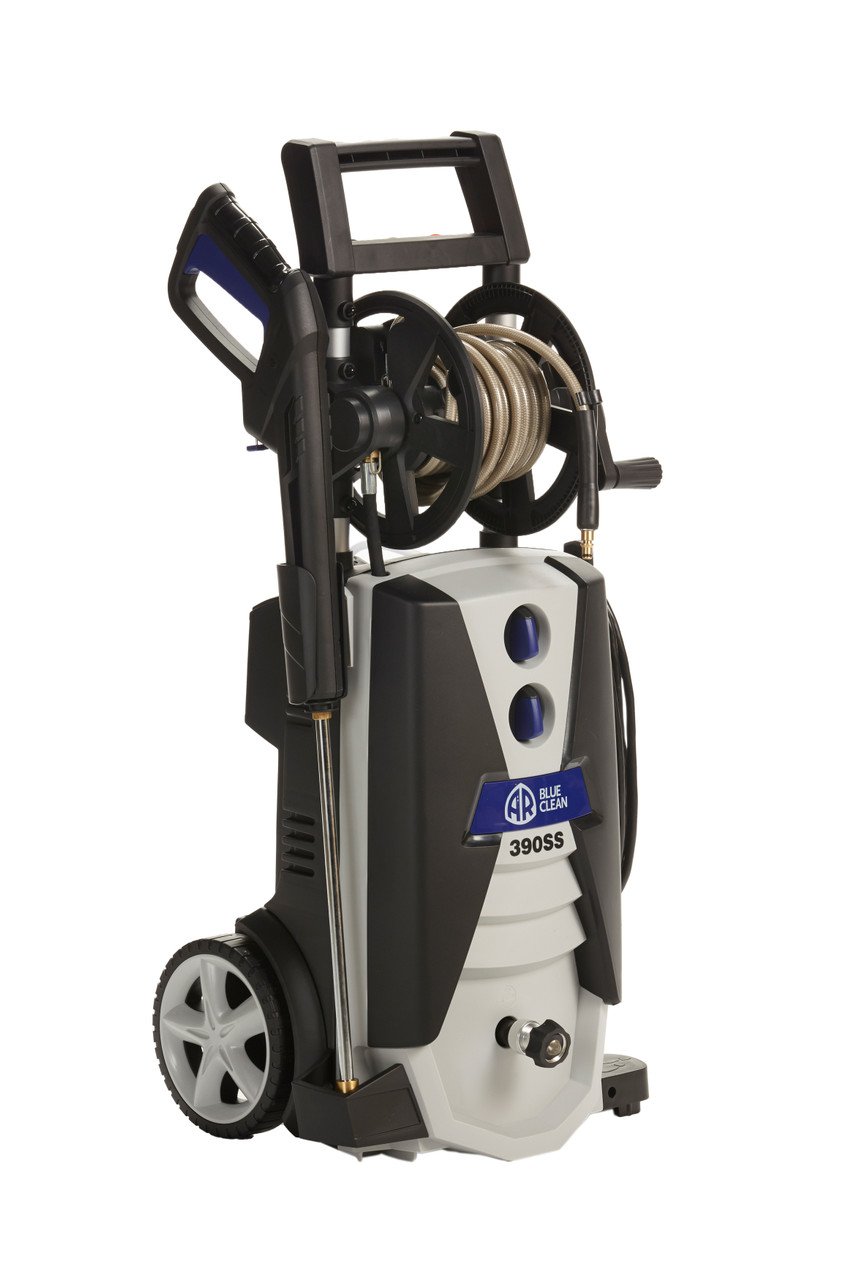
1.4 GPM, the highest flow in this guide, which is exactly the minimum Chemical Guys asks for on its foam cannons
30 feet of hose on a functioning reel, so the machine stays parked while you walk around the car
Tri-axial pump rather than the wobble-plate design in most budget machines
Aluminum swivel garden hose adapter, a small part that stops the inlet hose kinking as you move
Reasons to avoid
AR does not publish rated-versus-maximum figures, so the 2,000 PSI and 1.4 GPM are headline numbers
We could not verify a current retail link for this model beyond the manufacturer's own store, so it is the one pick here without a second seller
At the manufacturer's own asking price it is the dearest machine in this guide, and the reel is most of what the extra money buys
The reel is the reason to buy it. Thirty feet of hose that coils back onto the machine turns a two-trip job into a one-trip job, and the 1.4 GPM flow is the only one here that comfortably clears the minimum a mainstream foam cannon publishes.
It is the least transparent product in this guide on paper, which is why it is not the winner. If your priority is running a big cannon and never dragging the machine, that trade is defensible.
Not the right fit if you want the lightest machine on the shelf — this one is built around its reel, not around being carried.
Nothing here has been run against a car by us. Every figure above is quoted from the manufacturer's own product page or manual, and those pages are linked in Sources at the bottom.
Rated figures were preferred to maximums wherever a brand published both, because the rated number is the one measured under load. Where only a maximum exists, the table says so.
Candidates had to publish a flow figure. A washer that advertises pressure alone cannot be matched to a foam cannon, and that is the one accessory almost every buyer adds.
The comparison job was one mid-size sedan on a driveway: rinse, foam, contact wash, rinse, with a 25-foot working radius from a single outdoor outlet and a garden hose.
Machines above roughly 2,300 PSI were treated as the wrong tool rather than a better one. Extra pressure at a car cleans nothing faster and moves the risk to trim, emblems and any clear coat that has already been repainted once.
Certified ratings come from an industry test standard rather than the marketing department, which is why Sun Joe's certified 2,030 PSI and Kärcher's CETA-certified figures are worth more than an uncertified 3,000 on a carton.
The verdict
Best overall: the Westinghouse ePX3100, because 1,900 rated PSI and 1.24 rated GPM in a 19-pound machine is the right shape for washing a car at home, because it publishes both figures, and because it is also the least money on this page.
Most kit in the box: the Sun Joe SPX3000 at 2,030 PSI certified rated with two soap tanks, five nozzles and an extension wand. Gentlest: the Kärcher K1700. Most flow for a cannon: the AR Blue Clean AR390SS at 1.4 GPM.
Working out which machine suits the cannon you want? PSI vs GPM vs cleaning units explains what the numbers on the carton are measuring.
Between about 1,200 and 1,900 PSI at the nozzle is plenty, which every machine here can produce. Use the 25 or 40 degree tip, keep the nozzle a foot or more from the paint, and never use the 0 degree tip on a vehicle.
Is GPM or PSI more important for car washing?
GPM. Rinsing and foaming are both flow work — foam cannons publish minimums of 1.1 to 1.4 GPM and no minimum PSI that any of these machines fail. The washers here run 1.2 to 1.4 GPM rated.
What does certified rated PSI mean?
It means the figure was measured to a published industry test rather than taken at a peak. Sun Joe lists 2,030 PSI certified rated against a 2,500 maximum, and Westinghouse lists 1,900 rated against 2,300 maximum — roughly a 20 percent difference between the two ways of quoting the same machine.
Can I run hot water through an electric pressure washer?
Not unless the maker says so. Kärcher states a maximum inlet temperature of 104°F for the K1700, and that is typical for cold-water electrics. Warm water belongs in the foam cannon bottle, not in the inlet hose.
Will a pressure washer strip wax or damage paint?
At car-wash distances and with a fan tip, no. Damage comes from a 0 degree tip, from holding the nozzle inches from a badge or a rubber seal, or from blasting an existing chip. Ceramic sprays and waxes survive normal washing; they do not survive a pinpoint jet at close range.
Also considered
Gas pressure washers — Typically 2,800 to 4,200 PSI and far more flow than a car needs, with an engine to maintain. The right tool for a driveway and the wrong one for paint.
Marketplace washers advertising 4,000 PSI — No certified rating, no published flow under load, and a pressure figure a 15-amp household outlet cannot support. The number is the product.
Ryobi 2300 PSI brushless electric — The maker's own product page lists it as discontinued and publishes no flow rate, so there is no figure to match a foam cannon against.
Battery-powered portable washers — Useful for a bike or a muddy dog, not for a car — they run well under 800 PSI, carry their water with them, and stop when the pack does.
Washers sold only as a bundle with a surface cleaner — The surface cleaner is a driveway accessory that will never touch the car, and the bundle usually costs more than the machine and a foam cannon together.