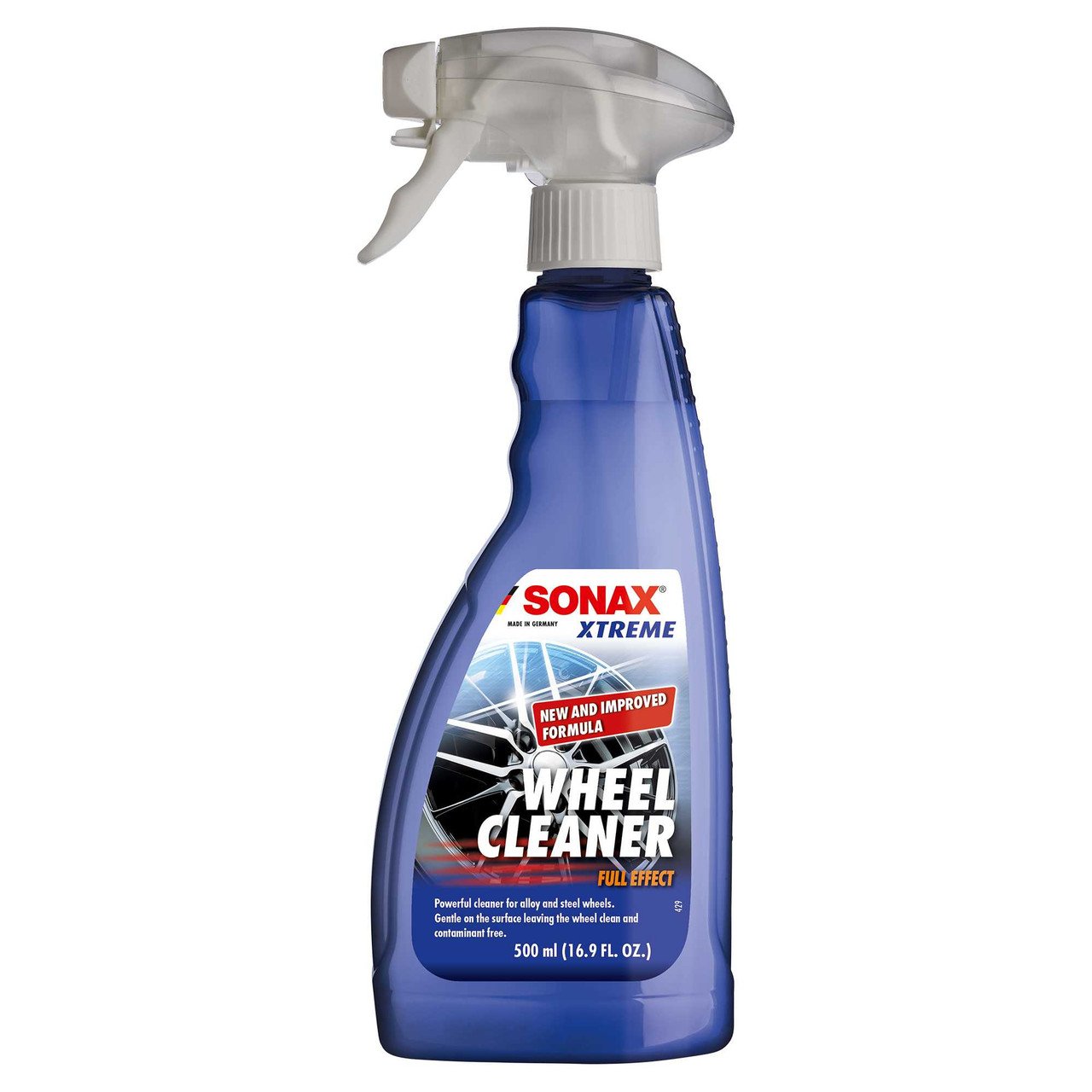
Buy Sonax Wheel Cleaner Full Effect ($$). It is acid-free and pH neutral, it is rated for painted, alloy, anodized, clear-coated, chrome, aluminum and stainless wheels, and Sonax tells you to let it dwell up to 10 minutes and watch it turn from yellow-green to deep red as it reacts with the brake dust.
Brake dust is iron, and iron is why wheels look dirty a day after a wash. A dedicated wheel cleaner dissolves it chemically instead of asking you to scrub it off — which matters because scrubbing embedded iron across a clear-coated wheel is how wheels get dull in the first place.
The chemistry is the whole purchase. Acid-based cleaners work fast and destroy anything that is not bare chrome; pH-neutral iron removers take ten minutes and are safe on everything. Every product below publishes what it is rated for, and the two that carry finish warnings say so in their own words — sources at the bottom.
How to shop for a wheel cleaner
Acid-free or not
Sonax, Mothers, Turtle Wax and P&S all state non-acid or pH-neutral formulas. Acid cleaners still exist for bare chrome and they will etch clear-coated or polished wheels permanently.
The finishes the maker rates it for
Sonax lists painted, alloy, anodized, clear-coated, chrome, aluminum and stainless. Mothers restricts its foaming cleaner to factory coated wheels and warns against polished, rough-cast, billet and anodized. That is a purchase decision, not a footnote.
Dwell time before it dries
The reaction needs time — Sonax says up to 10 minutes, and adds that the product must not dry on the wheel. A cleaner that is rinsed after 30 seconds has not removed any iron.
Gel or spray
Gels cling to a vertical wheel face and keep working; sprays reach spokes and barrels but run off. Chemical Guys sells Diablo in both, and P&S Brake Buster is deliberately a gel.
Whether it also cleans tires
Mothers and Turtle Wax both sell theirs as wheel and tire products, which removes a bottle from the shelf. Dedicated wheel chemistry is stronger on iron; combined products save a step.
Corrosion inhibitors afterwards
P&S and Turtle Wax both state that they leave a corrosion-repellent layer behind. On a car that sees salt, that is a real benefit for wheels that are already pitted.
The widest published finish list here — painted, alloy, anodized, clear coat, chrome, aluminum and stainless — so it is safe on the one set of wheels you own
Acid-free and pH neutral, which is what makes that list possible
A published dwell time of up to 10 minutes, and a clear instruction not to let it dry, so you know exactly how long to leave it
The color change from yellow-green to deep red shows the iron reaction happening, which tells you whether the wheel needed a second pass
Sonax also states to re-mist if it starts to dry, the one piece of technique that separates a good result from a streaky one
Reasons to avoid
500 mL is not a large bottle for a product you spray generously on four wheels
Ten minutes of dwell per axle means a wheel-only session is a genuine twenty-minute job
This is the wheel cleaner to buy if you do not want to think about wheel finishes ever again. Acid-free chemistry with a published safe list that covers essentially every wheel sold on a modern car removes the one way this product category can cost you real money.
It is not the fastest option and it is not the cheapest per ounce. What it is, is the one that can be sprayed on a set of expensive anodized wheels without a worried search first.
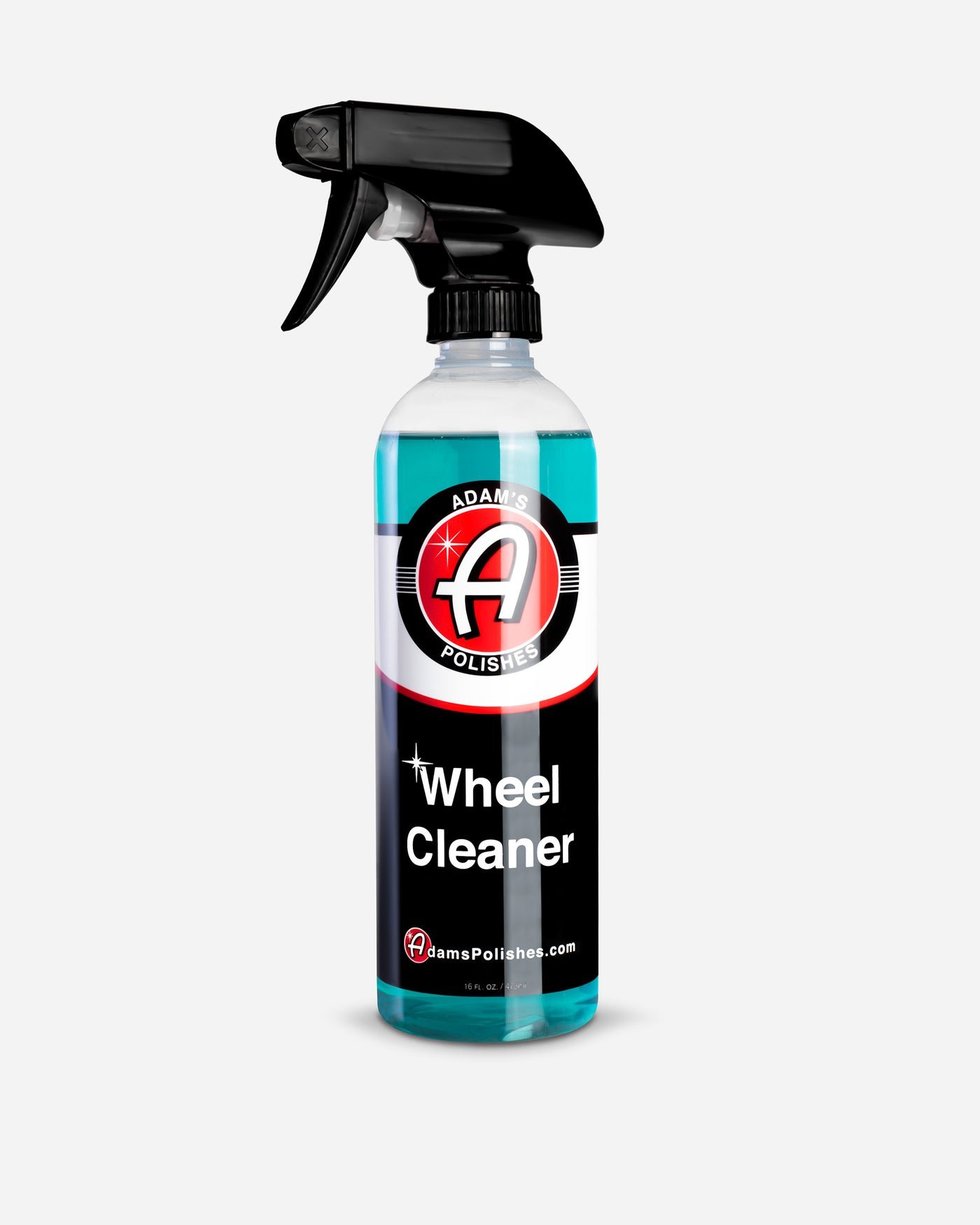
Adam's says the reformulated version activates faster, smells less and clings harder — the three complaints people had about iron removers
Thicker than a water-thin spray, so it stays on the face of the wheel instead of running into the barrel
Stated as safe on factory clear-coated, powder-coated and painted wheels and on high-performance brakes
Sold in gallons as well as 16 oz, which is how this product gets cheap if you use it every other week
Reasons to avoid
The rated finish list is narrower than the Sonax one — polished and anodized wheels are not named
Iron removers all smell, and "lower odor" is a relative claim
Adam's publishes no dwell time for it, so the only signal that the reaction has finished is the color, not a clock
On a car with aggressive European brake pads, this is the bottle that turns a scrubbing job into a rinsing job. The higher viscosity is the point: on a vertical wheel face, dwell time only exists if the product stays where you sprayed it.
Check your wheels against the rated list before buying. For the factory clear-coated wheels on nearly every modern car it is exactly right, and for a set of polished aftermarket rims the Sonax is the safer purchase.
Not the right fit if your wheels are polished or anodized aftermarket — use the Sonax, which names those finishes.
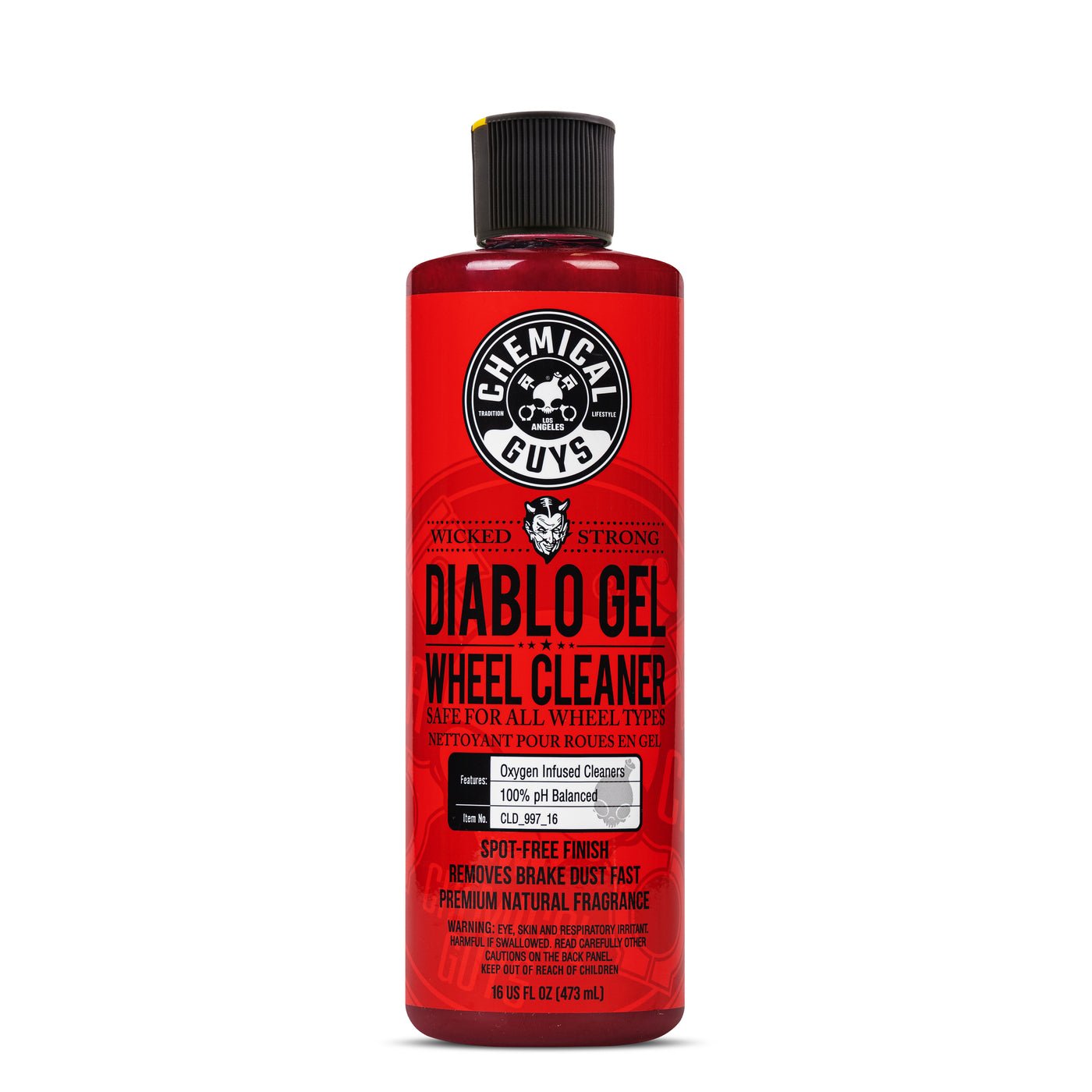
Sold as a gel concentrate and as a ready-to-use spray, so you pick cling or coverage rather than compromising
pH-balanced and non-caustic by the maker's own description, which is the claim that matters on a clear-coated wheel
The gel is a concentrate, so a 16 oz bottle makes considerably more than 16 oz of cleaner
Reasons to avoid
Chemical Guys publishes no dwell time and no explicit finish list, which both Sonax and Mothers do
Two versions with near-identical names is an easy thing to order wrongly
Diablo is the sensible first bottle if you have never used a dedicated wheel cleaner. The gel concentrate in particular is a lot of working product for the money, and the non-caustic chemistry means an accidental overspray onto paint is a rinse rather than a repair.
What it lacks is documentation. A dwell time and a rated finish list are exactly what a nervous first-time buyer needs, and here you get a description instead.
Not the right fit if you need a published safe-finish list — that is the Sonax.
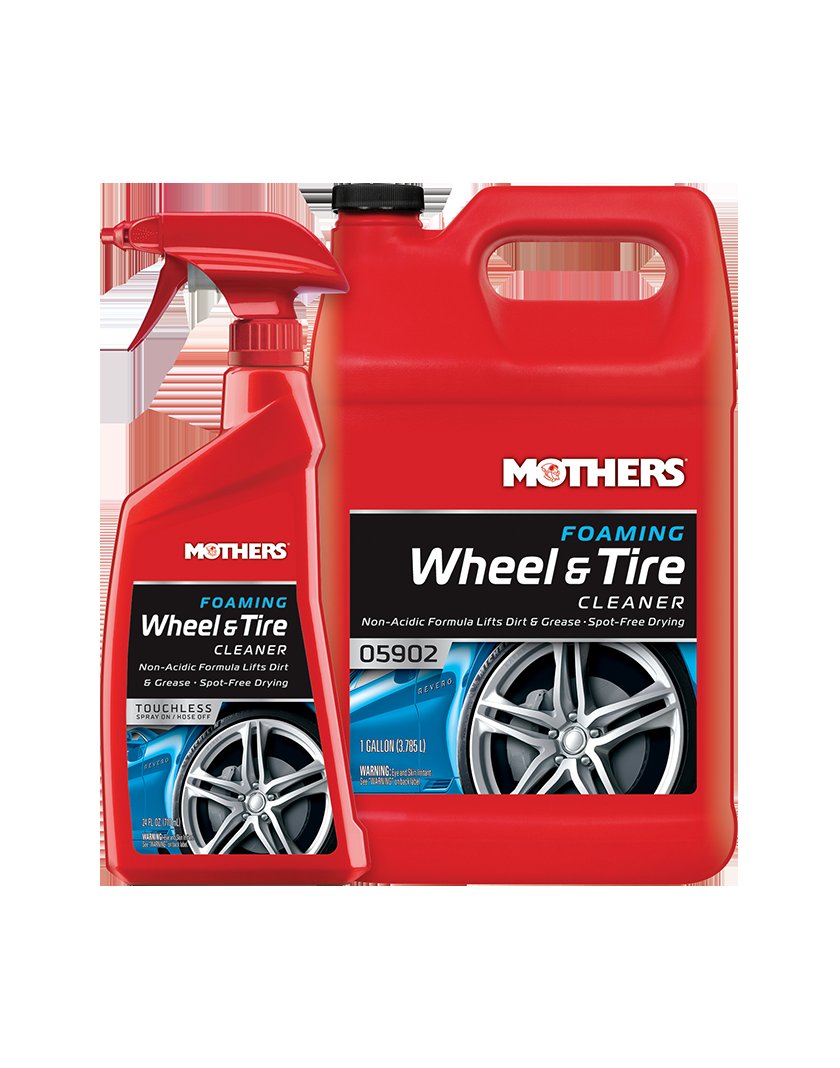
Cleans the tire and the wheel in one pass, which removes a whole bottle and a whole step from a driveway wash
Non-acidic and designed to be sprayed on and hosed off, with a spot-free rinse so nothing needs hand drying
Mothers publishes exactly which wheels it is for and which to avoid, which is more honest than most warnings in this aisle
Available in gallons, and it is the cheapest per ounce in this guide at that size
Reasons to avoid
The finish restrictions are real — polished, rough-cast, billet and anodized wheels are explicitly excluded, as are motorcycle wheels
A combined wheel-and-tire product is not as strong on embedded iron as a dedicated iron remover
The size linked here is the gallon, so it carries the highest sticker on this page even while it is the least money per ounce — buy the 24 oz bottle first if you only have one car
For the factory alloys on a family car this is the efficient choice. Spray both wheel and tire, let it foam, agitate the tire if it is browning, rinse, and the job is done in the time the dedicated cleaners are still dwelling.
The exclusions decide it. If your wheels are anything other than factory coated, this bottle is not for you, and Mothers deserves credit for printing that rather than burying it.
Not the right fit if your wheels are polished, billet or anodized — the Sonax names those finishes as safe.
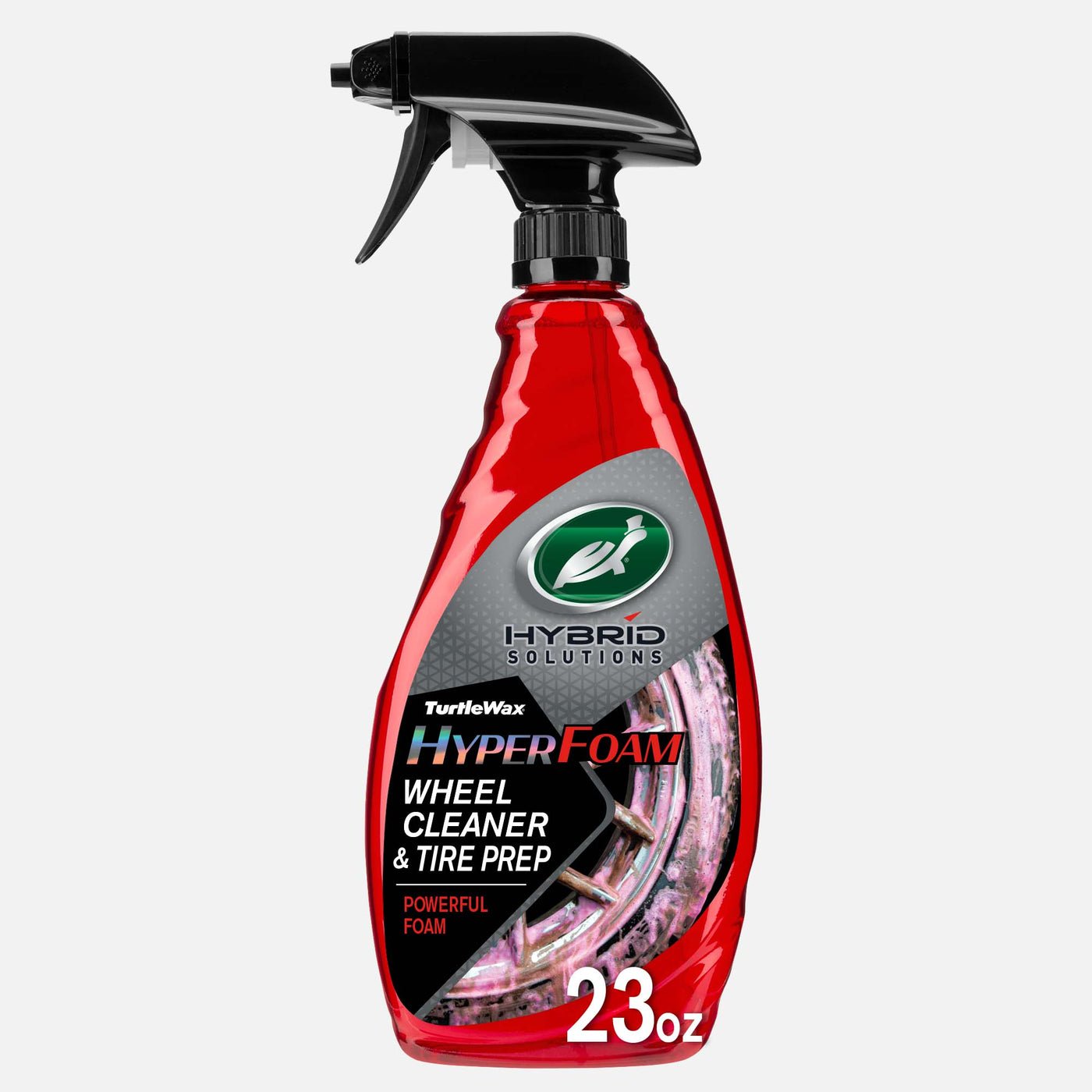
Sold as tire prep as well as wheel cleaner, which is the step people skip before applying a tire dressing that then peels
Turtle Wax states it removes tire browning, the brown bloom that makes clean tires look gray-brown a week later
Leaves corrosion-repellent polymers behind, so wheels that already have pitting are not left bare
23 fl oz of ready-to-use cleaner for the least money on this page, and it does the tires in the same pass
Reasons to avoid
Described as removing light iron deposits — for heavy embedded brake dust, a dedicated iron remover is the stronger tool
No published dwell time, so timing is by eye
If your tires get a dressing, this is the bottle that makes the dressing last. Rubber has to be genuinely clean before a coating will bond, and a product that does the wheel in the same pass is a sensible way to make that happen every wash.
It is a maintenance cleaner rather than a decontamination product. On a set of wheels that have not been cleaned in a year, start with the Sonax or the Adam's, then keep them that way with this.
Not the right fit if the wheels are heavily contaminated with baked-on brake dust — start with the Adam's iron remover.
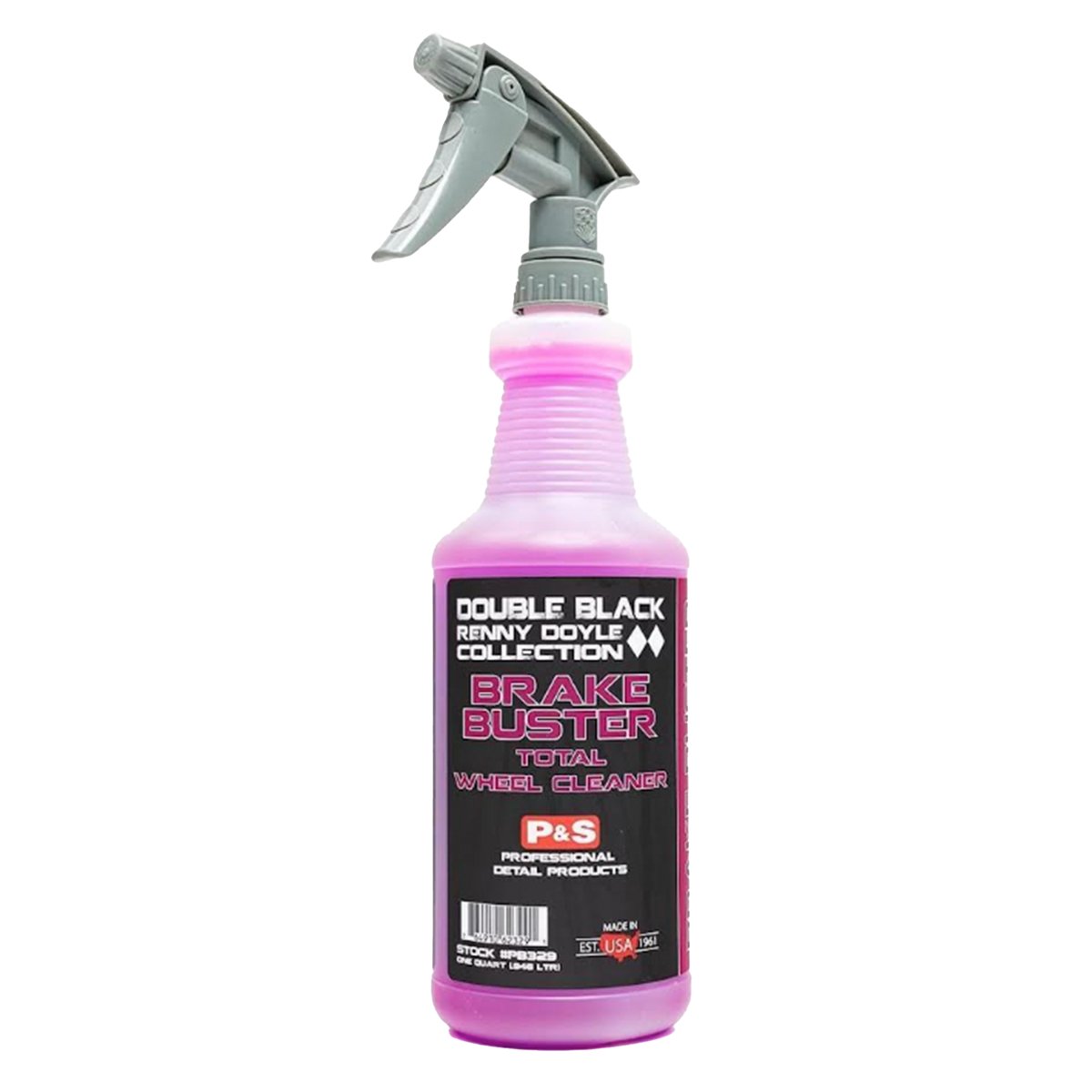
A cleaning gel that adheres to the wheel and penetrates deposits rather than running straight to the ground
Non-acid, and stated as safe on premium wheel surfaces, which is what put it in professional detail bays
Deposits a thin corrosion-inhibitor layer behind it, useful on wheels that have already started pitting
Sold in pints through gallons, so it scales from one car to a fleet
Reasons to avoid
P&S publishes no dwell time and no color-change indicator, so there is nothing to watch while it works
Sold mainly through detailing suppliers, which makes casual re-ordering harder than the supermarket brands
The pint on Amazon is offered by a third-party seller rather than P&S or Amazon itself, so check the seller before ordering
Brake Buster has been the default wheel cleaner in professional bays for years, and the reason is the gel: it stays put long enough to dissolve what is on the wheel, and it does not require an acid to do it.
For a home user it is a small step sideways from the Sonax rather than up. Buy it if you like the idea of a product designed for people cleaning twenty wheels a day, and expect no light show while it works.
Not the right fit if you want the color change to tell you when the iron is gone — that is the Sonax or Adam's.
Nothing here has been sprayed on a wheel by us. Chemistry, dwell times, sizes and rated finishes are quoted from the manufacturers' own product pages, which are linked in Sources.
A product had to publish either its chemistry — acid-free, pH neutral, non-caustic — or the finishes it is rated for. In this category those two facts are the entire safety argument, and a cleaner that publishes neither is in the rejects.
The comparison job was four factory clear-coated alloys with a season of brake dust, cleaned wheel by wheel with a soft brush, plus a set of browning tires.
Dwell time was treated as a benefit rather than a cost. The products that ask for ten minutes are the ones doing chemistry; the ones that promise instant results are usually asking you to provide the scrubbing.
Finish warnings were read as written. Mothers excludes polished, rough-cast, billet and anodized wheels from its foaming cleaner, and no amount of general safety talk overrides a manufacturer's own exclusion list.
Tire cleaning was scored separately, because a dressing applied to a tire that still has old dressing and road film on it peels within a week whatever the bottle promises.
The verdict
Best overall: Sonax Wheel Cleaner Full Effect, because pH-neutral chemistry with a published 10-minute dwell and a finish list that covers everything is the combination that cannot cost you a set of wheels.
Sonax says up to 10 minutes for Full Effect, and warns not to let it dry — if it starts to, re-mist it. That dwell is when the iron-dissolving chemistry happens, so rinsing after 30 seconds wastes most of the bottle.
Why does the cleaner turn red?
The active ingredient reacts with iron particles from brake pads and turns deep red or purple as it does. The color is a progress indicator, not a dye: heavy bleeding means there was a lot of embedded iron, and a second application is worth it.
Are these safe on all wheels?
Not all. Sonax lists painted, alloy, anodized, clear-coated, chrome, aluminum and stainless as safe. Mothers restricts its foaming cleaner to factory coated wheels and specifically excludes polished, rough-cast, billet and anodized. Read the maker's list against your wheels before you spray.
Do I need a separate tire cleaner?
Only if you dress your tires. Tire browning is old dressing and road film, and a product sold as tire prep — the Turtle Wax HyperFoam here — removes it so the next coat of dressing bonds. Otherwise a wheel-and-tire product like the Mothers covers both.
How often should wheels be cleaned?
Every wash for the surface dust, and a dedicated iron remover every second or third wash depending on your brake pads. European performance pads can visibly coat a wheel in a week; many Japanese pads take a month to do the same.
Also considered
Acid-based chrome wheel cleaners — Fast, effective and capable of permanently etching clear-coated, polished or anodized wheels, which is nearly every wheel sold in the last twenty years. Bare chrome only, and even then reluctantly.
All-purpose cleaner diluted for wheels — It removes road film and does nothing to embedded iron, which is the part that makes a clean wheel look dirty again in a week.
Griot's Garage Heavy-Duty Wheel Cleaner — A well-regarded product with almost nothing published to check — no dwell time, no pH statement and no rated finish list on its product page, which is exactly what this category needs in writing.
Tire shine used as a cleaner — Dressing over road film and old dressing is what causes browning and sling. The cleaning step is not optional; the shine step is.
Wheel cleaning kits bundled with a brush set — The brushes are usually the cheapest part of the kit and the first thing you replace. Buy the chemistry you want and a soft wheel brush separately.