As an Amazon Associate I earn from qualifying purchases. Links marked "at Amazon" are paid links.
How to cat-proof a rental without drilling
 By Chris Y. · Two cats, one-bedroom apartment; measures the inside of everything
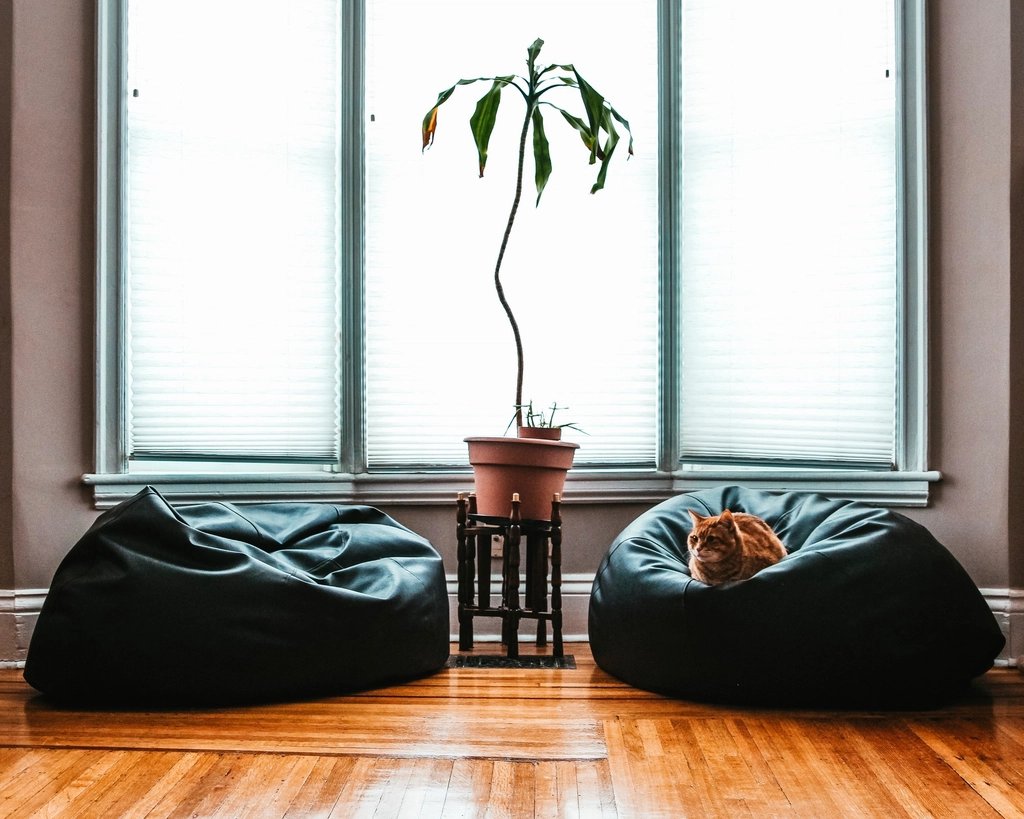
Almost every piece of advice about cats and vertical space assumes you own the wall. In a rented flat you do not, and the deposit is real money — so this page is the version that uses suction cups, tension, freestanding weight and furniture you already own, and is honest about the two problems that have no drill-free answer.
The order matters. Give a cat somewhere better to scratch before you protect the sofa, and somewhere higher to sit before you clear the shelf, because every fix on this page works by redirection rather than by denial. The ASPCA's own framing for scratching is to put a legal alternative next to the thing being scratched, not to make the thing unreachable.
What follows is six problems in the order a tenancy actually presents them, the drill-free fix for each, and a short list of the things renters buy that do not work.
Questions people ask
Will suction cups damage a window or leave marks?
They sit on the glass, not the frame or the paint, and glass is the one surface in a rented flat you can return to perfect with a cloth. The maintenance requirement is the real catch — K&H instructs monthly cleaning of the window and the cups, and the consequence of skipping it is stated plainly on their own page as the perch falling.
Can I use adhesive strips to hang a cat shelf?
No. Adhesive strips are rated for static weight on a clean dry wall, and a cat is neither static nor considerate. Every shelf worth hanging has a published load rating that was tested through screws into framing; the moment you substitute glue, the rating means nothing.
How do I stop a cat scratching the carpet by the door?
With a horizontal scratcher on that exact spot. Ohio State's guidance is that cats which scratch rugs and carpets may prefer a horizontal post or mat, and that the material should be similar to what the cat already chooses. A flat sisal or cardboard board laid over the patch is the whole fix.
Is a tension-mounted floor-to-ceiling cat tree safe in a rental?
It is the standard drill-free way to get real height, and it depends entirely on the ceiling. Textured, suspended or very high ceilings do not give a tension pole anything to work against, so check the ceiling before you check the cat tree.
What if my lease bans anything attached to the windows too?
Then the whole answer is freestanding mass — a tall tree, a capsule bed on the floor beside the sill, and furniture arranged so the cat can climb a bookcase in stages. It is less elegant and it works.
1. The wall you are not allowed to touch
Vertical space is the thing a cat misses most in a small flat, and it is the thing a tenancy agreement most reliably forbids you to install. There are exactly three drill-free routes to height, and they are worth ranking honestly.
Suction to glass. A window perch attaches to the pane rather than to the building. K&H publishes a 50 lb suction rating across its EZ Mount range and a required glass size for each model, which is the only pair of numbers in the category that lets you check a product against your actual window before you buy it. Glass is also the one surface you can restore to perfect with a cloth on the day you leave. The catch is stated on the maker's own page: clean the window and the cups monthly, or the seal fails.
Tension floor-to-ceiling. A pole braced between floor and ceiling gives real height with no fixings, and it is the only drill-free way to get a cat six feet up. It needs a flat, solid ceiling to push against, which rules out textured, suspended and very tall ceilings — check yours first, because this is the fix people buy and then cannot use.
Freestanding mass. A heavy tree, or a capsule bed placed on the floor beside the window rather than fixed above it. Less elegant, entirely reversible, and the only option that survives a move to a flat with different windows and a different ceiling.
What does not work is adhesive. Every wall shelf worth owning publishes a load rating that was tested through fixings into framing, and glue substitutes your optimism for that test.
2. The sofa, the carpet and the doorframe
Scratching is not a behavior to stop; the ASPCA lists it as stretching, marking, and shedding the old outer claw, and says even declawed cats keep the instinct. The renter's problem is not that the cat scratches, it is where.
The method that works in a flat is placement, not deterrence. Ohio State's Indoor Pet Initiative notes that cats often scratch prominent objects near sleeping areas and room entrances, which is exactly why the doorframe and the arm of the sofa get chosen. Put the alternative there — in front of the damage, not across the room — and match the direction to the crime: a vertical post for a cat working on a chair leg, a flat board or mat for a cat working on carpet.
Two specifications decide whether the alternative gets used. It must be tall enough for a full stretch, and it must not move. Ohio State says exactly that, twice, in different words: high enough to let your cat get a good stretch, and sturdy enough not to fall over during use. A post that wobbles teaches a cat that the sofa is better.
For the flat surfaces, a horizontal scratcher laid directly over the patch of carpet already being used is the closest thing to a certain fix in this whole guide. Our scratcher guide covers the ones you can leave in a living room.
3. The floor under the litter box
This is the deposit line item nobody thinks about until it is a stain. Rented flats come with laminate, vinyl, or a carpet someone else chose, and litter grit under a heavy box grinds into all three.
The drill-free fix is two layers. A waterproof, absorbent mat under and in front of the box catches both the grit and the accidents — the Drymate mats are built for this, with an absorbent top on a waterproof slip-resistant backing, and they can be trimmed with scissors to fit the awkward gap beside a pipe. On top of that, a trapping mat sized to the cat's exit path rather than to the box, because litter travels as far as the cat strides. The litter mat guide has the published sizes.
If the box lives in a cabinet, the mat goes outside the door where the cat lands, not inside where you cannot reach it.
4. The windowsill, the blind cords and the balcony
Blind cords are the one genuine hazard in this list rather than a deposit risk. Cordless blinds are a landlord conversation; in the meantime, a cord cleat or a wind-up tidy takes thirty seconds and no tools.
Screens in rented flats are frequently absent or loose, and an open window is the most common way an indoor cat becomes an outdoor cat. There is no drill-free fix that is also a safe fix here — tension-fitted screens exist, but none of them are rated for an animal pushing against them. The honest answer is to open windows on a restrictor, or to open different windows.
For the balcony, the AAFP and ISFM guidelines note that outdoor access is best given through an enclosure that protects the cat from injury and from contact with free-roaming cats. In a rental that usually means a freestanding, removable enclosure or nothing at all.
5. The cupboard doors, the bin and the houseplants
Cupboard latches, bin lids and plant choices are the cheapest part of cat-proofing and the part most people skip. Child latches are adhesive and removable, and a weighted or step-open bin is a purchase rather than an installation.
Houseplants are worth an afternoon of checking against a toxic-plant list before anything else on this page, because a lily in a rented flat is a veterinary emergency rather than a deposit problem. The ASPCA maintains the list most vets point to.
6. Somewhere to hide, because the flat is small
The one piece of cat-proofing that costs nothing and gets forgotten. The 2013 AAFP and ISFM environmental needs guidelines open with a safe place, described as a private and secure area, often in a raised location, that a cat can retreat to — and they point out that a cardboard box on its side does the job, because the cat feels safer if it cannot see a potential threat even when its body is not fully concealed.
In a rented flat with thin walls, a doorbell, and neighbours, a covered bed is not decor. It is the thing that stops a startled cat choosing under the bed permanently. Our covered bed guide lists the ones with published internal sizes, and any of them can simply be a box you already have.
The drill-free kit, in the order to buy it
- A scratching alternative placed in front of whatever is currently being scratched — vertical for furniture legs, horizontal for carpet.
- A window perch with a published suction rating, if your glass clears the published requirement.
- A waterproof mat under the litter box, sized to the exit path.
- A covered bed or a box on its side, somewhere quiet.
- A floor-standing tree, tension or freestanding, once you know which corner the cat has chosen.
- Blind cord cleats, cupboard latches, and an hour spent checking the plants.
Every item on that list leaves with you. None of them leave a hole. And if your next flat does allow fixings, the wall shelf guide starts with the maker that publishes an 85 lb tested load rating rather than an adjective.
What renters buy that does not work
Adhesive-mounted shelves. Rated for pictures. Not rated for an animal that arrives at speed.
Sticky anti-scratch tape on a sofa, with no alternative provided. Deterrence with nowhere to redirect to just moves the scratching to the next piece of furniture.
A perch on a window that is too small for it. Every K&H perch publishes the clear pane it needs — 11 inches of height for the single sill, 23 for the large perch, 31 for the double stack. Measure the glass, not the frame.
A tension pole under a suspended ceiling. Nothing to brace against, and the failure is sudden.
Sources
- ASPCA — Destructive Scratching
- ASPCA — Toxic and Non-Toxic Plants
- Ohio State University Indoor Pet Initiative — Scratching
- Ohio State University Indoor Pet Initiative — Perches
- AAFP and ISFM Feline Environmental Needs Guidelines (safe places, outdoor access)
- K&H Pet Products — EZ Mount Window Perch Bed (suction rating, glass requirement, monthly cleaning)
- Drymate — Original XL Cat Litter Mat (absorbent top, waterproof backing, trimmable)