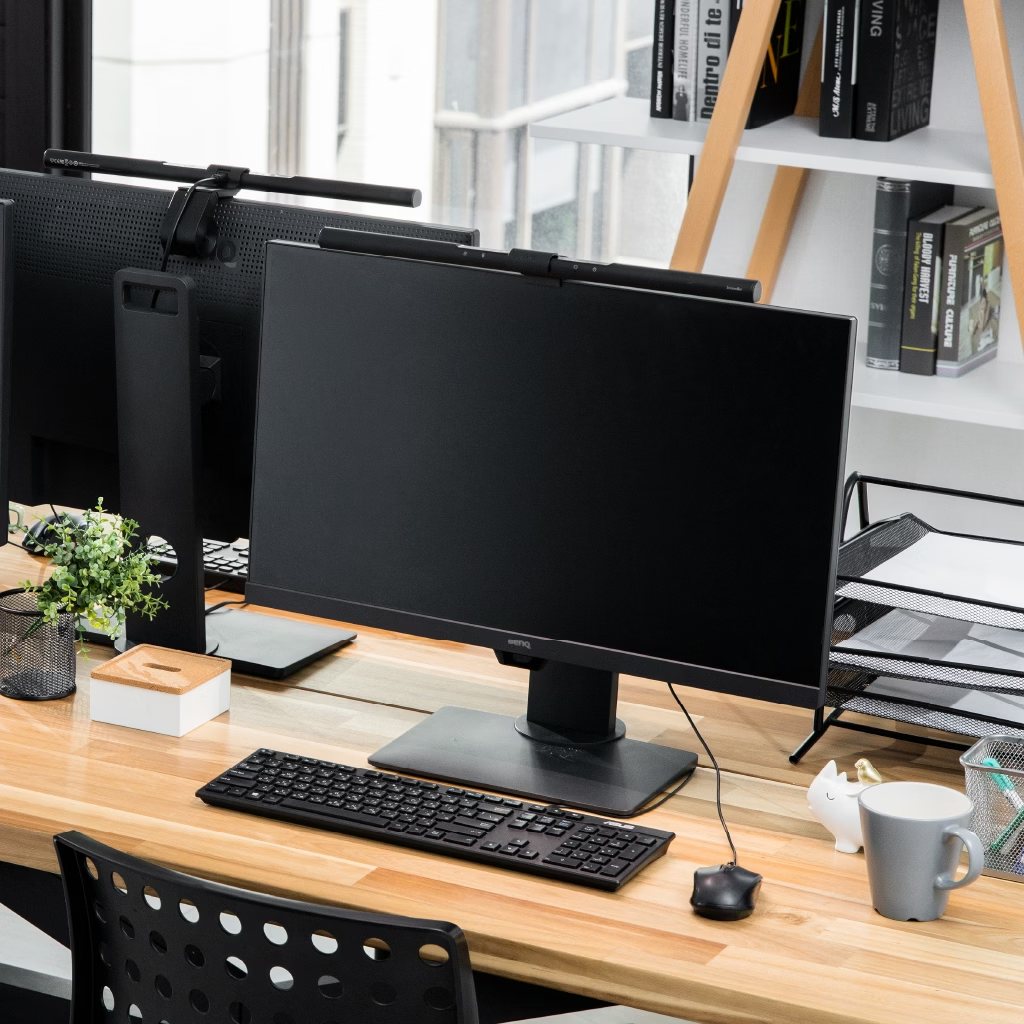
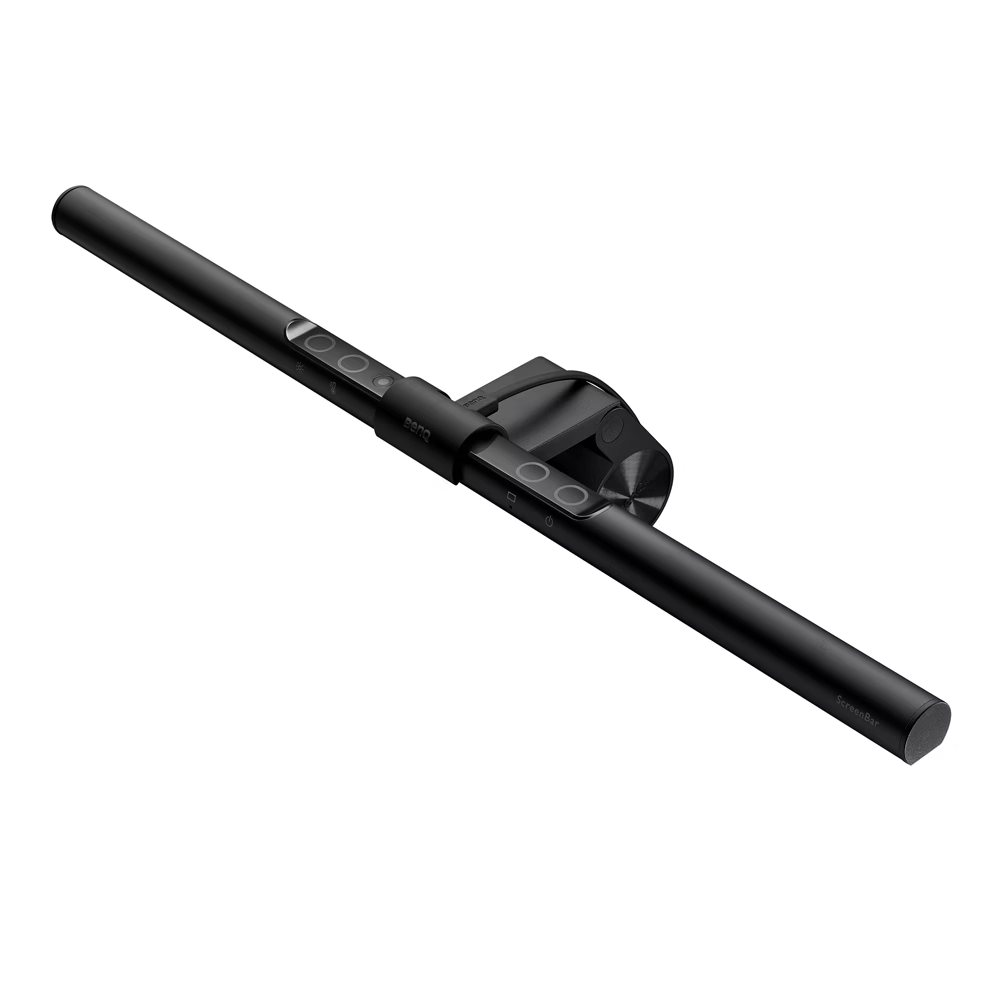
Buy the BenQ ScreenBar ($$$). It clips over the top of your monitor, takes no desk surface at all, publishes 930 lux at the center of the desk from 45 cm and a lit area of 60 by 30 cm, and runs off a USB port at 5 V and a maximum of 1 A. On a desk where a lamp base would occupy a quarter of the free surface, that is the whole argument.
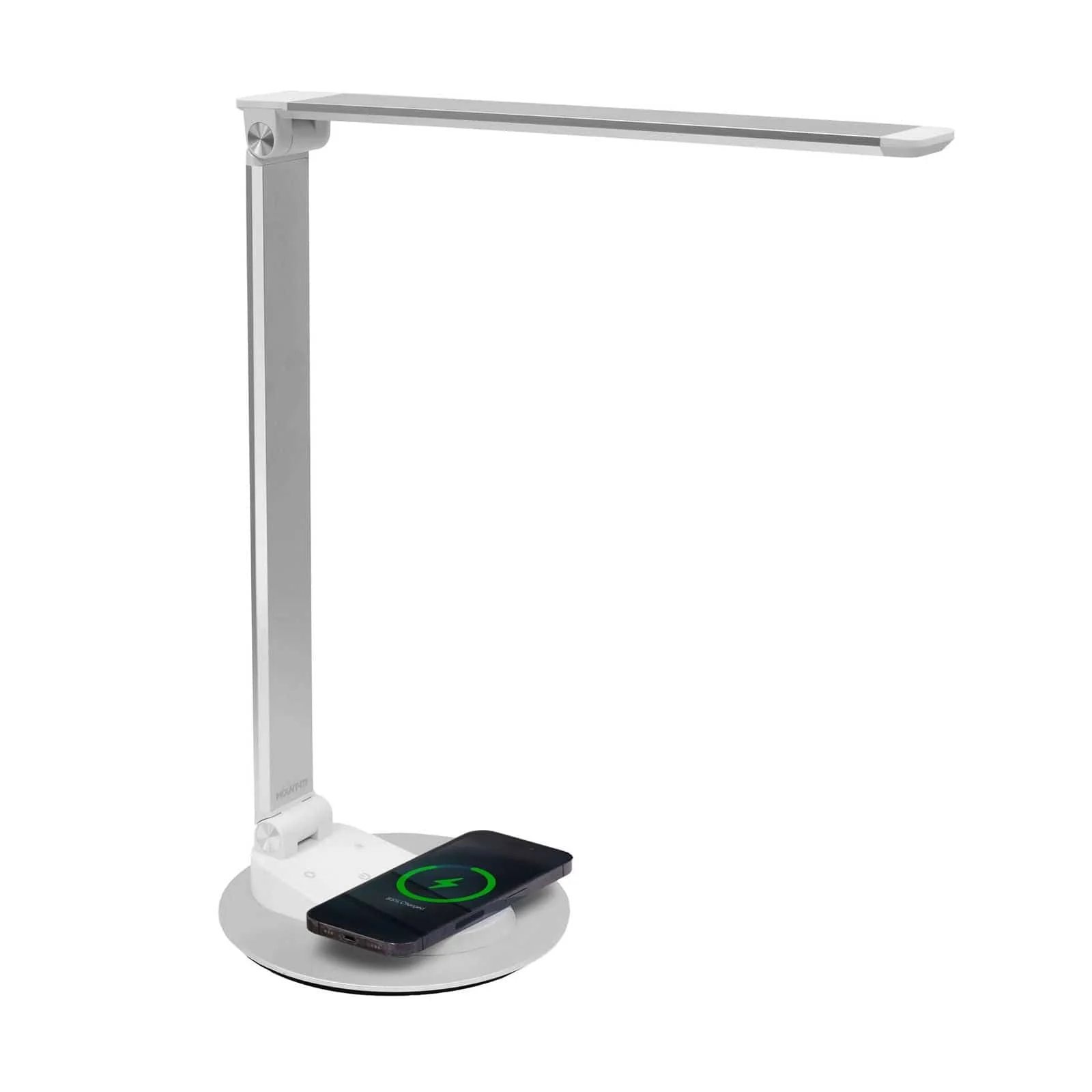
The right question for a small desk is not how bright a lamp is, it is where it stands. A base lamp puts a 7 by 14-inch footprint on a worktop that may only be 15 inches deep, in the corner you wanted for a notebook. Three lamps here clip to the monitor and take no surface at all; two clamp to the desk edge; one has a base and earns it back with a charging pad.
There is a catch nobody mentions: monitor bars publish lux at a stated distance, conventional lamps publish lumens, and the two cannot be ranked against each other. The table prints each maker's own figure in its own unit rather than pretending otherwise. Spend as little as possible and the IKEA NÄVLINGE is 220 lumens on a clamp for pocket money.
How to shop for a desk lamp for a small desk
How much desk it occupies
The reason the page exists. A bar takes none, a clamp about two square inches of edge, a base lamp its whole footprint out of a surface you do not have.
Published light output, in the maker's own unit
BenQ publishes 930 lux at 45 cm. IKEA publishes 220 and 370 lumens. Mount-It! publishes lux without a distance on two of three. Compare within a unit, never across.
Whether it throws light at the screen
A lamp beside a monitor reflects off the panel, which is the glare that makes an evening feel long. Bars use an asymmetric reflector that throws light down at the desk instead.
Color temperature range
Anything fixed at one temperature is a lamp for one time of day. Mount-It!'s three run 3000 to 6500 K; IKEA's NÄVLINGE is fixed at 2700 K warm white.
How it is powered
A USB bar draws from the monitor and adds no plug to the room. A mains lamp adds another brick to whatever your under-desk cable tray is already holding.
Best overall
Image: BenQ
BenQ ScreenBar
No desk used, and a published lux figure
Mount
Monitor clip
Published light
930 lux at 45 cm
Desk used
None
Model
ScreenBar
Reasons to buy
Takes zero desk surface — it hangs off the top bezel on a weighted clip with no fixing, no adhesive and no screws
BenQ publishes a real photometric figure rather than a vague brightness claim: 930 lux at the center from 45 cm, over a lit area of 60 by 30 cm at 500 lux
Runs on 5 V at a maximum of 1 A from a USB port, so there is no extra mains plug and no extra brick under the desk
The asymmetric reflector throws light forward onto the desk rather than back at the panel, which is the difference between a lit desk and a washed-out screen
At 45 by 9 by 9.2 cm it spans a 24-inch monitor almost exactly, so the lit strip matches the keyboard rather than one end of it
Reasons to avoid
BenQ rates it for monitors 1 to 3 cm thick; a very thin panel or a deep curved one needs a different bar in the family
The auto-dimming sensor is on the bar, so it reads the light at the screen rather than at the page you are actually reading
It is the second most expensive lamp here, and the only thing it lights is the desk directly in front of the monitor
A monitor bar is the right answer to small-desk lighting and this is the one with published numbers behind it. The lamp stops being an object on the desk and becomes part of the monitor, which on a 15-inch worktop recovers a corner.
The published lux figure is why it beats the cheaper bars. Nobody else states a center illuminance at a stated height and a lit area at 500 lux, and without both a brightness claim cannot be checked.
Not the right fit if you read paper at the far side of the desk — a bar lights the strip in front of the screen and not the whole worktop.
The same zero-footprint idea for roughly half the money, which on a first small-desk setup is the right order to spend in
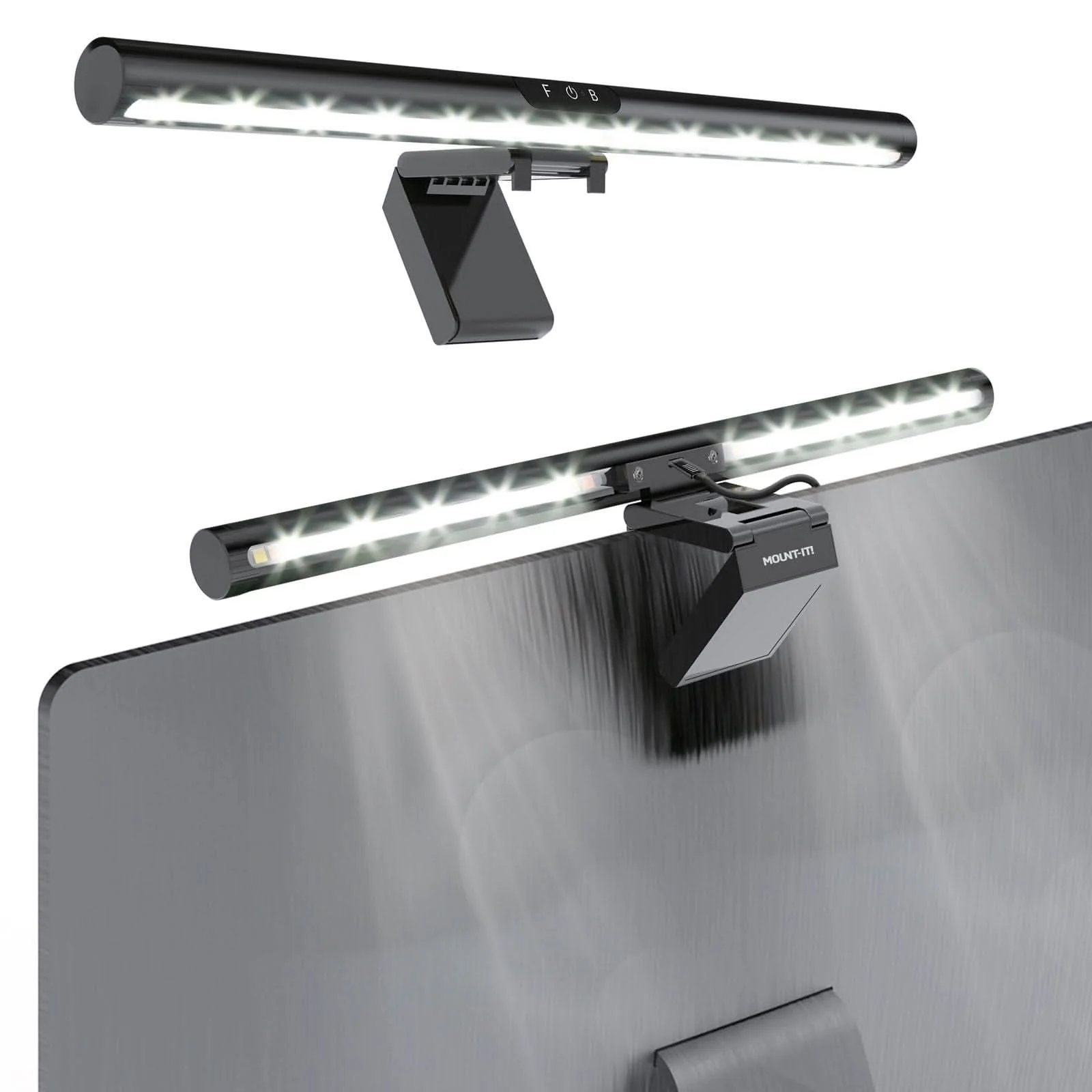
Eighty LEDs across 16.51 inches, wider than the BenQ bar, with stepless dimming rather than fixed steps
Color range of 3000 to 6000 K, so it covers a warm evening and a cool working morning
A 59-inch USB cord, long enough to reach a hub behind the desk rather than only the monitor's own port
Reasons to avoid
Mount-It! publishes over 380 lux without stating the distance it was measured at, so the figure cannot be compared with BenQ's 930 lux at 45 cm
No published monitor thickness range, which is the specification that decides whether the clip fits your panel at all
A rated LED life of over 40,000 hours against IKEA's 25,000 and no stated warranty on the product page
For most people this is the sensible buy, and it is worth saying why it is not the winner: the physics is the same and the missing piece is the documentation. Over 380 lux at an unstated distance is not a number you can plan around.
What it does have is width: 16.51 inches, longer than the BenQ bar, which on a 27-inch monitor covers more of the keyboard and the notebook beside it.
Not the right fit if you want a checkable photometric figure — that is the BenQ.
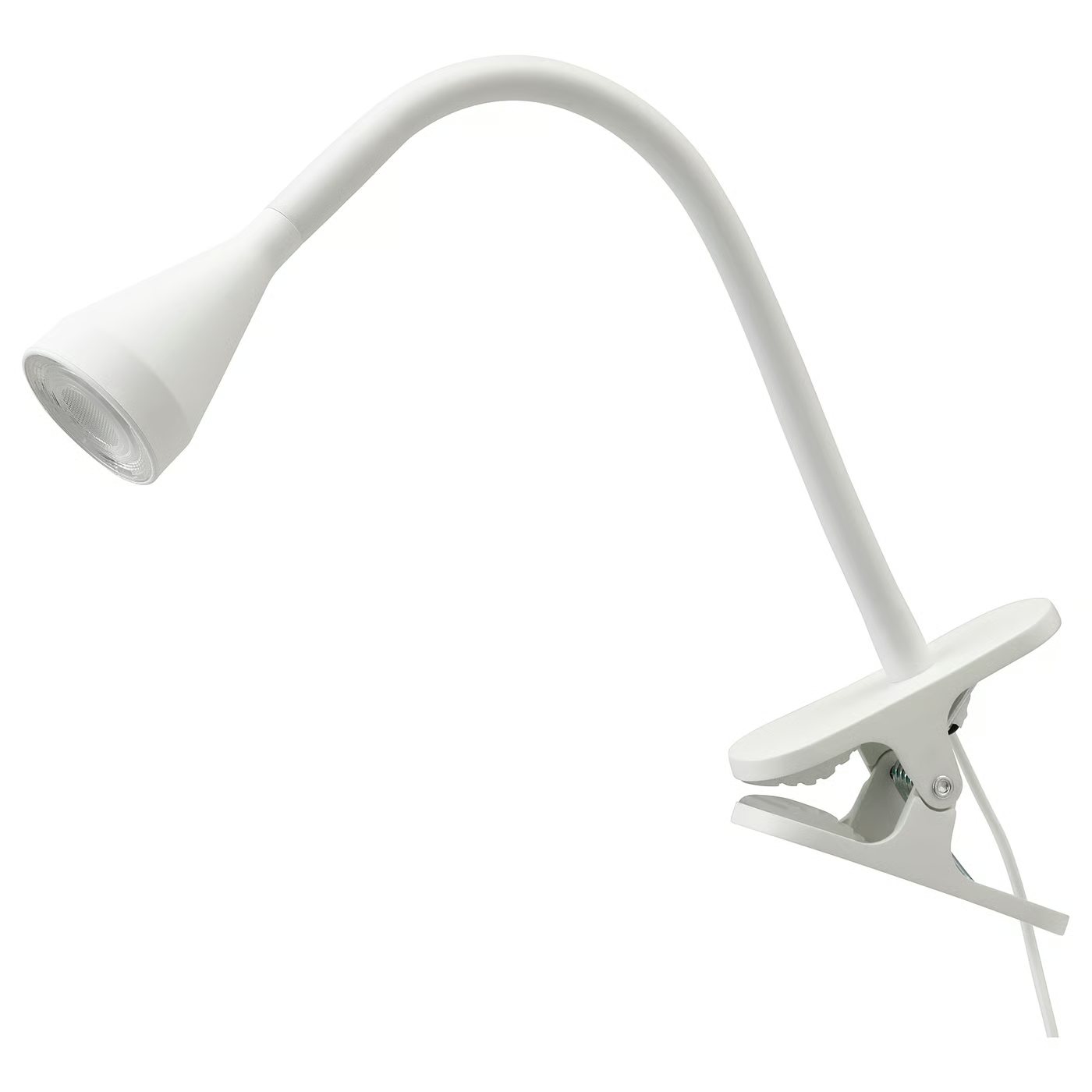
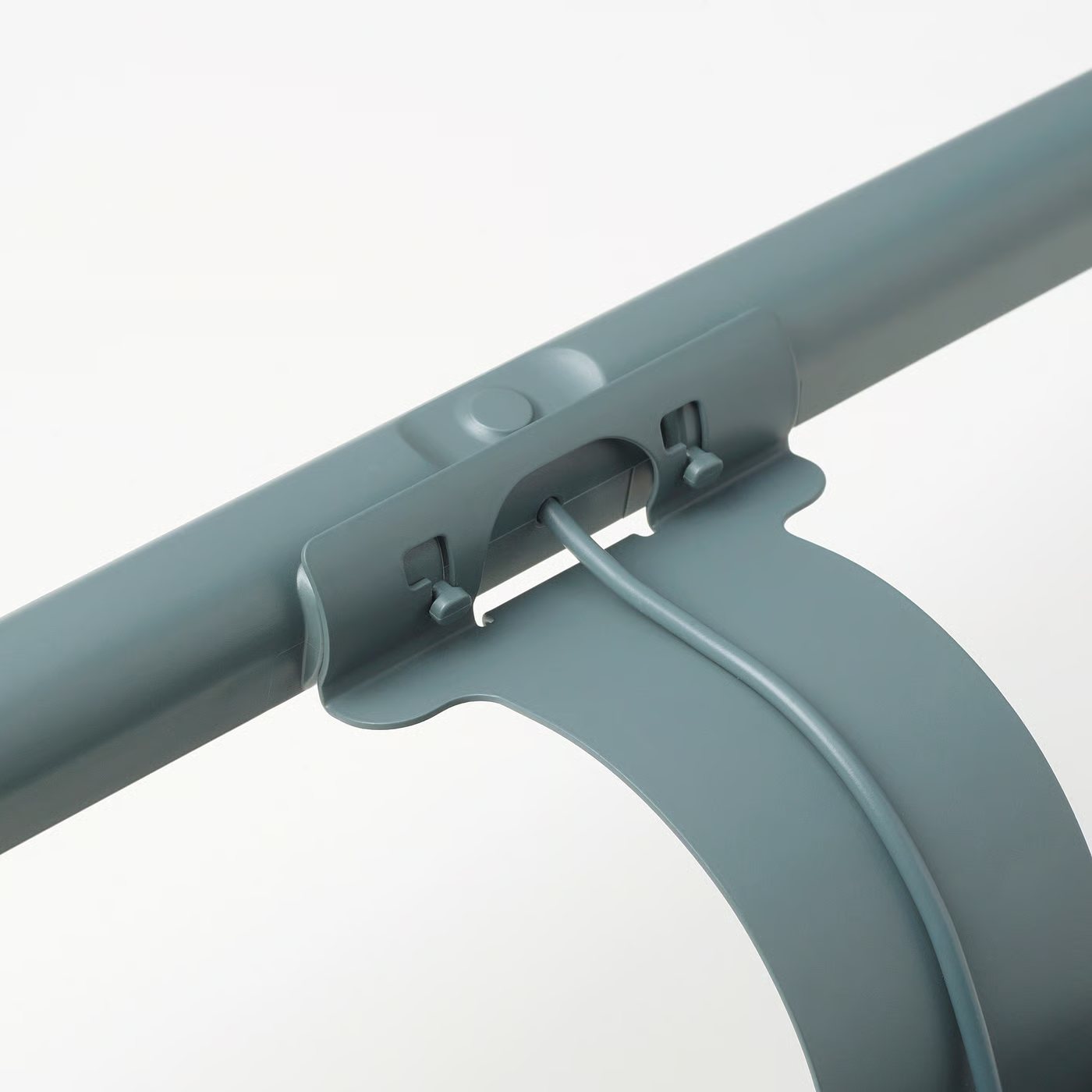
Clamps to a desk edge, a shelf or a headboard, so it takes about two square inches of surface and can be moved in seconds
IKEA publishes 220 lumens at 1.9 W and an estimated 25,000 hours of life, which is more detail than most lamps at ten times the money
Clamping range of one third to one and three quarter inches, wide enough for a thin laminate top and most shelf boards
A flexible arm 13 inches long, so the head goes where the page is rather than where the base happens to sit
Reasons to avoid
Fixed at 2700 K warm white — a lamp for the evening, and the wrong color for reading a contract at nine in the morning
Two hundred and twenty lumens is a reading pool, not desk lighting; it lights a book and nothing else
No dimmer of any kind, so it is on or off
The cheapest useful lighting decision here. A clamp spotlight takes almost no surface and points at whatever you are reading.
Buy it knowing what it is: a task light for one small area, fixed warm. Right for a student desk or a bedside worktop, wrong for detailed work on paper all day.
Not the right fit if you work on paper for hours — the Mount-It! swing arm publishes over 1700 lux.
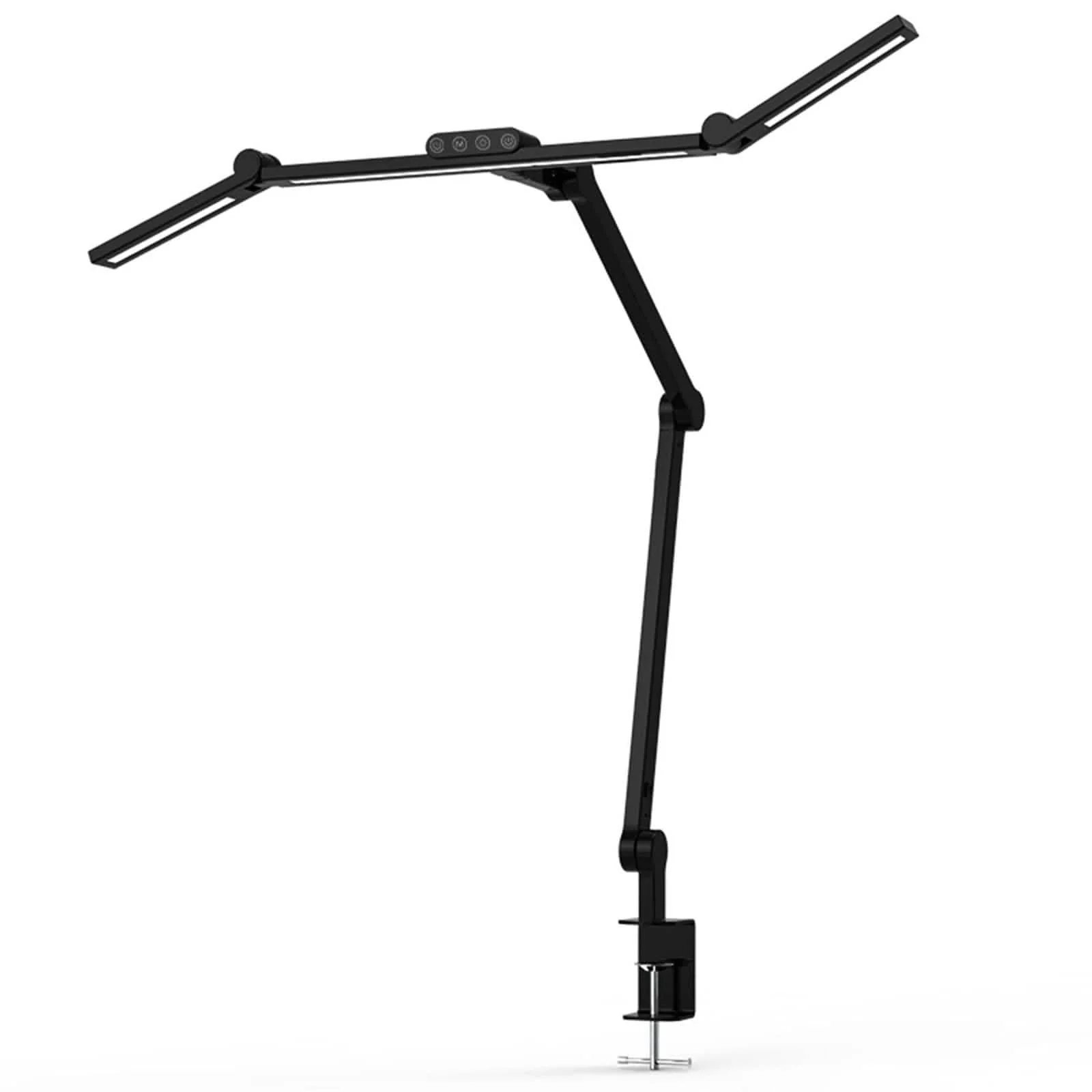
Over 1700 lux published, more than four times the maker's own figure for its monitor bar and the brightest thing on this page
A clamp base, so all that output arrives without a single square inch of the worktop being used for a stand
Two swing arms rather than one, which is what lets the head reach out over a keyboard or back over a book without moving the clamp
Stepless dimming, 3000 to 6500 K, touch control and a memory function that brings back the last setting
Reasons to avoid
Mount-It! publishes the lux figure with no measurement distance, which makes it an internal comparison rather than a photometric one
Mains powered through an AC adapter on a 6.5-foot cable, so it adds a brick to the run under the desk
The most expensive lamp on this page, and a clamp arm is visibly a piece of equipment in a bedroom
If the work involves paper — drawing, sewing, soldering, reading — a monitor bar is the wrong tool, because it lights the strip in front of the screen and nothing else.
It is the one lamp here built around output rather than footprint, and the clamp base is what makes it belong on this page. With a conventional base it would be unusable on a 15-inch desk.
Not the right fit if the desk is only ever used for a screen — a bar does that job for less and takes no cable.
A monitor lamp for under a third of the BenQ's price, with 370 published lumens and an estimated 25,000-hour life
Attaches magnetically rather than by clamping pressure, so it comes off and goes back on in one movement
Three levels of light intensity, which is two more than the cheap clamp spotlight offers
Fifteen and three quarter inches long with a 59-inch cord, so it spans a 24-inch panel and still reaches a hub
Reasons to avoid
IKEA publishes lumens rather than lux at a distance, so its output cannot be compared with the two bars above
A magnetic mount needs the right surface; a plastic monitor back without a steel plate is not it
No published color temperature range, and no published monitor thickness range either
This is the entry point into monitor lighting, and it sits last because of the mount: a magnet is elegant when it works and useless on a plastic monitor back, which most are.
Where it fits, the value is obvious: 370 lumens across the front of a screen, dimmable in three steps, for less than most people spend on a mouse mat.
Not the right fit if your monitor has no steel in its back panel — take the Mount-It! bar and its mechanical clip.
Nothing here has been switched on by us. Every figure above is quoted from the manufacturer's own product page, and those pages are linked in Sources.
A candidate had to publish a measurable light figure on its own site, which removed most of this category — sold on a photograph of a glowing desk and an adjective.
Lux and lumens are printed as published and not converted. Lux is illuminance at a surface at a stated distance; lumens is total output. Converting without the geometry would be inventing a number.
Lamps were judged against one desk: 15 to 20 inches deep, a single monitor, and about a third of the surface already spoken for by a keyboard.
Price bands were set by fetching each product's live retail page on 12 September 2026 and sorting the six by price. A band describes position on this page only.
The verdict
Best overall: the BenQ ScreenBar, for taking no desk at all and being the only lamp here that publishes a center illuminance at a stated height and a lit area at 500 lux. On a shallow desk, the lamp that is not on the desk wins.
BenQ builds its auto-dimming around 500 lux at the desk, which it cites as the American National Standard figure for office lighting, and publishes the lit area at that level — 60 by 30 cm for the ScreenBar. Compare against that, not a peak center figure.
Do monitor light bars cause screen glare?
Not if they are built correctly. The reflector inside a bar is asymmetric on purpose, throwing light forward and down rather than back at the panel — the feature that separates a bar from a lamp balanced on a monitor.
Will a light bar fit my monitor?
Check the published thickness range. BenQ rates the ScreenBar for panels 1 to 3 cm thick. Neither Mount-It! nor IKEA publishes a range for theirs, so on those two it is a question you answer on arrival.
Lux or lumens — which should I compare?
Only within the same unit, and only when both quote a measuring distance. BenQ's 930 lux at 45 cm and Mount-It!'s over 700 lux at 400 mm can be read against each other; over 1700 lux with no distance cannot.
Is a clamp lamp better than a base lamp on a small desk?
Almost always. A clamp takes about two square inches of edge; the base lamp here takes 14 by 7.2 inches, roughly a sixth of a 43 by 15-inch desk.
Does warm or cool light matter for work?
It matters for when you use it. Four of six adjust between roughly 3000 and 6500 K. The IKEA clamp spotlight is fixed at 2700 K — pleasant at night, flat for detail work.
Also considered
BenQ ScreenBar Halo — BenQ's own flagship, with a wireless controller and a backlight. On 12 September 2026 both of its main marketplace pages showed no buy box and BenQ's own store page displayed no price to an ordinary visit. A pick has to be buyable today.
Koncept Z-Bar Mini Gen 4 — On specification it would be a pick — 533 lumens, 90 CRI, 5.7 W, an L90 life over 60,000 hours and a two-piece desk clamp among the mounts. It sells through lighting dealers and publishes no price of its own, so there is no honest way to band it.
Ring lights sold as desk lamps — Built to light a face at a fixed distance, which makes them good on camera and poor on a desk — an even circle that does nothing for the page in front of the keyboard.
Clip-on book lights — They clip and they are cheap, which sounds like the IKEA spotlight's argument. The difference is output: tens of lumens reads a paperback and nothing else.
Smart bulbs in a standard desk lamp — The app is not the problem, the lamp around the bulb is. A shade and base take the surface, and color-changing firmware gives none of it back.