As an Amazon Associate I earn from qualifying purchases. Links marked "at Amazon" are paid links.
How to stop a cat scratching the couch — what the veterinary sources say
 By Chris Y. · Two cats, one-bedroom apartment; measures the inside of everything
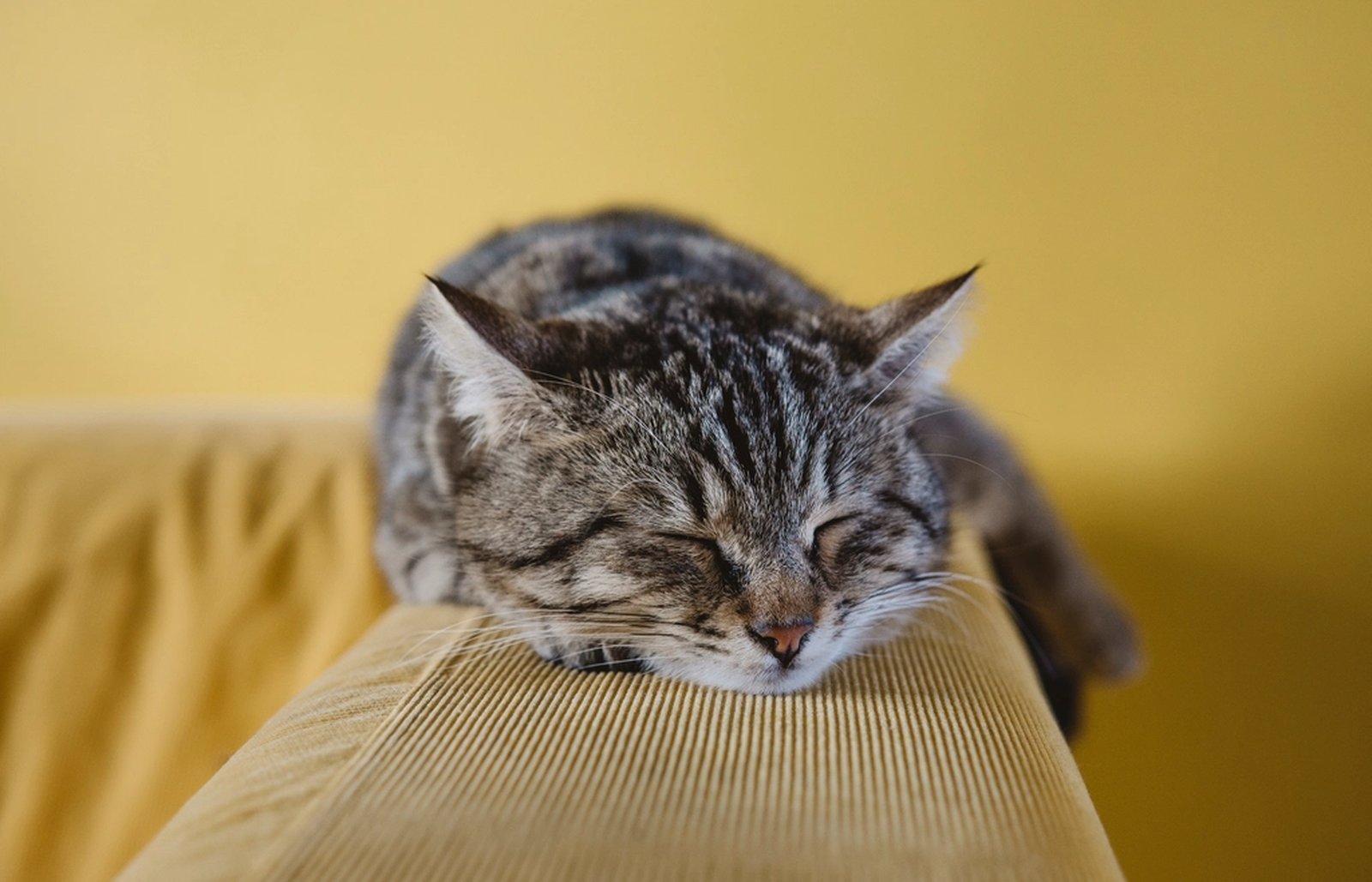
You cannot stop a cat scratching, and no source worth reading suggests trying. Scratching maintains the claws, stretches the body and leaves a visual and scent mark, which is why a cat does it in the most public part of your home rather than behind the sofa.
What you can do is move it. The method the ASPCA and Ohio State's Indoor Pet Initiative both describe is three steps in a fixed order — put an acceptable surface exactly where the cat is already scratching, make the sofa corner unrewarding, and keep the claws short.
The detail that decides whether it works is the post itself. Both sources say the same two things: it must be sturdy enough not to shift or collapse when the cat leans into it, and tall enough for the cat to stretch fully. Most posts sold in supermarkets fail on both.
Questions people ask
How tall should a scratching post be?
Tall enough for your cat to stretch up fully, which is the wording both the ASPCA and Ohio State use rather than a figure. For an average adult cat that means a post of roughly 30 inches or more, measured so the cat can reach above its head with the front paws while standing on its back legs.
Where should the post go?
Against the piece of furniture the cat is already using. The ASPCA's instruction is to put acceptable posts near the furniture being scratched, and Ohio State adds that posts belong in public parts of the house — near sleeping areas and room entrances — not in a spare room where nobody goes.
What material do cats prefer?
It varies by cat, and the sources name cardboard, carpeting, wood, sisal and upholstery as the options to try. Ohio State calls sisal ideal because it is satisfying to scratch and tough enough for repeated use. Offer two types, watch which one gets used, then buy more of that kind.
Does double-sided tape work?
As one half of the method. The ASPCA lists plastic, double-sided sticky tape, sandpaper or an upside-down vinyl carpet runner as covers for the furniture you want protected, and Ohio State lists tape, aluminum foil and sandpaper. It only works when an acceptable post is standing next to it.
Should I trim my cat's claws?
Yes, and it is the step people skip. Ohio State recommends weekly trimming to reduce damage, and the ASPCA also mentions plastic nail caps that last four to six weeks as an option for furniture that cannot be replaced.
What about declawing?
The ASPCA opposes it and says it should never be used as a behavioral remedy or as a preventative measure, because it has not proven effective for behavior problems. Declawing is a surgical amputation, not a nail trim, and it is banned or restricted in a growing number of places.
Why the cat is doing it there
Scratching is not damage in the cat's mind, it is maintenance and communication. It sheds the outer layer of claw, it stretches the whole front of the body, and it leaves both a visible mark and scent from the glands in the paws. That last part explains the location: cats scratch where they and other household members pass, which in a flat means the sofa arm nearest the door, not the corner behind the bookcase.
This matters because it tells you what a replacement has to be. A post hidden in a bedroom is not a replacement for a marking site in the busiest room. Ohio State's guidance makes this explicit — scratching posts belong in the public parts of the house, near where the cat sleeps and near the entrances to rooms.
The three steps, in order
1. Put the right post exactly where the damage is
The specification from both sources is short and unforgiving. The ASPCA: all cats want a sturdy post that will not shift or collapse when used, and most cats like a post tall enough that they can stretch fully. Ohio State: vertical posts must be tall enough for the cat to stretch up to scratch, and sisal is ideal because it is satisfying to scratch and stands up to repeated use.
In practice that means a heavy base, a post that does not wobble under a fourteen pound cat's full weight, and enough height that the cat reaches above its head. Then it goes against the sofa arm — not near it, against it. The cat has chosen that spot for a reason, and the post is competing with it.
Orientation is a preference, not a rule. Cats scratch vertically, horizontally and on slants, and the ASPCA lists all three. If a cat is working the flat front of a sofa base rather than the arm, a horizontal or angled scratcher is the match. Our scratcher guide covers the shapes that can stay in a living room.
2. Make the sofa unrewarding at the same time
Alone, this step fails; alongside a post it works. Cover the target area with something the cat does not want to touch — the ASPCA names plastic, double-sided sticky tape, sandpaper or an upside-down vinyl carpet runner, and Ohio State adds aluminum foil.
Two practical notes. Test any adhesive on a hidden part of the upholstery first, because tape residue on fabric is its own problem. And treat the covering as temporary: it comes off once the cat has switched, which normally takes a few weeks of consistent use of the post.
A washable cover over the whole piece is the other half of this, less as a deterrent than as damage control while the habit changes — our couch cover guide is honest about the fact that no cover stops claws.
3. Keep the claws short
Weekly trimming is Ohio State's recommendation and it reduces the damage each session does. A cat that has never had its claws touched learns fastest in short sessions, one or two claws at a time, with the paw held gently and a treat afterwards. Plastic caps are the fallback the ASPCA names — glued over the claw, lasting four to six weeks — for a sofa that genuinely cannot take more.
What is not on the list is punishment. Spray bottles, shouting and startling devices teach a cat that you are unpredictable, and the scratching continues when you are out. Every source here works by changing what the room offers, not by changing what the cat wants.
A two-week plan for a small flat
- Day 1. Look at the damage and note the height and the direction of the marks. Vertical marks at chest height mean a tall post; horizontal shredding at the base means a flat or angled scratcher.
- Day 1. Put a sturdy post against that exact spot. Two surfaces if you are unsure — one sisal, one cardboard.
- Day 2. Cover the damaged area with tape, foil or a runner. Leave the post in place, uncovered.
- Days 3 to 10. Reward use of the post when you see it. Play near the post with a wand so that the area becomes the good part of the room. Do not move the post.
- Day 7. Trim the claws, then weekly after that.
- Day 14. If the post is being used daily, take the covering off the sofa. If the cat goes back, the covering returns for another fortnight — and check the post has not started to wobble.
Two cats need two posts, in two locations. Ohio State says multi-cat households may need several posts, vertical and horizontal, spread through the house, and the reason is the same one that governs litter boxes: a resource one cat can guard is not available to the other.
When it is not really about scratching
A sudden change in scratching — a cat that has used a post for years and starts on the sofa, or a cat scratching doorframes and windowsills — often travels with something else. New animals in the building, a change in the household, or a medical problem all show up as marking behavior. If the scratching is new, intense and paired with anything else unusual, the vet comes before the tape.
And if the real problem is that the sofa is already ruined, fix the room in two moves: a post at the damaged corner so it does not get worse, and a cover so the room looks intentional again. Both jobs, one afternoon.
Sources
- ASPCA — Destructive Scratching (posts, deterrents, nail caps, position on declawing)
- Ohio State University Indoor Pet Initiative — Scratching
- AAFP and ISFM Feline Environmental Needs Guidelines (scratching as a key resource)
- American Association of Feline Practitioners — Environmental Needs Guidelines landing page