As an Amazon Associate I earn from qualifying purchases. Links marked "at Amazon" are paid links.
The best dog harnesses for pullers (2026)
By Chris Y. · One dog, one apartment, a tape measure and a chest girth chart
Image: Blue-9 Pet Products
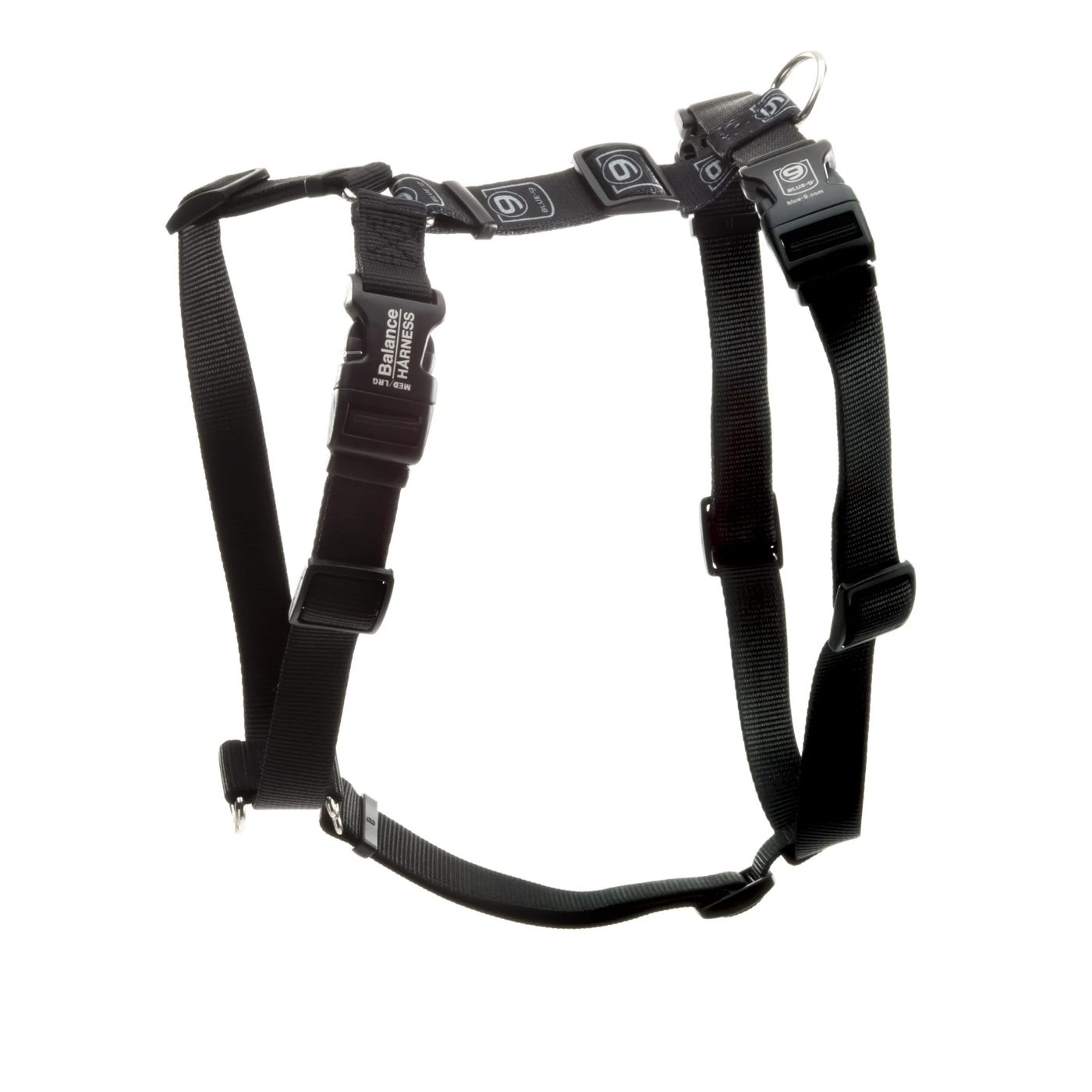
Buy the Blue-9 Balance Harness. It has six points of adjustment where the rest of this page has four or five, and Blue-9 is the only maker here that tells you where to put the tape — around the ribcage, about two inches behind the elbow — which is why its five sizes cover 13.5 to 43.5 inches without the gaps the others leave.
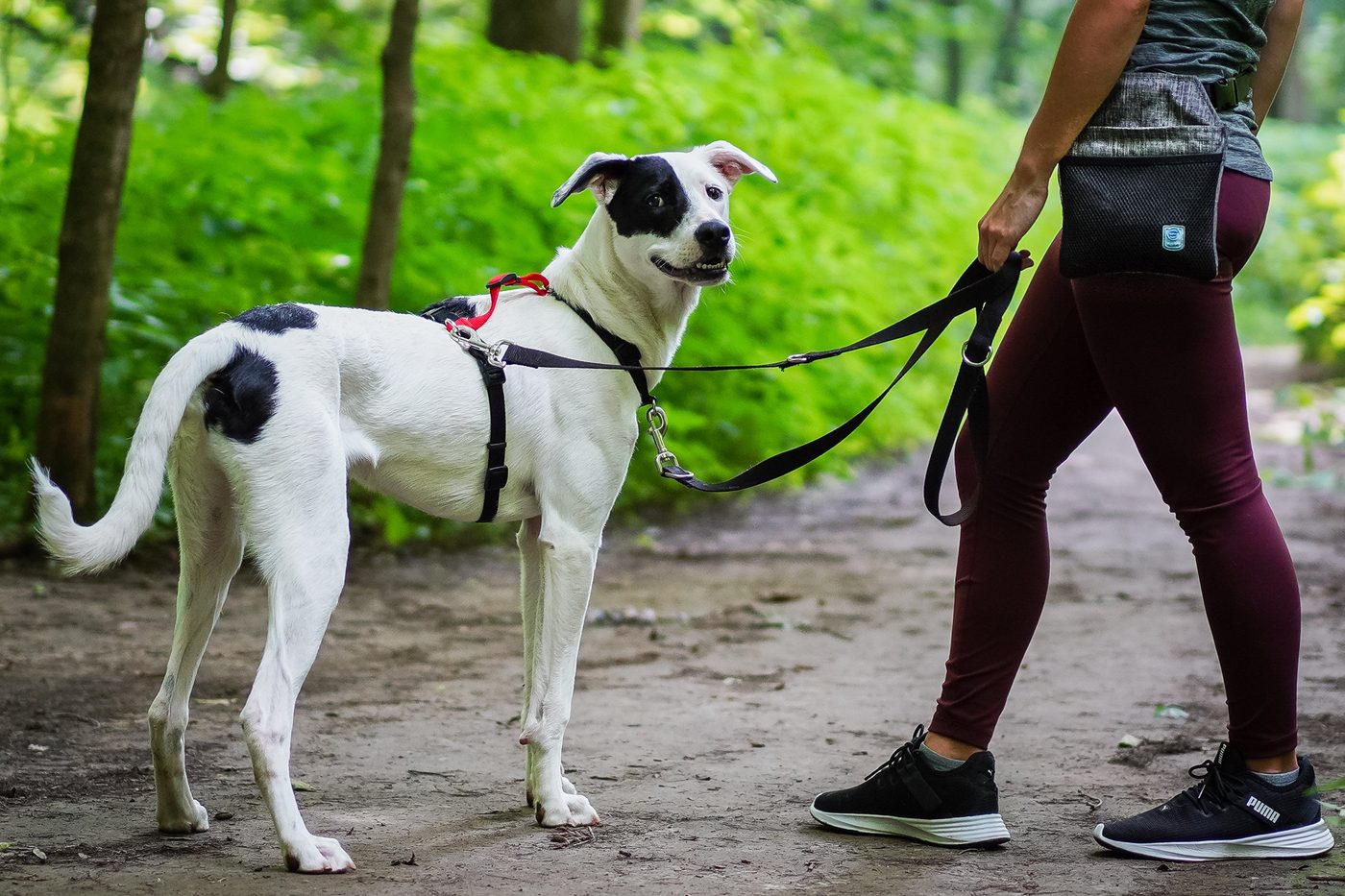
A no-pull harness does not stop pulling. It changes where the leash meets the dog, from the top of the shoulders, where a dog can put its whole weight against you, to the chest, where a step forward turns the dog back toward you instead of away. Everything else is fit.
And fit is a measurement problem, which is the reason this page exists: every harness below is bought by chest girth, every maker draws that measurement in a slightly different place, and one of the six publishes no adjustment count at all. Measure first, then read the rows.
How to shop for a no-pull harness
The published girth range, size by size
Chest girth is the only measurement that decides whether a harness fits. The ranges below overlap unevenly — PetSafe splits 12 to 49 inches across eight sizes, Ruffwear across five — and the more sizes a range is cut into, the less adjusting you are asking the straps to do.
How many points adjust
Four is the usual count, five and six are better, and every extra point is somewhere the harness can be made to sit right on a dog whose shape does not match the pattern. Deep-chested and barrel-chested dogs are where four-point harnesses fail.
Whether there is a front attachment at all
A back-clip harness on a puller gives the dog a sled-dog point of purchase. Every harness on this page has a chest ring; most also have one on the back, and the two used together is what trainers actually recommend.
What the strap does behind the front legs
This is where chafing happens, on the exact strap that takes the load when a dog lunges. Padding, lining and strap width are the three things makers do about it, and only two brands here publish a strap width.
Whether the maker says how to measure
"Measure the chest" is not an instruction. Blue-9 says ribcage, two inches behind the elbow. Ruffwear and PetSafe illustrate the girth point. The rest publish a number and leave you to guess where it is taken from, which is how a harness two sizes wrong arrives.
Best overall
Image: Blue-9 Pet Products
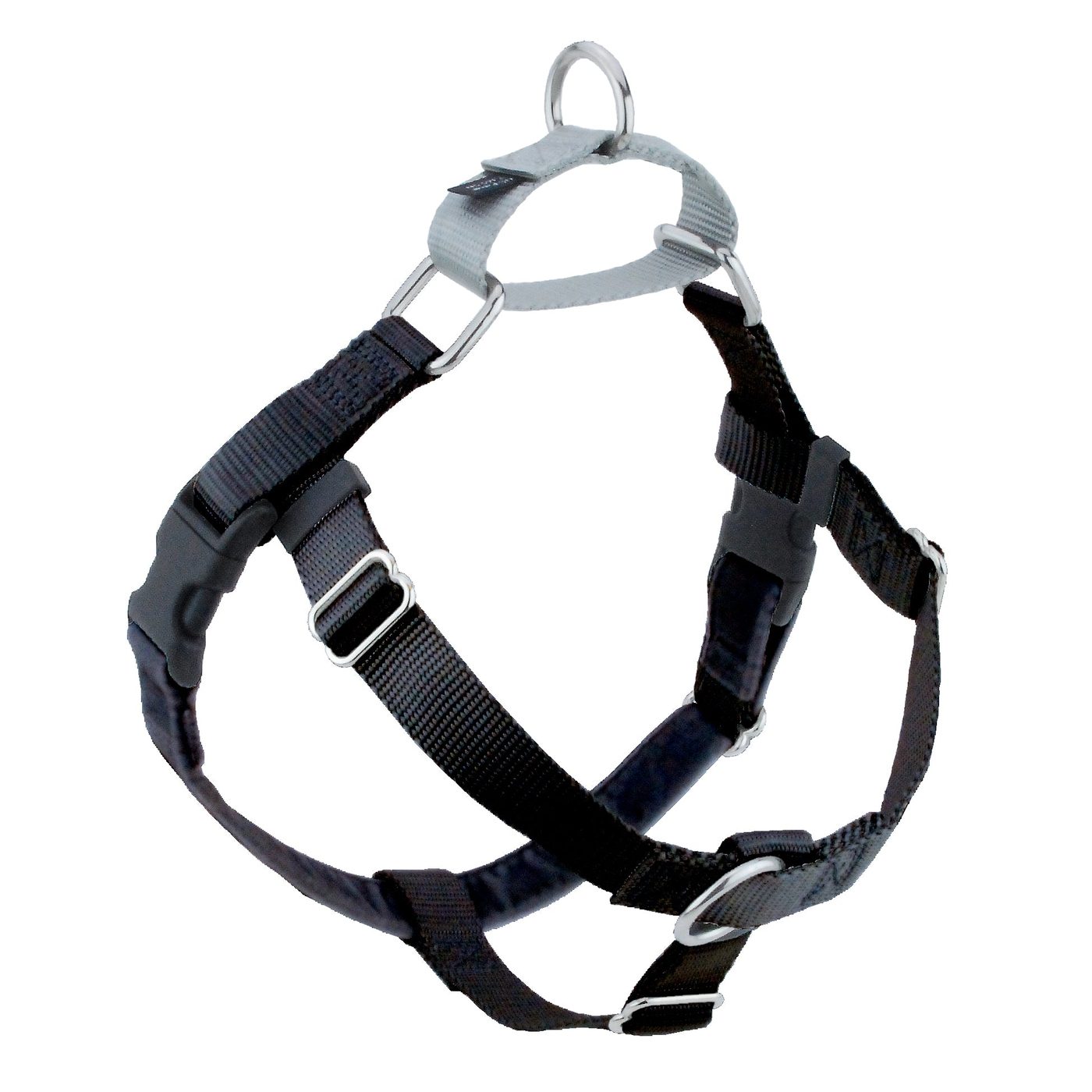
Blue-9 Balance Harness
Six adjusters, and the sizing is a bit odd
Model
Balance Harness (BHB), buckle-neck; five sizes XS to L
Girth
13.5–43.5
Adjusters
6 points
Sizes
5 sizes
Strap width
5/8 in on XS and S, 3/4 in on M, 1 in on M/L and L
Reasons to buy
Six points of adjustment, the most on this page, which is what lets one harness fit a whippet chest and a bulldog chest at the same nominal size
Blue-9 publishes the measurement point — around the ribcage, roughly two inches behind the elbow — so the size chart can actually be used
A buckle on the neck loop, so it goes on a dog that hates anything pulled over its head
Front and back rings, which Blue-9 recommends using together for a dog that pulls
Reasons to avoid
The five sizes overlap heavily — Small covers 17.5 to 25.5 inches and Medium covers 21 to 32 — so a 22-inch dog sits in two sizes and you have to choose
Amazon had no buy box on the two Balance Harness pages checked on September 12, 2026, so the button below goes to Blue-9's own store
Six adjusters means a genuinely fiddly first fitting; Blue-9 publishes a fitting video because it needs to
The Balance Harness is what dog trainers buy, and the reason is the adjustment count. Most harnesses have one strap that changes the chest and one that changes the neck; this has six, which means the Y-front can be moved off the point of the shoulder on a dog whose build the pattern did not anticipate. That is the difference between a harness that redirects a pull and one that rubs.
Not the right fit if you want one strap, one buckle and no thinking — the PetSafe Easy Walk is on the dog in thirty seconds.
A martingale loop on the back, 3,800 lb webbing under it
Model
Freedom No-Pull, 1 in width, Medium; seven size and width combinations
Girth
14–44
Adjusters
Not published
Sizes
7 sizes
Widths
5/8 in under 40 lb, 1 in over 40 lb
Reasons to buy
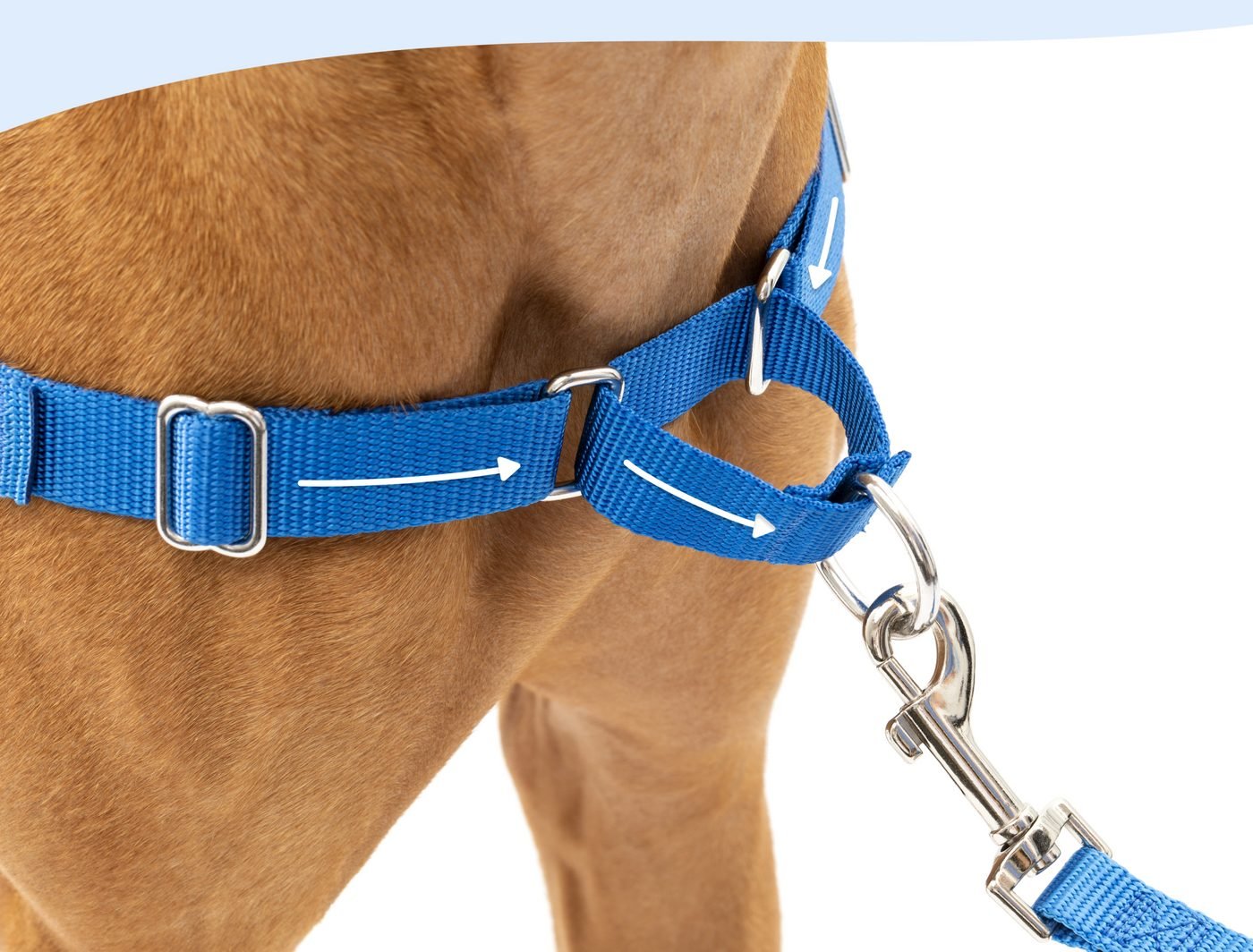
A patented control loop on the back that 2 Hounds says tightens gently around the chest when the dog pulls — the only mechanical answer here that is not just a front ring
A Swiss velvet-lined chest strap on the exact strap that chafes behind the front legs
Stainless steel hardware that 2 Hounds says will never rust or corrode, on webbing rated to 3,800 lb — the same type of material used for towing, in the maker's words
Two strap widths rather than one, so a 30 lb dog is not wearing the same inch-wide webbing as a 90 lb one
A separate XXS Mini exists for dogs with a 13 to 16 inch chest, below the 14-inch floor of the main range
Reasons to avoid
2 Hounds publishes no adjustment-point count anywhere on the product page, which on a page about fit is the thing you most want to know
Sizes are cut by girth and by webbing width at the same time, so a 26-inch-chest dog under 40 lb and one over it buy different products
The control loop is the feature and also the objection — it applies pressure when the dog pulls, which some owners and some trainers would rather avoid entirely
This is the harness for the dog that treats a front clip as a suggestion. The back loop closes as the dog drives forward and releases the moment it stops, and 2 Hounds pairs it with a two-ended training lead that clips front and back at once so the dog is turned rather than braked.
Not the right fit if you would rather nothing tightened on the dog at all — the Ruffwear Front Range is a plain padded harness with a front ring.
Aluminum V-ring on the back, reinforced front clip
Reasons to buy
Foam padding across the chest and belly panels rather than bare webbing, which is the difference on a dog that wears a harness for hours
An aluminum V-ring on the back and a reinforced clip at the chest, so the same harness does a relaxed walk and a training walk
Girth ranges published for all five sizes, from 13 inches at XXS to 42 at L/XL, with a stated overlap you can size into
Ruffwear says the current version adds more recycled material in the shell, webbing and lining, and improved girth-strap adjustment
Reasons to avoid
Roughly three times the price of the Easy Walk for a harness with the same four points of adjustment
Padding is warm; a thick-coated dog in summer is wearing more harness than it needs
Five sizes across a 29-inch span leaves wider gaps than PetSafe's eight
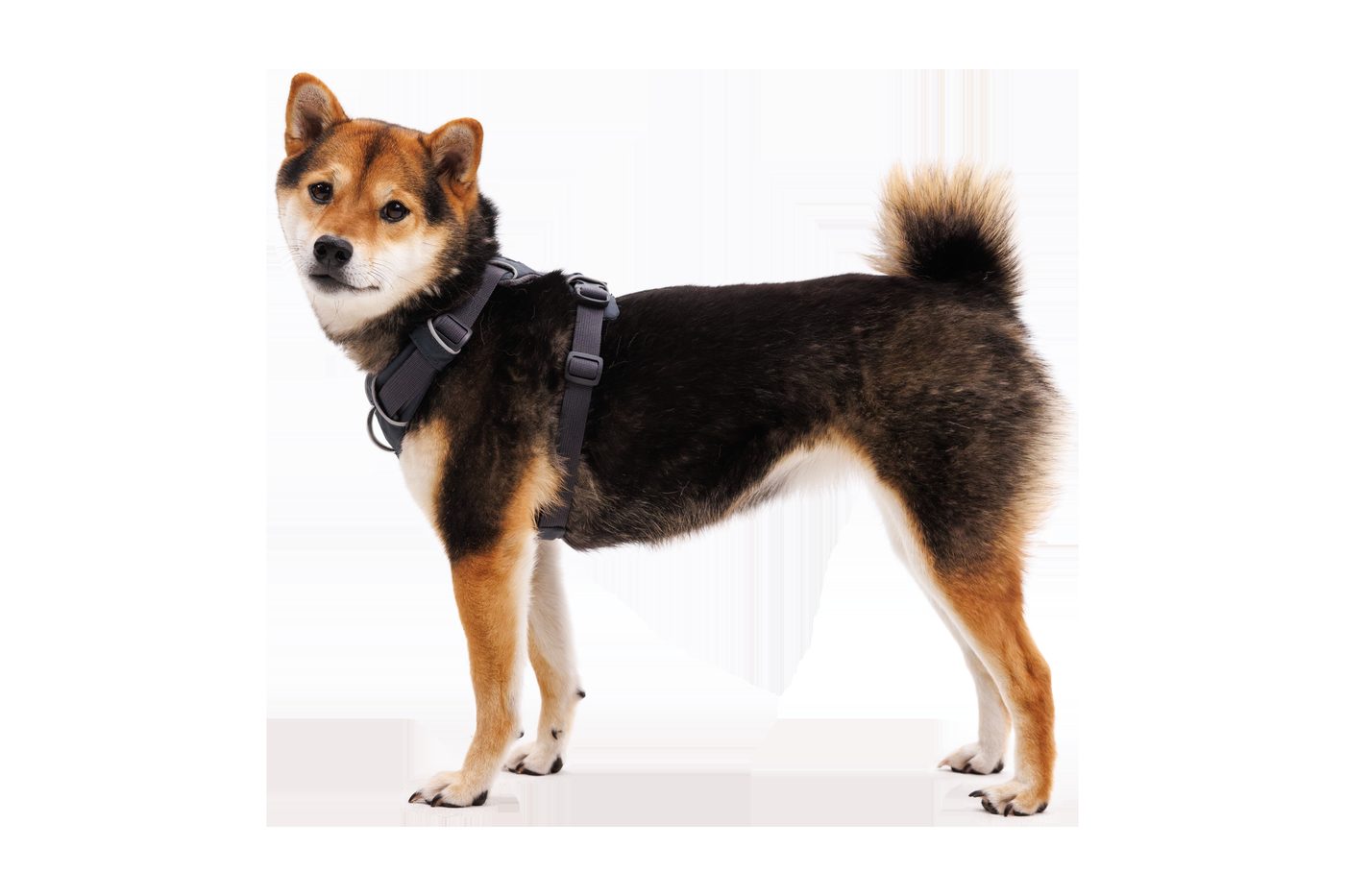
The Front Range is the harness to buy if the dog wears one every day rather than only for training. Four adjusters is an ordinary count, but the padded panels and the aluminum V-ring are where the money goes, and the ID pocket is a small thing that removes a jingling noise from every walk of the dog's life.
As a puller-specific answer it is the least specialized here — the front clip is a plain ring, not a martingale loop or a tightening strap. For a dog that pulls hard rather than habitually, one of the first two picks does more.
Not the right fit if the dog pulls hard enough to move you — the Freedom adds a tightening loop the Front Range does not have.
Easy Walk, Medium; eight sizes Petite to Extra Large
Girth
12–49
Adjusters
4 points
Sizes
8 sizes
Clip
Front chest only
Weight band
Under 10 lb at Petite up to 90 lb and over at Extra Large
Reasons to buy
Eight sizes covering 12 to 49 inches of girth, the finest size steps on this page by a wide margin — Petite is 12 to 17 inches and Petite/Small is 13 to 18
A patented martingale loop at the chest that PetSafe says applies gradual shoulder pressure rather than a hard stop
The front clip prevents the gagging a collar causes when a dog lunges, which is the original reason this design exists
Cheapest thing on this page, and the one most likely to be in a shop when the old one breaks
Reasons to avoid
No back ring at all, so it cannot be used as an everyday harness or with a two-point training lead
No padding anywhere, on straps that sit directly behind the front legs
Four points of adjustment across eight sizes means the size chart is doing the work; buy the wrong one and there is little room to correct it
The Easy Walk is the harness that made front-clip walking normal, and at this money it is still the right first purchase for most people. The eight-size range is genuinely useful — it is the only product here where a 15-inch-chest terrier and a 45-inch-chest mastiff both get a size cut for them rather than a strap let out.
The compromise is everything else. There is no back ring, no padding and no clever hardware; it is two straps, a martingale loop and a buckle. For a dog that pulls moderately on a 20-minute walk, that is enough.
Not the right fit if the harness is going on every day for hours — the Front Range is padded and has a back ring.
Tru-Fit Smart Harness, walking version; five sizes XS to XL
Girth
12–44
Adjusters
5 points
Sizes
5 sizes
Also published
Neck ranges and a dog-weight band per size
Reasons to buy
Five points of adjustment, one more than the usual four, at close to the cheapest price here
Kurgo is the only maker on this page that publishes a neck range, a chest range and a dog-weight band for every size
Front and back leash attachments on a ripstop shell, with quick-release buckles
A published dog-weight band for every size, from 5 lb at XS to 110 lb at XL, so the size chart can be checked two ways
Reasons to avoid
The crash-test claims belong to the separate Enhanced Strength Tru-Fit harness, not to this walking version — Kurgo states the Enhanced Strength model was tested at Calspan in 2018 against the federal child-restraint standard for dogs up to 75 lb
Kurgo's own store is the only checked route to it today; the walking version's Amazon page was not verified for this guide
The Tru-Fit is the most underrated set of published numbers here. Neck plus chest plus dog weight for all five sizes is more than Ruffwear, Blue-9 or 2 Hounds give you, and five adjusters at this price is a small bargain.
Do not buy it for the car on the strength of the name. Kurgo publishes its crash-test methodology honestly and it applies to the Enhanced Strength version; this one is a walking harness that happens to share a family name.
Not the right fit if you want the most adjustment available — the Balance Harness has six points.
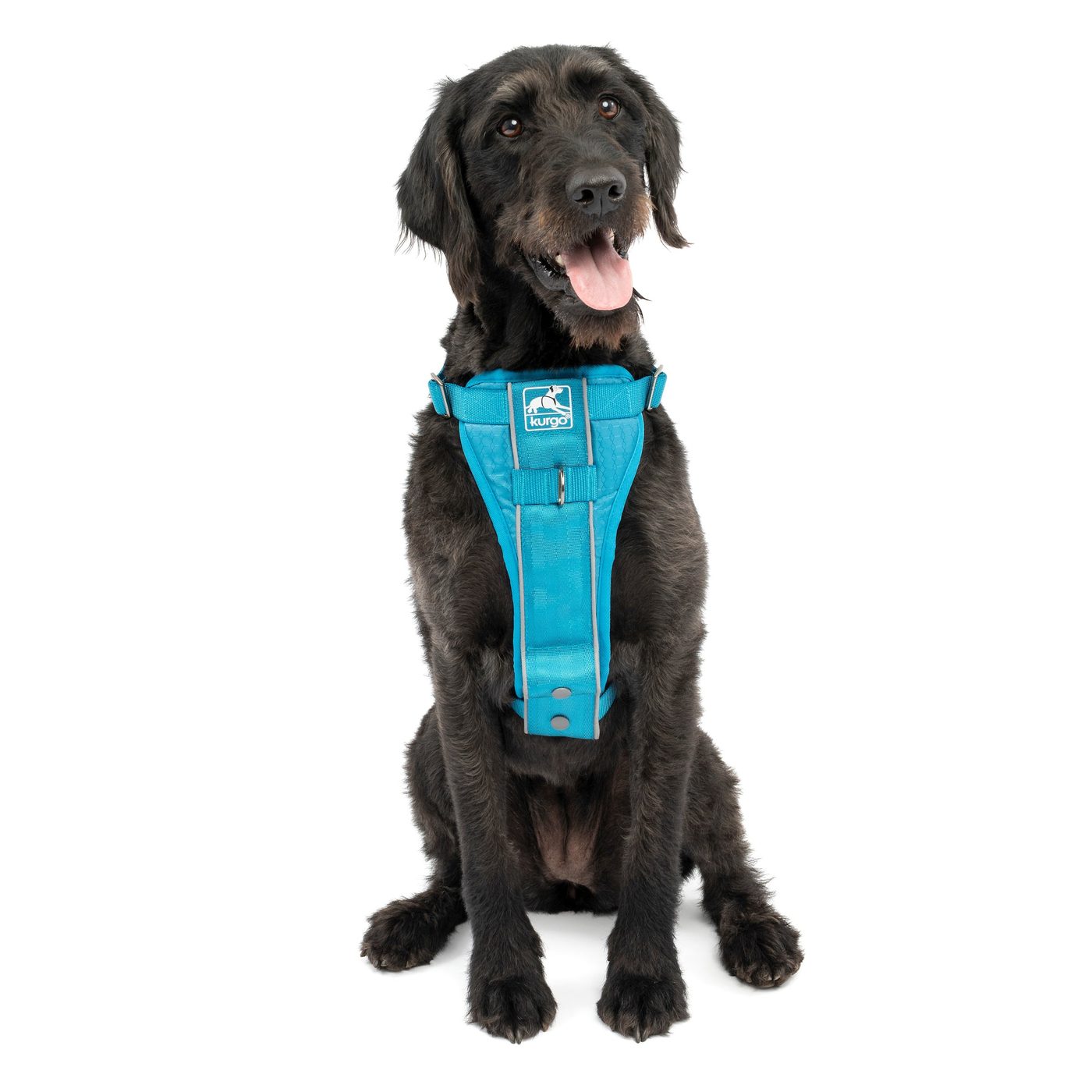
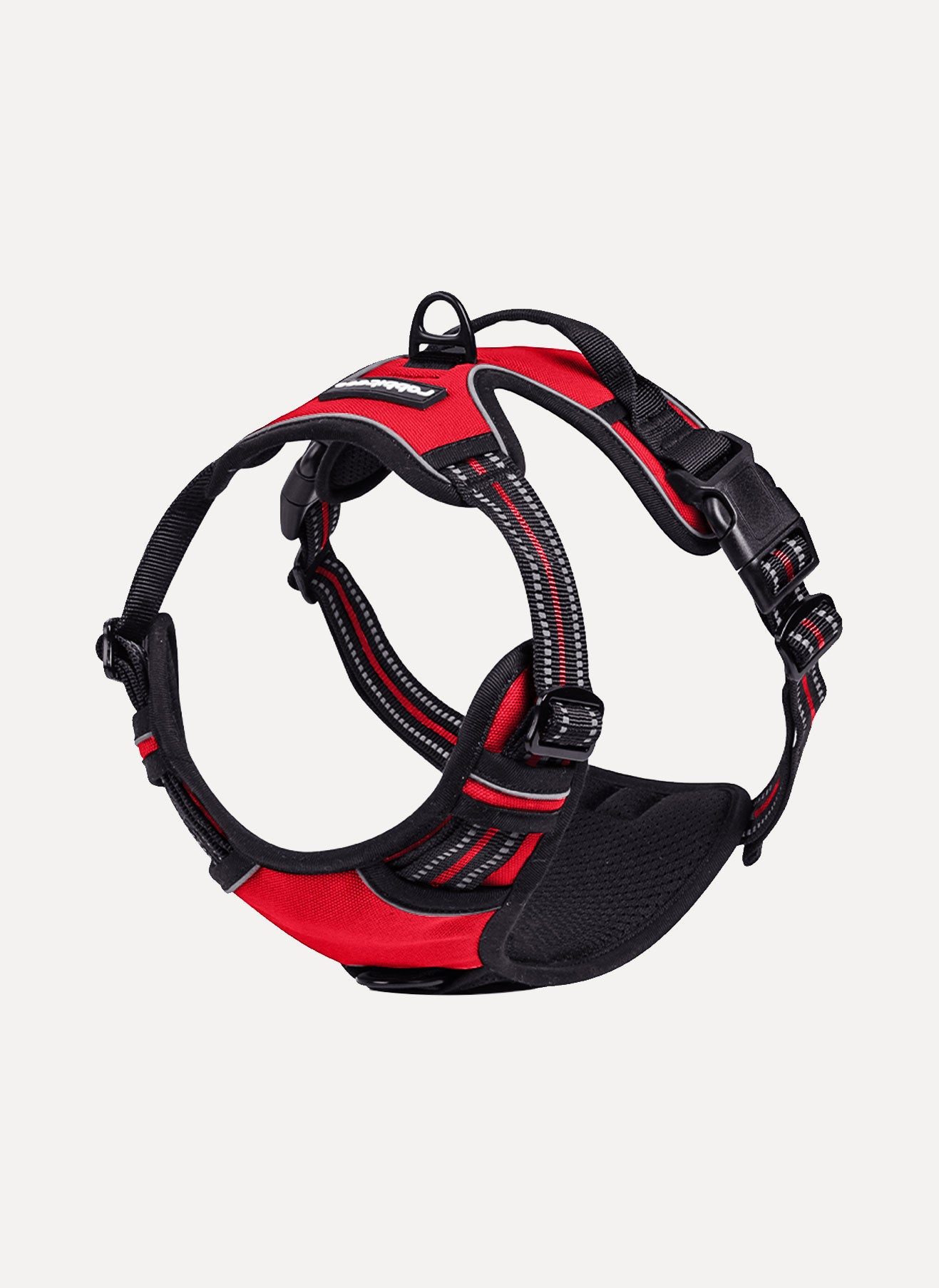
A sturdy top handle, which is the feature nobody else here has and the one that matters on stairs, at a curb or getting a dog into a car
Front ring for redirecting a pull and a back D-ring for ordinary walks, both published
Neck and chest ranges given for every size, from 10 to 35 inches of neck and 11 to 38 of chest
Reasons to avoid
Rabbitgoo lists four sliders but publishes no strap width, so the only fit evidence beyond the size chart is the count
The XL tops out at a 38-inch chest, well short of the 43 to 49 inches the Balance Harness and Easy Walk reach
This is the harness to buy when the dog is small to medium, pulls moderately, and sometimes needs to be picked up. The handle is genuinely useful and none of the more serious harnesses here have one.
Not the right fit if your dog's chest is over 38 inches — the Easy Walk reaches 49.
Every girth range, adjustment count and strap width on this page is quoted from the manufacturer's own product page or published sizing sheet, read on September 12, 2026, and each source is linked below. Blue-9's figures come from its printed sizing chart; PetSafe's from the size table on its own product page.
Where a maker publishes no adjustment count — 2 Hounds Design is the one here — the row says "Not published" rather than counting buckles from a photograph.
Every retail link was opened and checked for a live buy box on the same date. The two Blue-9 pages checked at Amazon had none, so that pick sends you to Blue-9's own store, where the size checked was in stock.
The verdict
Best overall: the Blue-9 Balance Harness, on six points of adjustment and the only sizing instruction here precise enough to follow. It is the harness that fits the dog rather than the pattern.
Best for the least money: the PetSafe Easy Walk, whose eight sizes from 12 to 49 inches make it the most likely to fit out of the box; and the Kurgo Tru-Fit, which publishes neck, chest and weight for all five sizes and gives you five adjusters at roughly the same price. For a dog that hauls, the 2 Hounds Freedom adds a tightening loop the others do not have. For a dog that wears a harness all day, the padded Ruffwear Front Range is worth its premium.
Around the widest part of the ribcage, just behind the front legs. Blue-9 is the most specific — around the ribcage about two inches behind the elbow — and that is the measurement its 13.5 to 43.5 inch range is built on. Take it with a soft tape, snug but not tight, and buy the smaller size when you fall between two.
Does a no-pull harness actually stop pulling?
It changes the geometry, not the behavior. Clipping at the chest means a dog that drives forward gets turned back toward you instead of gaining ground, which buys you the seconds in which training can happen. No harness on this page teaches a dog anything on its own.
Front clip or back clip?
Front for a dog that pulls, back for a dog that does not. Five of the six here have both — only the Easy Walk is front-only — and 2 Hounds and Blue-9 both recommend using the two together with a double-ended lead so the dog is redirected rather than braked.
How tight should it be?
Two fingers flat between the strap and the dog, everywhere, checked again after the first walk. This is where six points of adjustment earn their keep — with four, a dog whose build does not match the pattern ends up with one strap right and another wrong.
Also considered
PetSafe Gentle Leader headcollar — A head halter, not a harness, and a genuinely effective tool for a dog that out-muscles everything on this page. It is left off because most dogs need a conditioning period before they accept one, which makes it a different kind of purchase rather than a competitor to these.
Prong and slip collars — Not compared here on method grounds. The American Veterinary Society of Animal Behavior's position statement on humane dog training recommends reward-based methods and advises against training tools that work through discomfort.
Generic marketplace no-pull harnesses — Most publish one chest range and no measurement instruction, which is exactly the failure this page is built to avoid. A size chart without a stated measuring point is a guess with a table around it.